
CureMeAbroad Is Changing How Patients Explore Healthcare Beyond Their Home Country
As healthcare becomes increasingly global, CureMeAbroad is helping patients discover international care through research, comparison, and greater transparency.

A healthcare decision can begin with a simple search, but choosing treatment in another country is rarely simple. Patients may find dozens of hospitals, hundreds of physicians, dramatically different prices, and countless opinions online. The challenge is no longer finding information. It is knowing which information deserves attention.
That changing reality is creating a new role for platforms built around healthcare discovery. CureMeAbroad is developing its presence in this space by bringing hospitals, doctors, treatments, destinations, reviews, and indicative costs into a single platform. Today, the company says its network spans more than 1,500 hospitals, 3,600 doctors, and 38 countries, giving patients a broader starting point for researching international healthcare options.
When Healthcare Becomes A Global Choice
For decades, many patients viewed healthcare as something that happened within a relatively small geographic circle. Their choices were often shaped by local physicians, nearby hospitals, insurance networks, and familiar health systems.
Medical tourism has expanded that decision making landscape. A patient can now investigate a specialist in Turkey, a hospital in Thailand, a dental provider in Mexico, or a medical center in India without beginning the process through a traditional local referral.
That freedom creates opportunity, but it also creates complexity.
A hospital with a lower advertised price may not necessarily be the right choice. Patients need context. They may want to understand the physician's qualifications, hospital accreditation, procedure experience, patient reviews, expected recovery period, travel requirements, and what happens when they return home.
CureMeAbroad is approaching this challenge as a discovery problem. Instead of asking patients to navigate dozens of disconnected sources, the platform brings multiple elements of the research process together. Its medical tourism platform allows users to compare pricing, doctors, hospitals, reviews, and destinations before deciding which options deserve further consideration.
The New Healthcare Researcher
The modern medical traveler is not simply looking for the cheapest procedure. Increasingly, the patient is becoming a researcher.
That means asking better questions before making contact with a hospital. What credentials does the physician have? How frequently does the specialist perform the procedure? Is the hospital accredited? What do patients say about their experiences? What does the estimated price include? How much time might recovery require?
These questions can be difficult to answer when information is scattered across hospital websites, review platforms, social media, travel sites, and individual physician profiles.
CureMeAbroad brings these research categories closer together. Its hospital directory includes facilities across international destinations, while its platform also features physician profiles, treatment categories, patient experiences, and cost comparisons. The company describes its service as a discovery platform rather than a healthcare provider, emphasizing that patients should consult qualified healthcare professionals before making medical decisions.
That distinction is important. A technology platform can organize information and simplify discovery, but the final healthcare decision belongs with the patient and qualified medical professionals.
From Concierge Support To A Global Discovery Platform
CureMeAbroad's story began with a more personal approach to international healthcare. According to the company's account, it launched a concierge service in mid 2025 to help patients navigate hospitals abroad, coordinate travel, and understand the practical steps involved in seeking care outside their home countries.
The company says demand grew quickly. Its team reports handling between 60 and 80 patient cases per day across the United States, United Kingdom, Germany, and Australia within months of launching. Its platform has since expanded into a broader discovery experience covering thousands of hospitals and doctors across dozens of countries.
That evolution reflects a larger shift in how people approach international healthcare. Patients increasingly expect the same kind of accessible information and comparison tools they use in other areas of life, while recognizing that healthcare requires a much higher standard of scrutiny.
For CureMeAbroad, the opportunity is not simply to help someone find a hospital. It is to help them understand the landscape before they take the next step.
What Patients Should Look For Beyond A Price
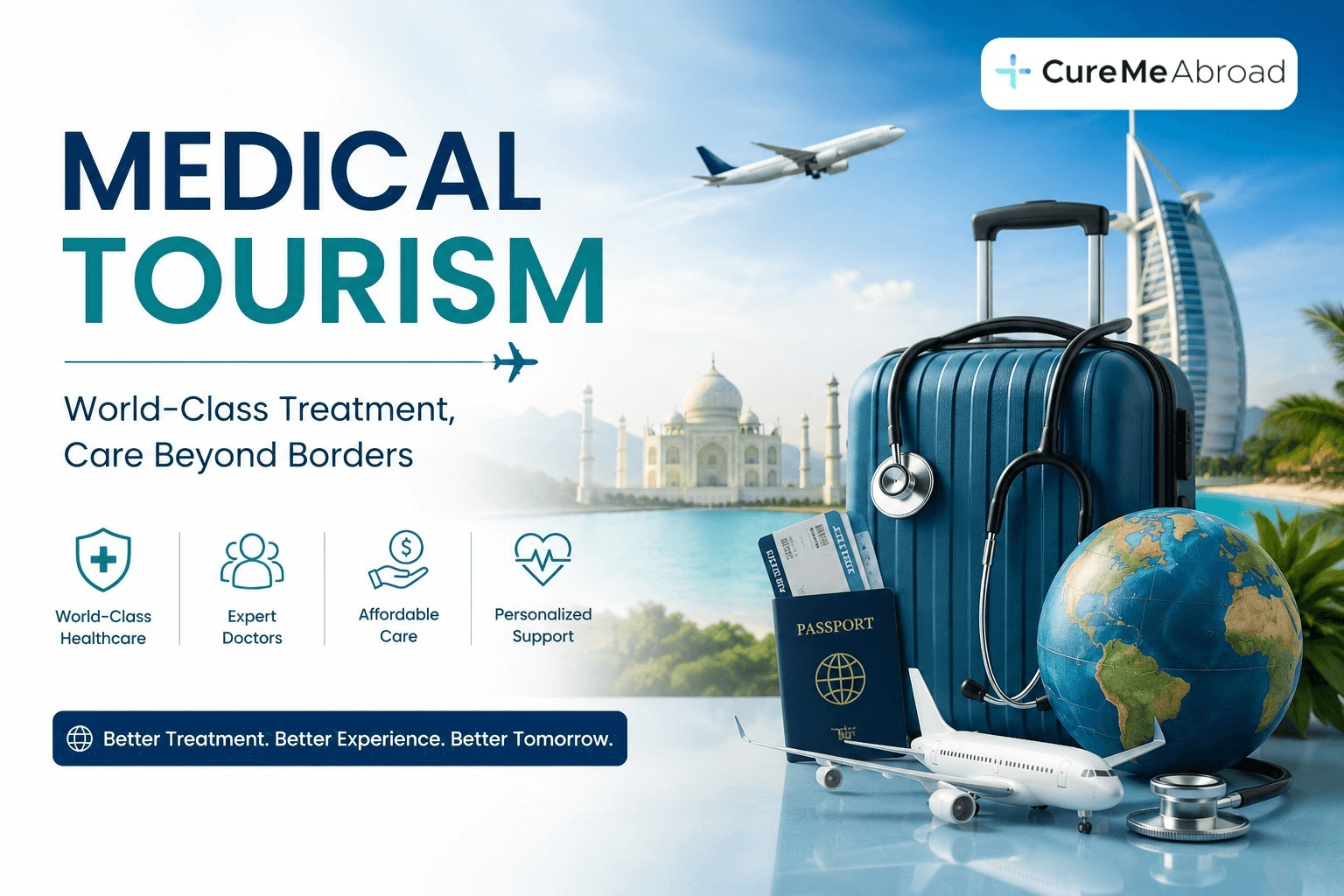
Price will naturally remain part of the medical tourism conversation. International treatment can be considerably less expensive in certain destinations, depending on the procedure, provider, patient circumstances, and country.
Yet a meaningful comparison requires more than placing two numbers side by side.
Patients should consider accreditation, physician qualifications, relevant experience, hospital capabilities, independent reviews, treatment details, recovery requirements, travel logistics, and follow up arrangements. They should also confirm whether an advertised price is an estimate or a final quotation.
CureMeAbroad's platform reflects this broader approach by presenting treatment and hospital information alongside indicative pricing and patient experiences. Its medical tourism guide also encourages patients to examine accreditation, physician credentials, independent reviews, recovery time, and medical travel insurance when researching care abroad.
The result is a more thoughtful way to frame affordability. The question becomes not simply, "Where can I pay less?" but, "What information do I need to evaluate my options responsibly?"
Why The Next Stage Of Medical Tourism May Be About Transparency
As international healthcare becomes easier to discover, transparency may become one of the industry's most important differentiators.
Patients can already search globally. What they need is a clearer way to compare what they find.
CureMeAbroad is building around that need. Its website currently presents destinations including Turkey, Mexico, Thailand, India, South Korea, Germany, Spain, Singapore, and Costa Rica, alongside hospitals, doctors, procedures, and patient experiences.
The company's model also gives patients a way to begin researching without immediately committing to a provider. Its hospital directory emphasizes discovery and comparison, while its platform offers consultation and treatment planning pathways for people who want to explore their options further.
This approach positions CureMeAbroad within a broader transformation in healthcare: the movement from passive searching toward informed discovery.
A More Informed Way To Look Abroad
The future of medical tourism may not be defined by how far patients are willing to travel. It may be defined by how much information they can access before they make the journey.
CureMeAbroad is building its platform around that idea. By connecting international hospitals, physicians, treatments, destinations, reviews, and indicative costs, the company gives patients a centralized place to begin a complicated research process.
For someone considering treatment abroad, that first step can make a meaningful difference. Instead of starting with a single hospital or an attractive price, patients can start with questions, comparisons, and evidence.
Readers can explore CureMeAbroad through its medical tourism platform, learn more about international healthcare options, and connect with the brand through its social channels, including Instagram, Facebook, TikTok, YouTube, X, and LinkedIn. For international healthcare research, the objective is simple: compare carefully, ask better questions, and make decisions based on more than cost alone.
In a world where healthcare increasingly crosses borders, the most valuable journey may begin long before the flight. It begins with knowing where to look, what to compare, and which questions to ask.