
How Pradip Thorat Is Shaping The Future Of Intelligent Buildings
Pradip Thorat combines engineering expertise, research, and practical innovation to help modernize buildings for a smarter, more sustainable future.
By: Katy Adams
Modern buildings are expected to do far more than provide shelter. Hospitals must maintain precise environmental conditions around the clock. Universities require reliable climate control for research laboratories. Government facilities must operate efficiently while managing rising energy costs, and commercial buildings are under increasing pressure to reduce carbon emissions without sacrificing performance.
Meeting those expectations depends on technologies that most people never see. Behind the walls and above the ceilings, sophisticated Building Automation Systems continuously monitor and regulate heating, cooling, ventilation, lighting, and energy consumption. As these systems become more intelligent, they are changing how buildings perform throughout their entire life cycle.
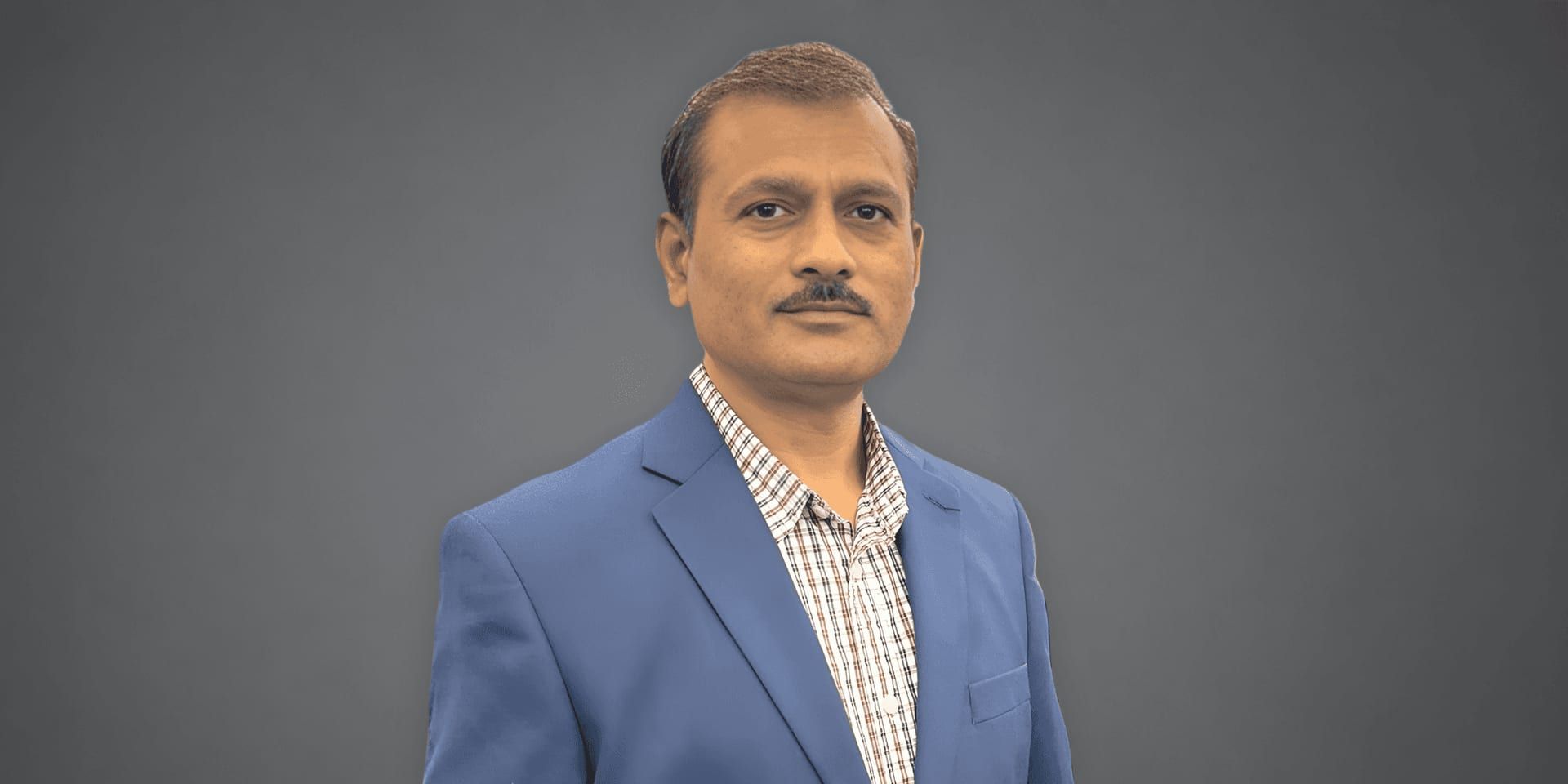
Among the engineers helping drive that transformation is Pradip Rohidas Thorat, a Senior Controls Specialist whose career has been dedicated to making complex buildings more efficient, resilient, and sustainable through intelligent automation. His work demonstrates that innovation is not always about constructing new facilities. Often, the greatest opportunity lies in improving the buildings that already exist.
Rethinking What Modernization Really Means
Many organizations assume that aging buildings require complete replacement of outdated control systems to meet today's performance expectations. Thorat has spent much of his career challenging that assumption.
Instead of recommending extensive demolition and reconstruction, he advocates a retrofit first approach that carefully evaluates existing infrastructure before determining what truly needs to change. Compatible wiring, control panels, sensors, and field devices are preserved whenever practical, allowing modern automation technologies to be integrated without unnecessary waste or excessive cost.
This engineering philosophy has been applied across more than 400 Building Management System projects throughout the Middle East, Canada, and the United States. His experience includes commercial developments, hospitals, universities, airports, retail facilities, government buildings, and scientific research centers, where project values have reached as high as three and a half million dollars.
"Every time I walk into an old mechanical room, I don't see an outdated building. I see an opportunity," Thorat says. "Tearing it down and starting over is rarely the sustainable choice. My job is to make what already exists smarter."
That perspective has become increasingly relevant as organizations seek practical ways to improve sustainability without replacing entire facilities.
Solving Problems Across Multiple Technology Platforms
One characteristic that distinguishes Thorat's career is his ability to work across multiple Building Automation System ecosystems instead of specializing in a single manufacturer's products.
His technical expertise includes Siemens, Honeywell, Johnson Controls, ABB, Schneider Electric, and Distech platforms, allowing him to integrate legacy infrastructure with newer technologies regardless of the original installation. This flexibility enables owners to preserve investments already made while introducing modern capabilities that improve performance, energy efficiency, and operational reliability.
That cross platform knowledge has supported engineering work on some of the world's most technically demanding facilities.
His portfolio includes the Sidra Medical and Research Centre and the Doha Convention Center in Qatar, Princess Nura University in Saudi Arabia, Chhatrapati Shivaji International Airport in Mumbai, the Pacific Rim Aquarium in Washington, Walmart refrigeration systems in Bentonville, the Ginsburg Center for Quantum Precision Measurement at the California Institute of Technology, and numerous courthouse modernization projects across California.
Although these projects differ significantly in size and purpose, they share a common engineering objective: helping buildings perform better while extending the useful life of existing infrastructure.
Engineering With Long Term Value In Mind
For Thorat, modernization is not simply about installing newer technology. It begins with understanding how a building operates and identifying opportunities to improve efficiency without introducing unnecessary complexity.
His engineering process typically starts with evaluating controllers, communication networks, sensors, actuators, field devices, and control strategies before recommending targeted improvements. Instead of replacing equipment because it is old, decisions are based on measurable performance, compatibility, and long term operational value.
This methodology has been particularly successful during California courthouse modernization projects, where compatible wiring, panel enclosures, and field devices were preserved while outdated control architectures were upgraded to support modern Building Automation Systems.
The same engineering philosophy has guided projects involving university campuses, municipal buildings, commercial facilities, and institutional infrastructure. In each case, modernization became an opportunity to improve performance while reducing material waste, limiting operational disruption, and maximizing the value of existing assets.
Rather than viewing retrofit engineering as a compromise, Thorat considers it one of the industry's most practical paths toward sustainable infrastructure.
Bridging Engineering Practice And Technical Research
Many practicing engineers focus exclusively on project delivery. Thorat has taken a different path by transforming field experience into published technical research that contributes to the broader engineering profession.
His work explores subjects that are becoming increasingly important within Building Automation Systems, including artificial intelligence driven fault detection, cybersecurity through BACnet Secure Connect, interoperability among smart building technologies, respiratory infection mitigation using optimized control strategies, and retrofit methodologies supporting deep energy and carbon reduction.
Unlike purely academic studies, these publications originate from practical engineering challenges encountered during live projects. Operational problems become research questions, and research findings return to the field as practical engineering solutions.
"A building generates enormous amounts of data every single day, and most of it used to go to waste," Thorat explains. "What excites me about AI in this field is that we can finally catch problems, a failing valve, a miscalibrated sensor, before they cost a client thousands of dollars in wasted energy."
His research reflects a growing shift within the building automation industry, where intelligent software is becoming just as important as mechanical equipment in improving long term building performance.
Professional Excellence Recognized Across The Engineering Community
Technical expertise alone does not define leadership. Innovation, impact, and consistent results distinguish engineers who shape the field.
Thorat is a Fellow of the Institution of Engineers India and a Senior Member of IEEE, reflecting recognized leadership and technical achievement. He is also a LEED Green Associate, highlighting expertise in sustainable design.
Leading Projects That Influence Industry Standards
Thorat has progressed from control system design to leading multidisciplinary engineering teams across large-scale projects involving architects, contractors, and facility owners.
His work includes BAS architecture design, control strategies, field device evaluation, commissioning support, and technical problem-solving. He also mentors engineers and improves project delivery standards.
Beyond individual projects, he develops engineering practices and documentation standards that improve long-term system reliability.
Across hospitals, airports, universities, and commercial facilities, his focus remains consistent: improve performance while reducing operational complexity.
Why Cybersecurity Has Become An Engineering Priority
Modern buildings rely on connected systems managing HVAC, lighting, energy, fire safety, and security. While this improves efficiency, it also introduces cybersecurity risks.
Thorat advocates integrating cybersecurity into BAS design from the start rather than treating it separately.
“An unsecured network is now a greater risk than mechanical failure,” he notes. “A building cannot be truly intelligent without cybersecurity built in.”
His work on BACnet Secure Connect supports stronger interoperability and system protection.
As buildings become more data-driven, cybersecurity is becoming a core engineering requirement.
Engineering That Improves Everyday Life
Building automation is often invisible, but its impact is essential to daily life.
Hospitals depend on stable environments, laboratories require precise control, schools need healthy indoor conditions, and public buildings rely on uninterrupted operation.
“When building automation works, nobody notices,” Thorat says. “That is the goal.”
From early rural energy projects to global infrastructure work, his philosophy has remained the same: engineering should solve real problems and improve lives.
Today, his focus includes efficiency, sustainability, occupant wellbeing, and cybersecurity as interconnected priorities.
He believes the biggest opportunity is not only new smart buildings, but upgrading existing infrastructure.
“The greatest opportunity is improving the buildings we already have,” he says. “Making them more efficient, resilient, and sustainable.”