LEDerma Connects The Clinic With Care At Home
Built around a shared routine, LEDerma gives professional skincare a place in daily life.
A client leaves a facial appointment pleased with what they see in the mirror. Then comes the less certain part: deciding what to do at home before the next visit. For Rstinclv, founder and CEO of LEDerma, that gap became a business question. After years spent building personal care brands and running spa businesses, the founder saw an opportunity to connect those two settings. The LEDerma Regimen grew from that observation, with professional treatments and home care designed as parts of one routine.
The Gap That Shaped The LEDerma Regimen
Skincare clients face a practical challenge. They may value their professional treatments yet struggle to connect them with the products on their bathroom shelves. A device comes from one brand, a serum from another, and instructions arrive from several sources. Each purchase adds a step, but not necessarily a clear plan. LEDerma was created to address that disconnect. Its premise centers on coordination: home care should have a defined place in the relationship between a client and a skincare professional.
Rstinclv brings more than 25 years of experience in health and personal care to that mission, including over 20 years formulating skincare. That background includes developing brands sold worldwide, as well as experience operating spa and wellness businesses. The combination matters to the company’s story. Product development raises questions about formulas and design. Running a spa adds another perspective: how people understand recommendations, fit care into their schedules, and decide what they will keep using once they leave an appointment.
The founder describes the issue in simple terms: “Skincare happens in two separate places, the clinic and the home, and nothing connects them.” That observation became the starting point for LEDerma. Rather than treating an at-home device as a stand-alone purchase, the company develops devices alongside its own branded skincare. The goal is a coordinated routine, with products formulated for use alongside the technology. Clients have a defined system to discuss with their skincare professional, rather than separate products to piece together.
The LEDerma Regimen puts that idea into a service model. Clients begin with professional treatments at partner med spas and aesthetic clinics, then continue with LEDerma devices and skincare at home. This is the central shift in the brand’s approach: the appointment starts a routine rather than standing apart from it. The company positions home use as a complement to professional care, not a substitute. That distinction gives both clients and providers a clearer way to understand where the products fit.
How The LEDerma Regimen Takes Shape
Developing devices and skincare together is a key choice behind the brand. Instead of asking customers to select products on their own, LEDerma offers accompanying formulas intended for use within its routine. Its described sequence includes an antioxidant serum before a device session and a peptide serum afterward. The value of that structure is practical. It gives users a defined order to follow and gives professionals a shared reference point when they explain home care, answer questions, or review a client’s experience.
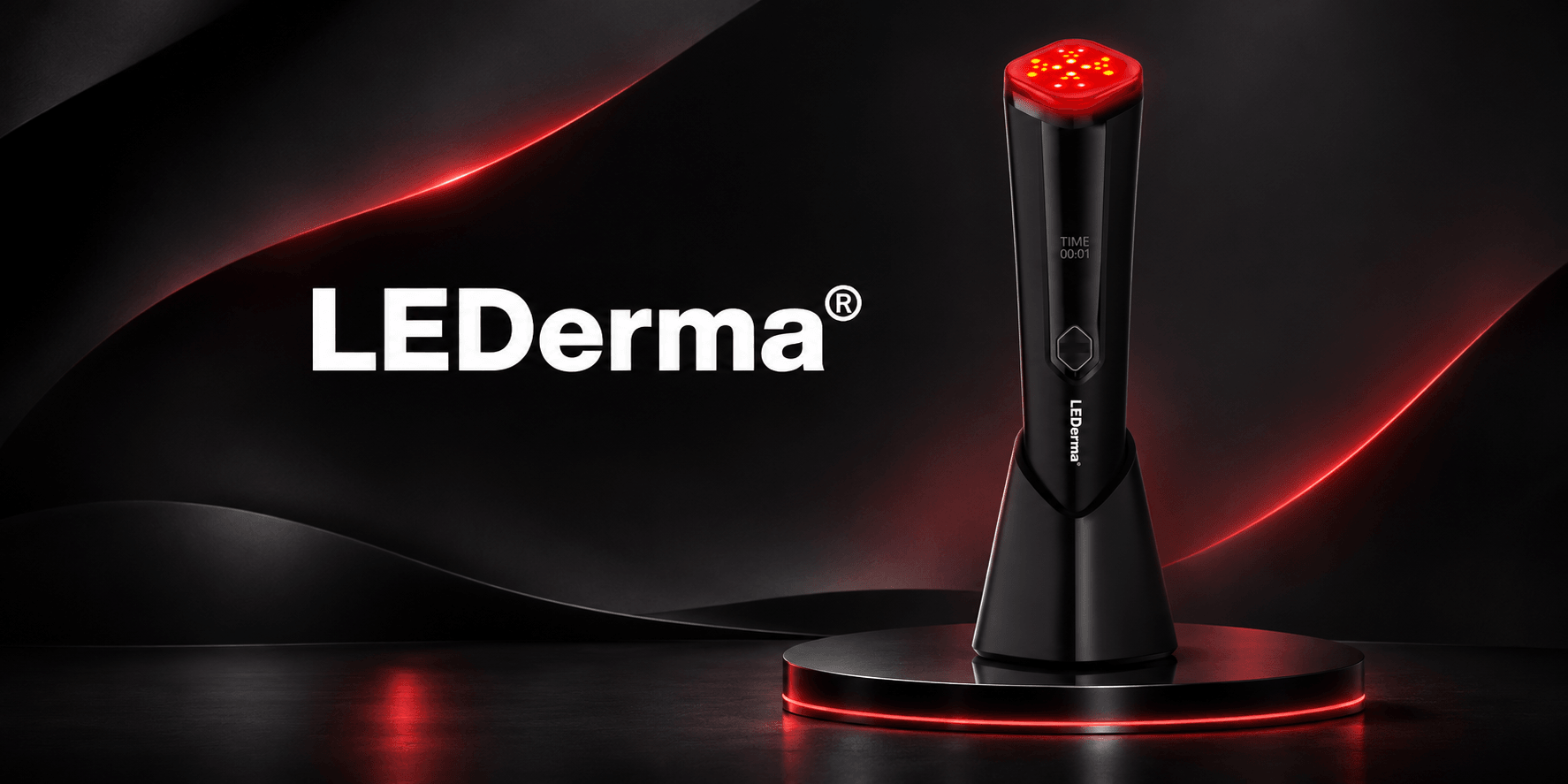
The home-use device brings several functions into one format. According to the company’s product information, it combines red, orange, and infrared LED light with warmth. A wide applicator, single-button control, built-in timer, and charging cradle shape the user experience. These details matter because a home routine must make sense outside a treatment room. Clear controls and a defined sequence can make instructions easier to follow, although individual experiences and cosmetic outcomes can vary. The system’s design, rather than a promised result, anchors the story.
For clients, the appeal is a more connected plan. They can ask their provider how the home routine fits their goals, which products belong in the sequence, and how to follow the device instructions. That conversation keeps the professional involved after the appointment ends. It also sets a useful boundary: owning a device does not replace an individual assessment or make every skincare choice self-evident. LEDerma’s model leaves room for professional judgment while giving home care a more defined role in daily life.
For med spas and aesthetic clinics, the relationship works in the other direction as well. LEDerma positions its products as tools that support providers rather than compete with them. The regimen gives professionals a home-care offering to explain and recommend, along with a retail component to their services. The company identifies continued client engagement and retail revenue as goals of that model. Those are business aims, not guaranteed outcomes, but they show how the brand links its product strategy to the needs of its partners.
A Professional Partnership Beyond The Appointment
The founder summarizes the intended shift this way: “The med spa becomes the start of an ongoing routine, not a one-time visit.” That statement captures the human side of the model. A client’s questions do not end at checkout, and a provider’s knowledge need not be limited to the treatment itself. A shared product system can give both sides something concrete to discuss. The emphasis moves from an isolated purchase toward a routine that the client understands and the professional can help explain.
Rstinclv’s earlier work also provides context for this venture. Recognition tied to the founder’s other cosmetics and beauty businesses includes the Inc. 5000 Regionals in 2025 and 2026, in the region covering Nevada, Utah, Colorado, Montana, Wyoming, and Idaho. Other recognition includes finalist status for BeautyMatter’s Best Indie Beauty Retailer in June 2025 and Cosmetics Innovator of the Year in January 2016. These distinctions belong to prior ventures, not LEDerma. They form part of the founder’s business history rather than evidence of this brand’s product performance.
Today, LEDerma’s identity rests on how its pieces fit together. It develops home-use technology, pairs that technology with branded skincare, and places both within a professional partnership model. LEDerma is also a registered trademark with the U.S. Patent and Trademark Office. Yet its most distinctive proposition is straightforward: a client should be able to understand the connection between a professional appointment and the care that follows. The brand seeks to make that connection part of the experience, rather than leaving customers to build it themselves.
For readers considering how professional skincare might fit into a home routine, the LEDerma Regimen offers a model to examine. The company’s website provides a starting point for reviewing its device, accompanying products, and approach to coordinated care. Clients can use that information to prepare questions for their skincare professional, while providers can explore whether the model suits their services. The useful next step is an informed conversation about fit, instructions, and expectations, with the relationship between clinic and home kept in view.