LifeCharter Command Suite: Clarity Over Hustle
For AmiLynne “Babs” Carroll, a business should support its founder, not depend on everything staying in the founder’s head.

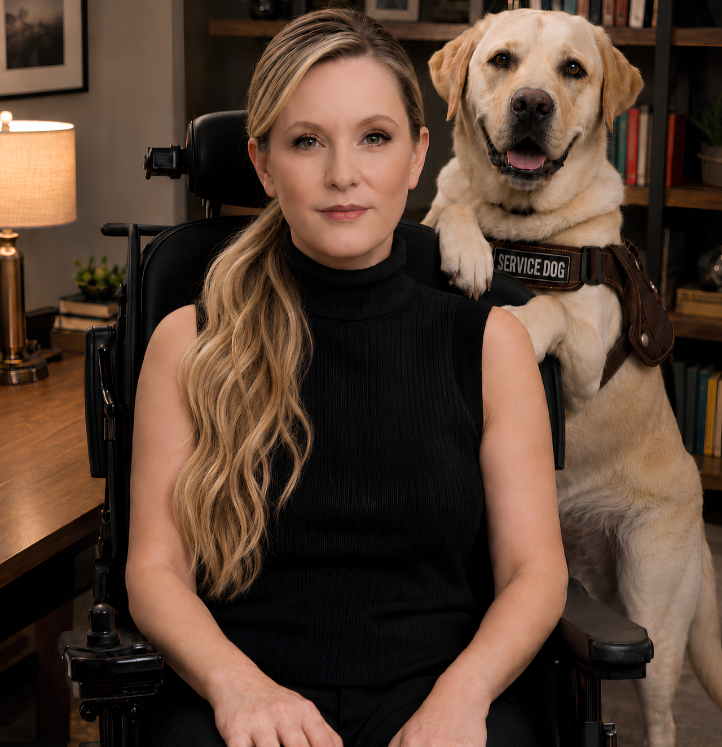
In October 2022, a stroke left Babs quadriplegic. Her work did not end, but the question behind it sharpened: What helps a person keep leading when life changes course? Today, she continues to coach, write, create, and speak, with her service dog, Beau, beside her. That experience informs the LifeCharter Command Suite, which pairs business software with executive coaching. Its premise is practical and personal: Build a structure that can support the founder through hard seasons, not just days when everything goes to plan.
Why LifeCharter Command Suite Starts With Clarity
Babs, the company’s CEO, Alignment Architect, and Chief Travel Partner, sees a pattern in founder-led businesses. The owner holds the plan, the priorities, and the reasons behind each decision. Strategy sits in a notebook. Leads live in a spreadsheet or several apps. Financial records sit in a tool that receives too little attention. Each piece may have a place, yet the founder remains the link between them. When every answer requires that person’s attention, even a promising business can become hard to lead.
The usual response is to add another tool. A CRM promises order. A scheduler handles bookings. A course offers a fresh approach, while an AI tool adds another set of options. But access does not establish priorities. Founders may use only a fraction of what they buy, while moving information between systems that do not connect. More software can leave the central question untouched: What needs attention first, and how does that choice serve the business the founder means to build?
Coaching can leave a different gap. A useful conversation may produce insight without changing the week ahead. The founder returns to the same scattered tasks, now carrying good advice alongside an already crowded list. Babs designed the LifeCharter Command Suite to bring those halves together. The software and her executive coaching form one offer, rather than separate purchases that the client must make work together. The aim is to give direction a working home and give each tool a clear purpose.
“Clarity creates freedom,” Babs says. In her approach, freedom does not mean freedom from responsibility. It means seeing what matters, understanding what needs to happen next, and making choices without treating every task as equally urgent. Her conviction is that alignment does not arrive when business becomes easier. A founder designs it, then puts it into practice each day. This gives her anti-hustle stance substance: Calm command depends on a clear structure, not simply a wish to feel less busy.
week ahead. The founder returns to the same scattered tasks, now carrying good advice alongside an already crowded list. Babs designed the LifeCharter Command Suite to bring those halves together. The software and her executive coaching form one offer, rather than separate purchases that the client must make work together. The aim is to give direction a working home and give each tool a clear purpose.
“Clarity creates freedom,” Babs says. In her approach, freedom does not mean freedom from responsibility. It means seeing what matters, understanding what needs to happen next, and making choices without treating every task as equally urgent. Her conviction is that alignment does not arrive when business becomes easier. A founder designs it, then puts it into practice each day. This gives her anti-hustle stance substance: Calm command depends on a clear structure, not simply a wish to feel less busy.
Inside The LifeCharter Command Suite Method
The process begins with the Business Command Audit. Its Brain, Soul, and Profit assessments examine 12 business dimensions: marketing, sales, operations, finance, team, systems, leadership, vision, product, client experience, legal, and sustainability. The audit also reviews eight customer journey pillars: customer acquisition, sales journey, onboarding, support, communication, fulfillment, internal process and culture, and referral. This broad view keeps the discussion from resting on one visible problem while other parts of the business go unseen. It creates a shared starting point for decisions.
From the 12 dimension scores comes one overall business health score, along with one list of next steps. Babs reads the same scores and tasks the founder sees. That shared view matters because it anchors coaching in the client’s own assessment, rather than a general lesson or a guess about priorities. The score serves as an organizing measure within the Suite. Its role is to help the founder and coach see the whole business, then discuss where attention belongs.
The audit leads into a Business Plan, Marketing Plan, and Sales Plan, supported by a guided first 30 days. A daily task list and weekly coaching rhythm connect those plans to ongoing work. Within one account, the Suite includes CRM functions, email campaigns, bookings, finance, projects, and e-signature. The distinction is not merely the number of tools available. It is the effort to connect assessment, planning, and action, with a human guide who can help the founder read what is in front of them.
That design reflects a choice about how support should work. Babs does not hand over a login and expect the founder to find the route alone. Nor does she leave a coaching session’s insights outside the systems used each day. The platform provides a place for the work; the coaching provides a way to examine it. Together, they are intended to make the next aligned action clear, without suggesting that a single score or software account can replace the founder’s judgment.

A Founder Who Builds For The Path Ahead
Babs’s public work extends beyond the Suite. She is a TEDx speaker whose talk has more than 100,000 views, and a published author with more than 78,000 copies of her books in readers’ hands. Conversations of Consequence: Lessons from the Still Small Voice accounts for more than 60,000 copies; Sacred Alchemy, more than 18,000. She also hosts the daily Conversations of Consequence podcast. Across those formats, her voice returns to the three pillars that guide her work: purpose, clarity, and aligned action.
“I don’t write from the mountaintop. I write from the path,” she says. That perspective shapes how she describes her own life. Babs uses a wheelchair and continues to lead her work. She does not present resilience as a reason to glorify constant strain. Instead, her story helps explain why she values support that does not depend on ideal conditions. As she puts it, “A butterfly can keep flying with a damaged wing, not because gravity disappeared, but because it learns to renegotiate with the air.”
Her language is vivid, but the business principle is grounded: A founder needs enough clarity for the next choice, not certainty about every future turn. “I don’t need a perfect wing, a windless day, or the entire flight plan. I need enough clarity to recognize the next right movement, and enough courage to extend my wings into it.” Her giving also forms part of the business: 10 percent of all sales support the Eva Mae Foundation. Purpose, in this model, belongs within daily operations.
“Head up is remembering who I am before circumstance tries to tell me who I am. Wings out is finding the lift available at this moment: more glide and less flapping.” For founders exploring the LifeCharter Command Suite, that is a useful lens for learning more: how the audit, shared task list, and weekly coaching connect a business’s purpose to its next actions. Babs’s website and social profiles offer places to explore her perspective on building with clarity rather than relying on more effort alone.
Explore More About LifeCharter Command Suite
Connect with AmiLynne Carroll, LinkedIn, Instagram, Facebook, and LifeCharter On Facebook.