Nelly Opitz Walked Five Runways in Düsseldorf. One Changed Her Stride.
Inside a former factory hall, a rope-skipping champion tested what disciplined movement can do for a runway walk — and five designers found out.
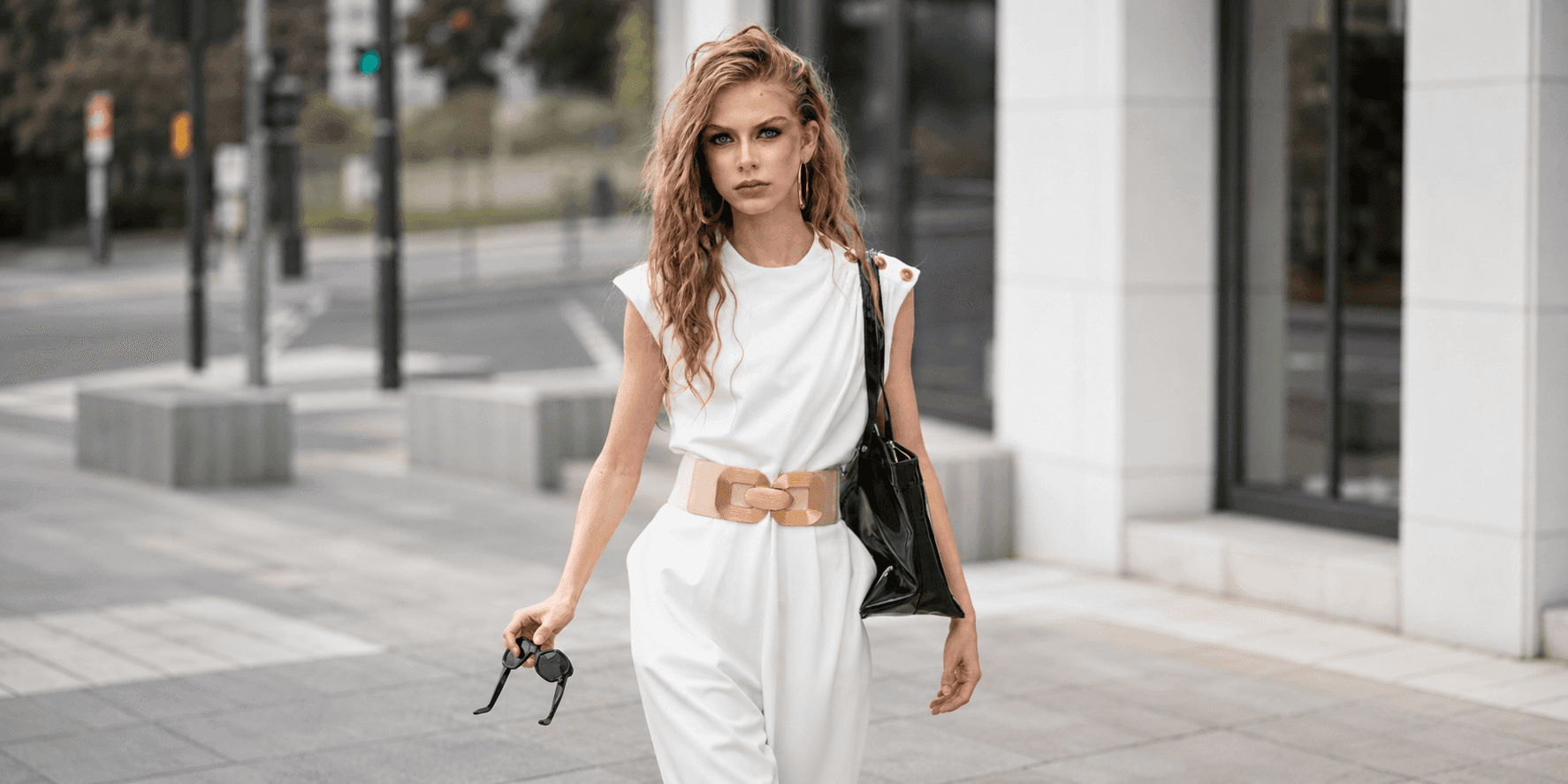
Most runway walks are taught, not discovered. A model learns a house’s specific rhythm — the pacing, the turn, the particular stillness a designer wants at the end of the runway — and reproduces it, show after show, city after city. It is a skill, and a real one, but it is rarely personal. The walk belongs to the collection. The body is the delivery mechanism.
This is what made KYVison’s debut show, staged on 23 July as part of Düsseldorf Fashion Days, worth paying attention to beyond the usual season-opener notes. Eleven designers presented collections in a former factory hall — the kind of raw, high-ceilinged industrial space that independent and newcomer showcases have increasingly favored over hotel ballrooms, for reasons that have as much to do with acoustics and light as with rent. Among the models moving through those eleven presentations was a fifteen-year-old German athlete named Nelly Opitz, who walked for five of them.
The five houses were not a random assortment. Pietro Paradiso, internationally established, sat at one end of the show’s range. ÉLÉPHISSE, a winner of the German Design Award 2024, sat near the other — proven, but still building the kind of runway presence that turns design recognition into commercial visibility. LvO Fashion and Barontini filled out the middle. And then there was Life Abroad, a newcomer label showing on this scale for the first time, which made a specific and slightly unusual request of its model.
It asked her to walk like herself.
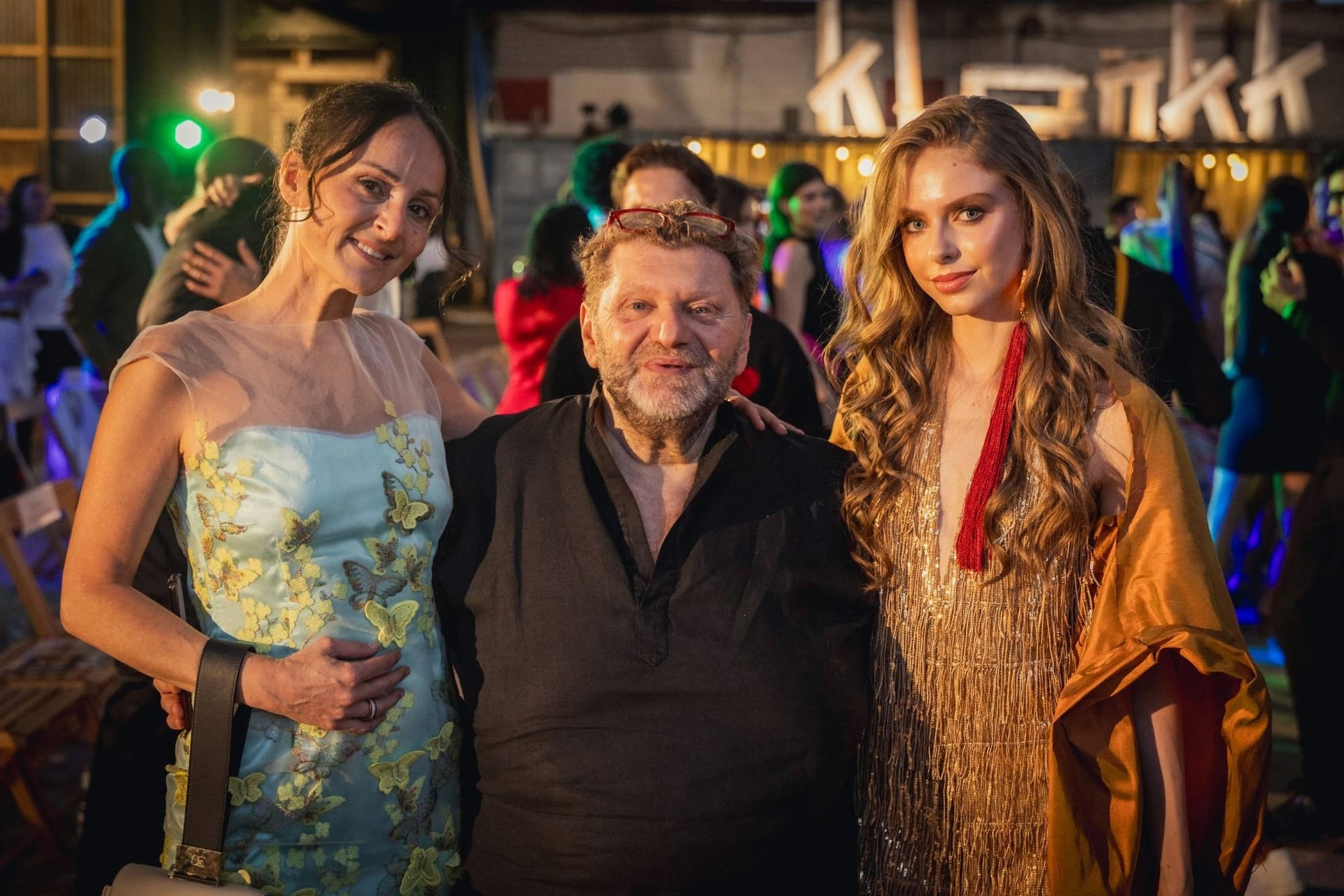
Photo 2: Sonia Salvati, Pietro Paradiso, Nelly Opitz
Opitz has been part of the Hessen State Squad in rope skipping since 2025 and is a German Federal Champion in her age division. Rope skipping is a sport that rewards almost nothing except precision repeated under time pressure. For Life Abroad’s presentation, she brought that precision to the runway directly, translating the cadence and control of competitive rope skipping into her stride rather than defaulting to the generic runway walk most young models are trained into by their third season. The rhythm read as deliberate rather thanborrowed. Audiences at newcomer shows are usually generous, but this particular reaction — the kind of response a show team notices and remembers — was for a walk that came from somewhere specific.
It asked her to walk like herself.
This is a more interesting outcome than it might first appear. Runway casting for emerging labels is typically a search for versatility — a model who can disappear into whatever the collection needs, an interchangeable canvas. What Life Abroad did instead was cast for a specific, legible physical vocabulary and then build a moment around it. That is a bet, not a default choice, and it is the kind of bet that only makes sense if the model in question actually has something distinct to offer beyond a well-proportioned frame and a practiced walk.
The other four houses Opitz presented for used her more conventionally, which is itself worth noting. A model who can hold a designer’s intended rhythm for Paradiso or ÉLÉPHISSE and then, minutes later, walk a version of herself for a newcomer label is demonstrating a kind of range that does not usually get tested inside a single show. Most young runway talent is still being shaped into one register. Opitz, across five collections in one evening, appears to already have more than one available to her.
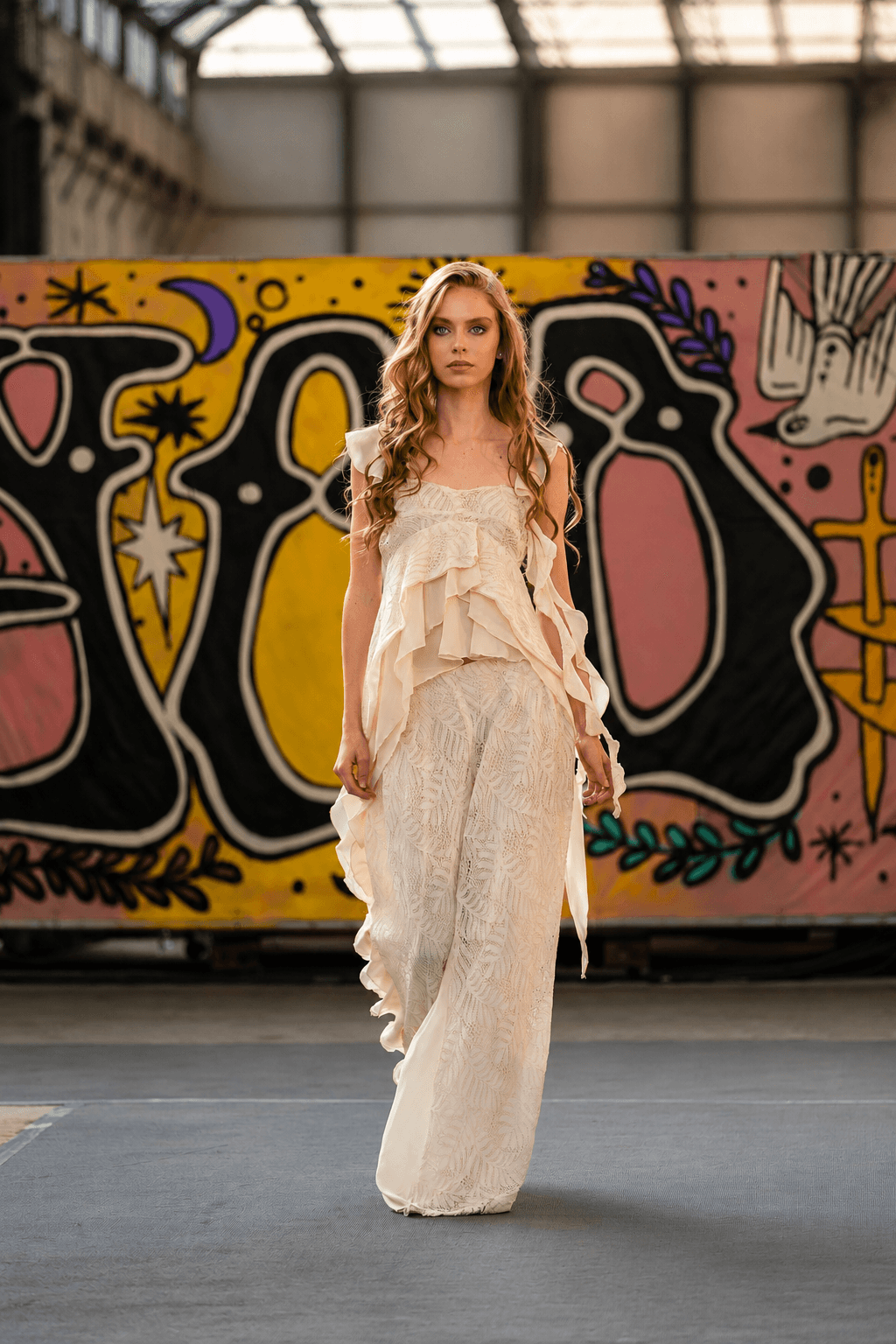
Photo Credit : Nelly Opitz Management
None of this required a name to be known beforehand. KYVison’s first show was not built around any single model, and Opitz’s presence across five of its eleven presentations is a data point about the show’s casting decisions as much as it is about her. But debut showcases are exactly where these kinds of signals tend to surface first — before the trade coverage catches up, before a face becomes a fixture on a specific circuit. An internationally renowned house and a design-award-winning label chose to work with the same fifteen-year-old on the same night that a newcomer label built part of its presentation around what makes her walk distinct from anyone else’s.
The former factory hall did what these venues generally do: it stripped away the polish of a conventional show setting and left the work more exposed than usual. Under those conditions, a borrowed walk tends to look borrowed. Opitz’s did not.
Whether this translates into a defined runway career is, as with any single show, unknowable from one evening. What is knowable is narrower and more concrete: five designers made a casting decision, one of them made a specific creative bet on what that decision could produce, and the bet read clearly enough in a former factory hall in Düsseldorf that it is worth noting before the rest of the season makes it retroactively obvious.
Readers can also discover Nelly Opitz on Instagram and Nelly Opitz on TikTok, where her presence continues beyond the runway and into contemporary fashion culture.