
Pacific Northwest Medical Group Redefines Weight Loss
A unique clinic where medical weight loss feels measured, personal, and deeply supported.
The turning point often arrives quietly. A patient steps onto a 3D laser body scanner, expecting another lecture about weight, willpower, or failure. Instead, the screen shows information, not judgment. Measurements become a map. Progress becomes visible. For the Welsh’s, Owners and Clinic Directors of Pacific Northwest Medical Group, that moment captures the mission behind the clinic: to turn medical weight loss into a structured, human, and accountable experience for people across Washington who want more than a prescription.
Pacific Northwest Medical Group Starts With Support
Pacific Northwest Medical Group was built around a direct promise: “Real Support, Real Results and Real Transformations.” In a crowded health and wellness market, that promise matters because many people arrive after years of frustration. They have tried diets, downloaded apps, joined programs, and started again more times than they can count. What they often lack is not desire. It is a practical system, clinical guidance, and people who stay with them when motivation fades.
The Welsh’s saw a gap between medication access and meaningful care. GLP-1 therapies such as Semaglutide and Tirzepatide have changed the conversation around weight management, especially when prescribed and monitored by qualified medical professionals. Yet medication alone is not a complete plan. Pacific Northwest Medical Group positions its clinic model around the work that surrounds treatment: consultations, education, monthly measurement, in-person accountability, and ongoing communication.
That distinction has shaped the clinic’s identity in Puyallup and Federal Way. Pacific Northwest Medical Group offers clinically supervised programs with same-day treatment options after consultation, weekend availability, and a first consultation that is free. The approach is built for people who want clear direction without contracts or memberships, and who prefer a physical clinic over a remote-only program.
The clinic’s in-person presence is especially important for patients who feel uncertain about injections or want more guidance. Some people are “needle-shy.” Others simply feel better knowing trained medical staff can perform weekly injections and answer questions face-to-face. In a field where convenience can sometimes replace connection, The Welsh’s have invested in a model that keeps the clinic accessible.
Pacific Northwest Medical Group Measures What Matters
From the beginning, Pacific Northwest Medical Group has treated data as a form of patient support. The clinic uses advanced 3D body scanning technology, specifically a total of 4 Styku Scanners, to document changes way beyond a standard scale reading. These tools can help track measurements such as body composition, body fat percentage, muscle mass, and caloric needs, giving patients a clearer picture of what is changing and why.
For many patients, that data changes the emotional experience of weight loss. A traditional scale can hide progress, especially when someone is gaining muscle, changing body composition, or losing inches before seeing dramatic changes in pounds. Monthly scans give patients a more detailed record. They can see patterns, ask better questions, and work with the clinic to adjust nutrition, exercise, and lifestyle plans.
Technology also extends beyond the clinic walls. Pacific Northwest Medical Group offers a downloadable clinic app for iPhone and Android. Patients can track food, connect devices such as Apple Watches and Fitbits, monitor activity, message the clinic, and schedule or update appointments. The app turns the program into a daily companion rather than a once-a-month visit.
However, the Welsh’s team does not present technology as a substitute for education. The clinic’s framework emphasizes four dimensions: nutrition, exercise, relaxation, and sleep. Those categories reflect a broader view of health. They also give patients practical levers to pull when progress slows or daily life becomes stressful.
The educational component is designed to help patients develop better habits while following a supervised medical plan. That matters because long-term change depends on more than appetite control. It depends on learning how to eat, move, recover, and sleep in a way that supports the body.
The Welsh’s summarize the difference this way: “Unlike other clinics that just prescribe medication and clients have to fend for themselves, we have a dedicated team, the best technology available, and the on-going support and education to make our patients successful.” The quote reflects the clinic’s core conviction. Weight loss care should not leave people isolated after the first appointment.
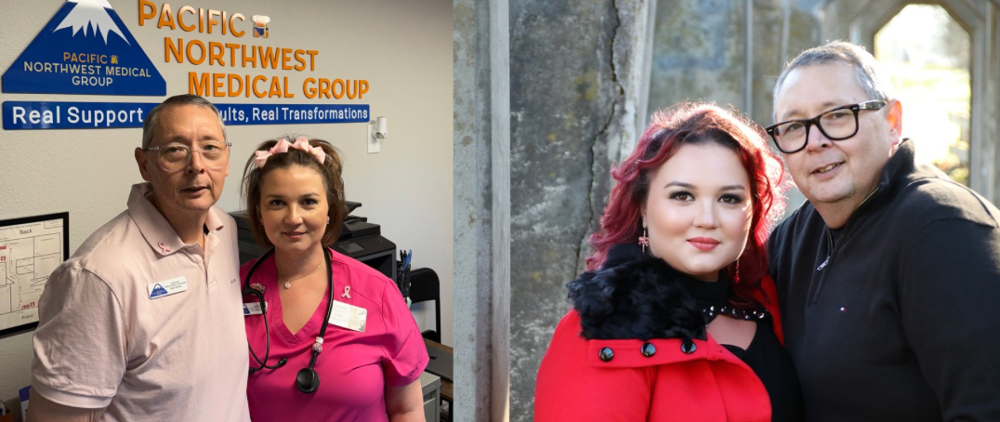
The Welsh’s are patients at the clinic as well.
Pacific Northwest Medical Group Builds Accountability
Every business has a moment when its model becomes more than an idea. For Pacific Northwest Medical Group, that moment has come through patient feedback. The clinic reports consistent 5-star reviews and strong comments from patients who describe meaningful transformations. While each person’s results vary, the shared theme is clear: patients value being seen, measured, encouraged, and supported.
The clinic’s support model also includes a feature the Welsh’s believe is rare in the medical weight loss field: after-hour patient support group meetings. These gatherings are designed for people who may not have support at home, or who may prefer privacy around their treatment. In that setting, patients can share the emotional side of weight loss, including doubt, confidence, setbacks, and renewed hope.
That sense of belonging can be powerful. Weight management often happens in private, but the emotional burden can be heavy. A person may celebrate progress one week and feel discouraged the next. Support groups help normalize that journey. They also remind patients that weight loss is not only a physical process. It can affect identity, relationships, routines, and confidence.
Pacific Northwest Medical Group’s model stands apart because it combines several elements that are often offered separately. Patients receive clinical oversight, medication management when appropriate, technology-enabled tracking, nutrition education, activity monitoring, and in-person care. They also have access to communication tools that make it easier to maintain momentum between visits.
The clinic’s growth across Washington reflects a larger shift in what patients expect from health care. People want convenience, but they also want confidence. They want modern medication options, but they do not want to feel abandoned. They want results, but they also want to understand their bodies. Pacific Northwest Medical Group speaks directly to those desires with a system built around visibility and follow-through.
The Welsh’s leadership gives the clinic a clear editorial story. They are not simply promoting a treatment. They are building an experience around accountability. Their work centers on a practical belief: people are more likely to succeed when they are supported with real data, compassionate staff, and a plan that fits their daily lives.
That belief has helped Pacific Northwest Medical Group become a recognized name in Washington’s medical weight loss space. Its clinics in Puyallup and Federal Way offer a grounded alternative to anonymous online programs. Patients can walk in, ask questions, receive measurements, meet staff, and build a plan with people who understand both the clinical and personal sides of the journey.
For those considering medical weight loss, the clinic’s message is not about quick fixes. It is about a more informed path. It is about replacing guesswork with scans, isolation with support, and confusion with education.
To learn whether Pacific Northwest Medical Group is the right fit, start with the free consultation. Bring your questions, your goals, and your history. The clinic’s team can help you understand available program options, review whether treatment may be appropriate, and show how monthly scans, coaching, and in-person support can help turn effort into a clearer plan forward.
Explore More About Pacific Northwest Medical Group
Connect with Pacific Northwest Medical Group, Facebook, and X.