
Sarah Seonarain Finds Power in a Young Voice
Her debut book turns the quiet struggle of growing up into a story of courage, self-trust, and voice.
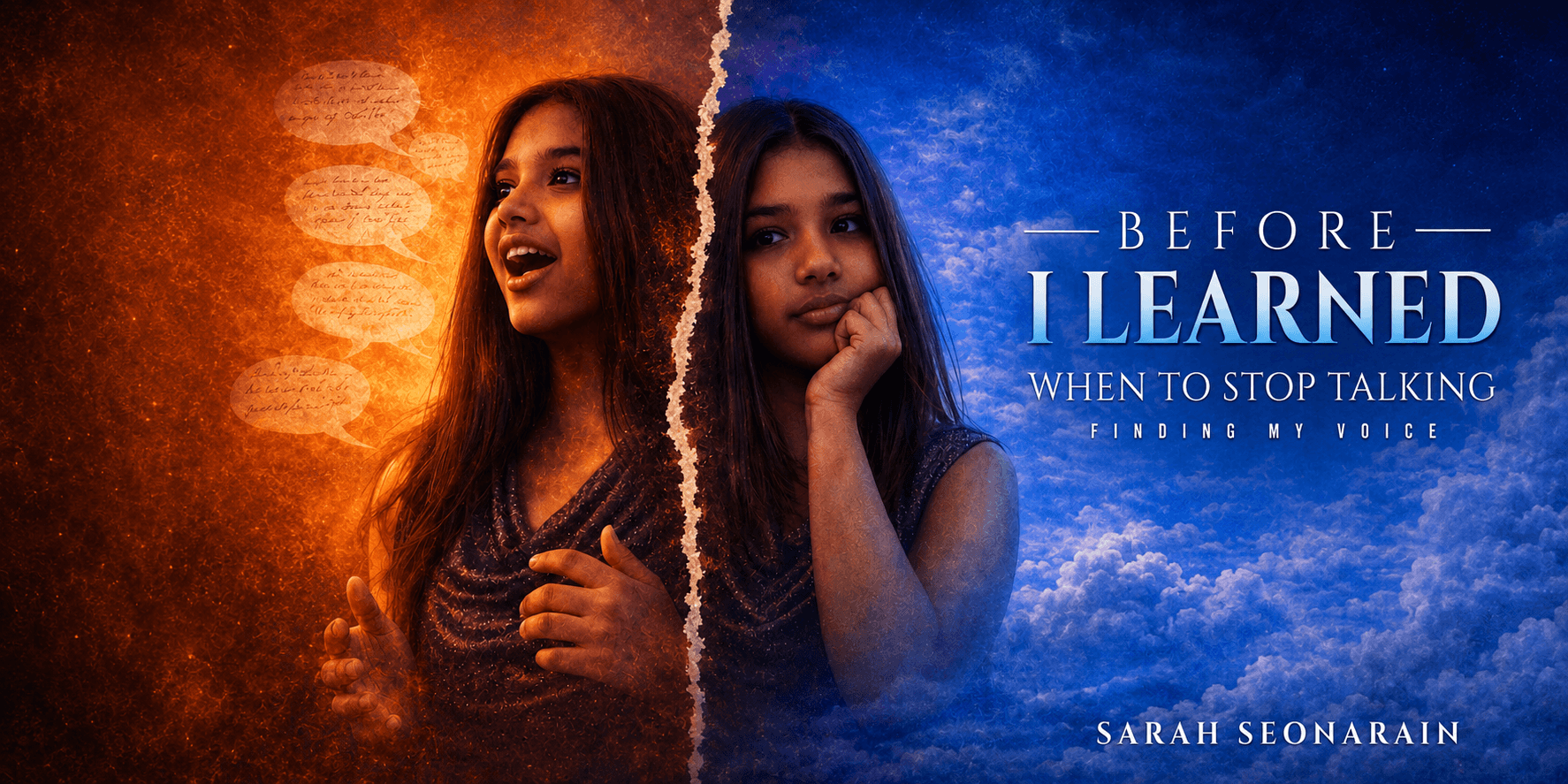
In classrooms, friendships, and family conversations, many young people learn the same lesson too late: speaking is not the same as being heard. That tension sits at the heart of Sarah Seonarain’s debut book, Before I Learned When to Stop Talking: Finding My Voice. Through the story of a thirteen-year-old girl trying to understand when to speak, when to listen, and how to trust herself, Seonarain brings a deeply familiar struggle into focus. Her work is not simply about adolescence. It is about identity, confidence, and the slow, brave process of becoming.
The Origin of Sarah Seonarain’s Mission
Sarah Seonarain writes with a sense of purpose that feels larger than a first publication. Based in Miami, Florida, she is part of a new generation of authors who understand that storytelling can do more than entertain. It can guide, reassure, and reflect readers back to themselves. In Before I Learned When to Stop Talking: Finding My Voice, Seonarain uses fiction to explore a challenge that many children and teenagers face but often cannot name clearly: how to find a true voice in a world full of noise, pressure, and shifting expectations.
That mission gives the book its emotional weight. The story follows a young girl on a personal quest as she navigates class, friendships, uncertainty, and self-expression. The central insight is simple but powerful. Finding your voice is not about being louder or faster. It is about learning discernment. It is about understanding timing, honesty, and self-respect. That message gives Sarah Seonarain’s work a rare kind of relevance, especially for young girls who are still defining who they are and how they want to move through the world.
A Story That Reflects Real Growing Pains
What makes Before I Learned When to Stop Talking: Finding My Voice resonate is its emotional familiarity. Growing up often means living inside unanswered questions. How much should I say? What happens if I say the wrong thing? What if I stay silent too long? Seonarain builds her story around those quiet conflicts. As friendships shift and uncertainty lingers, the young protagonist learns that mistakes are not proof of failure. They are part of learning how to speak with intention.
That perspective matters because it meets readers where they are. Many books about confidence focus only on boldness. Sarah Seonarain takes a more thoughtful path. She shows that confidence can also look like patience, reflection, and the courage to pause. In doing so, she offers something more useful than a slogan. She offers a framework for self-trust.
This is where her voice as an author begins to stand out. She is not presenting confidence as performance. She is presenting it as growth. The result is a story that can connect not only with young readers, but also with parents, teachers, and mentors who want to support them. The emotional journey through silence, courage, mistakes, and truth gives the book a universal quality. Almost everyone can see some part of themselves in that experience.
Why Sarah Seonarain Stands Out
Sarah Seonarain’s differentiator is not only that she is a young writer. It is that she is writing from a place of service. Her goal is to inspire and help others, especially young girls, find their true voice and grow into confident young women. That intention gives her work clarity. Readers can sense that this book was written not to impress from a distance, but to connect up close.
There is also something timely about her perspective. Young people today are surrounded by constant commentary, instant reactions, and public performance. In that environment, the idea of voice can become distorted. It can seem as if being noticed is the same as being authentic. Seonarain’s message challenges that assumption. She reminds readers that a real voice is rooted in self-knowledge. It is shaped by listening as much as speaking. That is a meaningful lesson for any age, but it is especially valuable during adolescence, when identity is still taking form.
Her emergence as a writer also signals a promising creative future. A debut book often introduces a theme. In Seonarain’s case, it introduces a calling. She is beginning a journey that reaches beyond authorship into encouragement, representation, and impact. For readers looking for stories that affirm emotional growth rather than spectacle, Sarah Seonarain is a name worth knowing.
The Breakthrough Inside the Book
The breakthrough in Before I Learned When to Stop Talking: Finding My Voice is not a single dramatic event. It is the gradual realization that truth does not need to shout. That idea gives the story its strength. The young protagonist does not become powerful because she suddenly dominates every room. She becomes powerful because she learns to trust what she thinks, what she feels, and when her words matter most.
That is a lesson with lasting value. It can help a student contribute in class with more confidence. It can help a friend communicate with more honesty. It can help a young person stop measuring worth by volume alone. In this way, Sarah Seonarain’s book offers more than a narrative arc. It offers readers language for an inner shift many of them are already trying to make.
The focus keyphrase, Sarah Seonarain, belongs in that conversation because her name is increasingly tied to a message of thoughtful confidence. She is building a brand around encouragement, but she is doing so through story rather than instruction. That choice makes her work more accessible and more human. Readers do not feel lectured. They feel seen.
Explore More About Sarah Seonarain
To discover Before I Learned When to Stop Talking: Finding My Voice and follow Sarah Seonarain’s growing author journey, visit Sarah Seonarain, read Reviews, connect on Instagram, follow on X, and watch on YouTube.