The Last House on Mulholland
A vacant lot in the Hollywood Sign’s viewing corridor behaves less like real estate and more like a media channel.
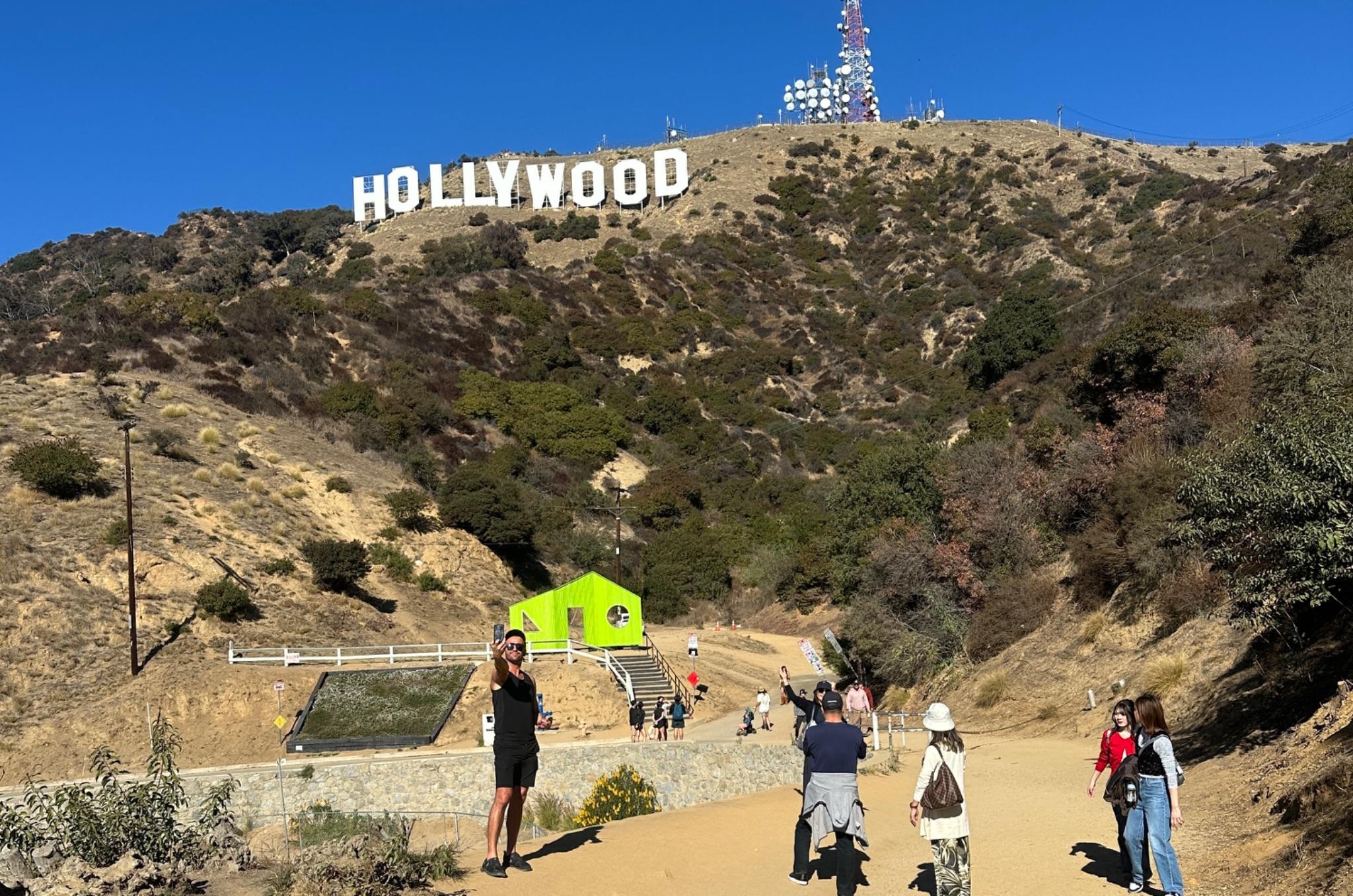
Every year, an estimated 300,000 people climb toward a single bend on Mulholland Highway, raise their phones, and turn toward the Hollywood Sign. They do not come for a billboard or a brand. They come for an icon. Yet in that instant, something remarkable happens. Whatever sits in the foreground of that photograph travels with it, across continents, platforms, and languages, shared by someone who never intended to advertise anything at all.
A Lot That Behaves Like a Media Platform
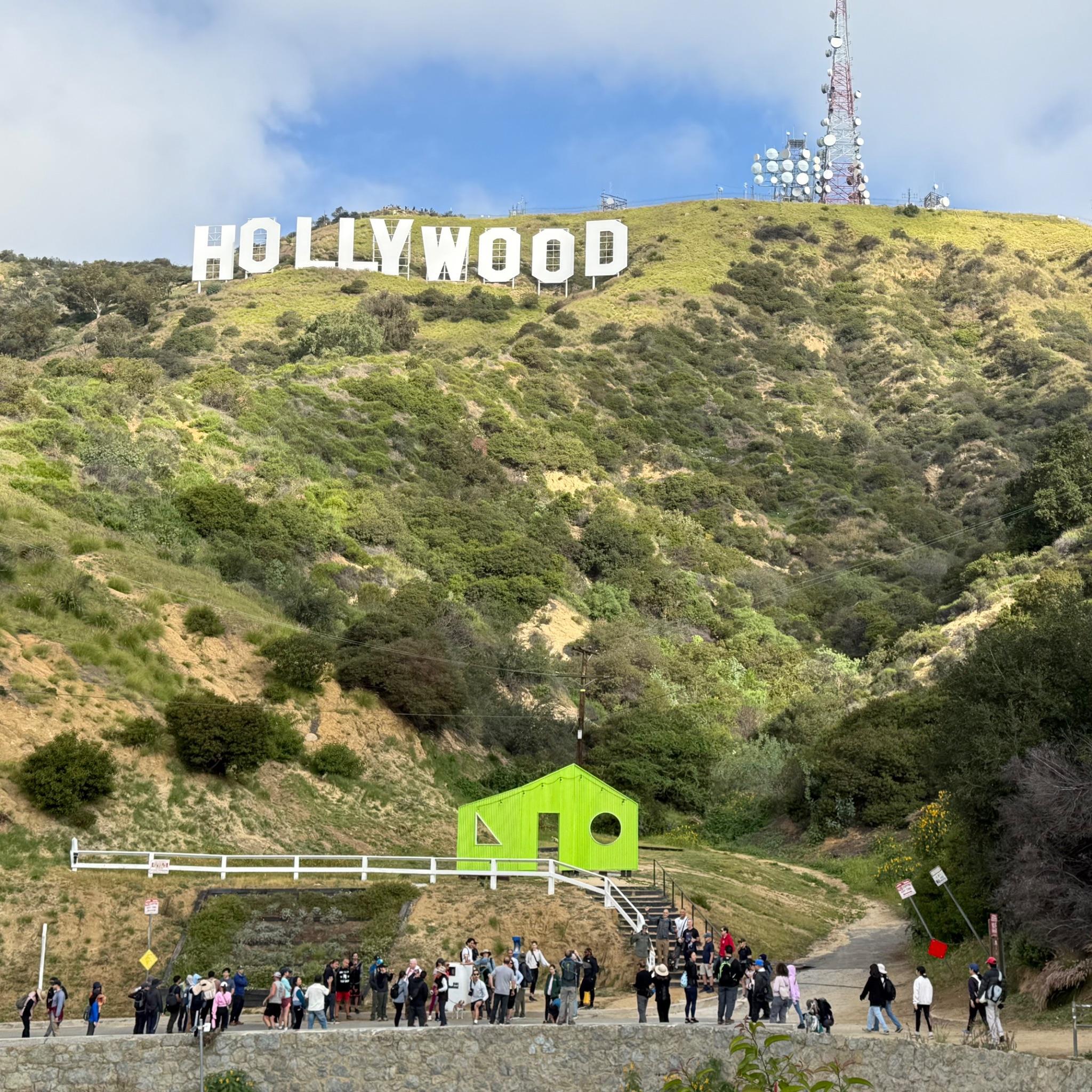
At 6101 Mulholland Highway sits a one-of-one asset: the closest buildable parcel to the Hollywood Sign, positioned squarely within the landmark’s Primary Viewing Corridor. This corridor is the fixed, terrain-governed vantage from which the world photographs one of the most recognizable symbols on Earth - the Hollywood Sign. The geometry is not negotiable. It is governed by the hillside itself.
That fixed geometry is what drives everything. This is not conventional real estate. It is a visibility platform with a preexisting global audience. Steve Alper, the property’s owner, frames it not as a property with a view but as a property that is the view. Indeed, many lots overlook the sign. but this one stands permanently inside the frame countless visitors photograph them selves with the Landmark.
The numbers underline the point. The site’s Google Maps presence has drawn more than 16 million cumulative page views. Hundreds of thousands of visitors arrive each year, and they all perform the same ritual. They capture the sign in a selfie, an Instagram story, a WeChat post, or a travel reel. Because the viewing angle is fixed, anything built on this parcel sits permanently in the foreground of that close-up shot.
Attention That Does Not Expire
Most visibility is rented. A billboard goes dark when the contract ends. An influencer campaign fades the moment the budget stops. A stadium naming deal carries a renewal date. The Last House on Mulholland works differently, and that difference adds to its value.
The attention here is positional, not purchased. It is tied to the land and the visual corridor, not to a media buy. Every visitor who frames the sign also frames whatever stands in front of it. That produces a self-sustaining engine of organic, behavior-driven, user-generated content. It is persistent, worldwide, and unprompted. It is inclusion in a photo people were always going to take and were always going to share.
This is why the project resists easy comparison. It is not a billboard. It is not a stadium to name. It is not an activation with a start and end date. As Arch Out Loud, the organizers of the international design competition for the site, put it, the lot “operates like an interface, continuously amplified by devices, platforms, and algorithmic repetition.”
Exposure Through the Lens of Residential Living
For a brand or cultural institution, a structure here does not chase an audience the way a billboard or a pop-up does. It inherits one. That audience arrives daily, by the hundreds of thousands each year, posting across every platform and in every language.
A high-equity cultural association forms here around Lifestyle, Celebrity, Travel, Aspiration, and Entertainment. It compounds with every visitor who lifts a phone. The impressions arrive on their own, generated by people who feel no obligation and sense no sales pitch. They are simply documenting a place they love. The brand becomes part of a memory, not an interruption of one.
Cultural Gravity, Already Tested
The pull of this site is not theoretical. It has already been tested in the most demanding arena imaginable: the global architecture community.
The Arch Out Loud competition for the lot drew more than 500 designers from around the world. The jury included some of the most respected names in the field, among them Thom Mayne, Tom Kundig, Ron Radziner, and Lawrence Scarpa. The competition earned coverage from ArchDaily, Designboom, and CBS News. All of that attention gathered around a parcel where nothing had yet been built.
The setting alone generated worldwide press, serious design talent, and sustained media interest before a single foundation was poured. That is cultural gravity in its purest form. The place commands attention simply by existing where it does.
What It Becomes
The question is no longer whether the audience exists. It arrives every day, by the thousands, cameras ready. The question is what gets built inside the frame.
The possibilities are deliberately open. The site could become a flagship brand house, a residence of genuine architectural significance, or a permanent media asset that converts every tourist photograph of the Hollywood Sign into distribution. In each case, the structure earns its reach without buying a single impression. The frame already exists. The world does not stop sharing it.
This is why people interested in novel ways to capture and hold attention should study The Last House on Mulholland closely. It represents a rethinking of what visibility can be when it is tied to place rather than payment, to human behavior rather than media spend. It rewards imagination, and it rewards those who recognize rare positioning when they see it.
The property carries an established digital identity under the name The Last House on Mulholland, documented at lasthouse.la, which opens the door to rebranding by whoever takes it on. The lot itself spans 9,415 square feet under Los Angeles RE9 zoning, buildable and ready for a vision equal to its setting.
A Rare Invitation
Opportunities like this do not recur. The corridor is fixed. The audience is already assembled. The only variable left is intent.
For a brand builder, a cultural institution, or an individual drawn to the idea of owning a position inside one of the most photographed views on the planet, this is a moment to look closer. The full story, the architecture competition, and the data behind the audience are at lasthouse.la. The world is already watching. The question is what it will be given to see.