
The Yummiest Rethinks How Great Dishes Win
The Yummiest is bringing focus, fairness, and community judgment to restaurant recognition.

The question often begins at a table. Someone leans in after the first bite of a lobster roll, pizza slice, burger, or taco and says, quietly but with conviction, “This might be the best one around.” Then the debate begins. Another diner has a different answer. A chef across town has a loyal following. A local list says something else entirely. The search for the best version of a dish should feel joyful, yet it often turns uncertain. The Yummiest was created for that exact gap: the space between vague restaurant rankings and the highly specific dishes people actually crave.
Why The Yummiest Focuses On Individual Dishes
Most restaurant recognition starts with a broad question: What is the best restaurant? The Yummiest asks a narrower one, and that distinction matters. A restaurant may be known for its atmosphere, service, wine list, or overall consistency, but diners often search in a more direct way. They want the best lobster roll on the coast, the best burger in the neighborhood, the best pizza in the city, or the best taco worth driving across town to try.
That focus gives The Yummiest its central purpose. Instead of placing entire restaurants into one sweeping category, the platform builds competitions around specific dishes. Each matchup centers on two restaurants that are credible contenders for producing an exceptional version of the same item. Diners then evaluate both dishes through transparent, dish-specific criteria. The result is not a general opinion about a restaurant. It is a focused assessment of a signature dish.
“Great restaurants deserve recognition, but great dishes deserve recognition too,” says Michael McHugh, Director of Operations at The Yummiest. The line captures the platform’s measured philosophy. It does not dismiss traditional awards, editorial lists, or review sites. Rather, it adds a complementary lens, one designed for the kind of food conversations that already happen in communities every day.
That approach also reflects how diners make real decisions. Online ratings can combine many experiences: dine-in service, delivery timing, ambiance, price, hospitality, or a single disappointing visit. Editorial lists often offer useful guidance, but they still depend on limited points of view. The Yummiest gives communities a structured way to answer a more precise question, with the dish itself at the center.
The Yummiest Method For Community Judging
The Yummiest is built around head-to-head comparisons. That format is intentionally simple. Two restaurants. One dish category. Clear criteria. Local diners compare what matters for that item, whether it is balance, texture, flavor, execution, presentation, or how closely the dish delivers on what diners love about it.
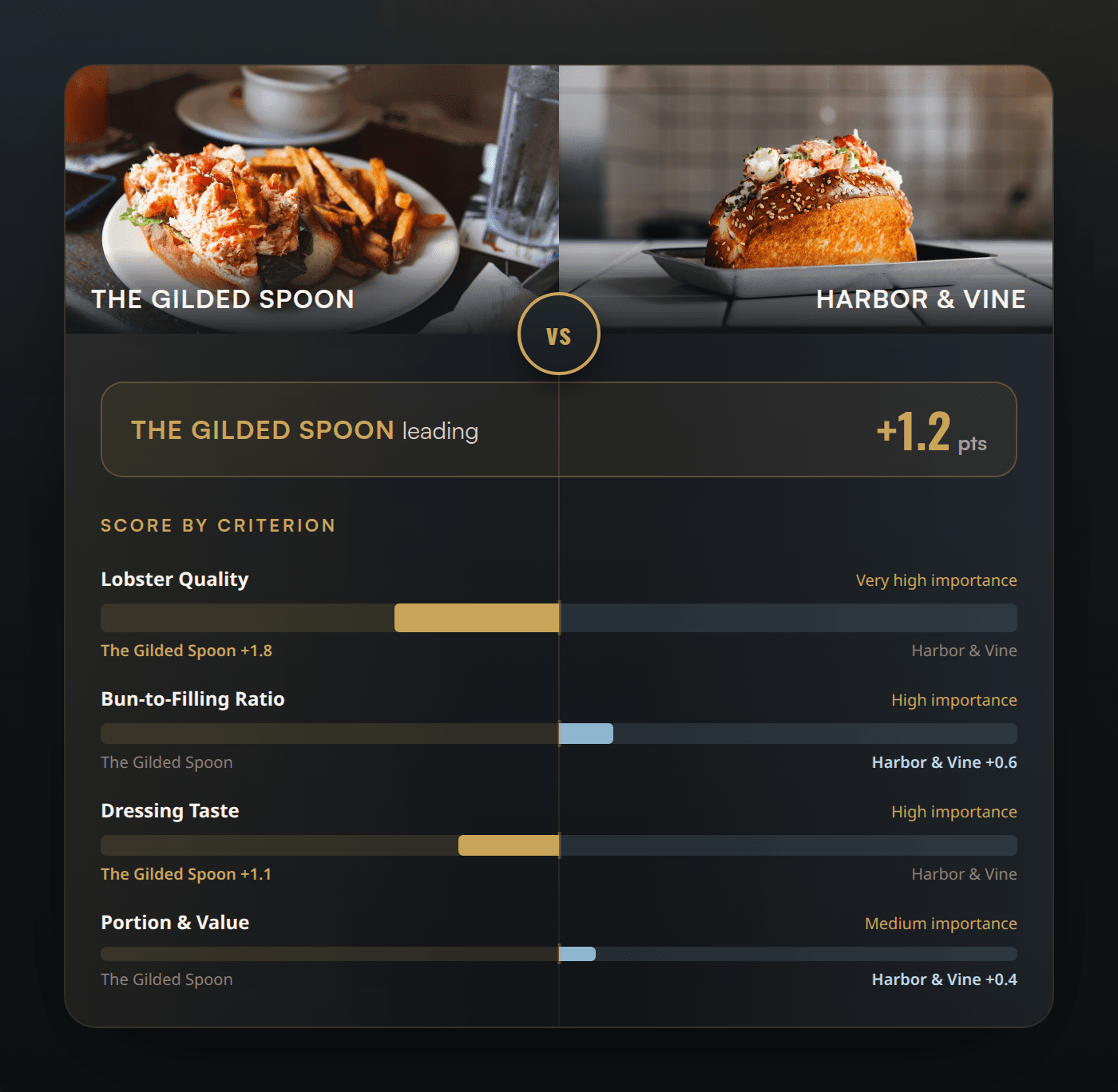
This structure turns casual preference into a more meaningful exercise. A five-star rating can be useful, but it rarely explains how one lobster roll compares with another, or why one burger leaves a stronger impression than a respected rival. The Yummiest asks diners to consider the qualities that define the dish, not merely whether they liked the overall experience.
“When diners compare two outstanding examples of the same dish using transparent criteria, the conversation becomes much more meaningful than a five-star rating,” McHugh says. That word, “conversation,” is important. The Yummiest does not aim to replace the judgment of chefs, critics, or loyal guests. It organizes community insight so the outcome feels grounded, fair, and relevant.
For restaurants, the process offers a different kind of recognition. Being selected for a matchup signals that the restaurant is viewed as a legitimate contender for one of the best versions of that dish in its region. A nomination is not treated as a casual mention. It is intended to reflect credibility, and over time, distinction.
That is also why the methodology matters. A matchup should feel like a genuine comparison, not a popularity contest. The restaurants need to belong in the same conversation. If the dish is tacos, both places should have earned attention for tacos. If the category is burgers, both should have a burger that draws serious local interest. The goal is not simply to generate a winner, but to create a comparison that diners and restaurants alike view as credible. The credibility of the result depends on the quality of the comparison.
What Makes The Yummiest Different Today
The Yummiest stands apart because it treats dish recognition as its own category, not as a footnote to restaurant recognition. This is a subtle shift, but a meaningful one. A chef may spend years refining one signature item. A sandwich may define a neighborhood. A bowl of noodles, a slice of pizza, or a regional seafood dish may carry a story larger than the menu around it.
By focusing on individual dishes, The Yummiest gives those achievements room to be seen. It also gives diners clearer guidance. Someone who wants the best pizza does not necessarily need a ranking of the best full-service restaurants. They need a credible, specific comparison that helps them decide where to go and what to order.
The value for restaurants is equally practical. A thoughtful dish-specific evaluation can reveal how diners perceive one important menu item beside another respected version. Those insights can show which qualities resonate most, where a dish stands out, and how guests describe the differences. For owners, managers, and chefs, that kind of feedback can be more actionable than general praise.
The Yummiest also benefits from a restrained tone. Its visual branding, nomination materials, and judging process are designed to support trust, not spectacle. In an environment where restaurant recognition can sometimes feel crowded or promotional, the platform’s quieter discipline is part of its strength. It is not trying to turn every food debate into a viral contest. It is trying to make recognition feel earned.
“We are not trying to answer which restaurant is the best,” McHugh says. “We are asking a much more specific, and often more interesting, question: Who makes the best version of this dish?”
That distinction makes the platform especially relevant for restaurant professionals who encounter The Yummiest after receiving a nomination. The nomination signals that the restaurant’s dish has entered a serious comparison with another respected local contender. It invites participation in a process built around fairness, visibility, and community input.
Explore The Yummiest
Visit The Yummiest, or follow them on Instagram, to explore current matchups, nominations, and community judging.