
Washington’s China Reset, a Supreme Court Voting Ruling and New Economic Pressure
The United States closed the week with major developments in foreign policy, election law, the economy, health care and technology. A Trump-Xi summit, a consequential Supreme Court voting decision and renewed economic pressures led the national news.
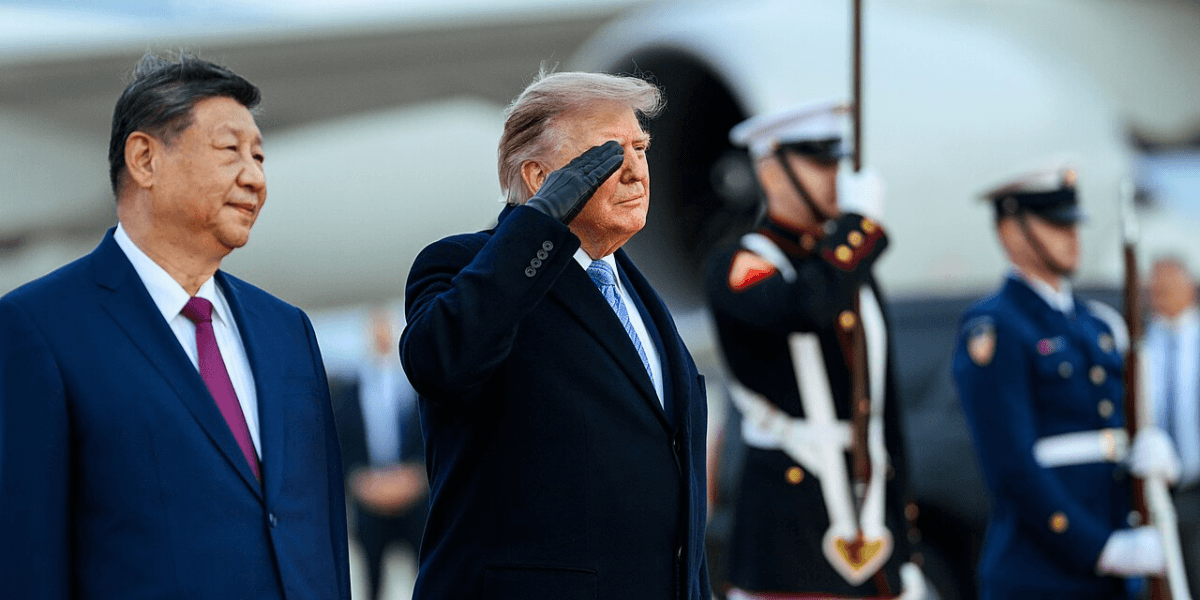
Trump-Xi Summit Ends With Limited Agreements
Trump and Xi concluded a three-day state visit Friday after discussions covering trade, artificial intelligence, Taiwan, Iran and other areas of strategic competition. Despite the elaborate diplomatic reception, the meetings produced no broad settlement of the countries’ major disputes. One concrete outcome was an agreement to extend an existing trade truce by two months.
The White House also highlighted Chinese actions involving fentanyl precursor chemicals, including new export controls and the scheduling of certain substances, as areas of cooperation. Meanwhile, U.S. Ambassador to China David Perdue said Trump told Xi that Chinese assistance to Iran would be unacceptable and that Beijing offered assurances concerning its activities. The summit underscored an effort by both governments to keep relations stable even as competition over technology, trade and security remains intense.
-10.png)
Supreme Court Revives Expanded Voter Verification System
The Supreme Court on Friday allowed the Trump administration to resume using an expanded federal immigration database to help states verify the citizenship status of registered voters. The justices blocked a lower-court order that had prevented officials from using Social Security numbers and other federal information for large-scale checks through the Systematic Alien Verification for Entitlements, or SAVE, system. The court’s three liberal justices dissented.
The decision comes weeks before the November 3 midterm elections and amid a broader administration effort to obtain and analyze state voter records. The administration argues the system helps prevent ineligible noncitizens from voting. Voting-rights and privacy groups contend the database can produce erroneous matches and potentially affect eligible citizens. Reuters reported separately that state audits and independent studies have found voter fraud to be rare, while the administration maintains tighter verification is necessary to protect election integrity.
-9.png)
Bond Yields and Oil Keep Pressure on the Economic Outlook
Financial markets remained focused on rising borrowing costs and energy prices. The benchmark 10-year Treasury yield had climbed above 5.1% during the week, reaching levels not seen since 2007, while longer-term yields also moved sharply higher. Higher oil prices associated with Middle East tensions have added another potential source of inflation pressure.
Cleveland Federal Reserve President Beth Hammack said Friday that the rise in bond yields appeared to reflect higher real interest rates and a solid economic outlook rather than a significant deterioration in inflation expectations. Separately, Reuters reported that the Federal Reserve is considering raising the asset thresholds at which banks face stricter regulatory requirements, a change that could give some regional and midsize lenders more room to expand or merge before triggering additional oversight.
-7.png)
Millions Navigate a More Expensive Health-Insurance Market
The consequences of higher Affordable Care Act insurance costs became increasingly visible in 2026. Reuters reported Friday that roughly 3 million Americans had left ACA marketplace coverage, with 19.2 million people enrolled as of February. The expiration of enhanced pandemic-era premium tax credits at the beginning of the year contributed to increases in premiums and deductibles for some consumers.
Some people who dropped ACA coverage have shifted toward short-term insurance or health-sharing arrangements, while others have gone uninsured. Reuters reported that consumers interviewed described delaying screenings and other medical care because of cost. The shift also has implications for hospitals, which can face greater uncompensated-care expenses when more patients lack comprehensive insurance.
-7.png)
TikTok Reaches Landmark Teen-Safety Settlement With Alabama
Alabama announced Friday that it had settled its lawsuit against TikTok and parent company ByteDance over allegations that the platform endangered children and misled consumers about safety. Under the agreement, TikTok will introduce measures for teenage users in Alabama including a two-hour daily usage limit, pauses after 15 minutes of use and stricter age-verification requirements.
TikTok will pay Alabama at least $100 million, with the amount potentially increasing if other state attorneys general join comparable agreements. Although the settlement formally applies to Alabama, its significance could extend further because implementing major platform controls differently in individual states can be difficult. The agreement comes amid broader state litigation scrutinizing how large social-media companies design products used by minors.
Looking Ahead
Attention now shifts toward the approaching November 3 midterm elections, particularly as courts continue considering disputes over voter verification and federal involvement in election administration. Economically, upcoming employment and inflation reports will provide new evidence about the Federal Reserve’s interest-rate path as Treasury yields and energy costs remain elevated. Washington will also be watching whether the Trump-Xi meetings lead to further trade or diplomatic negotiations, while the Alabama-TikTok agreement could provide a framework for additional state settlements over teenage social-media use.