While Everyone Watched Technology, Customs Changed
The new PSCG, the SAFE Framework and the changing economics of customs knowledge
Discussions about the future of international trade have become almost inseparable from artificial intelligence, automation, interoperability and digital transformation, yet while attention has concentrated on the technologies changing Customs, another shift has been taking place with far less visibility: the international customs system is becoming more explicit about the quality of knowledge it expects private-sector professionals to contribute.
Border modernisation is no longer simply a question of better software or faster processing. Customs administrations operate in environments where public authority remains firmly with the State, while much of the information on which decisions depend is generated by importers, exporters, customs brokers, freight forwarders, carriers and other supply-chain participants. What is changing, therefore, is not only how Customs works, but also which forms of knowledge become valuable within it.
A quiet change in the way the private sector is heard
The recent revision of the World Customs Organization’s Private Sector Consultative Group, the PSCG, provides a useful place to observe this development. Its revised Terms of Reference make the expected quality of private-sector participation more explicit by emphasising objective and informed input, strategic contribution, targeted research, studies, proposals and forward-looking priorities.
The significance lies less in the administrative revision itself than in the question it raises: why has representation begun to require research?
Practical experience has not become less important. Its institutional value increases when it can be organised and transformed into evidence, diagnosis and proposals capable of informing decisions beyond the individual transaction. For professional and business organisations, being present still matters, but the quality of what is brought to the table increasingly matters as well.
Customs was changing before artificial intelligence became the headline
Artificial intelligence offers an attractive explanation for almost every contemporary transformation in work, although Customs had been changing long before generative AI entered mainstream business discussion. Advance cargo information, electronic declarations, integrated systems, risk management, interoperability and cross-border information exchange had already altered the operating environment.
AI may accelerate that movement, but it did not create the dependence on information, data quality and co-ordination. The more useful question is not whether technology replaces professionals, but whether it changes the relative value of the activities they perform. Some tasks can become faster and easier to automate without making the professional unnecessary; what may change instead is the economic weight of the capabilities that make up the profession.

The SAFE Framework reveals a customs ecosystem
The WCO SAFE Framework of Standards is built around three relationships: Customs-to-Customs, Customs-to-Business and Customs-to-Other Government Agencies. Those pillars do not diminish the authority of Customs administrations or place public and private participants on the same legal plane; Customs remains a public function exercised by the State.
Yet border management depends on interaction among actors performing different roles throughout the supply chain. Importers, exporters, carriers, terminals, customs brokers and other private participants generate commercial, logistical and regulatory information, while Customs administrations receive, analyse and act upon much of that material.
The participants are not equivalent, but they are functionally interdependent. Customs can therefore be understood as an ecosystem: relationships through which public authorities and private actors produce the information, movement, security, conformity and facilitation required for international trade, without transferring the sovereign authority of the State. When public decision-making increasingly depends on information created outside government, the value of producing reliable information changes as well.
For customs brokers, the issue is not disappearance but value
The customs broker offers an especially useful example because the profession has never consisted solely of submitting declarations. Its value may include regulatory interpretation, documentary analysis, operational experience, identification of inconsistencies, management of requirements, preparation of evidence, risk awareness and professional judgement.
Automation can affect repetitive data transmission and routine documentary procedures without forcing every other element of professional value in the same direction. As systems become better at processing information, ensuring that the information is accurate before it enters the system becomes more consequential. Poor data do not improve because they move faster; automation may simply shorten the distance between an error and its regulatory consequence.
The professional who once created value partly by navigating a difficult process may increasingly create value by verifying information, relating it to the underlying transaction and anticipating how it may be interpreted within a risk-management environment. The profession need not disappear for its economic structure to change.
Schumpeter and the changing value of customs brokerage
Joseph Schumpeter’s concept of creative destruction is often reduced to the idea that innovation destroys old activities, but its more useful insight is that innovation reorganises the combinations through which economic value is created. In customs brokerage, technology may reduce the scarcity attached to routine tasks while increasing the relative importance of regulatory interpretation, data validation, traceability, commercial judgement and advisory capability.
The central question is therefore not whether automation will “replace” customs brokers, but which parts of their work will remain scarce enough to command value and which will increasingly be absorbed by systems. As Customs becomes more data-driven, professional value may shift away from merely transmitting information and towards ensuring its accuracy, coherence and regulatory defensibility.
Representation must also adapt to the economics of knowledge
The same logic applies to professional organisations. Advocacy, regulatory dialogue and member support remain essential, but when international institutions increasingly expect evidence, research, technical proposals and forward-looking analysis, representation also requires a broader capacity to organise knowledge.
This does not mean every association needs a large in-house research team. A body whose members are major multinational companies may have access to regulatory, technological and analytical resources already maintained within those companies, while an organisation representing individual professionals may depend on a more dispersed financial base.
The relevant question is how each organisation gains access to the knowledge it needs. Universities, research centres, technical specialists, international networks and collaborative projects can provide forms of knowledge production that would be difficult or uneconomic to maintain entirely in-house. For smaller professional bodies, collaboration may offer economies of scale in knowledge production that financial scale alone cannot provide.
Representational lag
This leads to what I call representational lag: the interval that may arise between a material change in a profession, activity or economic interest and the point at which that change is recognised and incorporated into the agenda of the organisation representing it.
The concept is not intended as a criticism of representative institutions. Technological uncertainty, incomplete evidence, competing priorities, limited resources and the difficulty of distinguishing structural change from temporary noise can all slow institutional recognition.
A regulatory problem usually arrives with a deadline, an identifiable authority and an immediate consequence, while structural change may first appear as something much smaller: a new data field, a software integration, a reduction in the time required for a task or a gradual change in what clients are willing to pay for. By the time its broader significance becomes clear, part of the change may already have taken place.
Rather than asking whether representative bodies are “modern” or “outdated”, the more useful question is whether they can identify meaningful change early enough to decide which developments justify research, training, co-operation or collective action.
Looking beyond technology
The future of Customs will involve more automation, artificial intelligence, interoperability and advanced data analysis, but technology is only part of the story. The deeper change concerns the relationships among authority, information, expertise and decision-making within international trade.
As Customs becomes more data-intensive, operational experience becomes more useful when it can be converted into knowledge capable of improving data, identifying risks, supporting regulatory interpretation and informing policy. The same applies to representation: the ability to speak for a profession remains important, but the ability to understand how that profession is changing may become equally important.
The PSCG revision may be read as a small but revealing signal that the international customs community increasingly expects the private sector to contribute more than experience of what has already happened; it increasingly expects knowledge capable of helping to make sense of what is still happening.
Technology will continue to change Customs, but the ability to transform experience into knowledge may determine who continues to create value inside it.
About the author
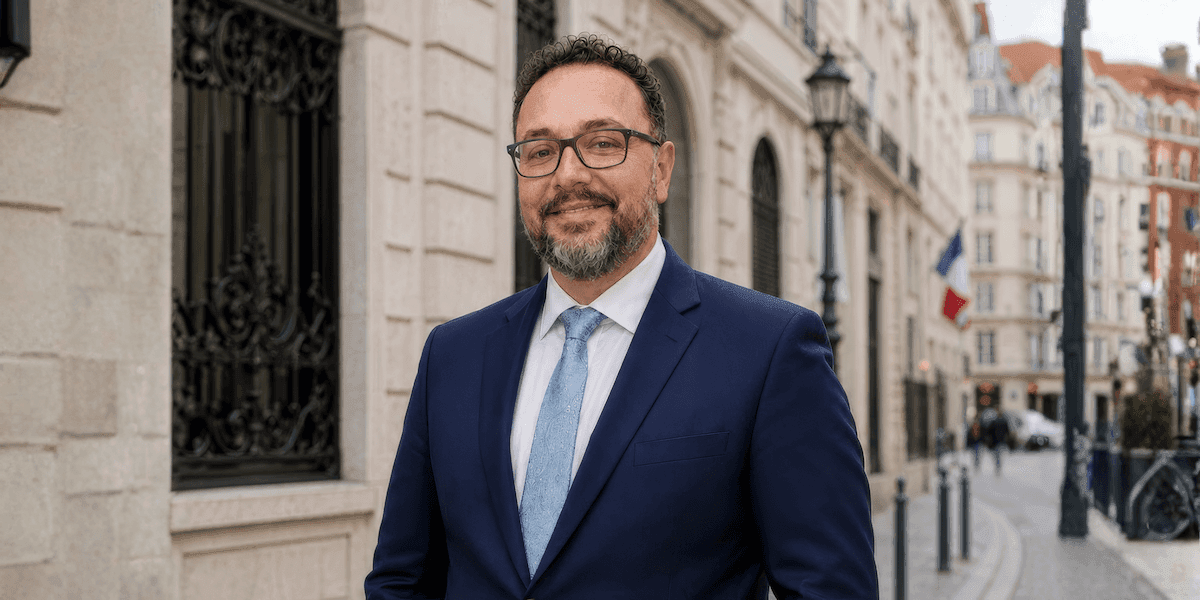
Marcelo de Castro Ferreira is a Brazilian economist, entrepreneur and customs broker, CEO of EBIMEX Comércio Exterior, Deputy Secretary Director and responsible for Institutional Relations at SINDASP, former Institutional Marketing Adviser to ASAPRA, and an international columnist on customs, international trade and trade facilitation. The views and interpretations expressed in this article are his own and do not necessarily represent the institutional positions of the organisations with which he is or has been professionally associated.
For professional discussion or enquiries related to the themes explored in this article, Marcelo de Castro Ferreira can be contacted via LinkedIn.