
Xi Arrives in Washington as Iran Tensions and Economic Pressures Test U.S. Policy
A high-profile U.S.-China summit moved to the center of Washington’s attention as Chinese President Xi Jinping began a state visit amid disputes over trade, technology and global security. At the same time, tensions with Iran remained elevated, a White House press-access fight reached federal court, and rising oil prices and Treasury yields renewed concerns about inflation.
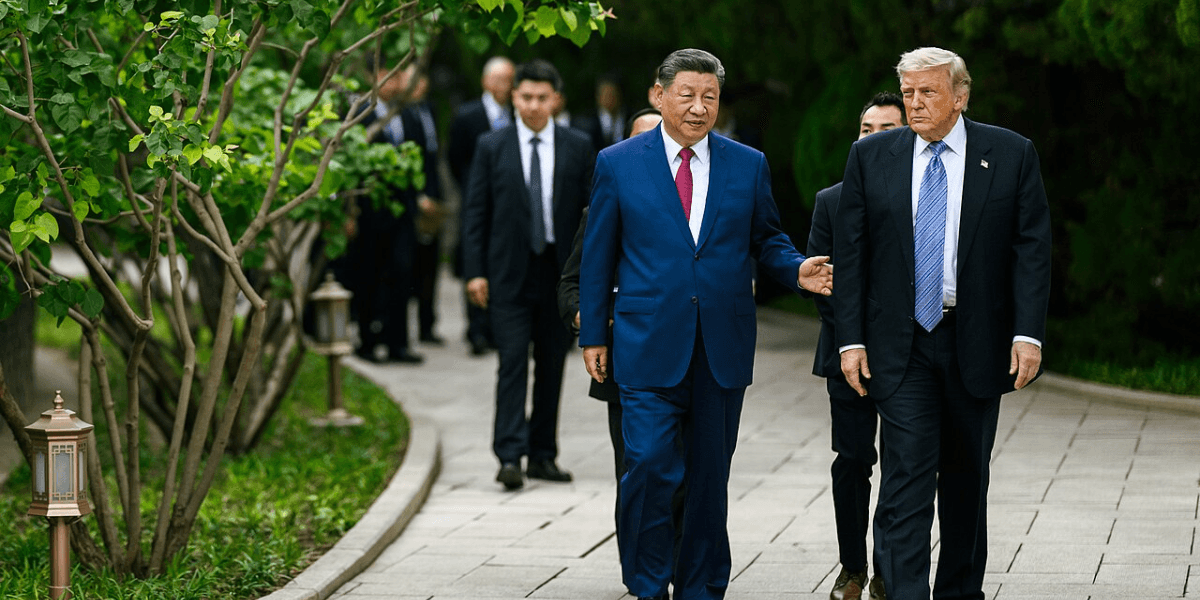
Trump Welcomes Xi as U.S.-China Trade Truce Is Extended
President Donald Trump personally welcomed Xi at Joint Base Andrews, an unusual planeside greeting that opened the Chinese leader’s first state visit to Washington in more than a decade. Xi and his wife, Peng Liyuan, were greeted by Trump and first lady Melania Trump before an arrival ceremony featuring an honor guard and red carpet.
The diplomatic pageantry comes despite persistent disagreements between the world’s two largest economies. Trade, artificial intelligence, advanced semiconductor technology, rare-earth minerals, Taiwan and China’s economic relationship with Iran are among the issues surrounding the visit. Treasury Secretary Scott Bessent said the two countries would extend their current trade truce until January 10, preventing its scheduled expiration in November.
Trump and Xi are expected to hold substantive talks Thursday before a White House state dinner. Their discussions will be closely watched for signs of progress on narrower trade issues as well as efforts to keep broader strategic competition from escalating.
-8.png)
Iran’s President Rejects U.S. Pressure at the United Nations
Iranian President Masoud Pezeshkian delivered a wartime address to the U.N. General Assembly, pushing back against the Trump administration a day after U.S. and Iranian officials held roughly three hours of discussions. Pezeshkian said Iran would resist U.S. pressure and portrayed his country as defending itself against American and Israeli military action.
The speech highlighted how far apart Washington and Tehran remain despite the renewed contact. Iran is seeking measures including an end to the blockade of its ports and access to frozen assets, while the Trump administration continues pressing Tehran for an agreement to end the nearly seven-month conflict. Secretary of State Marco Rubio described the latest discussions as positive but cautioned against characterizing them as a major breakthrough.
The conflict continues to have consequences beyond the battlefield. Commercial shipping through the Strait of Hormuz remains below prewar levels, keeping energy markets sensitive to diplomatic and military developments.
-7.png)
White House Press Ban Reaches Federal Court
A federal judge heard arguments over Trump’s decision to bar CNN, MS NOW and Politico from White House grounds, bringing the escalating confrontation between the administration and the three news organizations into court. The outlets argue that the ban violates constitutional protections and was imposed because Trump objected to their reporting.
During Wednesday’s hearing, U.S. District Judge Timothy Kelly questioned whether the White House had provided reporters with adequate due process before revoking their access. The administration has defended the restrictions partly on national-security grounds, an argument the news organizations dispute.
The case could have implications for how presidential administrations regulate access to the White House, particularly when credential decisions involve news organizations whose coverage officials strongly criticize.
-5.png)
Bond Yields Surge as Inflation Concerns Hit Wall Street
Financial markets retreated as stronger-than-expected U.S. business activity, rising oil prices and higher Treasury yields revived concerns about inflation. The S&P 500 fell 0.8% to 7,706.03, while the Dow Jones Industrial Average dropped 352 points, or 0.7%. The Nasdaq composite declined 1.1%.
The 10-year Treasury yield climbed to roughly 5.1%, reaching levels not seen since 2007. Brent crude also rose sharply after its recent decline, with renewed uncertainty surrounding Iran contributing to volatility in energy markets.
Higher bond yields can translate into more expensive mortgages, business loans and other forms of borrowing. The market reaction underscores the challenge facing the Federal Reserve after its recent interest-rate increase: economic activity remains relatively strong even as policymakers attempt to contain inflation.
-1.png)
Rural Voters Report Growing Cost-of-Living Pressure
A new Associated Press-KFF survey highlighted continuing economic frustration in rural America ahead of the November midterm elections. About half of rural registered voters surveyed said the U.S. economy was worse than when Trump returned to office, while groceries, gasoline and healthcare ranked among their most significant financial concerns.
The poll surveyed more than 2,000 rural registered voters over two weeks beginning in mid-August. About three-quarters rated the cost of living in their communities as either “fair” or “poor,” compared with roughly half responding similarly to a related question in a 2017 KFF-Washington Post survey.
The results also showed a more mixed political picture. Roughly half of rural voters approved of Trump’s overall job performance, while about four in 10 approved of his handling of the economy. Because rural communities make up an important part of the electorate in several states with competitive congressional races, economic conditions there are receiving increased attention as campaigning intensifies.
Looking Ahead
Trump and Xi’s formal White House talks will put trade, artificial intelligence, Taiwan and broader U.S.-China competition at the center of attention. The extension of the trade truce reduces one immediate source of uncertainty, but significant economic and security disagreements remain unresolved.
Developments involving Iran will also remain closely watched, particularly for signs that this week’s diplomatic contact can lead to further negotiations. Meanwhile, investors will be monitoring oil prices and Treasury yields, while the federal court handling the White House press dispute weighs whether restrictions on the three news organizations can remain in place.