Beijing Optics, Inflation Pressures, and Court Battles Shape America’s Week
The United States closed out the week confronting a mix of economic uncertainty, international tension, and escalating legal and political battles at home. President Donald Trump’s closely watched trip to China dominated headlines, even as inflation concerns and continued scrutiny of executive authority intensified domestically. Meanwhile, the Supreme Court’s recent interventions in trade policy and ongoing major cases underscored the judiciary’s growing role in shaping the administration’s agenda.

By
May 16, 2026
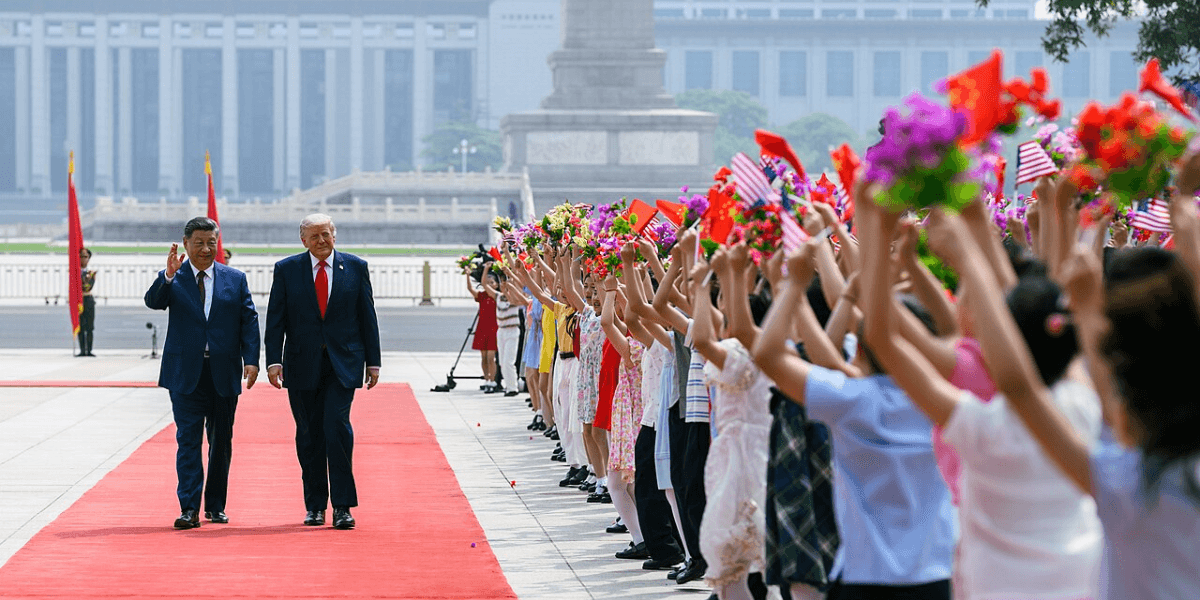
Trump’s China Summit Ends Without Major Breakthroughs
President Trump returned from Beijing following a high-profile summit with Chinese President Xi Jinping that emphasized symbolism and diplomacy more than concrete policy outcomes. The two leaders held extended meetings and public appearances designed to project stability in U.S.-China relations, but key disputes over Taiwan, trade, and technology remained unresolved.
The administration promoted the visit as a success, pointing to discussions involving potential Chinese purchases of American aircraft and agricultural products. However, few binding agreements were announced, and analysts noted that China appeared to maintain the stronger negotiating position throughout the summit. Xi reportedly reiterated warnings over Taiwan and pushed for “strategic stability,” while Trump avoided major public confrontations on sensitive issues.
The summit also reflected broader geopolitical pressures facing the White House, including ongoing instability tied to the recent Iran conflict and growing domestic concern over the economy. Critics argued that the administration returned with limited tangible gains despite extensive diplomatic fanfare.

Photo Credit: engin akyurt/Unsplash
Inflation Continues to Weigh on American Consumers
Economic concerns remained central to the national conversation as inflation continued rising through the spring. Recent reports showed annual inflation reaching approximately 3.8%, driven largely by higher energy costs, lingering tariff-related disruptions, and instability connected to Middle East tensions.
The White House has attempted to reassure voters by emphasizing long-term growth projections and investment tied to artificial intelligence and manufacturing expansion. Trump economic adviser Kevin Hassett recently predicted annual GDP growth could exceed 6% in 2026, far above most independent forecasts.
Still, rising consumer costs continue to create political pressure ahead of the midterm election season. Higher fuel prices, increased borrowing costs, and concerns about supply chains have fueled criticism from Democrats and some business groups, who argue that the administration has not presented a clear strategy for reducing inflation in the near term. Public polling has also reflected growing voter anxiety over affordability and economic stability.
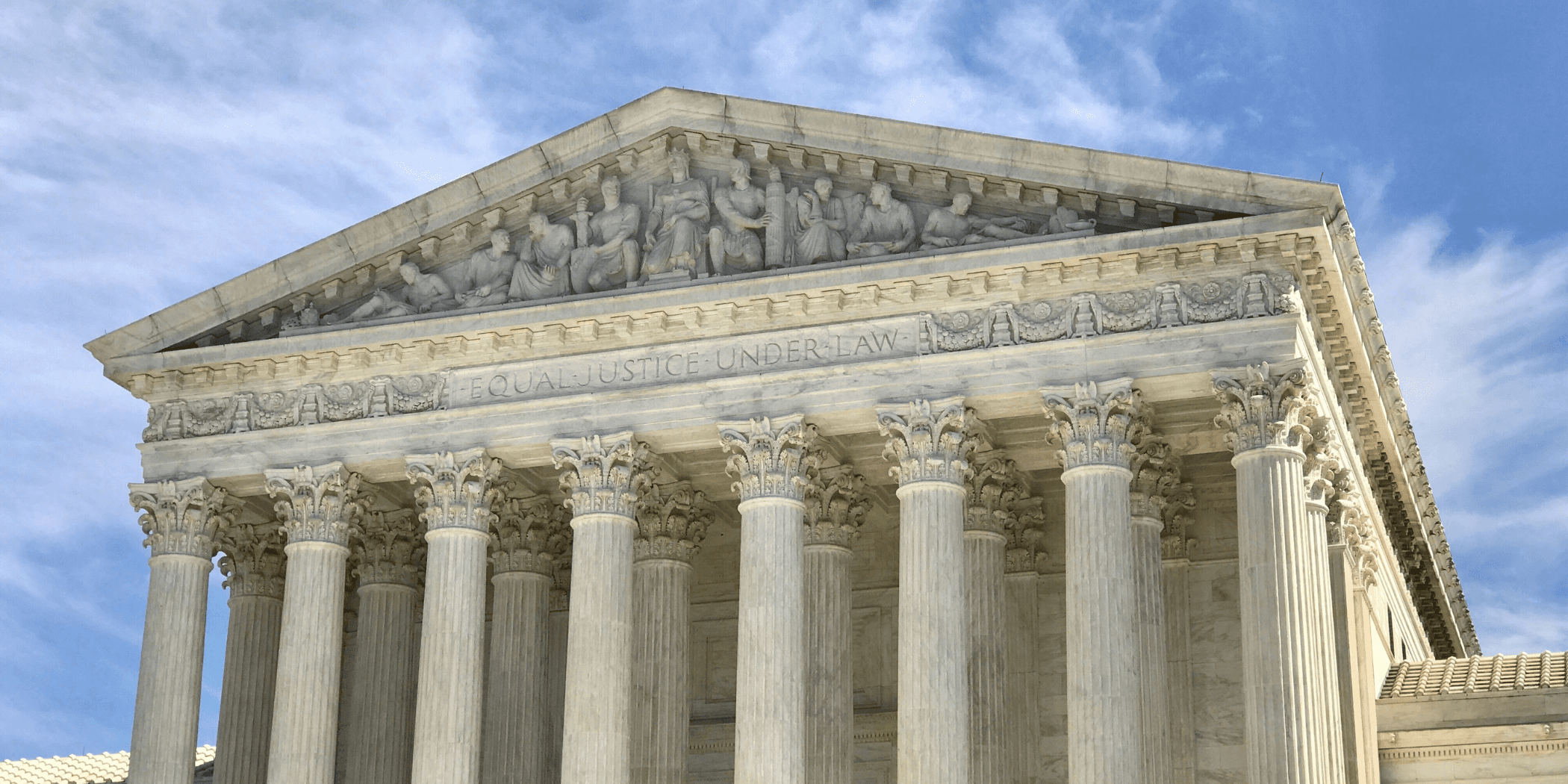
The Supreme Court of the United States
Photo Credit: Quercusvirginiana/Wikimedia
Supreme Court Continues Checking Presidential Trade Powers
One of the year’s most consequential legal developments continued reverberating through Washington after the Supreme Court ruled earlier this year that President Trump lacked authority to impose sweeping tariffs under emergency economic powers laws. The decision significantly narrowed the administration’s ability to use unilateral tariffs as a central trade tool.
The ruling, issued in Learning Resources, Inc. v. Trump, held that the International Emergency Economic Powers Act does not grant presidents broad tariff authority without explicit congressional authorization. Chief Justice John Roberts joined a cross-ideological majority in concluding that taxing authority fundamentally belongs to Congress.
Legal scholars and political analysts say the decision may mark a broader shift in the Supreme Court’s approach toward executive power. While the Court has supported portions of Trump’s administrative restructuring efforts, several recent rulings have signaled increased skepticism toward expansive presidential authority. Additional major decisions expected later this term — including cases involving birthright citizenship and federal agency independence — could further redefine the balance between Congress, the presidency, and the courts.

Nimitz-class aircraft carrier USS Abraham Lincoln (CVN 72), Arleigh Burke-class guided-missile destroyers USS Michael Murphy (DDG 112) and USS Frank E. Petersen Jr. (DDG 121), Henry J. Kaiser-class fleet replenishment oiler USNS Henry J. Kaiser (T-AO-187), Lewis and Clark-class dry cargo ship USNS Carl Brashear (T-AKE 7) and U.S. Coast Guard Sentinel-class fast-response cutters USCG Robert Goldman (WPC-1142) and USCGC Clarence Sutphin. Jr. (WPC-1147) sail in formation in the Arabian Sea, Feb. 6, 2026. The Abraham Lincoln Carrier Strike Group was deployed to the U.S. 5th Fleet area of operations in the Middle East.
Photo Credit: U.S. Navy photo by Mass Communication Specialist 1st Class Jesse Monford/Wikimedia
Iran Conflict Aftermath Continues to Influence U.S. Policy
Although President Trump announced earlier this month that the Iran conflict had effectively “terminated,” the political and economic consequences of the confrontation continue to shape national policy discussions. The administration’s military operations in and around the Strait of Hormuz earlier this spring disrupted global energy markets and contributed to renewed inflationary pressure in the United States.
The White House has continued pursuing negotiations aimed at stabilizing the region while maintaining military readiness. Shipping security operations launched during the conflict remain a major focus for defense officials and international partners concerned about global oil transport routes.
At the same time, lawmakers from both parties have renewed debates over presidential war powers and congressional oversight. Some critics argue the administration moved too aggressively during the conflict without sufficient authorization from Congress, while supporters contend the military actions prevented broader regional escalation.
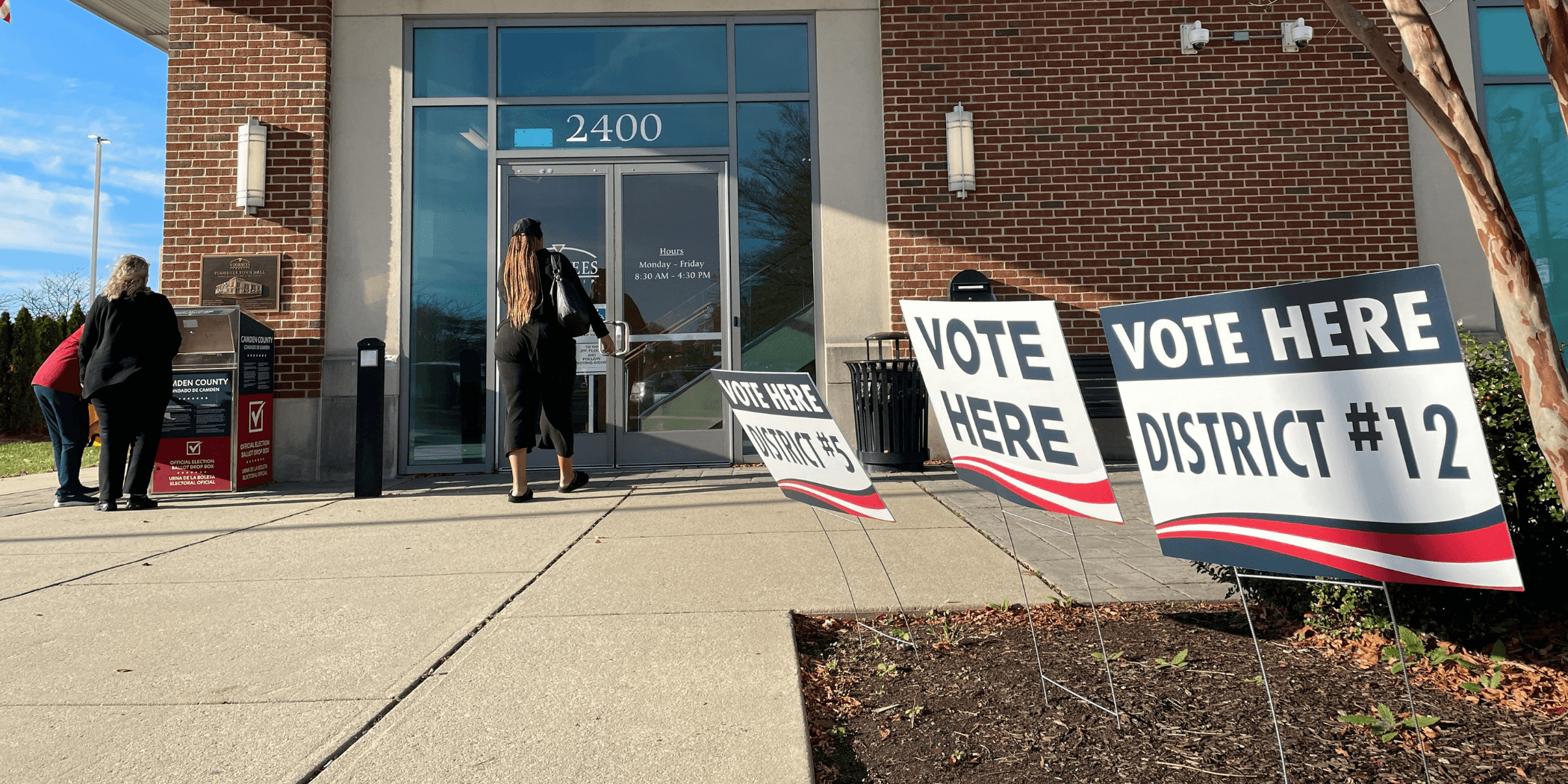
Woman enters a polling location inside a mall to cast a ballot in the November 8, 2022 midterm election while two other women examine a ballot drop box.
Photo Credit: Ernie Journeys/Unsplash
Political Tensions Intensify Ahead of Midterm Season
Political divisions deepened this week as battles over redistricting, immigration, and executive authority intensified across several states and in Congress. In South Carolina, a Republican-backed redistricting proposal supported by Trump failed in the state senate after several Republicans joined Democrats in opposition.
Meanwhile, legal and political disputes involving immigration enforcement and federal authority continued expanding nationwide. The administration also faces growing scrutiny over agency restructuring, judicial appointments, and investigations tied to both election administration and federal oversight.
The broader political climate remains shaped by the approaching 2026 midterm elections, with both parties increasingly framing debates around inflation, executive power, and national security. Republicans continue emphasizing economic growth and border security, while Democrats focus heavily on cost-of-living concerns and constitutional limits on presidential authority.
Looking Ahead
Attention in the coming weeks will center on several major Supreme Court rulings expected before the Court’s summer recess, continued economic data releases, and whether the administration can convert the China summit into measurable trade outcomes. Lawmakers are also expected to intensify debates over inflation, federal authority, and foreign policy as the political environment ahead of the midterms becomes increasingly contentious.