
Fault Lines and Flashpoints: America’s Institutions Face Another Defining Week
The United States entered the week confronting a series of major political, legal, and social developments that highlighted deepening tensions within the nation’s institutions. From Supreme Court battles over voting rights and healthcare policy to intensifying redistricting disputes and renewed debates over higher education and executive influence, the day’s headlines reflected a country navigating sharp political polarization and growing public scrutiny of government authority ahead of the 2026 election cycle.
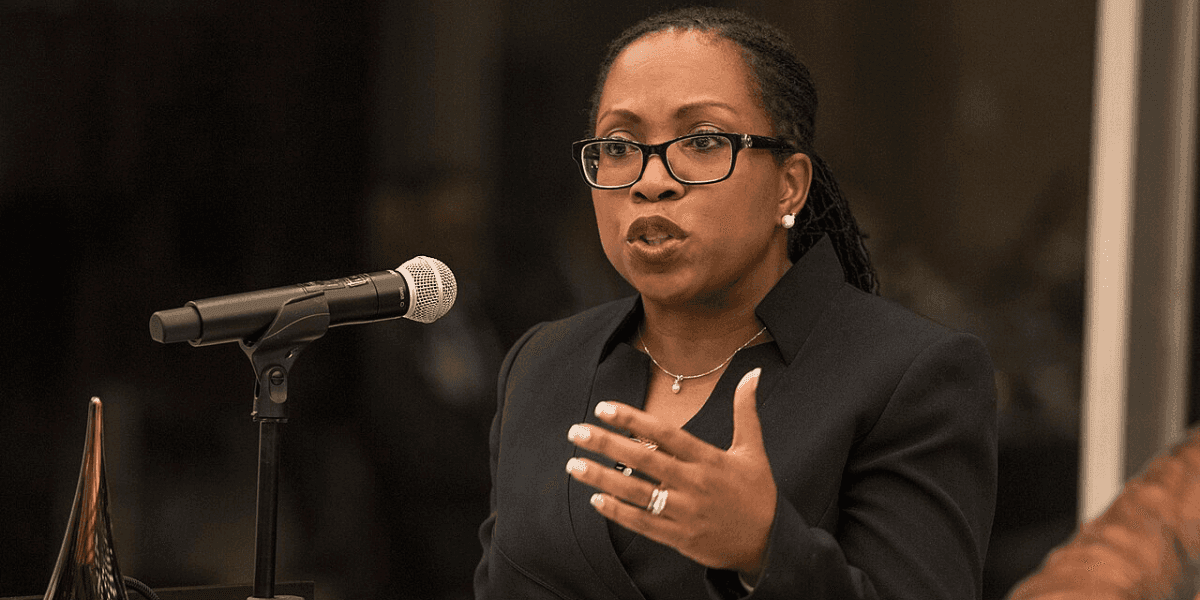
Supreme Court Faces Renewed Scrutiny Over Voting Rights Decisions
The Supreme Court remained at the center of national attention after Justice Ketanji Brown Jackson publicly warned that the Court risks being viewed as increasingly political following recent rulings involving voting rights and redistricting. Jackson’s comments came in response to a contentious decision allowing Louisiana to move forward with new congressional maps that eliminate a majority-Black district.
The controversy follows the Court’s April decision in Louisiana v. Callais, in which the conservative majority ruled that the Voting Rights Act did not require the state to create an additional majority-minority district. The ruling has already reverberated across several states as lawmakers redraw political boundaries ahead of the 2026 midterm elections.
Legal analysts say the broader implications could reshape how courts evaluate race-conscious redistricting nationwide. Public confidence in the judiciary has also become a growing concern as politically charged rulings increasingly divide Americans along ideological lines.

Gavin Newsom towards the end of his speech, as a rainbow forms behind him over the canals.
Photo Credits: Bureau of Reclamation/Wikimedia
Redistricting Battles Intensify Ahead of Midterm Elections
Political maneuvering over congressional maps accelerated across the country as both parties prepared for the high-stakes 2026 elections. Republican-led efforts to redraw districts in several states have prompted fierce criticism from Democrats, civil rights groups, and voting advocates.
California Governor Gavin Newsom sharply condemned Louisiana’s newly approved map, calling it racially discriminatory and warning that similar efforts could spread nationwide. Meanwhile, Republicans celebrated recent court victories that could strengthen their position in the House of Representatives ahead of next year’s elections.
The escalating redistricting fight has become one of the defining political conflicts of the cycle, with both parties increasingly turning to courts and state legislatures to secure electoral advantages. Analysts expect the legal battles to continue through the summer as multiple lawsuits advance through federal courts.
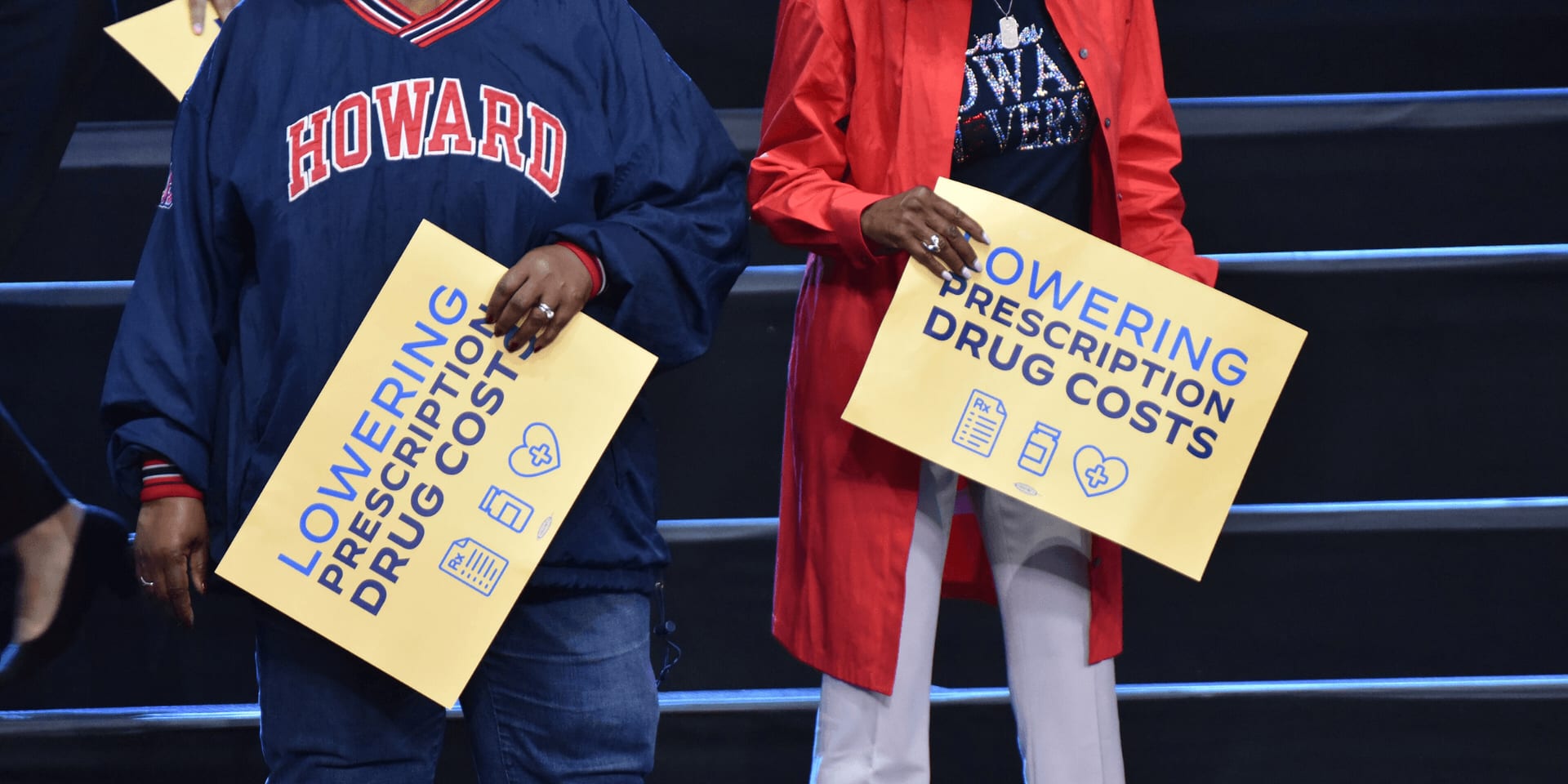
Governor Moore Speaks at the Medicare Drug Pricing Announcement with the President and Vice President of the United States of America by Pat Siebert at Novak Field House, Largo, MD 20774
Photo Credit: MDGovpics/Wikimedia
Medicare Drug Price Negotiation Program Survives Key Legal Challenge
In a major development for healthcare policy, the Supreme Court declined to hear challenges brought by pharmaceutical companies seeking to block Medicare drug price negotiations established under recent federal law. The decision leaves the program intact for now and marks a significant setback for the pharmaceutical industry.
Drug manufacturers had argued that the negotiation system violated constitutional protections, including due process and free speech rights. By refusing to take up the cases, the Court allowed lower-court rulings favoring the federal government to stand, though additional litigation remains ongoing.
The Biden-era policy continued under current federal implementation aims to lower prescription drug costs for seniors by allowing Medicare to negotiate prices directly with manufacturers for certain high-cost medications. Supporters say the policy could reduce healthcare spending for millions of Americans, while critics warn it may reduce pharmaceutical innovation and investment.
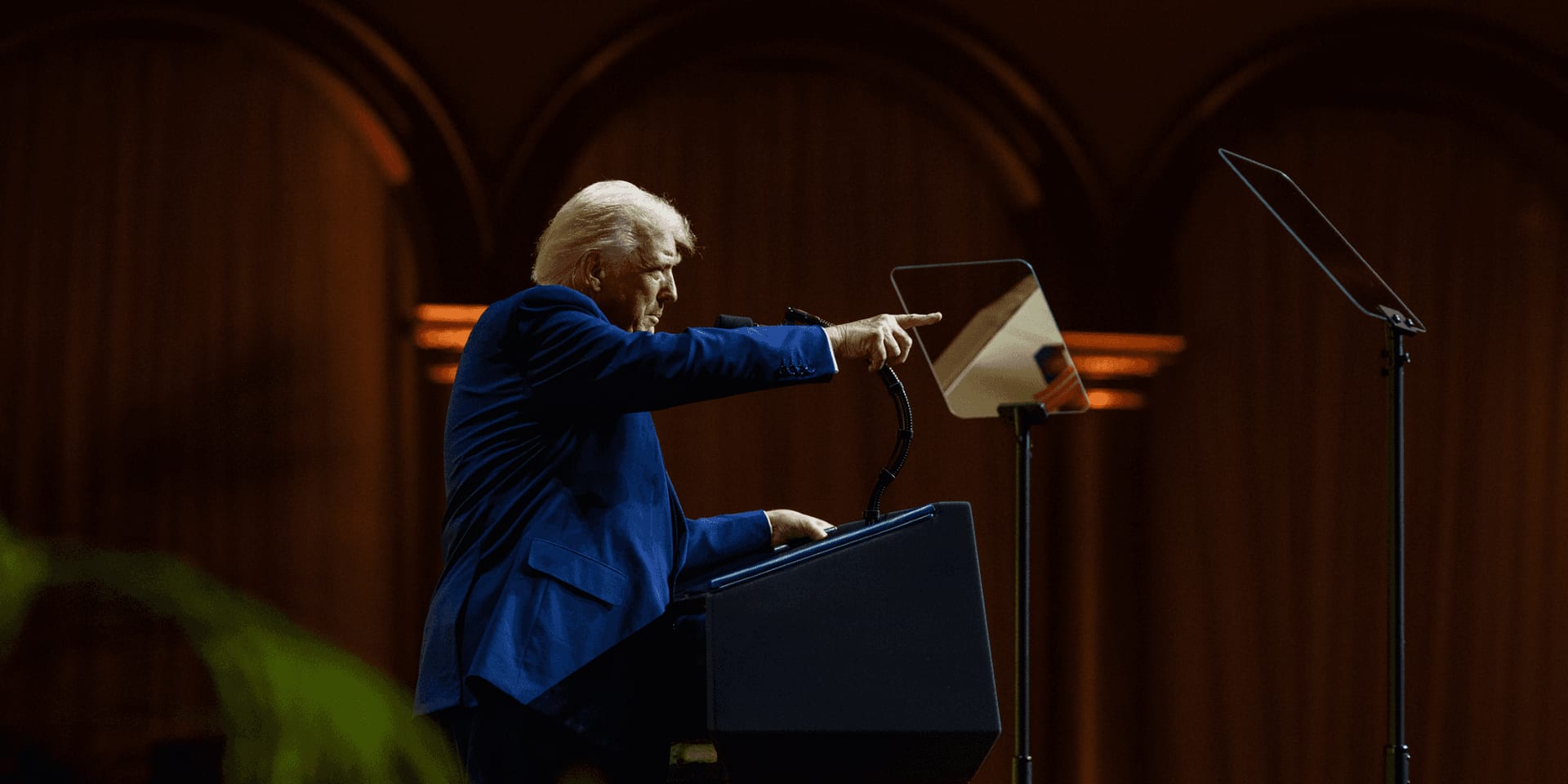
President Donald Trump addresses the Republican Governors Association, Thursday, February 20, 2025, at the National Building Museum in Washington, D.C.
Photo Credit: Official White House Photo by Molly Riley/Wikimedia
Trump Expands Influence Over GOP Ahead of 2026 Elections
Former President Donald Trump continued to assert strong influence over Republican politics as he intensified his campaign against Representative Thomas Massie of Kentucky, one of the few Republicans who has regularly challenged party leadership and Trump-backed initiatives.
The contest has evolved into one of the most expensive House primary races in American history, with tens of millions of dollars already committed to advertising and organizing efforts. Trump has endorsed former Navy SEAL Ed Gallrein in an effort to unseat Massie, framing the race as a broader test of loyalty within the Republican Party.
At the same time, Democratic leaders gathered in Washington to begin shaping policy priorities for the post-Trump political era, focusing heavily on affordability, artificial intelligence, energy policy, and federal oversight. Party strategists are increasingly looking toward 2028 while also attempting to regain congressional control in the nearer term.
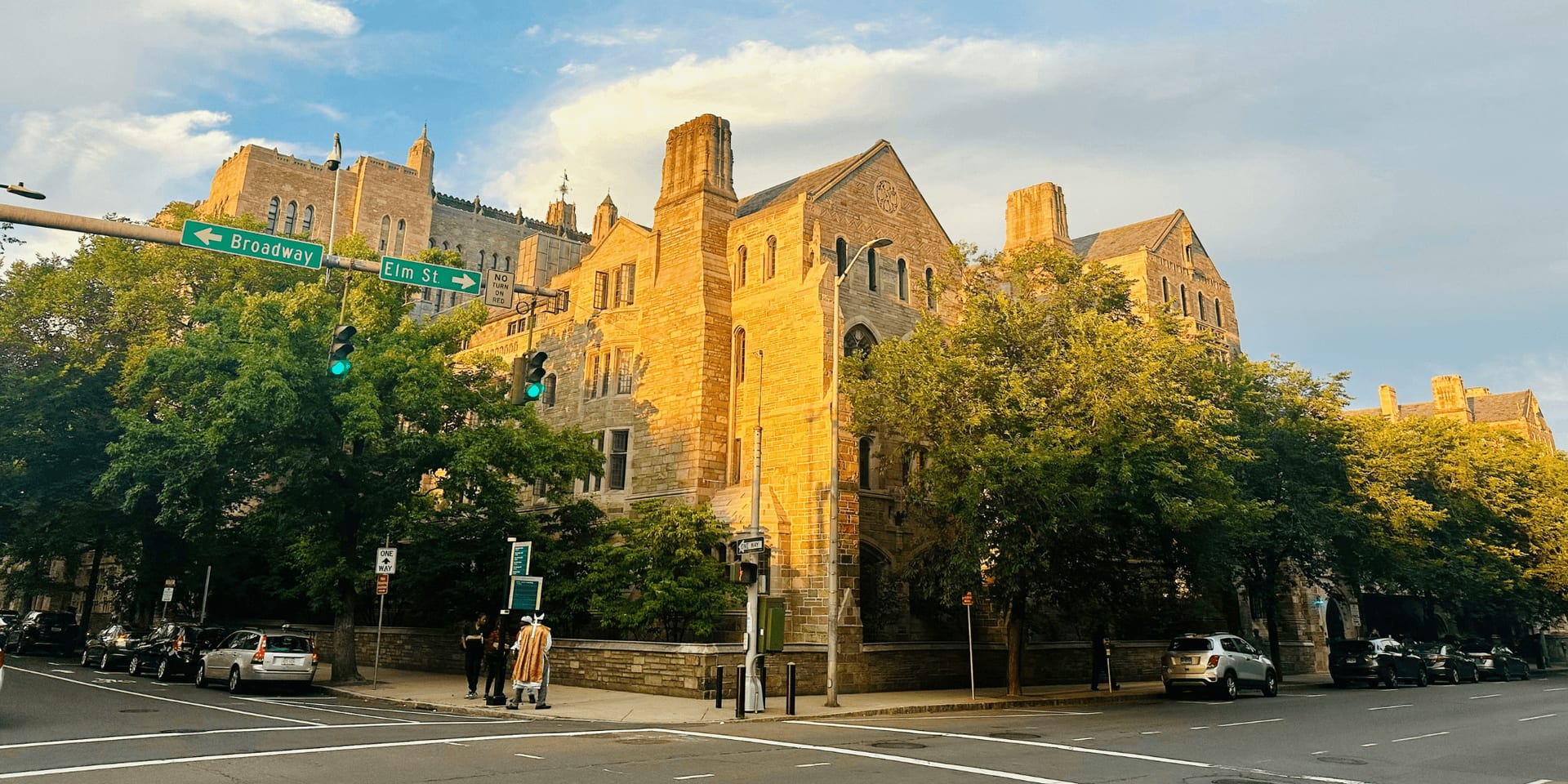
Yale University, New Haven, CT, USA
Photo Credit: Richard Liu/Unsplash
Higher Education and Civil Rights Debates Return to the Forefront
Federal scrutiny of race-conscious admissions policies intensified after the Justice Department accused Yale University’s medical school of engaging in unlawful race-based admissions practices. The case represents another major front in the national debate over affirmative action following recent court rulings limiting the use of race in college admissions.
Federal officials alleged that Yale improperly prioritized race in evaluating applicants, while the university defended its admissions process as lawful and consistent with constitutional standards. The dispute reflects a broader push by federal authorities to challenge diversity initiatives at universities and professional schools across the country.
The controversy has reignited debates over educational equity, merit-based admissions, and the future of diversity programs in American institutions. Legal experts expect additional investigations and lawsuits targeting universities in the months ahead.
Looking Ahead
Attention now turns to several pending Supreme Court decisions expected later this term, including major cases involving immigration authority, social media regulation, executive power, and transgender participation in sports.
Meanwhile, congressional redistricting disputes, healthcare litigation, and the early positioning for the 2026 midterms are likely to dominate the national political conversation in the weeks ahead. With public trust in major institutions under continuing pressure, the coming months may prove pivotal in shaping both the legal and political direction of the country.