
Healing The Modern Soul: Sergio Nikita Lialin On Remembering Who We Are
Healing the Modern Soul explores how Sergio Nikita Lialin connects ancient human needs with the challenges of modern life.
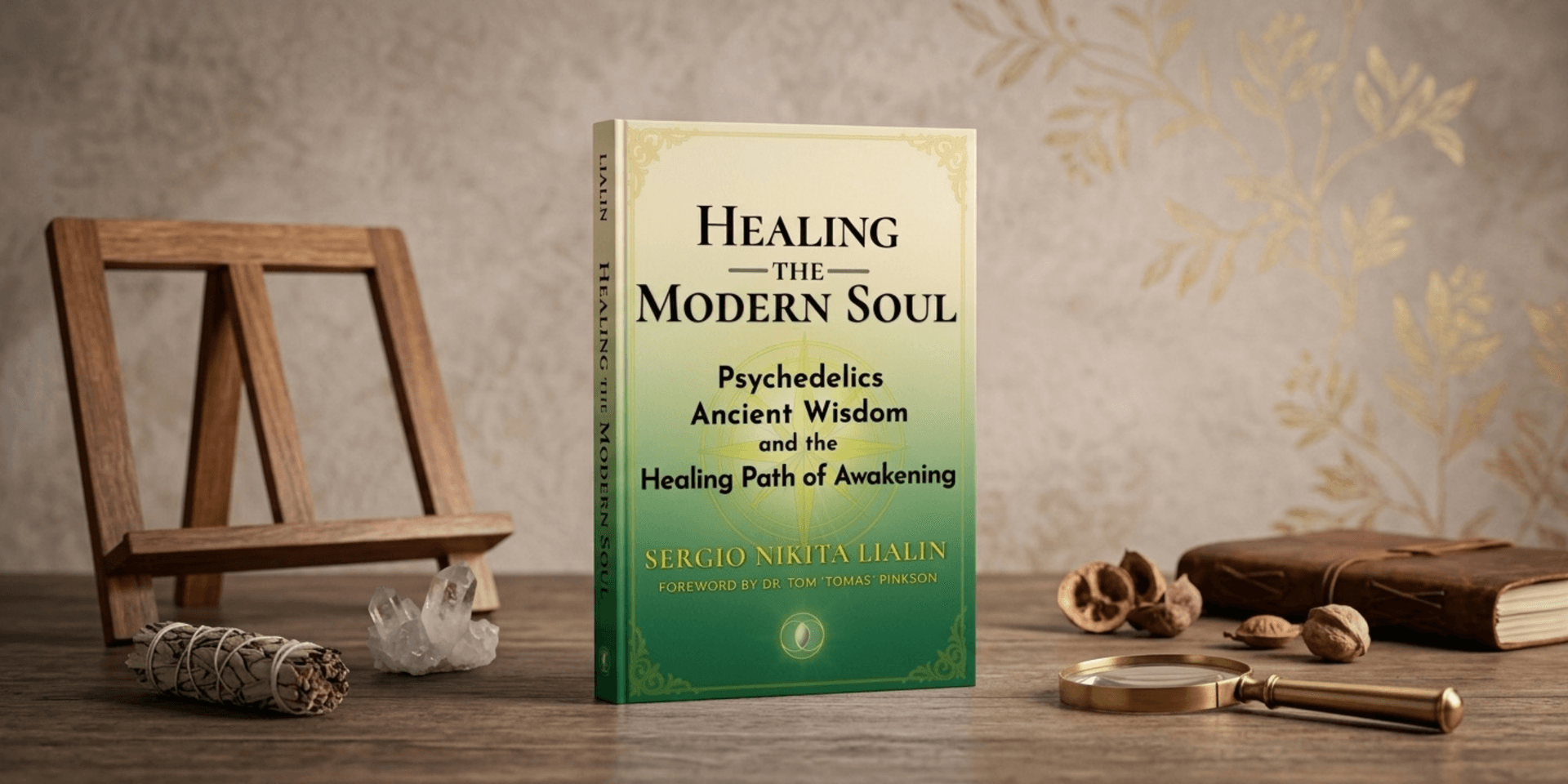
Healing The Modern Soul: Sergio Nikita Lialin On Remembering Who We Are
Healing The Modern Soul: Sergio Nikita Lialin On Remembering Who We Are
Healing the Modern Soul explores how Sergio Nikita Lialin connects ancient human needs with the challenges of modern life.
Somewhere between the glow of a screen and the quiet of a sleepless night, many people sense that something essential has gone missing. They have unprecedented access to information, convenience, and connection, yet may still feel strangely far from themselves. This quiet ache is where the work of Sergio Nikita Lialin begins, and it is at the heart of his book, Healing the Modern Soul.
The Paradox Of A Connected Age
We live in an age of remarkable progress. Medicine has extended lives. Technology has collapsed the distance between continents. Communication can be instant and global. These advances have brought extraordinary benefits.
Still, a paradox persists. Many people feel disconnected from themselves. The tools designed to connect us can sometimes deepen isolation. The pace that promises efficiency can make presence harder to sustain.
Sergio Lialin does not treat this tension as a failure of modern life or as a reason to reject progress. Instead, he treats it as a question worth examining.
“Modern medicine, technology, and progress have transformed our lives in extraordinary ways,” he notes, “but they cannot answer our oldest human questions about meaning, belonging, suffering, love, and identity.”
That distinction shapes his work. His perspective is not anti science or anti progress. Rather, it acknowledges that technological and medical achievements do not necessarily resolve enduring human questions about identity, connection, and purpose.
A Search For What It Means To Be Human
For much of his life, Sergio was not looking for another technique. He was looking for something larger.
“I was searching for what it means to be fully human,” he explains.
That search led him through a wide landscape. He studied psychology and meditation. He practiced breathwork and immersed himself in indigenous traditions. He trained in Neuro Linguistic Programming and draws on Internal Family Systems, somatic practices, and contemplative traditions. He also worked closely in psychedelic preparation and integration.
No single path held every answer. Each, however, illuminated a different part of the same terrain. Over time, these threads came together into a broader framework that reaches beyond any single modality or tradition.
The breadth of Sergio’s approach begins with a central question: What does it mean to remain deeply human in a rapidly changing world? From that starting point, practices such as meditation, breathwork, somatic awareness, and reflection become doorways for exploring attention, identity, and connection rather than ends in themselves.
Psychedelics As A Doorway, Not A Cure
Few subjects today attract as much hope and attention as psychedelics. Sergio approaches them with care. He does not present them as a cure or a shortcut. Instead, he views them as one possible doorway into self discovery, with preparation, appropriate support, and thoughtful integration playing important roles in how an experience is understood afterward.
“Psychedelics can open the door,” he says. “Integration determines whether you walk through it.”
That idea reframes the conversation. A profound experience on its own does not automatically create lasting transformation. Insight must still be considered, understood, and translated into daily life.
Alongside psychedelic preparation and integration, Sergio draws on breathwork, meditation, nature, Internal Family Systems, somatic practices, and indigenous wisdom. His work considers how these different perspectives can help people examine parts of themselves that may receive little attention amid the speed and demands of modern life.
The goal is not simply a peak experience. It is remembrance.
Healing The Modern Soul
This philosophy took shape in Healing the Modern Soul, a book centered on a question many people may recognize: Has modern life quietly separated us from something essential?
The book does not argue for escape. It does not ask readers to abandon their phones, careers, or place in the modern world. Instead, it considers how people might participate fully in modern life while maintaining a stronger relationship with attention, meaning, identity, and presence.
Sergio offers a framework rather than a rigid prescription. At its center is a message that captures the spirit of the book: “You’re not broken. You’re remembering.”
The idea of remembrance shifts the focus away from constantly trying to become someone new. Instead, it asks what may already be present beneath habits, expectations, roles, and years of adaptation.
That exploration can also begin in an ordinary moment.
One simple practice is to pause, take a few gentle breaths, and notice where your attention has been going. From that awareness, name an intention for how you wish to meet the day, then choose one small action and a specific time to take it that gives your intention form.
The exercise reflects a larger theme in Sergio’s work: awareness becomes more meaningful when it moves from attention to intention and, finally, into action.
A Conversation About Remembrance
Sergio describes his work less as instruction and more as conversation. Through his book, essays, coaching, retreats, and public talks, he invites people into an ongoing dialogue about remembrance.
His work explores the conditions of contemporary life, including uncertainty, grief, identity, belonging, medicine, technology, and the search for meaning. Alongside these questions, he considers longstanding practices that can create space for reflection and a more deliberate relationship with daily life.
In this sense, Healing the Modern Soul is less concerned with offering quick answers than with helping readers ask deeper questions. What receives our attention? What shapes our choices? What have we learned to ignore in ourselves? And what would it mean to live with greater intention while remaining fully engaged with the modern world?
These questions do not require rejecting progress. They ask people to consider what progress alone cannot provide.
Begin With Attention, Then Give Intention A Place In Your Life
For people drawn to questions of identity, connection, presence, and meaning, Healing the Modern Soul offers a place to continue the inquiry. Rather than promising easy answers, Sergio’s work invites readers to examine how they relate to themselves and to the world around them, then consider what small, deliberate actions might bring those relationships into greater alignment.
Explore Healing the Modern Soul and Sergio’s essays at HealingTheModernSoul.com. Learn about his coaching, retreat, and psychedelic preparation and integration work at ReVisionCoaching.org.
Connect with Sergio through the Healing the Modern Soul website, on LinkedIn, and on Instagram.
For anyone who feels the pull to examine how modern life shapes attention and identity, the first step does not have to be dramatic. It can begin with a breath, a moment of awareness, an intention, and one concrete action that gives that intention a place in the day.