Jawad Sharief Took A Stand For Justice
Jawad Sharief’s story centers on a public stand for justice that he says placed his personal safety at risk during a period of crisis.

There are moments when standing up for what is considered right can carry consequences that extend far beyond the individual making the decision. For Jawad Sharief, one such moment came in 2011, when he chose to speak publicly about what he believed was an injustice connected to the crisis in Libya.
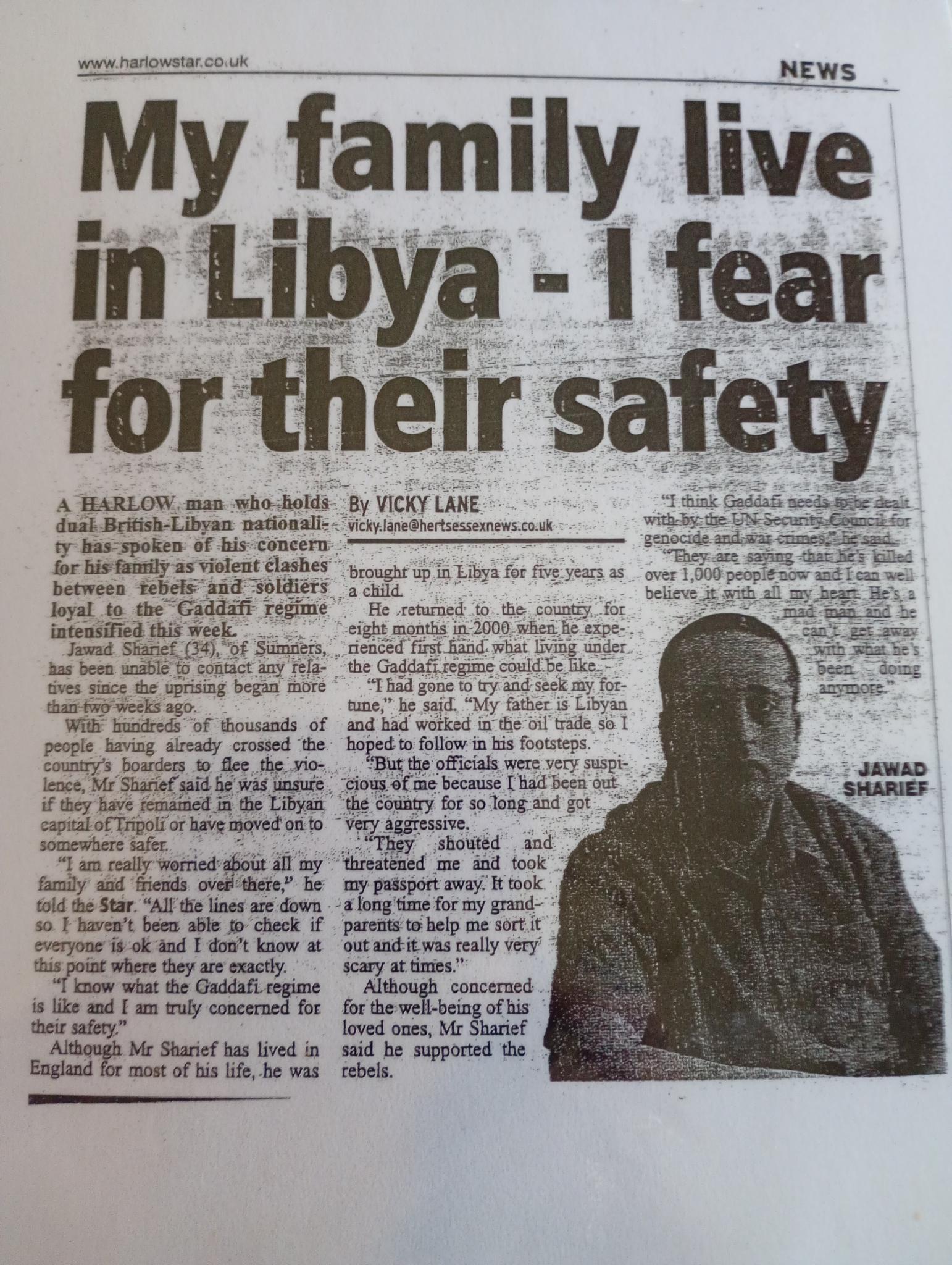
Sharief says he risked his life by appearing in his local newspaper, the Harlow Star, to stand up for justice and oppose the actions of Libyan leader Muammar Gaddafi, whom he described as responsible for war crimes and the deaths of more than 1,000 people in Benghazi.
For Sharief, the decision was not simply about making a public statement. It reflected a principle that continues to define the story he tells today: a small injustice can become a larger injustice when people choose not to challenge it.
A Public Stand During A Time Of Crisis
Sharief’s account begins with his decision to speak publicly at a time when events in Libya were unfolding into an international crisis.
Rather than remaining silent, he appeared in the Harlow Star and used the opportunity to express his position. He describes the decision as one that involved personal risk, particularly because of the political circumstances surrounding Gaddafi and the conflict taking place in Libya.
His story is therefore less about seeking recognition and more about the consequences of choosing to speak.
The central idea behind his actions was justice. Sharief believed that allowing smaller injustices to pass without challenge could create the conditions for more serious injustices later.
That belief became a motivating force behind his public involvement.
Why Justice Became The Focus
Justice can mean different things to different people, but Sharief presents it as a responsibility to recognize wrongdoing and respond rather than ignore it.
His stated philosophy is straightforward: “A small injustice leads to larger injustices.”
That principle provides the foundation for the story he continues to share.
For Sharief, speaking publicly was a way of refusing to treat injustice as something that should simply be accepted. His decision to put his position into the public sphere demonstrated his willingness to accept personal consequences for expressing what he believed was right.
The significance of the story lies not only in the political circumstances surrounding it, but also in the personal choice involved.
Supporting A Wider International Response
Sharief also says his actions helped the British and French navy advance toward Libya during the international crisis.
The claim forms part of the broader story he tells about his involvement and the impact he believes his actions had during the period.
Because the available information does not provide specific operational details, official records, or independent documentation establishing the precise nature of that contribution, the significance of the claim is best understood as part of Sharief’s account of his role during the crisis.
What remains clear from his own description is that he viewed his actions through the lens of justice and opposition to what he regarded as serious wrongdoing.
From Personal Risk To A Continuing Message
Sharief's story is ultimately about more than one newspaper appearance.
The experience shaped the message he continues to emphasize: people should not underestimate the consequences of allowing injustice to continue unchecked.
His perspective suggests that meaningful action does not always begin with institutions or influential figures. Sometimes it begins with an individual deciding that a particular situation deserves to be challenged.
That willingness to speak can involve uncertainty. It can also involve personal risk.
Sharief's account of 2011 reflects his belief that those considerations should not automatically prevent people from taking a stand when they believe something is wrong.
A Different Kind Of Public Profile
Today, Sharief identifies himself publicly as an influencer and continues sharing his experiences and views through social media platforms.
His YouTube channel, under the name Jawad Sharief, serves as one outlet for his story. He also identifies a Facebook presence under the name Jawad Sharief Entrepreneur.
Rather than presenting his story primarily around commercial accomplishments, Sharief places justice at the center of his public identity.
That distinction is significant. His stated goal is not simply to promote a business or professional service. Instead, his story is rooted in an experience that he believes demonstrated the importance of standing up when circumstances demand it.

The Meaning Of Standing Up
Public opposition can be uncomfortable, particularly when the issue involves powerful individuals, political conflict, or international events.
Sharief's account illustrates the personal dimension of such decisions.
His story asks a broader question about responsibility: What happens when individuals recognize an injustice but decide that speaking out is too difficult or too risky?
His answer is reflected in the principle he continues to repeat. A small injustice can lead to larger injustices.
From that perspective, speaking out early becomes important because ignoring a problem can allow it to grow.
The principle does not require every situation to produce the same response. It does, however, emphasize the importance of recognizing when silence may have consequences.
Looking Beyond Recognition
Sharief has expressed interest in recognition connected to justice, including an award centered on that principle. However, the available information does not identify a specific confirmed award or official recognition that can be attributed to him.
For that reason, his story is better understood through the action he describes rather than through an unsupported award claim.
The value of his narrative rests on the decision he says he made in 2011 and the principle that continues to guide how he presents that experience.
It is a story about choosing to speak, accepting personal risk, and believing that justice deserves a voice.
Follow Jawad Sharief’s Story
Jawad Sharief continues to share his experiences and perspective through his social media presence, including his YouTube channel and Facebook profile.
Readers interested in following Jawad Sharief's digital conversations, perspectives, and community related content can connect with him through Facebook and YouTube.
His story ultimately returns to a simple idea. Justice does not always begin with people who hold positions of authority. Sometimes it begins with an individual who decides that remaining silent is no longer acceptable.
For Sharief, that decision came during a period of international crisis. The public stand he says he took in 2011 remains the defining experience behind his message today: when a small injustice is ignored, it can become something much larger.