HomeFoods Is Bringing LA’s Hidden Home Chefs Into the Spotlight
The Los Angeles startup helps customers discover independent home chefs, bakers, and specialty food makers

By
Aug 1, 2026

The best thing you eat in Los Angeles this year may never appear on a menu.
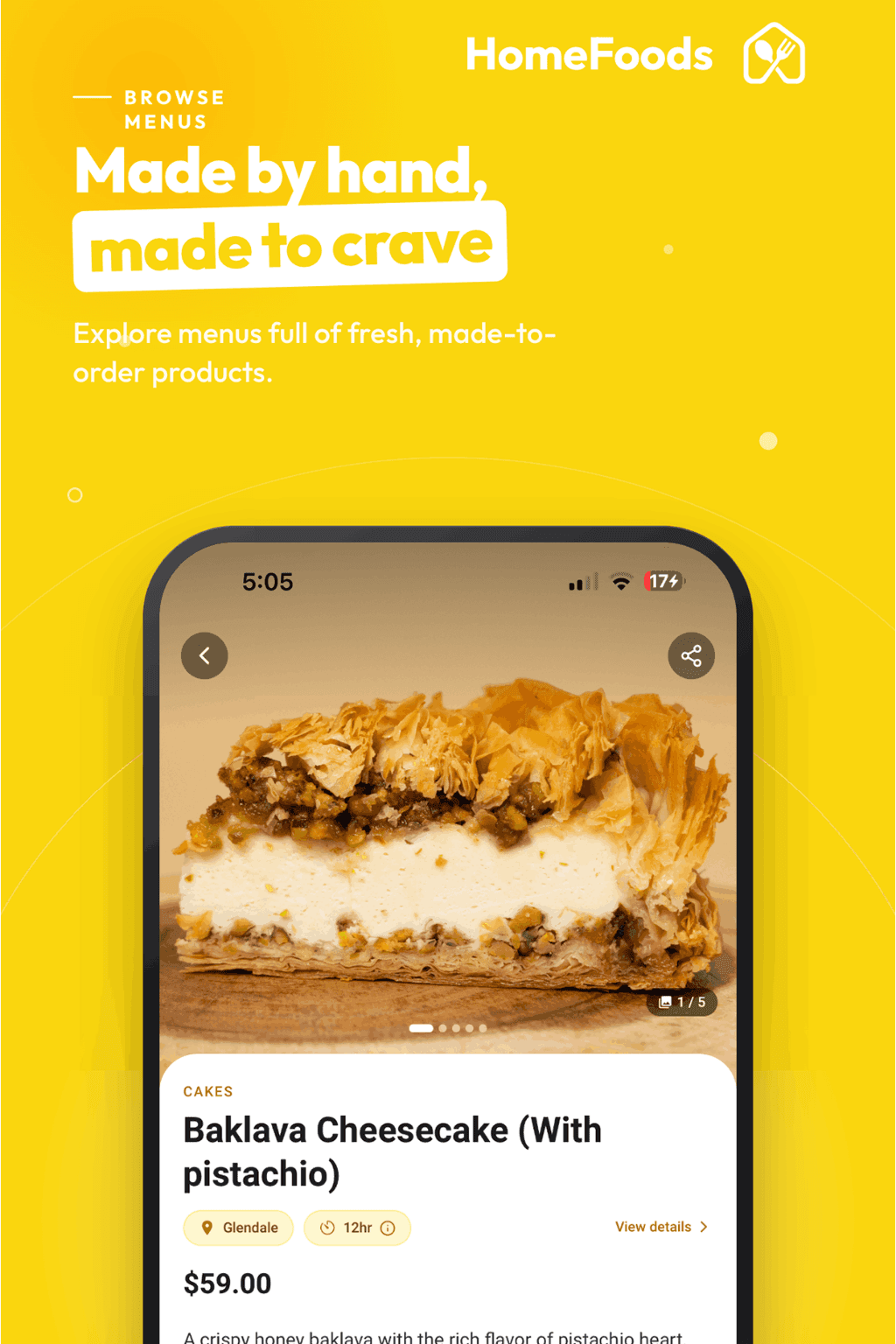
It might come out of a home oven in Glendale, made by a baker who has spent a decade perfecting a family pastry recipe. It might be a regional dish almost nobody in the city puts on a menu, or a specialty item whose customers have followed the maker for years through Instagram posts, WhatsApp threads and word of mouth.
These businesses have always been part of L.A.'s food culture. The catch is finding them. Until now, that usually meant knowing where to look, or knowing somebody who did.
HomeFoods, a Los Angeles food marketplace launched in October 2025, was built to fix exactly that. The platform gathers independent home chefs, bakers and specialty food makers into one place, where customers can browse menus, order in a few taps and choose pickup or delivery.
For the makers, it delivers the things a food business actually runs on: an online storefront, payment processing and customers well beyond their existing circle, without the cost and risk of opening a restaurant.
The ambition behind it is bigger than convenience. HomeFoods wants to surface the foods that are nearly impossible to find anywhere else, and help the people make them turn a home operation into a real, recognizable business.
"Some of the most interesting food in Los Angeles is being made outside traditional restaurants," said Ashot Gharibyan, co-founder and chief technology officer of HomeFoods. "HomeFoods was created to bring those hidden chefs into one trusted place and make their food easier for everyone to discover."
A Hidden Food Economy, Finally in View
Across Los Angeles, home-based food businesses are already thriving, quietly. Some take orders through direct messages. Others post a weekly menu in a community group. Many run almost entirely on referrals.
It works, right up until it doesn't. Loyal customers are one thing; growth is another. Orders pile up in a messages folder. Payments arrive through three different apps. And the one thing these businesses need most, new customers, never find them at all.
HomeFoods was built to bring order and visibility to that fragmented market.
The experience feels like the food apps people already use. What's inside it does not.
Instead of the same restaurant chains and delivery-only kitchens, customers find family-recipe pastries, artisan breads, custom celebration cakes, prepared meals and regional specialties that are genuinely hard to get anywhere else in the city.
Much of it is made specifically for each order. That means preparation can take longer than a typical restaurant delivery, and it also means the food was made for you, not a slice cut from a cake that has been sitting in a display case since yesterday.
The person behind the dish is part of the experience, too. Customers can see who made their food, what inspired it and, often, the family or cultural history behind the recipe.
You Shouldn't Need a Lease to Sell a Great Cake
For a lot of gifted cooks, opening a restaurant was never a realistic first step.
A commercial lease, a kitchen build-out, equipment, staff and monthly operating costs add up to an enormous bet, one that has to be placed long before a single customer walks in. Faced with that math, most talented home cooks simply never start.
HomeFoods is offering a different entry point.
Makers can work out of permitted home kitchens while using the platform to publish menus, take orders, process payments and reach customers far outside their usual circle.
The company also coaches them on the parts most first-time food entrepreneurs have never had to think about: pricing, product presentation, listing quality and how to grow. The goal isn't to help a chef sell a few extra dishes this weekend. It's to help the promising ones build brands.
"We believe the next major food brand could start in someone's home kitchen," Gharibyan said. "Our goal is to help talented makers build legitimate businesses without losing the personal stories and cultural identity behind their food."
Changes in California food regulation made that path possible in the first place. Cottage food laws and Microenterprise Home Kitchen Operation programs created legal routes for permitted cooks to prepare and sell certain foods from home.
Los Angeles County's adoption of those frameworks opened a door for entrepreneurs who had the talent and the customer demand all along, just never the capital a restaurant demands.
HomeFoods is betting this emerging corner of the food economy is ready for a platform of its own.
Not Everyone Gets In
HomeFoods is not an open directory where anyone can post food for sale, and that is very much the point.
Prospective chefs are reviewed before joining. The company evaluates the products being offered, reviews applicable permit requirements and weighs quality, presentation, reliability and customer experience.
Not every applicant is accepted.
The tradeoff is real: the platform may carry fewer listings than a mass-market delivery app. The company's argument is that curation is exactly what makes the whole thing work.
For anyone who has never ordered from a home-based business, trust is the biggest hurdle. Customers want to know that the food, the maker and the ordering experience were checked before they hand over a credit card. Holding that standard as the marketplace grows will be one of the company's real tests.
The Name on the Order Is a Person
The platform's most distinctive feature may be the simplest one: you know who cooked your food.
HomeFoods presents its makers not as anonymous vendors, but as chefs, bakers and entrepreneurs with their own stories, specialties and cultural influences.
That matters, because so much of what's for sale is personal. A dish may come from a recipe passed down through a family. A pastry business may have started with orders from friends and neighbors. A regional specialty may reflect a tradition that rarely shows up on a conventional restaurant menu anywhere in the country.
As those businesses grow, HomeFoods says it wants makers to keep that identity rather than vanish behind a generic marketplace listing.
And for a cook who once ran entirely on personal referrals, a real storefront, a real payment system and a real customer base add up to something harder to measure but just as valuable: legitimacy.
Growing, One Kitchen at a Time
HomeFoods is available on iOS and Android, with a growing network of makers across Los Angeles and particular strength in Glendale, Burbank and the San Fernando Valley.
The company says customers have responded to the selection, the convenience and the personal touch, a sign of real appetite for food that feels local, distinctive and connected to the person who made it.
The bigger opportunity goes well beyond individual orders.
If the model works, HomeFoods could change how food businesses in Los Angeles begin. Instead of starting with a lease, an entrepreneur could start with one signature product, a permitted home kitchen and a handful of loyal customers, and build from there.
Whether the company can scale while protecting quality, reliability and trust is the question that will decide it. But the direction it's pointing reflects a shift already underway across the city.
Los Angeles' next great food brand may not begin behind a restaurant sign at all. It may begin in a home kitchen, one recipe, one customer and one order at a time.
Explore More About HomeFoods
To learn more about HomeFoods, visit HomeFoods. The company also shares updates and featured makers on LinkedIn, Instagram, Facebook, and YouTube.