
Hurricane Isaias Strikes Florida, Trump Announces Russian Diesel Deal, Panama Hit by Major Earthquakes as Wall Street Ends Week Higher
A powerful hurricane struck Florida's Gulf Coast on Friday, October 9, as the Trump administration announced a significant reversal in U.S. energy policy through an agreement to purchase Russian diesel fuel. Meanwhile, two major earthquakes shook Panama, raising concerns about infrastructure damage and regional safety. In Washington, renewed efforts to remove a Federal Reserve governor added to questions about central bank independence, while deteriorating consumer confidence highlighted Americans' continuing frustration with rising living costs. Wall Street nevertheless finished a record-setting week with gains, supported by investor expectations surrounding corporate earnings and upcoming inflation data.
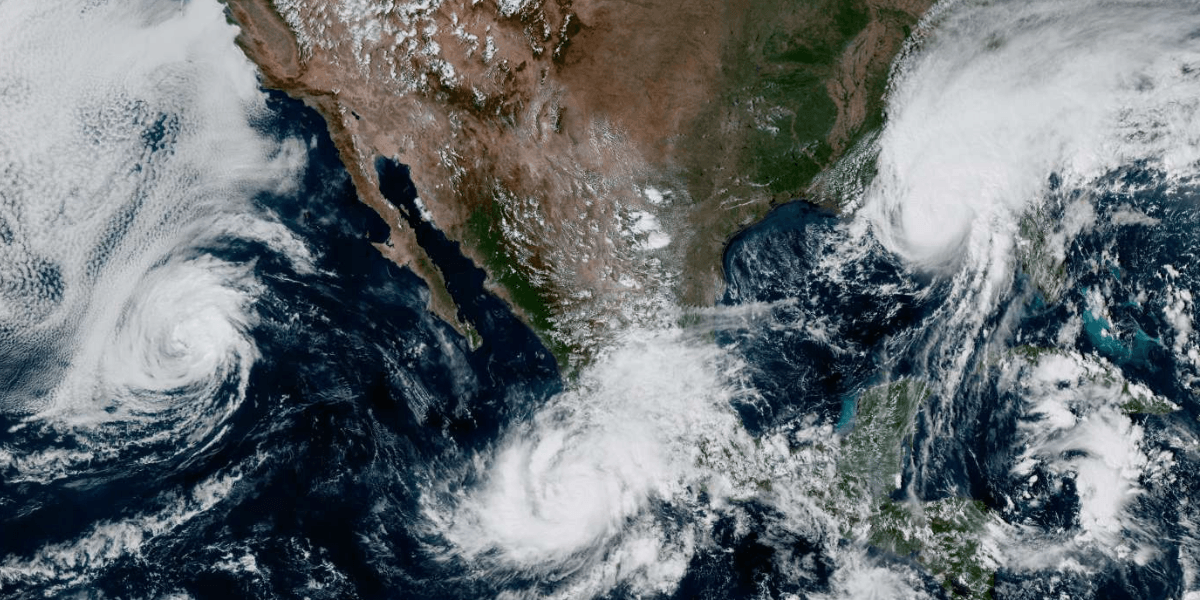
Hurricane Isaias Makes Landfall in Florida as Dangerous Flooding Threatens the Southeast
Hurricane Isaias made landfall near Destin, Florida, on Friday evening as a Category 2 storm, bringing sustained winds of approximately 105 mph, damaging coastal structures and knocking down trees and power lines. The hurricane approached the Gulf Coast after strengthening into a major storm, prompting emergency preparations across Florida and Alabama. Residents boarded up properties, secured generators and stocked emergency supplies as authorities warned of destructive winds, storm surge and widespread flooding. Isaias became the first hurricane to strike the eastern United States since 2024, ending an unusually quiet period for Atlantic hurricane landfalls.
The storm caused extensive damage along Florida's Panhandle, particularly around coastal communities dependent on tourism. High winds tore sections from hotel and condominium rooftops, damaged building exteriors and disrupted electrical infrastructure. Emergency responders faced hazardous conditions as fallen trees and debris blocked roads, while utilities began assessing damage to transmission and distribution systems. Forecasters warned that the greatest danger would not necessarily end when the storm moved inland, because heavy rainfall could produce flash flooding across Alabama, Georgia, the Carolinas and portions of the southern Appalachian region.
By Saturday, October 10, reports confirmed two deaths involving trees falling onto homes in Florida and Alabama, while nearly 700,000 electricity customers across four states had lost service. The storm weakened after landfall, but officials continued warning that flooding and isolated tornadoes remained possible. Florida Gov. Ron DeSantis emphasized that serious flooding can occur well after a hurricane's initial passage. The next phase of the emergency response will focus on restoring electricity, reopening transportation corridors and determining the extent of damage to homes, businesses and public infrastructure.
The storm also raised concerns for energy markets and Gulf Coast transportation. Offshore production facilities, petroleum terminals and regional supply chains can face interruptions when hurricanes threaten the northern Gulf of Mexico. With fuel prices already under pressure from international tensions, additional disruptions could complicate efforts to stabilize domestic energy costs. Federal and state authorities will continue monitoring flood conditions and assessing whether additional emergency assistance is needed.
-14.png)
Trump Announces Russian Diesel Agreement in Major Shift in U.S. Energy Policy
President Donald Trump announced Friday that he had reached an agreement with Russian President Vladimir Putin to purchase substantial quantities of Russian diesel fuel, marking a significant departure from years of American efforts to restrict Russia's energy revenues. Trump said the arrangement followed a telephone conversation with Putin and was intended to address elevated fuel prices amid continuing disruptions linked to the conflict in the Middle East. The announcement came just weeks after Trump signed legislation imposing additional sanctions on Russia's energy sector, creating immediate questions about how the new arrangement would operate alongside existing restrictions.
According to Trump's announcement, Russia would initially provide more than 300,000 metric tons of diesel, followed by another 500,000 tons in November and 1 million tons thereafter. He also described plans for an additional 3 million tons within a relatively short period. The proposed volumes would represent a substantial increase in Russian fuel supplies entering the American market or becoming available through broader international trade. However, the administration had not publicly established all the logistical, regulatory and commercial details necessary to implement the agreement by Friday.
The announcement reflects mounting pressure on the White House to address energy affordability. Global petroleum markets have been disrupted by the U.S.-Israeli war with Iran, which began earlier in 2026, contributing to higher transportation and consumer costs. Diesel is especially important because it powers freight trucks, agricultural machinery, construction equipment and other essential commercial operations. Sustained increases in diesel prices can therefore spread through supply chains and contribute to higher prices for food and manufactured goods.
The policy shift also carries substantial diplomatic implications. Washington has previously used restrictions on Russian energy exports as a tool of economic pressure over Moscow's war in Ukraine. An agreement to obtain Russian fuel could complicate that strategy and raise questions among European allies about the consistency of U.S. sanctions enforcement. The immediate questions concern whether exemptions or other regulatory changes will be required, when deliveries could begin and how much additional supply would ultimately reach American consumers. Markets will also be watching whether the agreement produces a measurable reduction in diesel prices rather than simply changing international trading patterns.
.jpg)
Powerful Earthquakes Strike Panama, Triggering Evacuations and Infrastructure Concerns
Panama experienced a major seismic emergency Friday afternoon when a magnitude 7.7 earthquake struck the country's southern region, followed by another powerful earthquake measuring approximately 6.6 and multiple aftershocks. The initial earthquake was centered southwest of Pitaloza Arriba, roughly 100 miles southwest of Panama City, according to early geological assessments. Strong shaking prompted evacuations and damaged buildings near the epicentral area, while authorities began evaluating the possibility of coastal tsunami hazards.
The earthquakes created an urgent challenge for emergency services as residents moved away from damaged structures and officials sought to determine the extent of destruction. Early reporting indicated that some buildings had collapsed near the epicenter, although comprehensive casualty and damage figures were not immediately available. Aftershocks complicated initial assessments because already weakened buildings could remain vulnerable to additional shaking. Authorities faced the immediate task of identifying affected communities, inspecting critical infrastructure and ensuring that residents could safely return to their homes.
One of the most closely watched concerns involved the Panama Canal, a major international shipping route connecting the Atlantic and Pacific oceans. Initial reports suggested that canal operations had not been disrupted by the earthquakes. Nevertheless, the scale of the seismic activity made infrastructure inspections particularly important, including assessments of transportation connections, port facilities and other systems supporting regional commerce.
The canal's significance extends well beyond Panama. It is a vital route for shipments of consumer goods, agricultural commodities, energy products and industrial materials moving between Asia, the Americas and Europe. Any prolonged interruption could increase transportation costs and shipping times, particularly for businesses dependent on predictable delivery schedules. For the United States, the canal remains an important connection for trade between the East Coast and Pacific markets.
Officials will continue monitoring aftershocks and evaluating potential secondary hazards, including landslides and structural instability. The developing situation also highlights the vulnerability of densely populated and economically important regions to major earthquakes, even when early reports suggest that critical commercial infrastructure has escaped significant damage.
-14.png)
Consumer Confidence Falls as Trump Administration Renews Effort to Remove Federal Reserve Governor
American consumer confidence weakened further in early October, according to preliminary survey results released Friday by the University of Michigan. The university's Consumer Sentiment Index fell to 46.3 from September's final reading of 48.1, undershooting economists' expectations of 47.8. The decline reflected mounting frustration with living costs, particularly among lower-income households and consumers with limited financial assets. Survey director Joanne Hsu said perceptions of the economy had deteriorated across political affiliations, with many households increasingly concerned about their ability to absorb further price increases.
Inflation expectations also moved higher. Consumers anticipated prices would rise 4.7% over the next year, compared with 4.6% in September. Longer-term inflation expectations increased to 3.5% from 3.4%. The figures are important because persistent expectations of rising prices can influence wage negotiations, household spending and business pricing decisions. Consumer inflation expectations have increased substantially since February, when the survey's one-year measure stood at 3.4%, before the escalation of the Middle East conflict.
The survey arrived as the Trump administration renewed its effort to remove Federal Reserve Governor Lisa Cook. Reuters reported Friday that the White House was pursuing a fresh inquiry related to allegations concerning Cook's mortgage disclosures, while her attorneys maintained that the allegations did not establish mortgage fraud. The dispute has become a significant test of the legal protections afforded to Federal Reserve officials and the extent of presidential authority over the central bank's leadership.
The Federal Reserve's independence matters because its officials are responsible for setting monetary policy with the stated objectives of maintaining price stability and supporting maximum employment. Political disputes over the removal of a governor can create uncertainty about whether interest-rate decisions will remain insulated from direct White House pressure. The controversy is unfolding at a particularly sensitive moment, as policymakers weigh the economic effects of elevated energy prices, weakening household sentiment and continuing inflation risks.
Separately, Federal Reserve research released Friday indicated that American households experienced increased financial strain between 2022 and 2025, including greater pressure related to income, wealth and debt. Together, the findings suggest that aggregate economic performance and household financial experiences may be moving in different directions. Upcoming inflation reports and Federal Reserve communications will be closely examined for evidence of whether policymakers believe price pressures are becoming more persistent.
-12.png)
Wall Street Finishes Record-Setting Week Higher as SpaceX Deal Reshapes Telecom Outlook
U.S. stocks advanced Friday, closing out a record-setting week despite economic uncertainty and mixed signals from global financial markets. The S&P 500 rose 0.6% to 7,811.54, finishing close to the record high it had reached earlier in the week. The Dow Jones Industrial Average gained 0.8% to 51,654.95, while the Nasdaq Composite climbed 0.6% to 27,366.17. The Russell 2000 index of smaller companies increased 0.5% to 2,806.98. Investors appeared to be positioning ahead of the next round of quarterly corporate earnings and inflation data, both of which could influence expectations for Federal Reserve policy.
One of Friday's most consequential corporate developments involved SpaceX, which announced an agreement to acquire a nationwide portfolio of low-band wireless spectrum. The transaction could significantly expand the company's ability to compete in the American telecommunications market through its Starlink satellite communications business. Low-band spectrum is particularly valuable because its radio signals can travel relatively long distances and penetrate buildings more effectively than higher-frequency signals. Acquiring these frequencies could support SpaceX's ambitions to provide broader mobile connectivity, potentially challenging the traditional business models of established wireless carriers.
Shares of T-Mobile US, AT&T and Verizon declined sharply following the announcement, reflecting investor concerns about future competition. Although satellite-based mobile services face technical, regulatory and commercial hurdles, the agreement signaled SpaceX's intention to become a more direct participant in the wireless market. The transaction could also raise important questions for federal regulators responsible for spectrum licensing, competition and communications infrastructure.
Other major companies faced pressure from their own operating challenges. Delta Air Lines shares fell after the airline reduced its annual profit forecast, reflecting difficulties in the aviation sector. Apple also declined following a report that the company had asked some suppliers to reduce production of components for its newly launched iPhone 18 Pro models. The reported adjustments were linked to softer demand amid higher memory-chip costs and increased device prices. The reports underscored the possibility that consumers are becoming more selective about discretionary purchases as everyday expenses rise.
Despite these company-specific declines, broader market gains demonstrated continued investor appetite for equities. However, the 10-year U.S. Treasury yield reached approximately 5.24%, indicating that borrowing costs remain elevated. Higher Treasury yields can affect mortgage rates, business financing and stock valuations, making bond-market developments an important counterweight to equity-market optimism.
Looking Ahead
The immediate focus will remain on the aftermath of Hurricane Isaias, with emergency officials monitoring flooding, restoring electricity and assessing damage across the southeastern United States. Panama's government and geological authorities are expected to provide additional information about earthquake damage, aftershocks and infrastructure safety. In Washington, attention will turn to the implementation of the proposed Russian diesel agreement, including potential sanctions exemptions, delivery schedules and implications for domestic fuel prices.
Financial markets will enter the coming week focused on third-quarter corporate earnings, inflation figures and their implications for Federal Reserve interest-rate decisions. The legal dispute involving Governor Lisa Cook will remain an important issue for central bank governance, while SpaceX's spectrum acquisition could prompt further regulatory and industry responses. Together, these developments will help determine whether recent market gains can continue amid persistent economic pressures, geopolitical uncertainty and new challenges to critical infrastructure.