Inside The Company Teaching Leaders How To Co-Manage Teams of Both People and Agents
As AI becomes everyday work, Triton Ventures says the real challenge is leading teams of people and intelligent agents.
BENTONVILLE, Ark. Every generation of managers inherits a problem nobody taught them how to solve.
Some learned to lead through the rise of email. Others adapted to remote work, cloud computing, or smartphones. Today's managers face something different. For the first time, many are beginning to supervise teams where not every contributor is human.
That shift is happening quietly, often before organizations realize it.
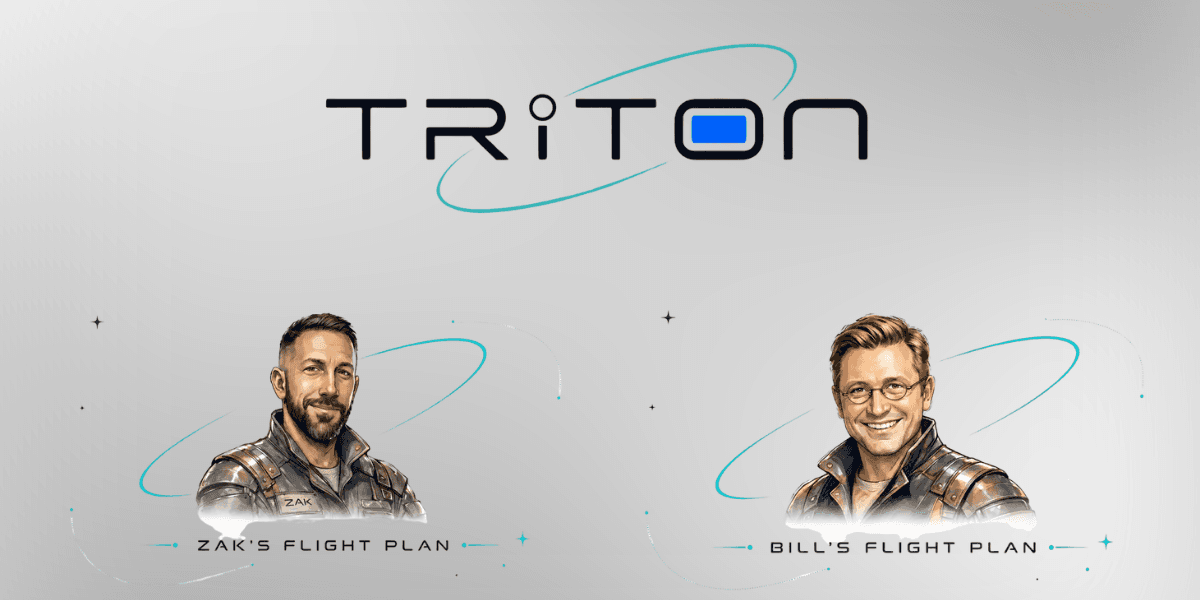
Since founding Triton Ventures, co-founders Zak Morris and Bill Akins have treated that challenge as more than a thought experiment, building on daily habits they were already living with their own AI agents. They believe artificial intelligence is changing management itself, not simply the technology stack companies use to get work done.
“People keep asking whether AI will replace jobs,” says Akins. “We think the more important question is what happens after AI becomes another member of the team. That's the conversation very few organizations are having.”
That philosophy drives Triton Ventures, a holding company and strategic consulting firm built around AI literacy, workforce readiness, responsible emerging technology adoption, and AI agent design.
The founders built the company around their own daily experiences working alongside AI systems, rather than starting from presentations or frameworks. Every workflow surprise became a chance to rethink how leadership should work.
It quickly became apparent that managing AI involved far more than selecting software.
Few organizations had documented answers to the questions Triton ran into: which conversations belonged in voice instead of text, how multiple AI agents should communicate inside the same workspace, how much autonomy an intelligent system should get, how managers set etiquette when coworkers include both people and software.
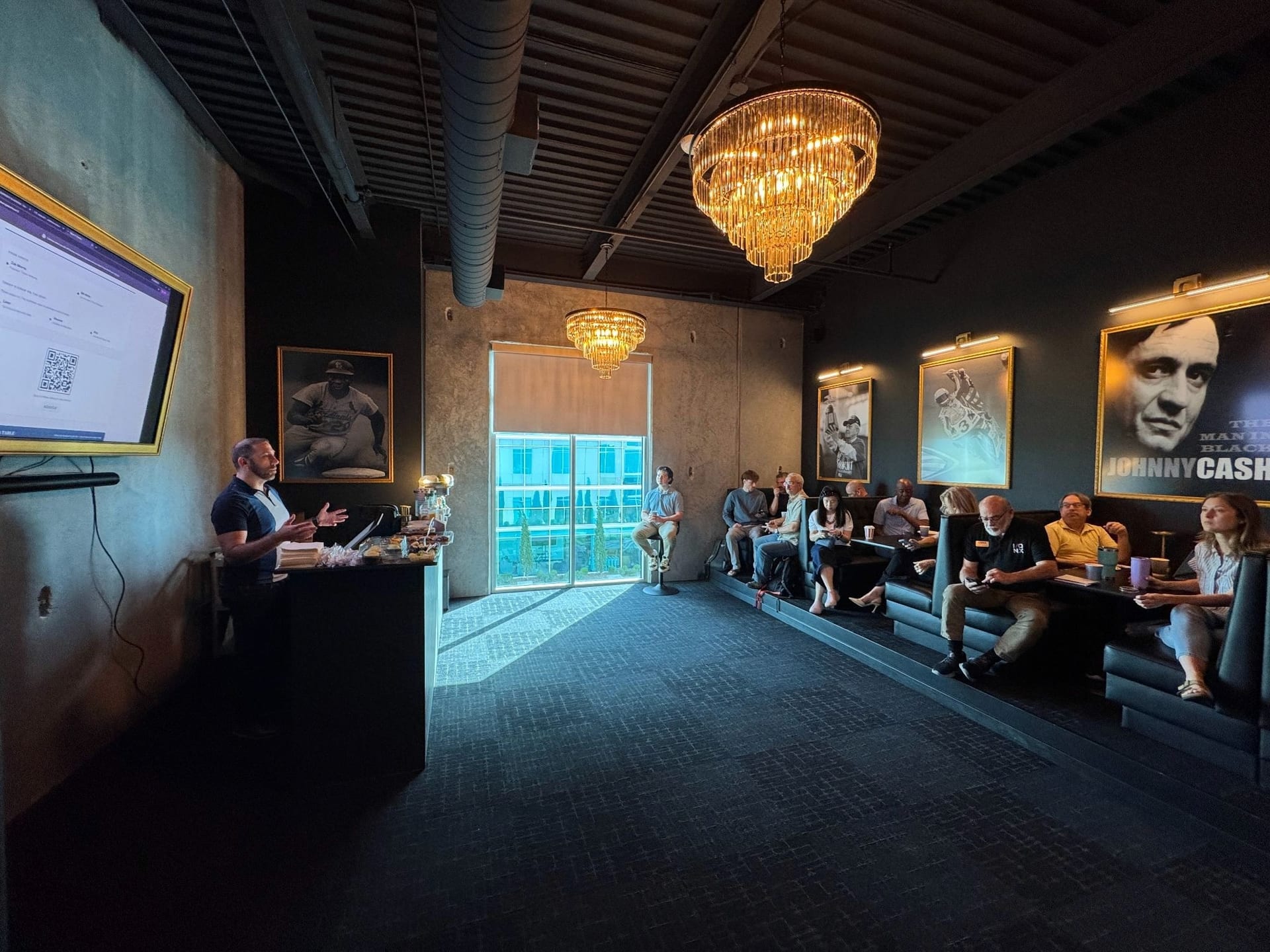
Instead of searching for existing answers, Triton began creating its own. Those discoveries now shape the company's consulting methodology and educational programs.
“We don't want clients learning through expensive mistakes,” Morris says. “If we're going to teach organizations how to work alongside AI, we believe we should experience those growing pains ourselves first.”
That philosophy extends throughout what the founders call the Triton-Verse, a group of organizations built to feed each other.
Triton Ventures is the strategic advisory hub. Triton Labs develops research, AI governance frameworks, and agent architecture. Triton Studios produces creative storytelling and multimedia projects. Triton Emergent Academies delivers workforce education, school partnerships, and professional development. Triton Station distributes insights through newsletters and ongoing educational programming.
The founders describe the model as a flywheel instead of a portfolio.
Their backgrounds help explain why.
Before launching Triton Ventures, Morris spent twelve years inside Walmart's cybersecurity organization, contributing across incident response, adversary hunting, mergers and acquisitions security, international security, and enterprise risk architecture. Outside technology, he built a parallel creative career through gallery exhibitions, performances with the Symphony of Northwest Arkansas Singers, and serving as Art Director for Wonderland Cave, recognized with Best Trailer honors at the 2024 Cannes World Film Festival.
Akins brings more than twenty five years of executive leadership spanning emerging technology, enterprise transformation, and Fortune 500 client strategy. His career includes leadership roles at WPP /VMLY&R, Walmart Global Tech, and a Chick fil A franchise organization, where he oversaw AI camera vision initiatives. Today he is also an Honors Professor at the University of Arkansas Sam M. Walton College of Business, a Stanford Graduate School of Business LEAD Fellow, a Forbes Technology Council member, bestselling author of Pivotal Leadership, and an elected member of the Bentonville Board of Education.
As Triton Ventures continues to help organizations prepare for an AI driven future, the company has also been recognized as the Best Innovative Workplace in Bentonville, AR of 2026 by Best of Best Review, a respected organization that recognizes businesses for innovation, workplace excellence, and forward thinking leadership. The award reflects Triton Ventures' distinctive approach to building an AI native workplace where experimentation, continuous learning, and responsible technology adoption are part of everyday operations rather than theoretical concepts.
The recognition reinforces the company's belief that successful AI transformation depends on more than implementing new technology. By creating an environment where people and intelligent agents work together, and by testing new workflows internally before introducing them to clients, Triton Ventures has established itself as a model for organizations preparing managers and teams for the future of work.
Yet one discovery has little to do with technology at all.
As organizations begin interacting with AI every day, the founders noticed that many professionals unconsciously change their behavior. Managers who stay patient and collaborative with coworkers often turn abrupt or dismissive when speaking to AI systems.
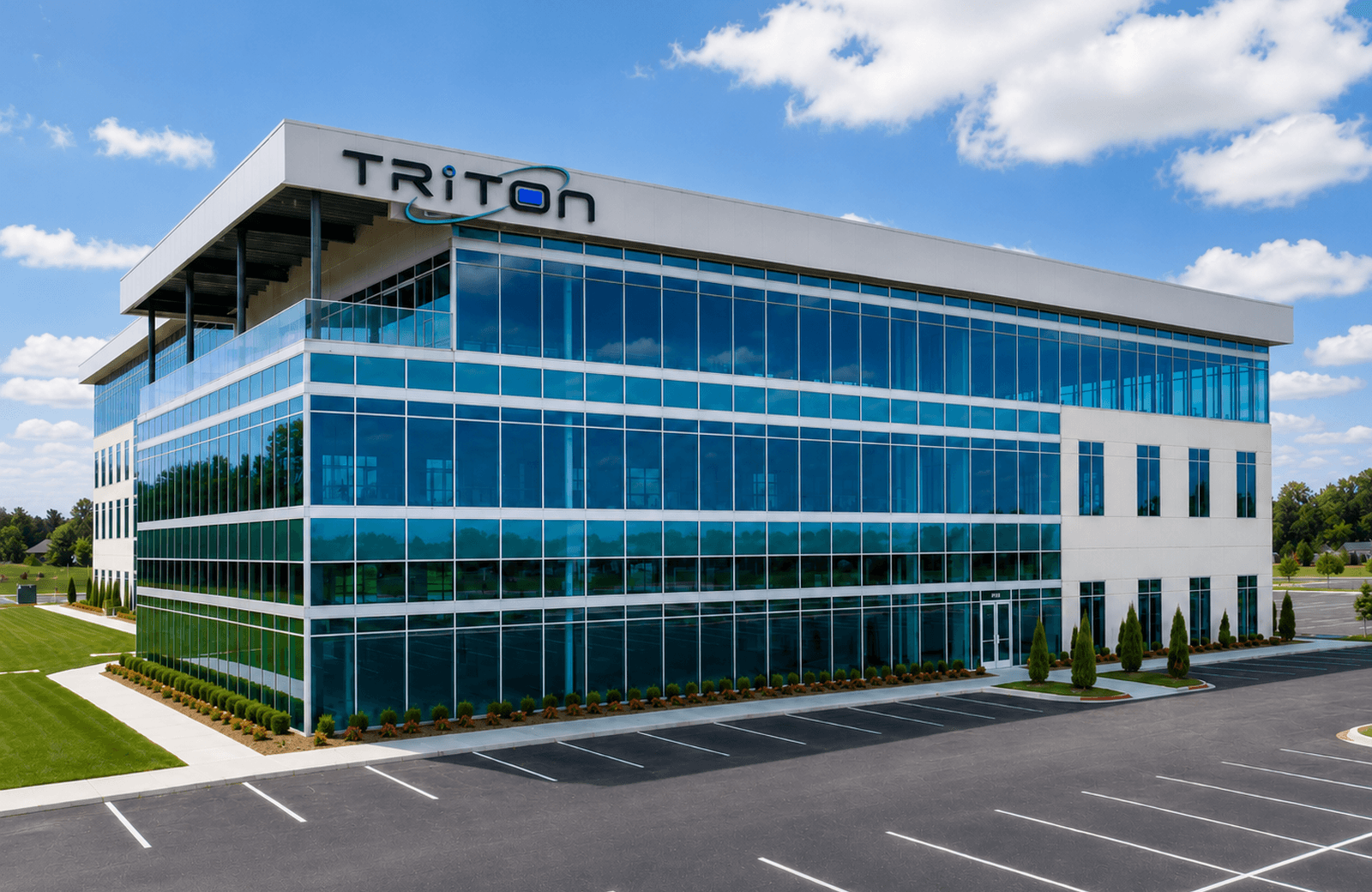
Inside Triton, that observation became known as “Jekyll and Hyde Syndrome.” An AI agent will execute a bad habit as efficiently as a good one, which is part of why the founders take the pattern seriously.
“It tells you something about leadership,” Morris says. “Respect is a habit, and habits don't check who's in the room. When people think nobody's watching, the habit shows through.”
That insight became part of Triton Emergent Academies, where leadership development extends beyond technical skills into communication, judgment, governance, and organizational culture. One focus area is helping adults relearn how to pretend, the same imaginative instinct most people had as kids before mortgages and work deadlines trained it out of them. The founders argue that skill translates directly into better AI prompting and agent design, since both depend on imagining a scenario clearly enough to describe it to something else. Coursework reflects that logic: improv training and watercolor painting sit on the schedule alongside more traditional technical sessions.
Even Triton's internal operating language reflects that philosophy. Instead of organizing projects into traditional Agile sprints, the company works through weekly orbits. Each week begins with a flight plan, concludes with a splashdown, and unfinished priorities move into a manifest.
The company's name carries similar symbolism. Triton, Neptune's largest moon, follows a rare retrograde orbit, traveling opposite the planet's rotation. For Morris and Akins, it represents a willingness to question accepted assumptions about leadership, innovation, and organizational design.
Most organizations are still focused on AI implementation. Triton is already working on what comes after: leaders who know how to build trust, accountability, and collaboration across teams where humans and intelligent systems work side by side.
Organizations interested in exploring AI and emerging technology readiness, workforce education, leadership development, or responsible AI strategy can connect with Triton Ventures, visit tritonventures.io or contact info@tritonventures.io, or connect with the company and its founders on LinkedIn: Triton Ventures, Zak Morris, and Bill Akins.