
Trump, Xi and Putin Hold Historic Summit as Democrats Prepare for Congress, Anthropic Launches Record IPO and Middle East Tensions Escalate
The past 24 hours brought major developments in global diplomacy, American politics, financial markets and international security. President Donald Trump met Chinese President Xi Jinping and Russian President Vladimir Putin in an unprecedented three-way summit focused on nuclear security and ongoing conflicts. In Washington, Democrats continued preparing to take control of Congress following their midterm election victories. Artificial intelligence company Anthropic prepared for a record-breaking Wall Street debut, while renewed missile threats in the Middle East raised concerns about regional stability and energy supplies. Meanwhile, severe storms disrupted transportation and communities across parts of the United States.

Trump, Xi and Putin Hold Unprecedented Summit in China, but Major Disputes Remain Unresolved
President Donald Trump, Chinese President Xi Jinping and Russian President Vladimir Putin held a historic trilateral meeting Thursday in Shenzhen, China, bringing together the leaders of the world's three major nuclear powers for discussions about international security, arms control and the wars involving Ukraine and Iran. The approximately 90-minute meeting took place alongside the Asia-Pacific Economic Cooperation summit, where disagreements over trade, technology and military security have increasingly overshadowed the organization's traditional economic agenda. The talks represented an unusual diplomatic gathering at a time when relations among Washington, Beijing and Moscow remain strained by competing strategic interests.
Following the meeting, Chinese and Russian officials released a four-point declaration addressing United Nations reform, global energy supplies, international legal jurisdiction and efforts to reduce nuclear risks. However, the discussions produced no announced ceasefire agreement, binding nuclear arms arrangement or clear breakthrough on Ukraine. Putin rejected a proposed pause in attacks on energy infrastructure and Black Sea targets, while Ukrainian and European officials remained concerned about negotiations involving Russia without direct Ukrainian participation. The summit's immediate significance rests in the establishment of a high-level diplomatic channel among the three governments, although substantial disagreements remain over the measures needed to end existing conflicts.
The meeting also placed renewed attention on the relationship between economic competition and national security. Washington and Beijing continue to face disputes involving advanced semiconductor technology, artificial intelligence and trade restrictions, while Russia remains central to negotiations concerning the war in Ukraine. Further bilateral discussions and official statements will determine whether the summit produces concrete negotiations beyond its initial declaration.
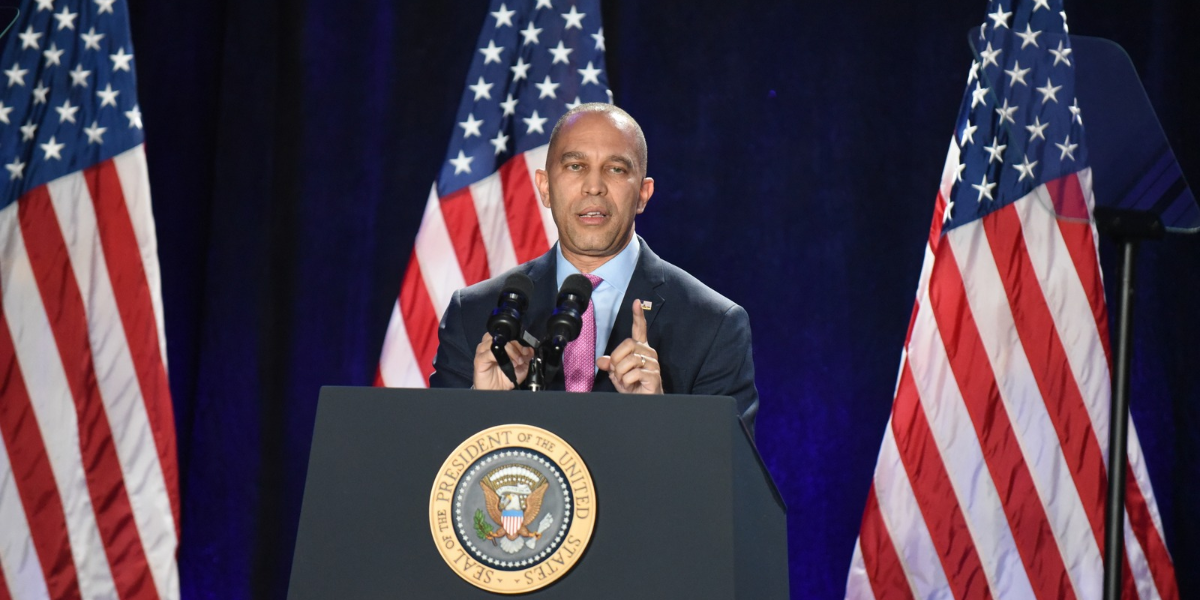
Democrats Prepare for New Congressional Majority as Jeffries Secures Speaker Nomination
House Democrats nominated New York Representative Hakeem Jeffries on Wednesday to become speaker of the House when the next Congress convenes in January, advancing a leadership transition following the party's victories in the November 3 midterm elections. Jeffries secured the nomination by a 251-11 vote during a closed-door meeting of Democratic lawmakers. If elected by the full House, he would become the first Black speaker in American history. The nomination followed an election cycle in which Democrats captured control of both chambers of Congress, significantly changing the legislative environment facing President Trump during the remainder of his term.
The final outstanding Senate contest was also resolved, with Democrat Mary Peltola defeating Republican incumbent Dan Sullivan in Alaska. Her victory gives Democrats a 56-44 Senate majority, strengthening the party's position ahead of the January transition. Peltola told the Associated Press that voters were particularly concerned about the rising cost of fuel, healthcare and everyday necessities, and emphasized that her election should not be interpreted as a mandate for partisan confrontation. She had not yet announced whom she would support as the Senate's next majority leader.
The incoming congressional majorities are expected to reshape legislative priorities, federal spending negotiations and oversight of the executive branch. However, the leadership transition will not occur until the new Congress is seated. Internal disagreements among House Democrats also remain visible, with some progressive lawmakers seeking stronger commitments on policy priorities before fully supporting the party's leadership arrangements. The next major steps include formal leadership elections, committee assignments and preparations for the new congressional session.

Anthropic Prices Record $81 Billion IPO as Wall Street Weighs the Future of Artificial Intelligence
Artificial intelligence developer Anthropic priced its initial public offering at $83 per share Wednesday, raising approximately $81.3 billion and establishing the largest IPO in stock market history. The offering surpassed SpaceX's roughly $75 billion public debut earlier this year and valued Anthropic at approximately $1.5 trillion. The San Francisco-based company, which develops the Claude AI assistant, is scheduled to begin trading on the Nasdaq on Thursday under the ticker symbol ANT. Its final offering price exceeded the previously indicated range of $70 to $78 per share, reflecting substantial investor demand despite growing questions about the financial sustainability of the artificial intelligence industry's expansion.
The offering includes approximately 980 million shares, with most being sold directly by Anthropic and the remainder by existing shareholders. The capital will provide additional resources for the company's extensive investments in computing infrastructure, research and development, and commercial AI services. However, the company's financial obligations remain considerable. Anthropic has accumulated billions of dollars in debt and committed to substantial future spending on computing capacity, even as profitability remains uncertain. Its public listing also creates a major test of how investors value rapidly growing AI businesses whose infrastructure requirements can exceed those of traditional software companies.
The offering arrives during a volatile period for technology stocks. On Wednesday, the S&P 500 declined 0.2% to 7,323.63, marking its fifth consecutive losing session and longest losing streak since June. The Dow Jones Industrial Average fell 1.1%, while the technology-heavy Nasdaq Composite gained 0.4%. Nvidia shares remained volatile despite stronger-than-expected quarterly earnings, illustrating continued uncertainty about valuations and growth expectations across the semiconductor and AI industries. Anthropic's opening trading performance will provide another important indication of whether institutional and individual investors remain willing to support the sector's exceptionally high valuations.

Missile Threats Strike Saudi Capital as Iran Conflict Disrupts Global Oil Shipping
Security tensions across the Middle East intensified Thursday after Saudi Arabia reported that debris from a missile threat had fallen on Riyadh, with damage reported in the capital's financial district. The Saudi-led coalition accused Yemen's Iran-backed Houthi movement of launching the attack, while a witness reported damage to the Public Investment Fund Tower, one of Riyadh's prominent commercial buildings. Residents reported hearing an explosion after receiving incoming-threat warnings. The Houthis had not immediately claimed responsibility for the latest incident, although the movement has repeatedly threatened Saudi targets during recent weeks. Saudi authorities also reported intercepting missiles in the country's southern region, while Houthi-controlled media described additional airstrikes on Yemen's capital, Sanaa.
The escalation coincided with renewed uncertainty surrounding maritime security in the Strait of Hormuz, one of the world's most strategically important energy shipping routes. Iran's Revolutionary Guard claimed that two supertankers carrying more than four million barrels of crude oil had caught fire after striking mines while traveling through the waterway under American military protection. Those claims had not been independently verified, and U.S. Central Command had not immediately commented. The allegations nevertheless added to concerns about the safety of commercial vessels operating near Iran and the Persian Gulf, where military activity has already forced shipping companies to alter routes and increase security precautions.
Energy transportation data illustrate the broader economic consequences. Preliminary figures from maritime intelligence company Kpler indicate that crude shipments through the Strait of Hormuz have declined to approximately 8.5 million barrels per day, about half their prewar levels. Total Middle Eastern oil exports across available routes, including pipelines and protected shipping corridors, have fallen to roughly 64% of prewar volumes. Despite those disruptions, oil prices have recently eased as the International Energy Agency anticipates a potential global supply surplus. The combination of reduced shipping capacity, elevated transportation costs and uncertain regional security continues to create risks for international energy markets, even as alternative export routes help prevent a more severe supply interruption.

Historic Flooding Hits South Florida as Powerful Storms Disrupt Both U.S. Coasts
A powerful, slow-moving storm system brought severe flooding to South Florida on Wednesday, prompting emergency declarations, highway closures and widespread disruptions to schools and public services. Preliminary National Weather Service measurements showed that parts of Broward County received as much as 15.3 inches of rain within 24 hours, overwhelming drainage systems and flooding residential neighborhoods. Broward County and the cities of Hollywood and Fort Lauderdale declared states of emergency as officials urged residents to avoid unnecessary travel. Sections of Interstate 95 and the Florida Turnpike were closed because of high water and stranded vehicles. In Hollywood, heavy rainfall caused the roof of Temple Sinai to collapse and damaged portions of a hospital, although no injuries were reported from those incidents.
The National Weather Service linked the unusually persistent rainfall partly to El Niño, which has altered seasonal weather patterns and contributed to increased storm activity across the southeastern United States. Forecasters warned that additional heavy rainfall could continue through Friday, with some areas potentially receiving another 12 inches. A developing low-pressure system near the Bahamas was also being monitored for possible subtropical or tropical development. Schools in Broward and Miami-Dade counties were closed Thursday as officials continued evaluating flooding, transportation conditions and damage to public facilities.
Meanwhile, a separate storm system brought heavy rain, strong winds and transportation disruptions to Northern California. San Francisco recorded 2.28 inches of rainfall, setting a daily record, while flooding and fallen trees affected roads throughout the Bay Area. High winds temporarily interrupted flights at San Francisco International Airport and disrupted ferry operations. Farther north, flooding affected Napa County and surrounding communities, while authorities issued warnings for areas vulnerable to landslides and debris flows. In Southern California, evacuation warnings were issued near several wildfire burn scars, where saturated hillsides can produce dangerous mudslides. Forecasters also warned that additional heavy precipitation could affect portions of the East Coast over the weekend, raising concerns about travel disruptions ahead of the Thanksgiving holiday period.
Looking Ahead
The next several days will test whether Thursday's diplomatic and financial developments lead to measurable changes. Washington, Beijing and Moscow are expected to face questions about the practical implications of their summit declaration, particularly concerning nuclear arms negotiations, Ukraine and Middle Eastern security. In Congress, Democrats will continue organizing their incoming majorities, selecting leaders and preparing legislative and oversight priorities for January. Investors will closely monitor Anthropic's Nasdaq debut and the broader technology sector for indications of whether enthusiasm for artificial intelligence can withstand concerns about high valuations and infrastructure spending.
International attention will also remain focused on missile activity around Saudi Arabia, the security of commercial shipping through the Strait of Hormuz and the effects of regional conflict on global energy supplies. Across the United States, emergency officials and forecasters will monitor additional rainfall in Florida and California, possible storm development near the Bahamas and changing weather conditions along the Atlantic Coast. With the Thanksgiving travel period approaching, the immediate priorities include restoring transportation networks, assessing storm damage and determining whether additional severe weather will threaten major population centers.