Markets, Courts, and Campaigns: America’s Political Fault Lines Deepen
The United States ended the week amid escalating legal, economic, and political tensions, as major Supreme Court rulings, evolving trade negotiations, and renewed debates over executive authority shaped the national conversation. From the Court’s continuing influence on tariffs, healthcare, and abortion policy to mounting scrutiny over federal spending and international relations, the developments underscored how deeply interconnected America’s legal institutions, economic strategy, and political climate have become heading into the summer months.

By
May 21, 2026
Supreme Court’s Tariff Ruling Continues to Reshape U.S. Economic Policy
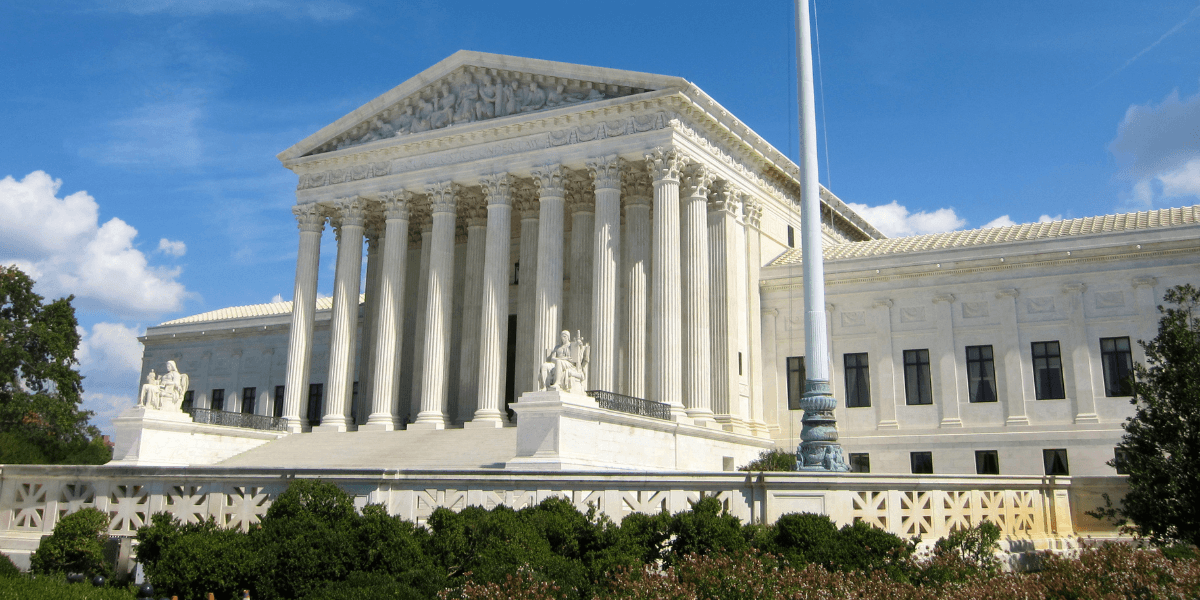
One of the most consequential developments still reverberating through Washington is the Supreme Court’s February decision striking down President Donald Trump’s broad emergency tariffs imposed under the International Emergency Economic Powers Act (IEEPA). The Court ruled 6–3 that the statute did not authorize unilateral presidential tariff powers on such a sweeping scale, significantly limiting executive authority over trade policy.
The ruling continues to carry major economic implications. Analysts estimate that hundreds of billions of dollars in tariff revenue and refund claims are now in legal limbo, while businesses and foreign governments are reassessing trade relationships with the United States. Legal scholars say the decision could also constrain future presidents from using emergency declarations to enact broad economic measures without congressional approval.
The administration has continued searching for alternative legal pathways to preserve portions of its trade agenda, but additional lawsuits are already challenging those efforts in federal trade courts.
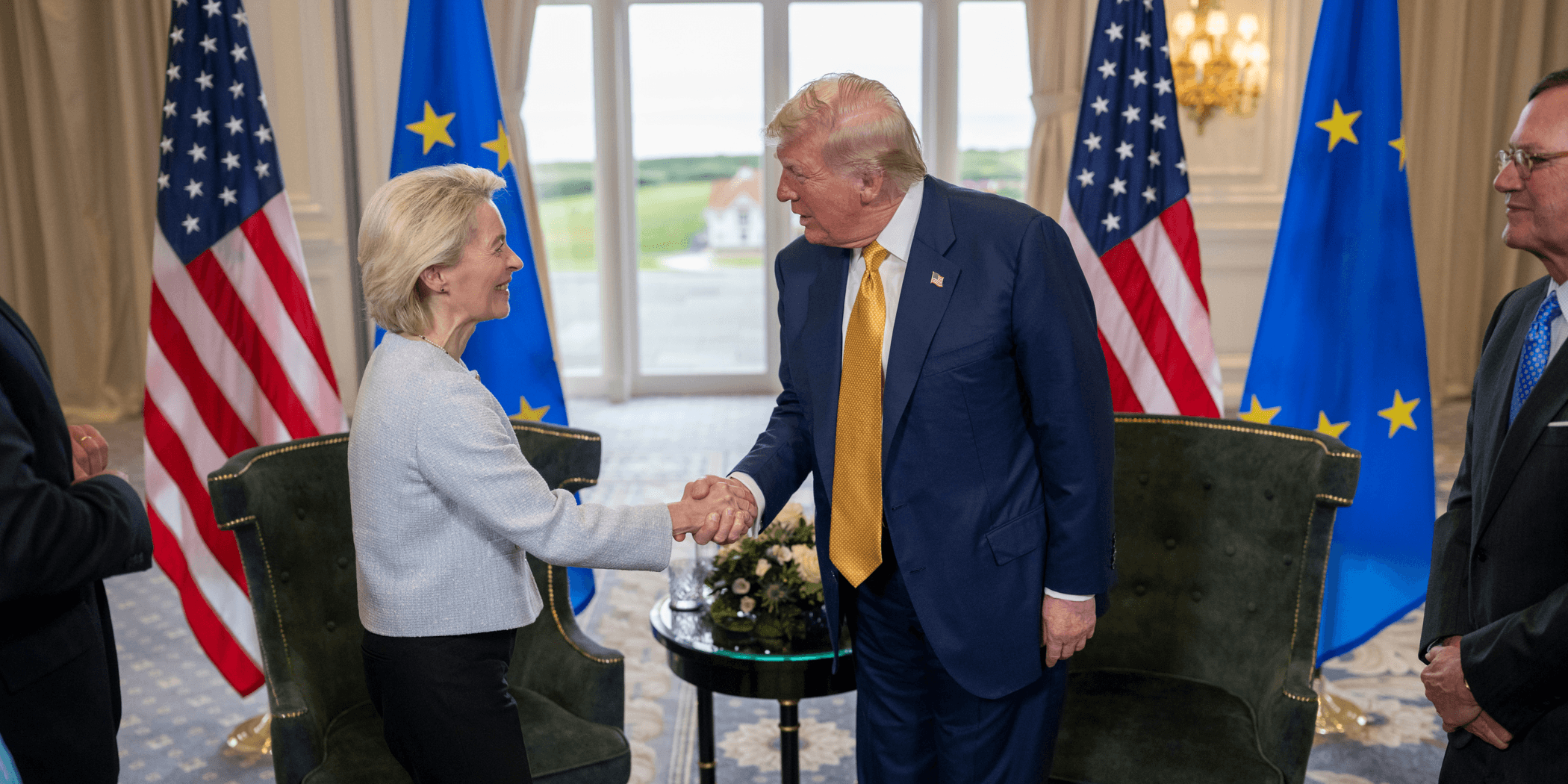
Donald J. Trump participates in a Bilateral with the President of the European Commission Ursula von der Leyen in Scotland on Friday, 27 July 2025
Photo Credit: The White House/Wikimedia
European Union Advances New Trade Agreement With Washington
In response to the shifting U.S. trade environment, the European Union moved this week to formalize a provisional trade arrangement with the United States aimed at easing tariff tensions and stabilizing trans-Atlantic commerce. European officials approved safeguards while moving forward with a broader agreement that would reduce many tariffs on American imports entering Europe.
The negotiations come ahead of a July deadline tied to possible new U.S. tariffs on European automobiles. European leaders sought guarantees protecting their industries in case Washington changes course again, reflecting continued uncertainty surrounding American trade policy after the Supreme Court’s tariff ruling.
Economists say the agreement could help avoid a broader trade conflict between two of the world’s largest economic blocs, though critics on both sides of the Atlantic argue the deal remains politically fragile. Debate is expected to intensify in the European Parliament next month as lawmakers review the final terms.

MTP Kit containing one mifepristone and four misoprostol plus a blister strip of 10 extra miso.
Photo Credit: Plancpills/Wikimedia
Supreme Court Preserves Nationwide Access to Abortion Pill by Mail
The Supreme Court also remained at the center of America’s cultural and legal debates this week after preserving nationwide access to the abortion medication mifepristone through mail delivery. In a 7–2 emergency ruling issued earlier this month, the justices temporarily blocked a lower court order that would have severely restricted remote prescriptions of the drug.
The case emerged from a Louisiana-led challenge arguing that federal mail distribution of abortion medication violated both state abortion bans and federal anti-obscenity laws dating back to the 19th century. The Court’s ruling allows current FDA rules to remain in effect while litigation continues in lower courts.
The decision represents another major flashpoint in the post-Dobbs era, as states continue testing the limits of federal authority over reproductive healthcare. Healthcare providers and advocacy groups across the country are preparing for the possibility that the issue could return to the Supreme Court in a future term for a definitive constitutional ruling.

Photo Credit: Towfiqu barbhuiya/Unsplash
Medicare Drug Price Negotiation Program Survives Industry Challenge
In another major healthcare development, the Supreme Court declined this week to hear pharmaceutical industry challenges to the federal Medicare drug price negotiation program created under the Inflation Reduction Act. The decision leaves lower court rulings intact and allows the federal government to continue negotiating prices for high-cost prescription medications.
The program, which already includes negotiations over medications such as Ozempic and Wegovy, is designed to reduce costs for older Americans enrolled in Medicare. Supporters argue it marks one of the most significant efforts in decades to curb prescription drug spending, while pharmaceutical companies maintain that the policy could reduce innovation and investment in future treatments.
The ruling also highlights an unusual area of continuity between administrations. Although Republicans broadly opposed the original legislation, the current administration has continued implementing the negotiation framework, signaling that parts of the healthcare cost-reduction effort may remain politically durable despite ongoing partisan disagreements.
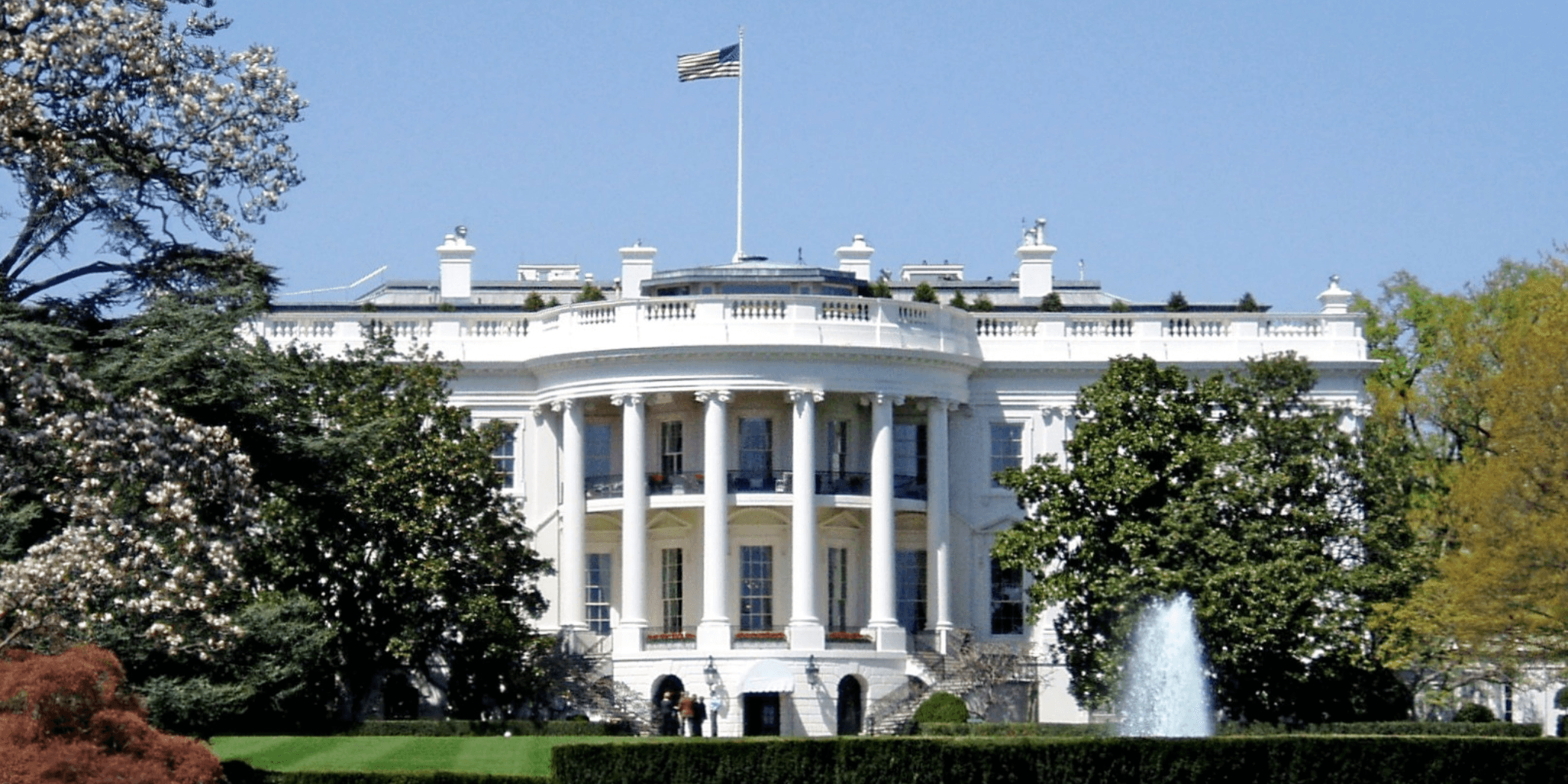
White House (President's Palace), Washington, DC, United States
Photo Credit: Matt H. Wade/Wikimedia
White House Spending and Executive Power Spark Political Backlash
Political tensions inside Washington intensified further this week over President Trump’s proposed White House ballroom project and related security expenditures. The administration defended the multibillion-dollar security allocation as necessary infrastructure spending, but criticism emerged from both Democrats and some Republicans concerned about federal spending priorities during a period of economic uncertainty.
The debate unfolded alongside broader disputes over executive authority, artificial intelligence regulation, environmental rollbacks, and immigration enforcement. The administration also drew international attention after federal prosecutors indicted former Cuban leader Raúl Castro in connection with the 1996 shootdown of humanitarian aircraft over the Florida Straits, a move widely viewed as escalating tensions between Washington and Havana.
Meanwhile, civil liberties groups raised alarms following federal raids targeting immigration activists in California and renewed protests surrounding voting rights and surveillance concerns. Together, the controversies reflect a deeply polarized national environment in which legal institutions, executive actions, and campaign politics are increasingly intertwined.
Looking Ahead
Attention now turns toward several looming deadlines and legal battles that could further shape the national landscape in the coming weeks. Trade negotiations with Europe face critical parliamentary votes, additional tariff lawsuits are advancing through federal courts, and the abortion medication dispute is expected to continue moving through the judiciary.
Congress is also preparing for renewed budget fights as lawmakers debate spending priorities and executive authority heading into the summer legislative session. With the Supreme Court continuing to influence major policy outcomes and the presidential campaign environment steadily intensifying, the next phase of America’s political and economic battles is already taking shape.