My Amaal Turns Faith And Privacy Into A New Tech Vision
My Amaal founder Kamran Mohammed transforms a personal spiritual awakening into a privacy-first Islamic technology platform.
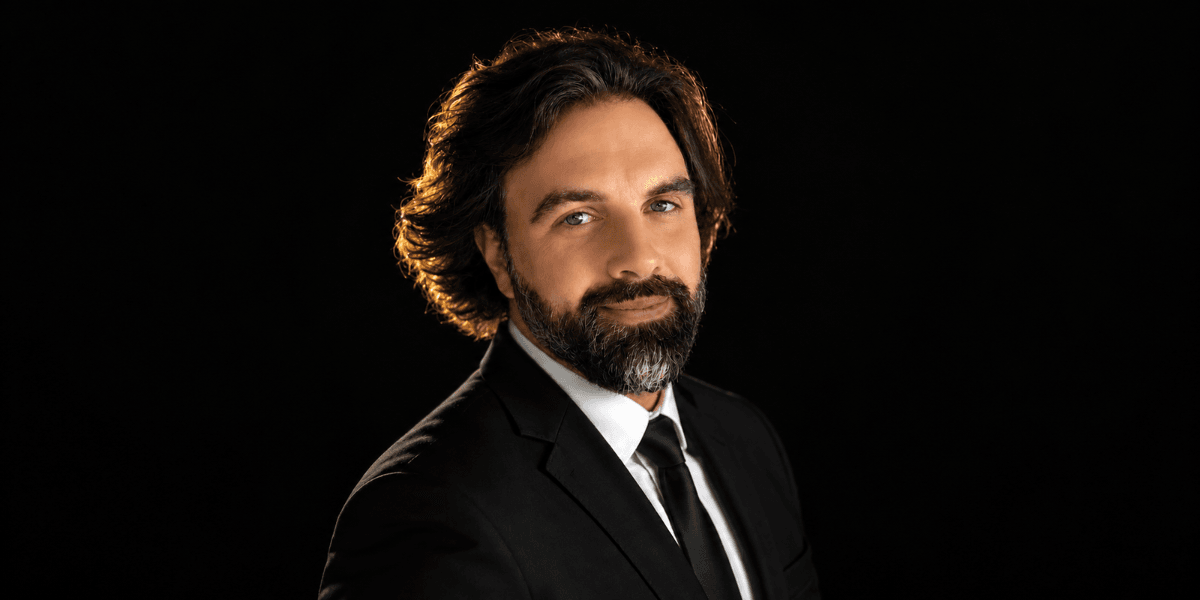
There are moments when a person is forced to reconsider what truly matters. For My Amaal founder Mohammed Abdul Kamran, one such moment came after he and his wife survived a devastating accident that nearly took their lives. The experience prompted a deeper question about purpose, faith, and the kind of life they wanted to build. That reflection eventually became the foundation for My Amaal, a mobile first Islamic worship companion designed to help everyday Muslims strengthen their spiritual practice while keeping their personal data private.
“There was a period when I barely prayed a single salah a day. Everything changed when my wife and I survived an accident that nearly took our lives. That forced us to ask: what do we actually want our lives to stand for?” Kamran said. Salah refers to the five daily prayers performed by Muslims, making the statement particularly personal for a founder whose relationship with Islamic practice was being rebuilt from the ground up.
Rather than approaching the experience as a conventional technology opportunity, Kamran began by examining his own frustrations. He found that many existing Islamic apps seemed designed for people who were already familiar with Islamic terminology, religious practice, and scholarly concepts. For someone returning to faith or trying to establish a stronger daily practice, the experience could feel overwhelming. That gap led him to ask a simple question: What would an Islamic app look like if it were created for someone who was not already an expert?
The answer became My Amaal, a platform built around accessibility, authenticity, privacy, and restraint. Its core experience includes personalized prayer times based on location, daily adhkar and tasbih, an on device dua search function, an offline Qur’an reader, a Qibla compass with haptic feedback, and reminders for Islamic occasions. Adhkar refers to devotional remembrance of God, while a dua is a personal supplication or prayer. These features are presented as practical tools for daily worship rather than as an attempt to replace religious scholarship.
That distinction is central to My Amaal’s philosophy. The company describes its role as being a “librarian, not a mufti.” In Islamic tradition, a mufti is a qualified scholar who may issue religious rulings. My Amaal instead focuses on retrieving and presenting carefully sourced religious content. “We’re a librarian, not a mufti. We retrieve and present carefully sourced, authentic content, and we never issue religious rulings ourselves,” Kamran said.
The approach also extends to how the company handles user information. My Amaal was built around the principle that privacy should not become a secondary consideration after a product gains traction. The company says it does not use advertising, tracking, or personal data monetization, while its dua matching capability operates directly on the user’s device. The core experience is also designed to work without an account or continuous internet connection.
“We will never have ads. We will never track users. Privacy isn’t a feature we advertise. It’s an amanah, a sacred trust between us and our users,” Kamran said. Amanah is an Islamic concept commonly associated with trust, responsibility, and something entrusted to another person. For My Amaal, that principle provides a framework for product decisions as much as a statement about data protection.
The result is a deliberately focused product. Instead of competing through endless notifications, content feeds, or engagement mechanics, My Amaal emphasizes a smaller collection of tools intended to support consistent worship. Prayer times, Qur’an reading, adhkar, dua discovery, Qibla direction, and Islamic reminders form the center of the experience. The company describes this discipline as a feature rather than a limitation.
That philosophy has also shaped the company’s early development. According to information provided by My Amaal, the iOS launch generated a 44.3 percent conversion rate from App Store views, while beta testers opened the application more than 300 times across six days and logged more than 100 prayers alongside dozens of adhkar sessions. The company also reports more than 20,000 LinkedIn impressions with organic engagement. These figures have been presented by the company as early indicators of repeated use rather than simply installation volume.

The company says this initial momentum came without paid marketing. “We haven’t spent a single dollar on marketing. Growth has been entirely organic, driven by word of mouth from people who genuinely find the app useful,” Kamran said. For a founder with professional engineering experience at companies including Amazon, CloudTrucks, and Rippling, the decision is notable because it places product usefulness and user trust ahead of conventional growth tactics.
That philosophy reflects the larger story behind My Amaal. Kamran did not begin with a market opportunity and then search for a problem to solve. His own experience of reconnecting with Islam exposed a practical need, and that need influenced the product from its earliest stages. The result is technology shaped by a personal journey rather than technology searching for a purpose after the fact.
My Amaal’s vision ultimately reaches beyond religious technology. At its core, the company is exploring a broader question about what digital products should optimize for. In an environment where many services depend on attention, behavioral data, and constant engagement, My Amaal is taking a different approach: technology can remain useful without becoming intrusive, and personalization does not have to require surveillance.
Learn more through the My Amaal website, Instagram, LinkedIn, and the Apple App Store. Founder profiles are available on Instagram and LinkedIn. Media inquiries may be sent to kamran@myamaal.com.
Explore A More Private Approach To Islamic Technology
My Amaal invites everyday Muslims to explore an Islamic worship companion built around accessible guidance, authentic sourcing, offline functionality, and privacy. Its central promise is not to make technology the focus of worship, but to make technology quietly useful in supporting it. As Kamran puts it, “Before asking users to pay for anything, a product must first earn a permanent place in their daily lives by being genuinely useful. Revenue should be the outcome of trust, not the objective that drives every decision.”
For a founder whose own search for deeper purpose became the starting point for a technology company, My Amaal represents an intentionally different path. Its story is ultimately about rebuilding, creating with restraint, and demonstrating that digital innovation can be guided by values as much as by growth.