
Path And The Rise Of Regenerative Software
Path introduces regenerative software, helping businesses build and continuously evolve AI native systems without traditional development bottlenecks.

As artificial intelligence continues to reshape how organizations build and operate technology, a new concept is beginning to take hold: regenerative software. Rather than treating applications as static products that require periodic replacement, this approach views software as adaptive systems that evolve alongside the businesses they support.
Austin-based startup Path is positioning itself within this shift. Cofounded by CEO Billy Kraft and CTO Patrick Hubbard, the company is introducing what it describes as an AI-native platform designed to help organizations build and iteratively refine their own software systems without relying on fragmented stacks of traditional SaaS tools.
The idea emerged from a familiar frustration across growing companies. Over time, teams accumulate customer relationship management systems, analytics dashboards, marketing automation tools, internal tracking platforms, and other specialized applications. While each tool addresses a specific function, the result is often operational complexity. Data becomes siloed, workflows span multiple systems, and even small changes require coordination across integrations or engineering resources.
Kraft observed that many organizations were not lacking software. Instead, they were constrained by it.
“Software should evolve alongside a business,” Kraft says. “It should not become something teams have to work around.”
For decades, software has largely followed a predictable lifecycle. A product is built, deployed, configured, and eventually supplemented or replaced as needs expand. Even modern no-code builders and AI coding assistants primarily accelerate development within that same structure. The underlying applications, once launched, typically remain fixed unless manually rebuilt or significantly re-engineered.
Regenerative software challenges that model. In this framework, applications are designed to adapt continuously. Rather than treating deployment as a final stage, systems are structured to evolve in response to new operational goals, market conditions, and internal processes.
Path’s platform combines AI agents with production-ready infrastructure to enable this adaptability. Instead of assembling multiple services for authentication, hosting, databases, and front-end development, users operate within a unified environment. AI agents assist in generating full-stack applications, deploying them, and iterating on them over time.
The company emphasizes that its focus extends beyond code generation. While many AI tools help developers write software faster, regenerative systems are designed to align more directly with business intent. Teams define objectives or workflows, and the platform translates those inputs into functioning applications that can be refined through ongoing interaction.
Patrick Hubbard, Cofounder and CTO of Path, explains, “The biggest problem with AI-assisted development isn't the AI. It's that we keep asking agents to make decisions they shouldn't have to make. What framework? What auth pattern? How do I secure this? Path takes all of that off the table.”
Early users have included operators seeking to build internal dashboards, marketing systems, and customer-facing tools without expanding engineering headcount. In these cases, the appeal lies in reducing the time between identifying a need and deploying a working solution.
The broader industry context supports this shift. As AI models become more capable and cloud infrastructure more accessible, smaller teams are gaining the ability to build and manage systems that previously required large technical departments. This change is altering expectations around speed and adaptability.
Rather than purchasing a new SaaS platform whenever strategy changes, some organizations are exploring ways to modify existing systems dynamically. Regenerative software attempts to address that demand by embedding iteration into the foundation of the application itself.
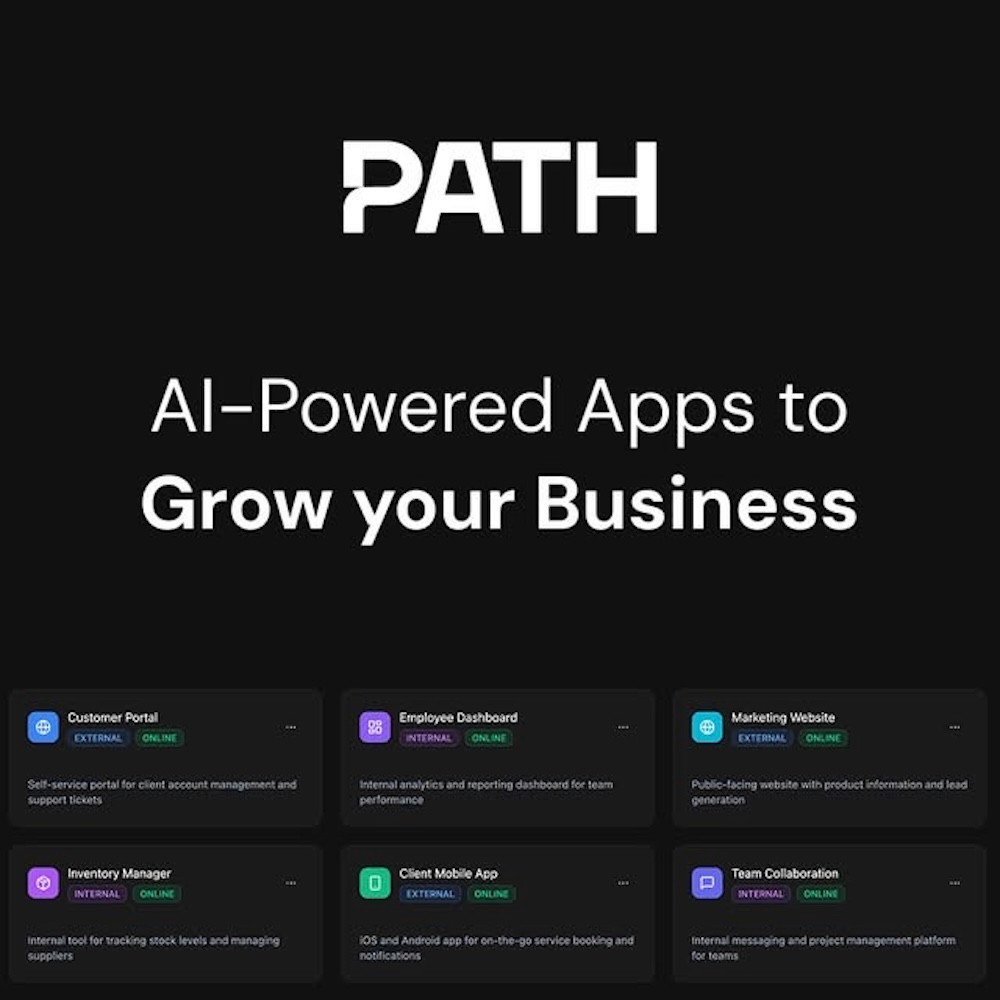
Path describes this transition as a move from “software as a product” to “software as a living system.” In practical terms, that means features can be expanded, workflows adjusted, and capabilities refined without dismantling the underlying architecture. Applications become flexible assets rather than fixed tools.
Patrick Hubbard adds, “We didn't try to build a better agent. We built the environment that lets agents do their job.”
The company is preparing for a public launch during SXSW 2026 in Austin, a venue historically associated with emerging technology trends. The event will focus on conversations around AI-native companies and the future of autonomous systems in business operations.
Looking ahead, Path plans to expand integrations and developer tooling as it builds out its ecosystem. However, its central thesis remains consistent: organizations are increasingly seeking fewer disconnected tools and more cohesive systems capable of adapting in real time.
The concept of regenerative software arrives at a moment when operational complexity continues to rise. Regulatory shifts, evolving customer expectations, and rapid market changes demand flexibility. Static applications can slow that response cycle, requiring teams to navigate backlogs or external vendors before implementing adjustments.
By contrast, adaptive systems aim to shorten the distance between decision and deployment. When business intent can be translated directly into functioning software, iteration becomes part of daily operations rather than a periodic overhaul.
Whether regenerative software becomes a defining category in the broader technology landscape remains to be seen. What is clear is that expectations around software are changing. As artificial intelligence integrates more deeply into infrastructure and development workflows, organizations are beginning to reconsider what applications should be, and how they should behave over time.
In that evolving conversation, Path represents one example of a company attempting to rethink the relationship between operators, engineers, and the systems they rely on.
Learn more at https://path.dev.