
Project Command Explores Leadership And Organizational Strategy In Fire Service
Project Command examines how leadership, project management, and organizational planning support modern fire departments and public safety operations.
Fire departments today manage responsibilities that extend far beyond emergency response. In addition to fire suppression and rescue operations, many agencies oversee infrastructure planning, communications systems, EMS coordination, staffing strategies, training initiatives, and technology implementation. As these responsibilities continue expanding, organizational planning and long-term project execution have become increasingly important within the public safety sector.
This evolving operational environment helped inspire Founder Peter Younes to launch Project Command, a podcast focused on leadership, project management, innovation, and organizational effectiveness within the fire service. Hosted by Younes, the platform explores how fire departments approach large-scale initiatives and organizational change while maintaining operational readiness.
After more than 17 years working in the fire service, Younes observed that many departments were being asked to manage increasingly complex operational and administrative initiatives without systems specifically designed for public safety organizations.
“The fire service is managing more complex projects than ever before, but many traditional project management models were not originally built around the realities of public safety operations,” Younes says.
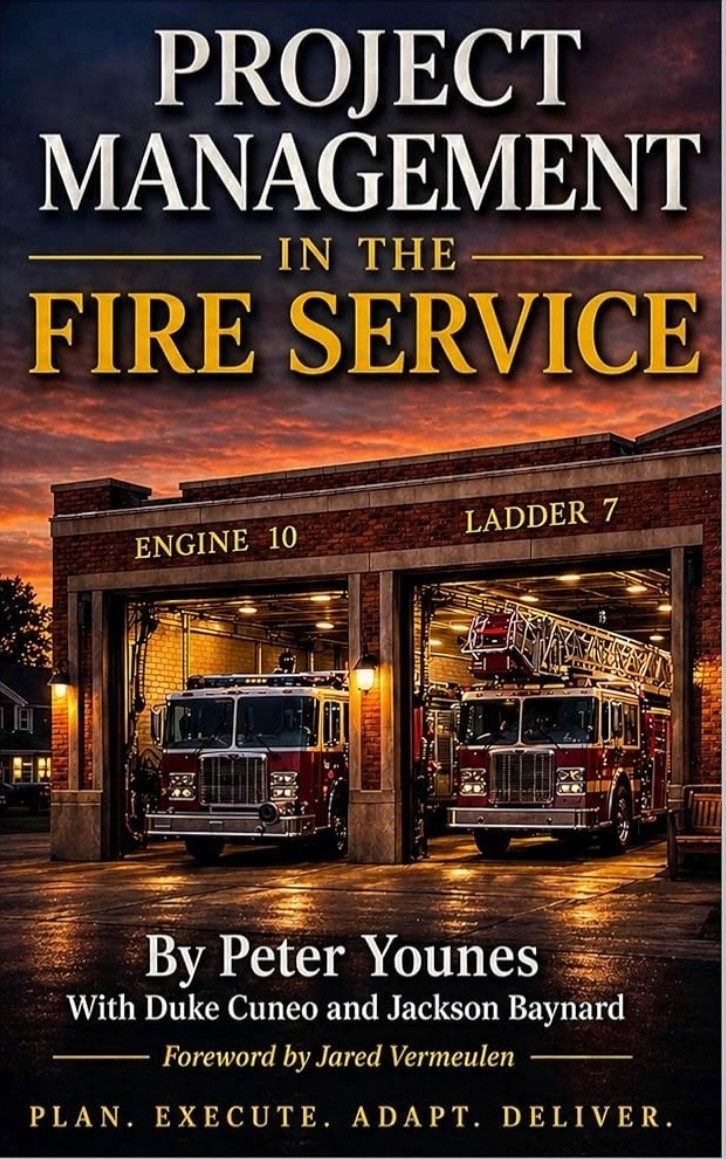
That perspective became the foundation for both Project Command and his book, Project Management in the Fire Service, which examines how structured project management principles can be adapted to the operational environment of fire departments. Readers can learn more about the book through Amazon at Project Management in the Fire Service.
Fire departments often operate under conditions that differ significantly from traditional business environments. Rotating shifts, emergency response demands, staffing requirements, public sector budgeting cycles, and command-based organizational structures all influence how long-term initiatives are developed and executed. According to Younes, these operational realities require leadership approaches that balance immediate response responsibilities with long-term organizational planning.
Project Command regularly features conversations with fire chiefs, command officers, technology leaders, educators, and public safety professionals discussing leadership, organizational development, communications systems, training programs, and operational strategy. Topics explored throughout the podcast include apparatus planning, software implementation, staffing coordination, leadership communication, and organizational culture.
The podcast also examines how fire departments are adapting to modernization efforts across the broader public safety industry. Many agencies are currently evaluating new technology systems, operational software, infrastructure improvements, and data-driven planning tools while continuing to prioritize emergency response readiness.
Younes believes leadership within the fire service increasingly involves both operational experience and organizational strategy.
“Every major initiative inside a fire department begins as a project that requires coordination, communication, and long-term planning,” he explains.
Part of what distinguishes Project Command is Younes’ combination of operational experience and formal education related to project management and organizational leadership. In addition to his fire service background, he earned a Bachelor of Science in Interdisciplinary Studies from Liberty University and an Associate of Applied Science in Fire Science from the University of Montana College of Technology. He also completed the Project Management Professional certification, a Project Management Certificate through UC Irvine, and coursework focused on organizational strategy and leadership.
Through his work, Younes emphasizes that project management within public safety extends beyond administrative procedures. He views structured planning and communication systems as tools that may help departments coordinate initiatives more effectively while supporting operational consistency.
This philosophy also contributed to the development of one of the early fire service-focused Project Management Offices designed specifically around public safety operations. Through those efforts, projects involving communications systems, EMS initiatives, infrastructure planning, operational technology, and organizational improvement strategies have been supported using structured planning frameworks adapted for fire service environments.
Another ongoing area of discussion throughout Project Command involves the role technology may continue to play in public safety organizations. Episodes often explore how departments evaluate modernization efforts while balancing operational reliability, training requirements, and organizational culture.
Rather than presenting technology as a replacement for leadership or operational expertise, the podcast focuses on how departments can assess new systems responsibly while maintaining accountability and effective communication practices. Discussions frequently examine the importance of implementation planning, stakeholder coordination, and organizational alignment during periods of operational change.
The show also addresses how organizational culture can influence the success of long-term initiatives. According to Younes, communication and leadership alignment often play significant roles in determining whether operational improvements are successfully implemented across departments.
As fire departments continue adapting to changing public safety demands, Project Command aims to contribute to broader conversations surrounding leadership, planning, and organizational effectiveness within the industry.
Through the podcast and Project Management in the Fire Service, Peter Younes continues exploring how modern management practices, operational leadership, and structured planning approaches may support fire departments as they navigate increasingly complex organizational responsibilities.
Listeners interested in fire service leadership, organizational strategy, and public safety management can explore the Project Command podcast at Project Command Podcast or connect with Peter Younes through LinkedIn.