Shifting Power and Legal Battles Define America’s Mid-May Landscape
The United States entered the week amid intensifying political, legal, and economic tensions as Supreme Court rulings on voting rights and abortion access reignited national debate, while President Donald Trump’s administration continued facing pressure over trade policy, federal spending, and party divisions ahead of the 2026 midterm elections. Across Washington, battles over executive authority, redistricting, and economic uncertainty underscored a broader struggle over the direction of American governance and the country’s political future.

By
May 18, 2026
Abortion Access Remains Intact — for Now
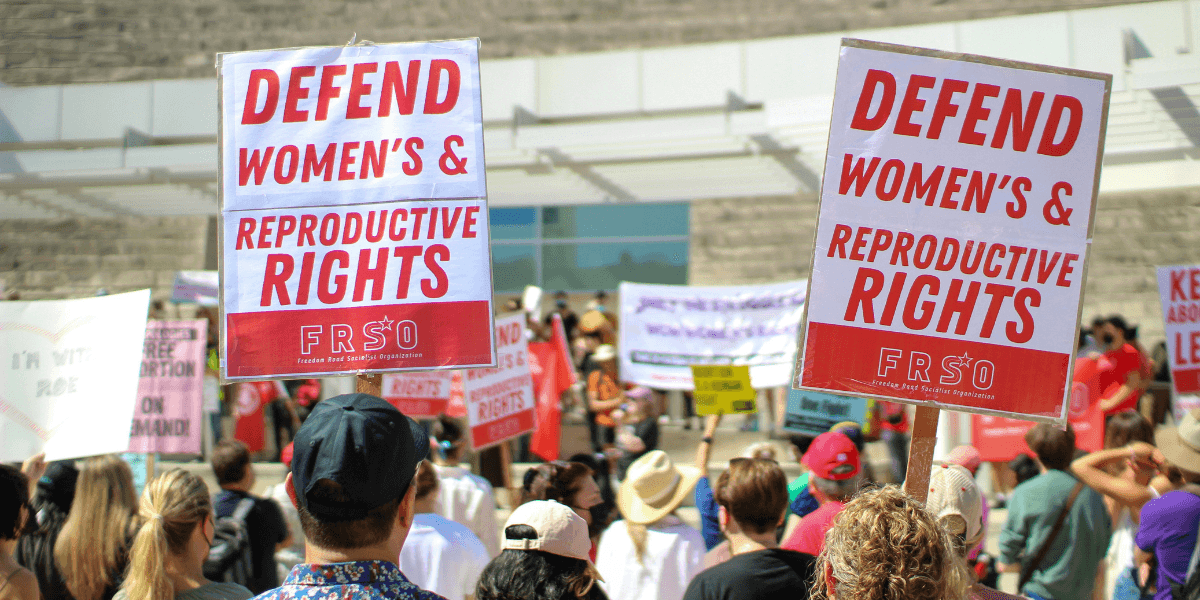
In another major judicial development, the Supreme Court temporarily preserved nationwide access to the abortion pill mifepristone through mail distribution, blocking a lower court order that would have reinstated in-person dispensing requirements.
The ruling keeps in place policies first expanded during the COVID-19 pandemic that allowed broader telemedicine access to medication abortion. The legal challenge, brought by Louisiana officials and anti-abortion groups, argued that mailing the drug into states with strict abortion bans undermines state authority.
Although the Court’s action was temporary rather than final, reproductive-rights advocates described the decision as a significant reprieve. Opponents of abortion rights, meanwhile, vowed to continue pursuing restrictions through the courts and state legislatures.
The issue remains one of the country’s most politically potent flashpoints nearly four years after the overturning of Roe v. Wade. With several additional abortion-related cases expected to reach the Supreme Court in coming months, the legal battle over reproductive healthcare appears far from settled.
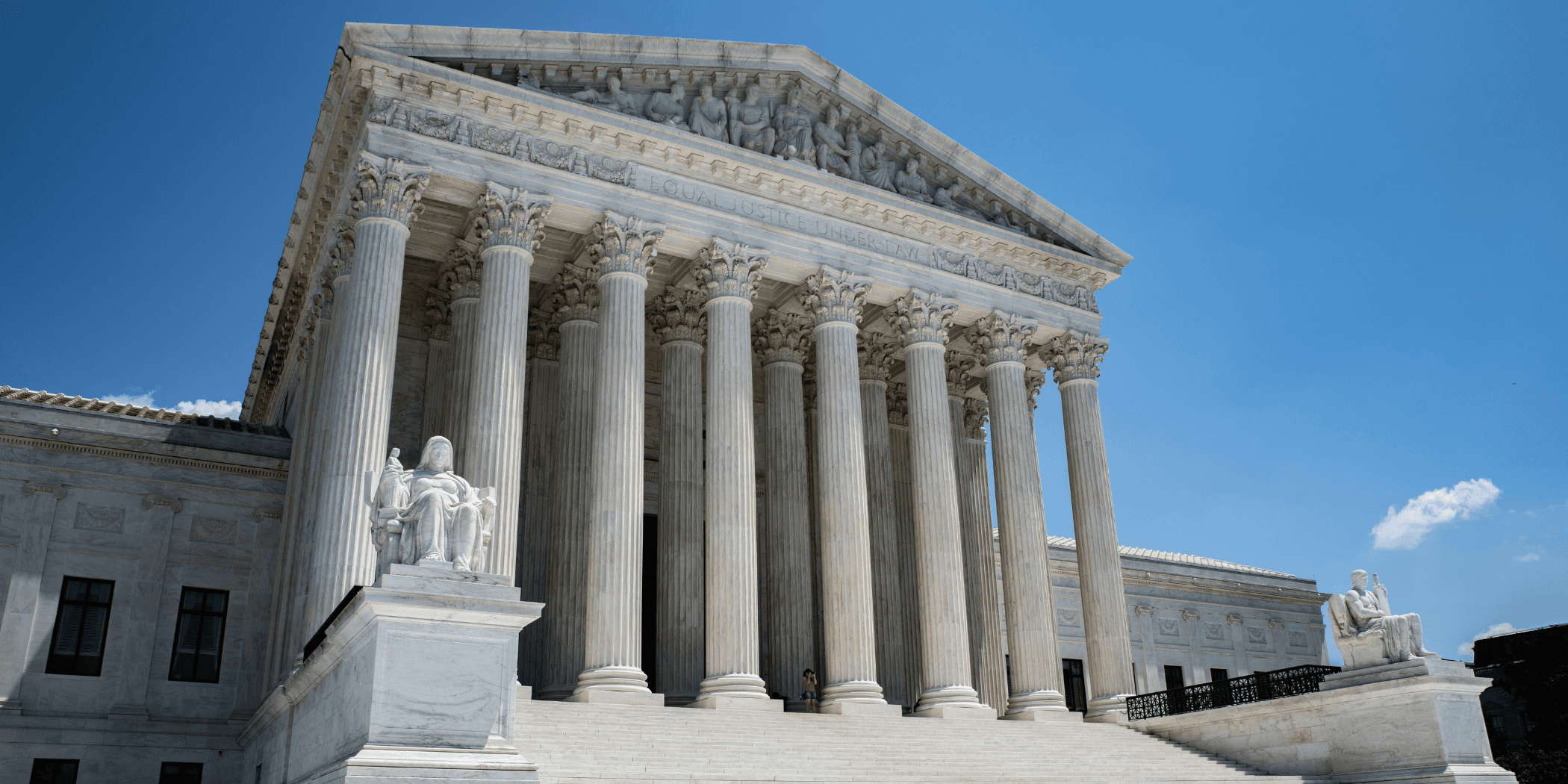
Supreme Court, Washington DC
Photo Credit: mana5280/Unsplash
Supreme Court Reopens Debate Over Voting Rights
The Supreme Court issued a closely watched procedural decision Monday by sending a major Native American voting rights case back to lower courts for reconsideration. The dispute centers on whether private citizens and advocacy organizations can sue under Section 2 of the Voting Rights Act, a mechanism that has long served as a cornerstone of voting-rights litigation.
The case originated in North Dakota, where Native American tribes challenged electoral maps they argued diluted Indigenous voting power. A lower federal appeals court had ruled that only the federal government — not private individuals — could bring such lawsuits under the Voting Rights Act, a departure from decades of legal precedent. The Supreme Court did not fully overturn that ruling but instructed lower courts to revisit the matter in light of recent decisions.
The move comes amid broader national concern over election law, redistricting, and ballot access as states continue reshaping congressional maps ahead of the midterms. Legal observers noted that while the Court stopped short of a sweeping ruling, the decision signals continuing uncertainty around the future scope of federal voting-rights protections.
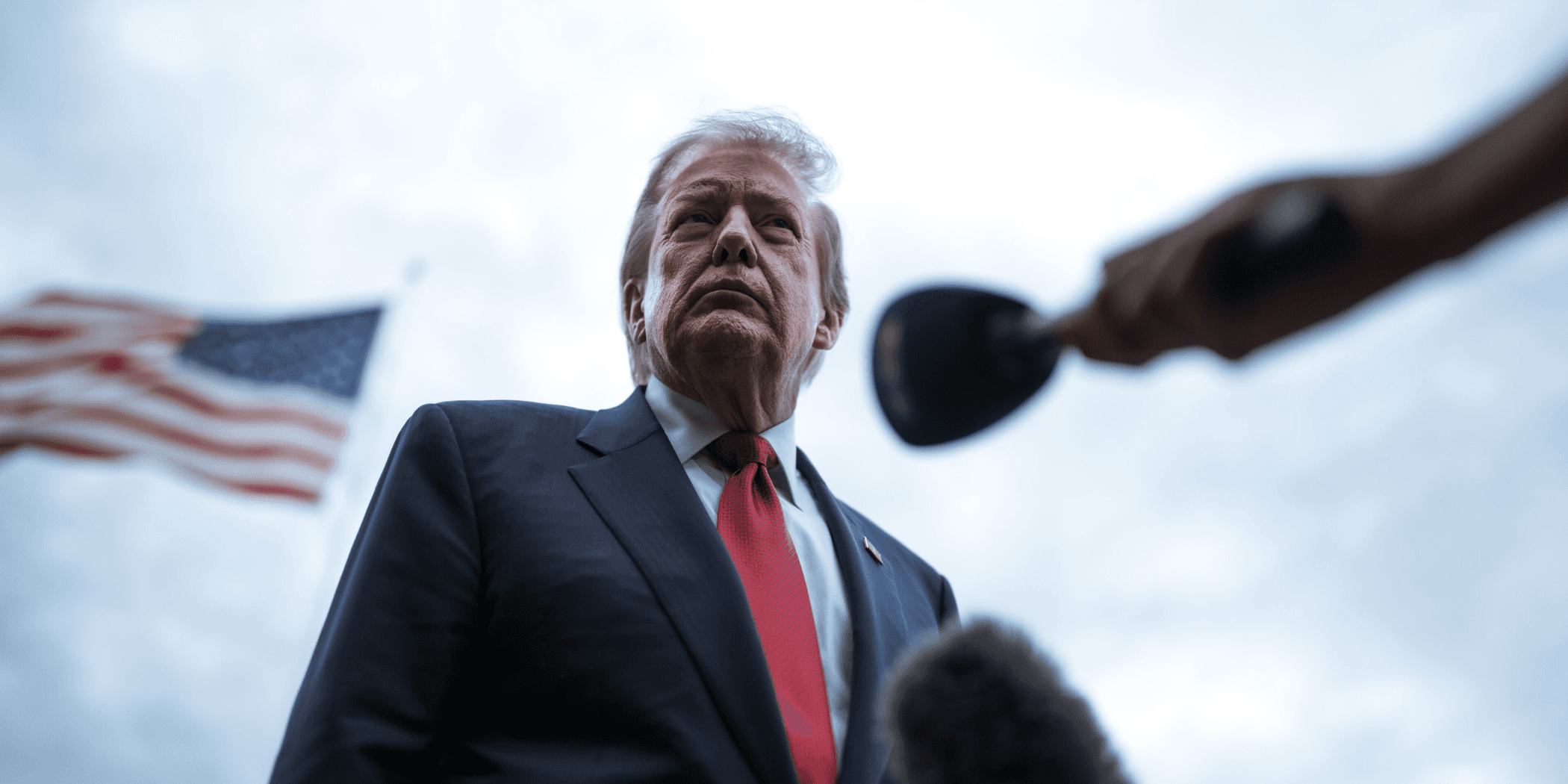
President Donald J. Trump boards Marine One on the South Lawn of the White House, Friday, May 8, 2026, en route Trump National Golf Club Washington D.C. in Sterling, Virginia
Photo Credit: Official White House Photo by Patrick B. Ruddy/Wikimedia
Republican Divisions Intensify Ahead of Midterms
Political tensions within the Republican Party deepened as several prominent Trump critics faced mounting electoral consequences. In Louisiana, Senator Bill Cassidy — one of the few Republicans who voted to convict Trump during his second impeachment trial — lost his primary contest after sustained attacks from the president and his allies.
Meanwhile, Kentucky Representative Thomas Massie continued facing pressure from Trump-backed challengers as internal party disputes increasingly revolve around loyalty to the president’s agenda. These contests reflect the ongoing transformation of the GOP into a party more tightly aligned with Trump’s political movement.
At the same time, Democrats accelerated efforts to capitalize on competitive Senate and House races. In Maine, Senator Susan Collins faces one of the most difficult reelection environments of her long political career as Democrats seek to reclaim control of the Senate.
House Minority Leader Hakeem Jeffries has also intensified national organizing efforts as Democrats attempt to regain the House majority in 2026. Party strategists continue focusing heavily on suburban districts, abortion rights, and concerns about executive power as central campaign themes.
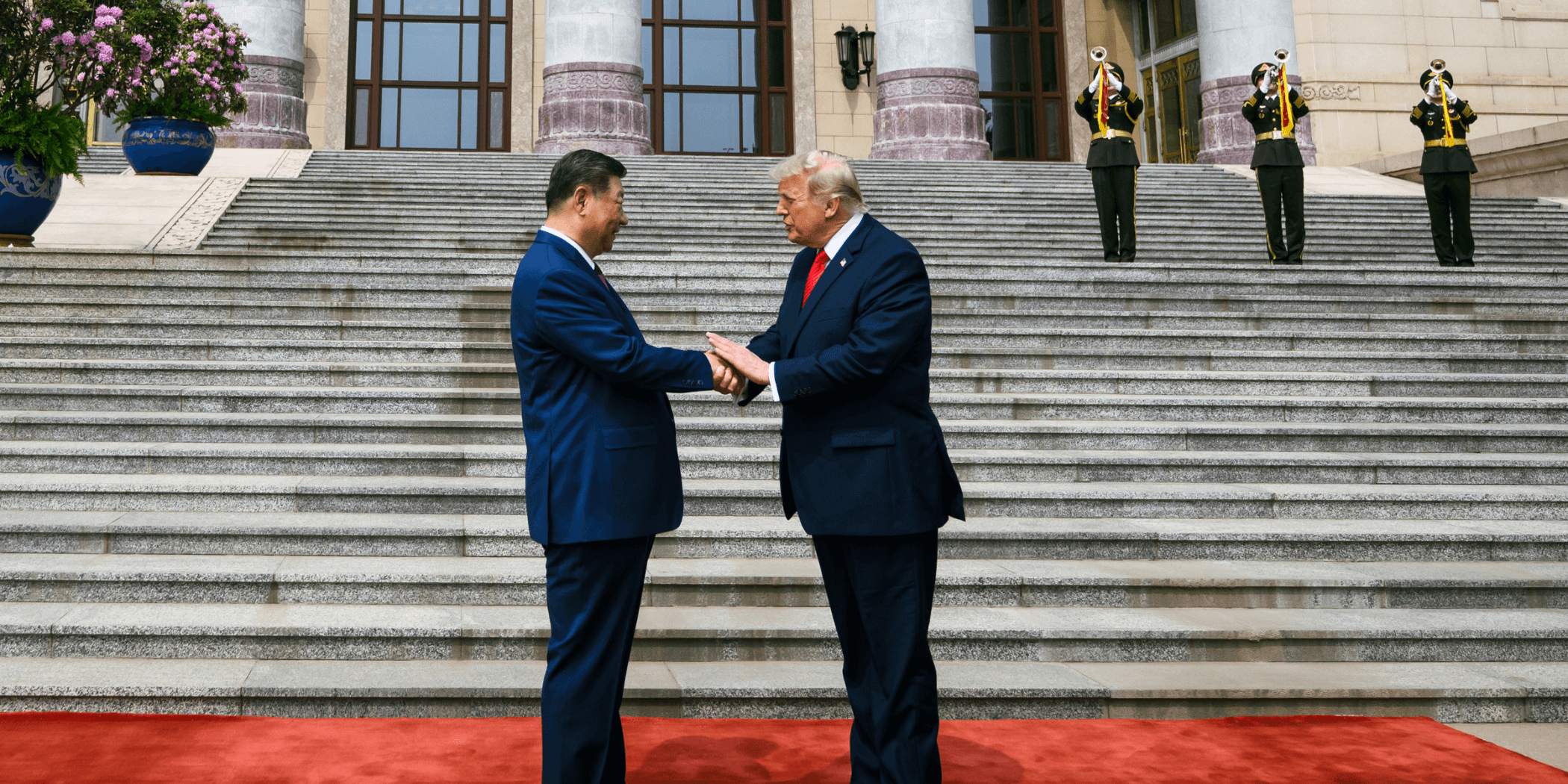
US President Donald J. Trump participates in a welcome ceremony with Xi Jinping, the General Secretary of the Chinese Communist Party and President of China, Thursday, May 14, 2026, at the Great Hall of the People in Beijing, China.
Photo Credit: Official White House Photo by Daniel Torok/Wikimedia
Trump Administration Navigates Economic and Trade Pressures
Economic uncertainty remained another major national concern as the administration continued managing the political fallout from tariffs, inflation pressures, and volatile global markets. President Trump announced new understandings with Chinese President Xi Jinping on trade and agricultural purchases following high-level discussions aimed at easing tensions between the two countries.
China reportedly agreed to increase purchases of American farm products and Boeing aircraft as part of the discussions, though analysts cautioned that previous trade agreements between the two nations have often faced implementation challenges.
At home, the labor market showed signs of continued strain. National reporting highlighted slower hiring trends and growing unease among workers across multiple industries. While unemployment has remained relatively stable, economists continue warning about the combined effects of high borrowing costs, geopolitical instability, and slowing consumer demand.
Trump’s economic approval ratings have also softened in recent polling amid concerns over foreign policy tensions and market volatility tied to global conflicts. Still, the White House has argued that tougher trade negotiations and industrial policy initiatives are necessary to strengthen domestic manufacturing and long-term economic competitiveness.
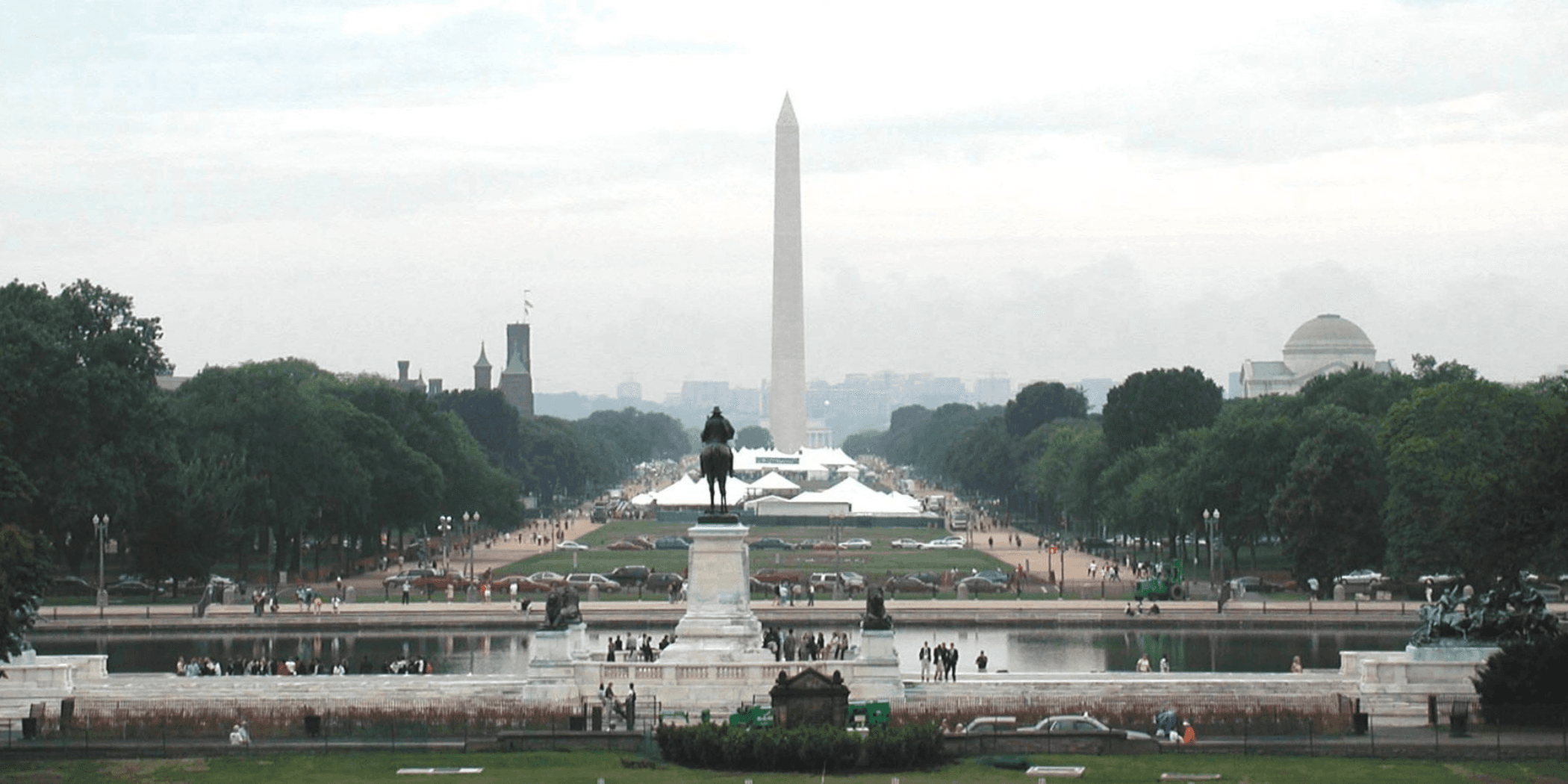
Facing West across the The Mall, with one's back towards the United States Capitol. The Washington Monument and Lincoln memorial are visible in the background.
Photo Credit: Raul654 at en.wikipedia/Wikimedia
Federal Spending and Cultural Battles Fuel Washington Gridlock
Congressional disputes over federal spending intensified after Senate officials removed funding for a proposed $400 million White House ballroom project from a broader government package. Republicans had attempted to include the project under expanded security and infrastructure funding, while Democrats criticized the proposal as an improper use of taxpayer resources.
The controversy became symbolic of broader debates over executive authority, federal priorities, and political symbolism in Washington. Additional cultural and religious disputes also drew attention this week, including criticism surrounding a large Trump-backed prayer gathering on the National Mall that opponents argued blurred constitutional lines between church and state.
Meanwhile, legal and political battles over congressional redistricting continued in several states, particularly Virginia, where Democrats unsuccessfully sought Supreme Court intervention to preserve newly redrawn House maps favorable to their party.
As the nation approaches the summer campaign season, both parties are increasingly framing the 2026 elections as a referendum not only on policy, but on the direction and identity of American democracy itself.
Looking Ahead
The coming weeks are expected to bring additional Supreme Court rulings on voting rights, immigration, and executive authority as the Court approaches the end of its current term. Congress also faces renewed budget negotiations amid intensifying partisan conflict over federal spending and immigration policy.
On the campaign trail, primary battles in several states will continue testing the political strength of President Trump inside the Republican Party while Democrats seek to build momentum around economic concerns and reproductive rights. With legal, economic, and electoral pressures converging simultaneously, the nation appears headed into an increasingly consequential political summer.