Sometimes Going the Extra Mile Is Literal
How Amark Logistics works to protect customers from avoidable freight costs — and why accountability does not end when normal business hours do.
“Going the extra mile” is one of those phrases businesses use so often that it can lose its meaning.
At Amark Logistics, there have been times when it has been literal.
When freight has been sitting at a carrier terminal and the normal delivery process was not going to meet a customer’s needs, members of the Amark team have gotten into their own vehicles, driven to the terminal, picked up the freight and helped get it where it needed to go.
That is not Amark’s normal delivery model, nor should it need to be.
But it illustrates something the company believes strongly: when a customer entrusts Amark with a shipment, responsibility does not disappear simply because the normal process has broken down.
The same philosophy is behind late-night emails, weekend phone calls, holiday problem-solving and the less visible work of reviewing shipments and carrier charges for costs a customer should never have had to absorb in the first place.
Exceptional customer service is often judged by what happens after something goes wrong.
Amark believes it should begin much earlier.
The Best Additional Charge Is the One That Never Happens
Freight invoices are complicated because freight itself is complicated.
The original rate may be based on the shipment’s weight, dimensions, freight class, origin, destination and service requirements. But additional charges can appear when the information used to quote the shipment does not match the conditions the carrier encounters.
Liftgate service. Limited access. Inside delivery. Residential service. Appointment requirements. Reclassification. Reweighs. Detention. Redelivery. Oversized freight.
Many of those charges can be completely legitimate.
But some are avoidable.
Others may be incorrect.
And still others result from information that should have been questioned before the shipment was ever dispatched.
That distinction matters to Amark.
The company does not believe protecting a customer’s transportation spend simply means obtaining a competitive rate. It also means paying attention to the details that can change that rate later.
Before pickup, Amark reviews shipment information for potential pricing and service concerns. The objective is to identify inconsistencies, missing requirements or circumstances that could lead to an unexpected charge while there is still time to address them.
Sometimes that means asking for additional information.
Sometimes it means confirming whether a service is actually needed.
Sometimes it means questioning whether the carrier being considered is appropriate for the shipment.
And sometimes the review confirms that everything is exactly as it should be.
The important part is that somebody looked.
Because a $200 charge prevented before pickup is generally more valuable to the customer than a $200 charge successfully disputed a month later.
A Carrier Invoice Is Not Automatically the Final Word
Preventing unexpected charges before shipment is only part of the responsibility.
When an invoice does not match what was expected, Amark reviews the discrepancy rather than assuming that every carrier adjustment is correct simply because it appeared on a bill.
That may mean examining shipment records, quoting information, bills of lading, carrier documentation or the circumstances surrounding pickup and delivery.
Some adjustments are valid and need to be paid.
Others deserve questions.
The purpose is not to dispute every additional charge. It is to make sure customers are paying transportation costs that can be reasonably supported.
For Amark, that is an important distinction.
A low initial freight rate has limited value if a customer routinely receives unexplained additional charges after delivery. True cost management requires looking beyond the number shown when the shipment was booked.
It requires understanding how the final transportation cost came together.
Customer Service Does Not Follow a Perfect Schedule
Freight has an inconvenient habit of developing problems outside normal business hours.
A truck running late does not wait until Monday morning.
A delivery problem does not necessarily occur between 8 a.m. and 5 p.m.
A customer facing an urgent transportation issue on Saturday does not become less responsible for solving it simply because the office is closed.
That reality has shaped how Amark approaches responsiveness.
Calls and emails are answered at night. Problems are worked over weekends. When circumstances require it, members of the team remain engaged on holidays.
Not because every shipment requires around-the-clock attention.
Most do not.
But when a customer genuinely needs help, the question is less about whether the issue happened during business hours and more about whether something can be done about it.
Amark believes responsiveness matters most when it would be easiest not to respond.
Sometimes the Normal Process Is Not Enough
Transportation is built around processes for a reason.
Carriers have terminal networks, dispatch systems, customer-service teams and established pickup and delivery procedures. Those systems successfully move enormous amounts of freight every day.
But processes do not always produce the outcome a particular customer needs.
That is when judgment becomes important.
There have been occasions when freight needed to move the final few miles and waiting for the carrier’s next normal delivery opportunity would have created an unnecessary problem for the customer.
Rather than simply explain the situation and wait, someone from Amark went to the carrier terminal and retrieved the freight personally.
The significance of that story is not that Amark employees occasionally put freight in their vehicles.
It is what had to happen before someone made that decision.
Someone had to recognize that the normal solution was not good enough.
Someone had to understand why the shipment mattered.
And someone had to care enough about the outcome to ask, “What else can we do?”
That question is at the center of good customer service.
The Extra Mile Is Usually Much Less Dramatic
Personally retrieving freight from a carrier terminal makes for a memorable story.
Most examples of good freight management are far less dramatic.
They happen when a team member notices something that does not look right and asks about it.
When someone confirms the carrier is actually going to make the pickup before the shipper closes.
When a potential delay is communicated before the customer has to ask where the freight is.
When an unexpected carrier charge is reviewed instead of simply passed through.
When someone follows up for a delivery receipt because they know the customer may need it.
When a carrier problem is escalated without requiring the customer to chase multiple people for an answer.
When an email that could easily wait until tomorrow receives a response tonight because the person sending it clearly needs help now.
These moments rarely make for dramatic stories.
They are also where much of the value in freight management is created.
The best customer service is often the work the customer never has to think about because someone else was already paying attention.
Vigilance Requires Knowing What to Look For
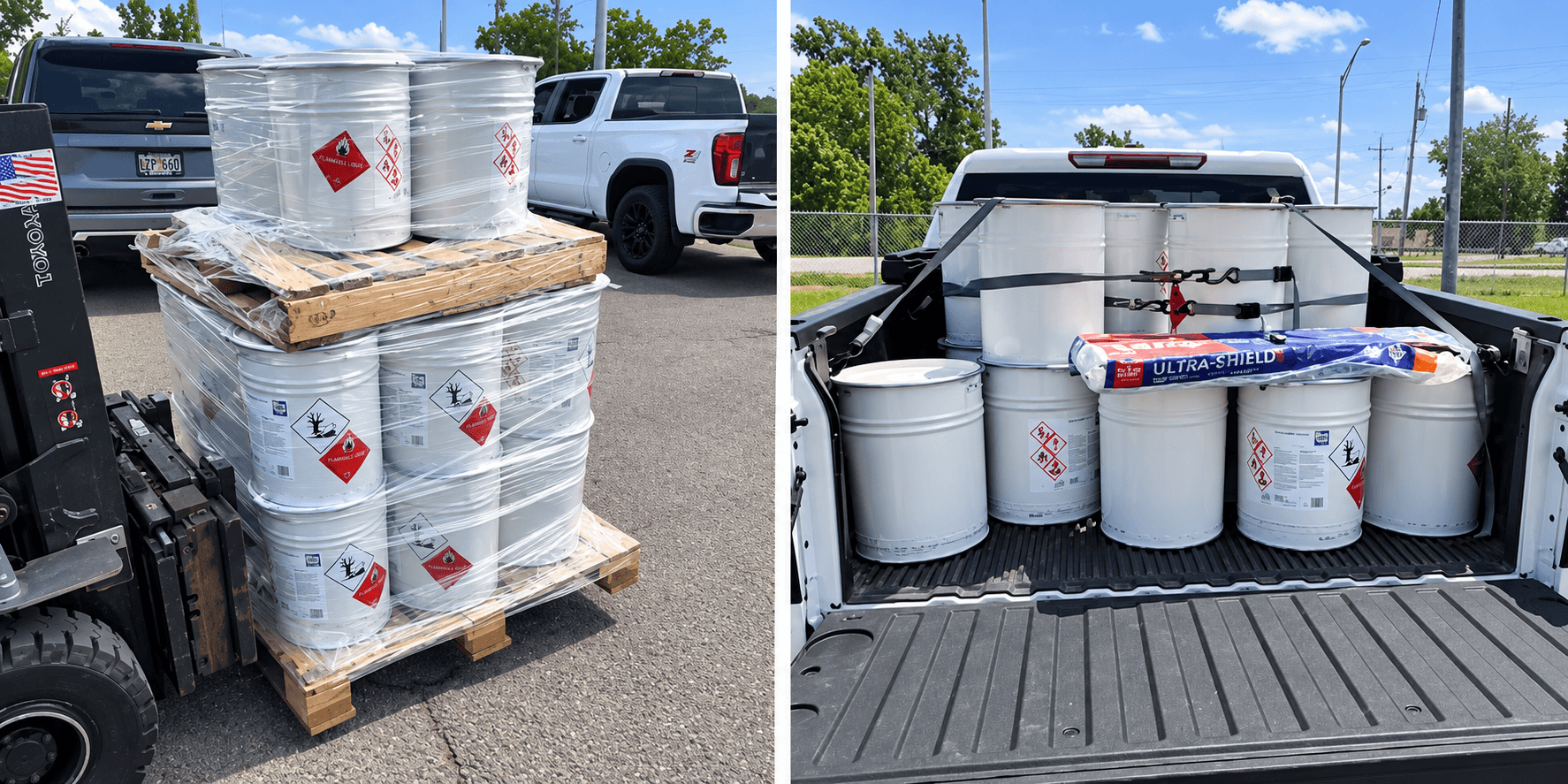
Protecting customers from unnecessary costs requires more than good intentions. It takes freight experience to recognize questionable shipment information, understand pricing factors, ask the right questions and know when a carrier invoice deserves another look.
Technology helps by providing rates, carrier options, shipment information and visibility quickly. Amark combines those tools with transportation experience to work faster and identify what deserves closer attention.
Protecting the Customer Means Caring About Both Cost and Consequence
An avoidable freight charge affects a budget. A missed pickup can affect production. A late delivery can affect someone else’s customer. In every case, somebody ultimately absorbs the consequence.
That is why Amark views vigilance and customer service as connected responsibilities. Reviewing shipments, questioning unsupported charges, answering when the timing is inconvenient and staying involved when normal processes fail all serve the same purpose: protecting the customer.
The action changes with the situation. The responsibility does not.
Going the Extra Mile Starts With Paying Attention
There will always be freight problems that cannot reasonably be predicted or prevented.
Carriers experience delays. Equipment fails. Weather changes. Terminals become congested. Circumstances change after a shipment is already moving.
Amark does not believe good freight management means pretending those realities do not exist.
It means being vigilant enough to prevent what can be prevented, responsive enough to act when something cannot, and accountable enough to remain involved until the customer has an answer.
Sometimes that means identifying a charge before it ever reaches an invoice.
Sometimes it means questioning one after it does.
Sometimes it means answering an email long after the workday was supposed to be over.
And occasionally, going the extra mile means exactly that.
For Amark Logistics, customer service is not measured by how often the company says it will go above and beyond. It is measured by what the team is willing to do when the customer actually needs it.
Connect with Amark Logistics, Richie Keane on LinkedIn, Facebook, Instagram, and TikTok.