
Stop Saving The Day: The Hero’s Rope - Leadership Shift
In The Hero’s Rope, Wesley Paterson reveals how leaders can end hero culture and build resilient, accountable teams that thrive without burnout.
NATIONWIDE -FEBRUARY 2026 - (USAnews.com) In many organizations, the leader who rescues a failing initiative or resolves a crisis late at night is praised for dedication and decisiveness. These moments often reinforce a familiar image of leadership: the individual who steps in, takes control, and ensures success when others struggle. Yet once the urgency fades, the underlying problems frequently remain. Teams continue to depend on intervention, systems remain fragile, and leaders return to an unsustainable cycle of reactive problem-solving.
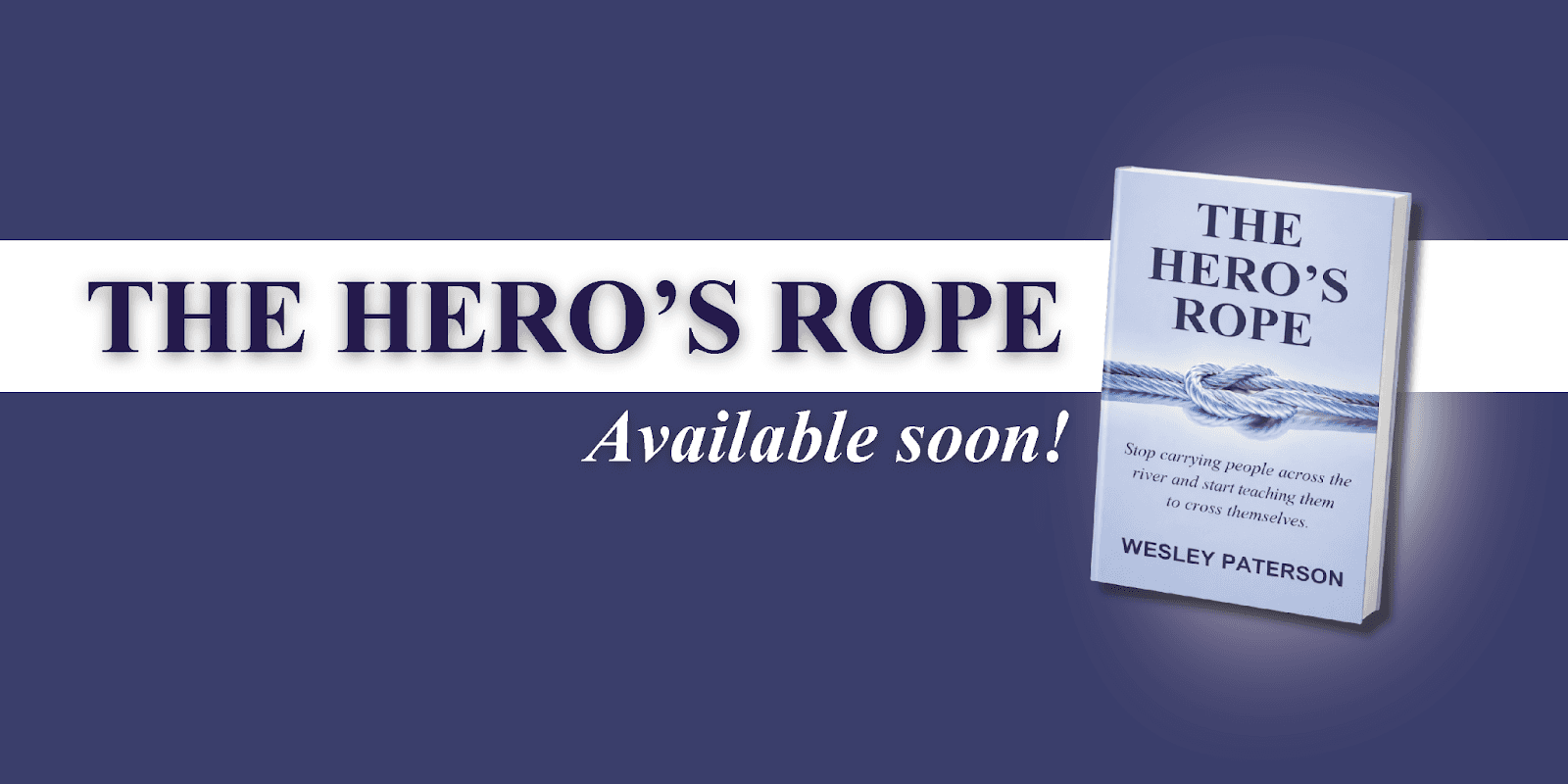
In The Hero’s Rope: Stop Carrying People Across The River And Start Teaching Them To Cross Themselves, Wesley Paterson examines this pattern and challenges the assumption that constant intervention is a sign of strength. Instead, he presents an alternative view: leadership that relies on individual heroics may inadvertently weaken organizational resilience over time.
Paterson, president of Paterson Consulting Inc. and a certified management consultant (CMC®), has worked with organizations navigating operational complexity, digital transformation, and strategic growth. Across sectors ranging from traditional energy to emerging technologies, he has observed a recurring dynamic. High-performing companies often depend heavily on a small number of capable individuals. While this concentration of expertise can produce short-term results, it can also create structural vulnerability.
According to Paterson, the issue is not commitment or competence. Rather, it is design. When decision-making authority, knowledge, and problem-solving capacity are concentrated in one or two leaders, teams may hesitate to act independently. Over time, this dynamic limits development and reinforces dependency.
At the center of The Hero’s Rope is a distinction between visible heroism and invisible systems. Modern workplaces tend to reward decisive, visible action, especially in moments of crisis. However, sustainable performance depends less on dramatic intervention and more on clarity of structure. Clear roles, well-defined metrics, and shared accountability often determine whether progress can continue without constant oversight.
Paterson argues that leaders benefit from shifting their identity from firefighter to architect. A firefighter responds to emergencies. An architect designs conditions that prevent them. This shift does not require leaders to disengage. Instead, it calls for deliberate investment in systems that distribute capability across the organization.
In practical terms, this includes establishing clear decision-making frameworks, aligning incentives with collective outcomes, and ensuring that expectations are transparent. When individuals understand their responsibilities and have the authority to act within defined boundaries, organizations become less dependent on escalation.
One example frequently cited in discussions of Paterson’s consulting work involves efforts to transform retired oil and gas sites in Alberta into grid-connected clean energy opportunities. Projects of this scale require coordination across technical, regulatory, and financial domains. Success depends not on a single decision-maker but on integrated collaboration. Such initiatives illustrate how structured alignment can bridge industries and disciplines effectively.
This emphasis on integration reflects a broader theme in The Hero’s Rope: performance becomes stable when accountability is shared. In hero-driven cultures, results may fluctuate. Intense effort can generate impressive short-term gains, but repeated reliance on urgent intervention often leads to fatigue. Leaders experience burnout, and team members may feel underutilized or uncertain about expectations.
By contrast, environments built around shared ownership encourage consistent contribution. Decision-making accelerates when individuals do not wait for approval at every stage. Professional growth increases when people are trusted with responsibility. Over time, resilience strengthens because capability is distributed rather than concentrated.
The timing of these ideas aligns with contemporary organizational challenges. Leaders today face rapid technological shifts, workforce fatigue, economic uncertainty, and rising stakeholder expectations. Under pressure, the instinct to personally resolve emerging problems can intensify. Yet constant intervention may prevent the very adaptability organizations require.
Paterson describes modern leadership as an exercise in embedding standards into systems rather than enforcing them through presence alone. When expectations are documented, processes are transparent, and feedback loops are clear, performance becomes less dependent on proximity to authority. Teams are better equipped to navigate ambiguity independently.
Importantly, The Hero’s Rope does not frame ambition or accountability as problematic. Instead, it reframes accountability as collective rather than individual. Leaders remain responsible for direction and integrity, but they cultivate conditions where others can operate confidently within that direction.
This approach also affects talent retention. Employees who are entrusted with meaningful responsibility often report greater engagement. When their contributions influence outcomes directly, professional growth accelerates. Conversely, when critical decisions are routinely centralized, initiative can diminish.
Organizational durability emerges as a central outcome of this leadership shift. Durable organizations maintain momentum even when key individuals step away. They adapt without destabilizing. They scale without overwhelming those at the top. These characteristics become particularly important during periods of transition, such as expansion, technological integration, or leadership succession.
The metaphor embedded in the book’s title captures this transition clearly. Carrying others across a river may solve an immediate problem. Teaching them to cross independently changes the future. The first approach addresses urgency. The second builds capacity.

In practice, the transition from hero culture to structured empowerment requires intentional effort. Leaders must clarify decision rights, establish measurable goals, and provide feedback that reinforces ownership. They may also need to resist the impulse to intervene prematurely. Allowing teams to navigate manageable challenges can strengthen competence and confidence.
Over time, organizations that adopt this philosophy often experience reduced volatility. Performance becomes more predictable because systems guide behavior. Leaders regain strategic focus because they are no longer absorbed in routine problem resolution. Teams develop depth because responsibility is not confined to a select few.
The Hero’s Rope ultimately presents leadership as a design discipline. Rather than measuring effectiveness by how often a leader rescues a situation, it encourages evaluation based on how well the organization functions without rescue. This perspective shifts attention from personal recognition to structural health.
As complexity continues to shape the business landscape, the distinction between heroic effort and sustainable architecture may grow increasingly relevant. Leaders who prioritize capability-building over crisis response may find that their organizations are better positioned to endure uncertainty and capitalize on opportunity.
In that sense, the applause that follows a dramatic rescue may be less significant than the quiet stability of a system that no longer requires one.
Additional information about The Hero’s Rope and Wesley Paterson’s work can be found through Paterson Consulting Inc. (https://patersonconsulting.ca/). Professional updates and insights are also shared via X (formerly Twitter) at https://x.com/patersonconsult, on LinkedIn at https://www.linkedin.com/in/wes-paterson-consultation/, and through Instagram at https://www.instagram.com/patersonconsulting/.