
The Burgundy Car That Changed an Industry
Yusuf Yaran’s odyssey from chef prodigy to bestselling author shows how Rich Chef Poor Chef® bridges cooking talent and financial literacy.

A 13-year-old's first day in an Istanbul kitchen, a forgotten wedding cake, a US$1,000 dessert, and a Guinness World Record. The story behind Rich Chef Poor Chef®, the first book ever written for chefs and hoteliers about wealth.
Istanbul, 1990. Yusuf Yaran is 13 years old, kicking a ball with three friends on a street in Bakirkoy. He has no plans for the afternoon. He certainly has no plans for a career.
A burgundy Dogan car pulls up. Inside are his uncles Kemal and Celal Çetin, both legendary chefs in Türkiye. Two words: “Get in.” Within minutes, Yusuf is standing in a sweltering kitchen on the other side of the city. The chopping is rhythmic. The stove heat is brutal. Orders move faster than thought. And then, from the pastry section, the scent of fresh bread and vanilla cuts through everything.
Something clicks. His uncle Kemal Çetin looks at him and says: “You were born to be a chef. You might never be rich. But respect the golden rules of the kitchen, and you'll always have work.”
That sentence becomes the tension line of his entire life. Thirty-five years later, the No.1 international bestselling author of Rich Chef Poor Chef® has spent his career trying to prove the first half of that sentence wrong. The book is the proof.
Awards & Recognition
In 2026, Rich Chef Poor Chef® received the Best Business Book of Hospitality and Career Category in the United States award from Best of Best Review. The recognition highlighted the book’s impact on financial literacy, leadership, and career sustainability in hospitality, praising Yusuf Yaran’s ability to combine elite culinary experience with practical wealth-building strategies for chefs and hospitality professionals. The award further positioned the book as one of the few hospitality-focused business guides centered on long-term wealth creation rather than survival alone.
The Championship Year, and The Wedding Without a Cake
By 1999, Yaran was 22. He had won Turkey’s first-ever national pastry championship, beating 420 competitors to become the country’s officially recognised best pastry chef. The same year, he got married. And forgot to arrange a wedding cake. His wife will confirm. It is the kind of story he tells against himself, not as humour, but as evidence of how total immersion in kitchens can erase everything outside them.
The championship should have been a turning point. Instead, it exposed a gap. He spent the night before the competition convinced he would fail. He spent the day terrified the title would not translate into anything that paid. He was right to be concerned. National titles in pastry do not come with financial guarantees.
That early gap, between recognition and reality, becomes one of the central ideas behind Rich Chef Poor Chef®.
The Sultan’s Golden Cake
In 2002, Yaran became the first Turkish Executive Pastry Chef at Çırağan Palace Kempinski Istanbul, a position he held until 2006. In 2005, at Çırağan, he created the Sultan’s Golden Cake.
A US$1,000 signature dessert, delivered in a handcrafted silver box with a golden seal. It became an international reference point in luxury pastry, the kind of story tier-one business media highlights for its precision: price, presentation, prestige.
But behind the recognition was a quieter reality. It did not produce wealth for its creator. It produced acclaim. And in the hospitality industry, acclaim does not automatically translate into financial structure.
The Olympics, and the Guinness World Record
In 2008, Yaran joined Team A representing Türkiye at the World Culinary Olympics. It was the country’s first appearance at that level of competition. In December 2011, in Shanghai, he and his team set a Guinness World Record for the world’s longest Christmas Yule Log cake (1,068 meters). The project stretched across an industrial-scale production effort and remains one of the largest collaborative pastry achievements ever executed.
The initiative was led under the vision of Çetin Sekercioglu, a global leadership figure and CEO known for challenging conventional Profit & Loss thinking, who would later become one of the two foreword authors of Rich Chef Poor Chef®.
The other foreword is written by Paul Pairet, Michelin-starred French chef and founder of Ultraviolet in Shanghai, the world’s first multi-sensory restaurant awarded three Michelin stars. Pairet first met Yaran in 2001 at Restaurant Cam in Istanbul, where Yaran worked as his Chef Patissier. It was Pairet who later introduced him to Pierre Hermé in Paris. By any conventional measure, Yaran’s culinary career had reached the top. And yet, a pattern kept repeating.
The Pattern
“I’ve trained under the best chefs in the world and worked in over 20 countries,” Yaran says. “The most consistent pattern I’ve ever seen is brilliant chefs going broke. Not because they failed at cooking. Because no one ever told them cooking and earning are two different skills.”
That observation, more than any award, title, or record, became the foundation of the book. His view is structural. Software engineers have entire libraries on career progression. Financial advisors have hundreds of books on wealth systems. Real estate professionals have frameworks built over decades.
For chefs, until recently, there was nothing comparable. Only memoirs. Only recipes. There was no Rich Dad, Poor Dad for kitchens. No structured financial education for the profession. And that absence is the gap he set out to address.
“Cooking schools teach you how to cook,” he says. “They don’t teach you how to be paid what your cooking is worth. That single gap has destroyed more culinary careers than any failed restaurant ever did.”
The Three Steps
Rich Chef Poor Chef® is built around a system developed over Yaran’s three decades in hospitality: Acknowledge. Activate. Achieve.
Acknowledge is the mindset layer, identity, values, time management, communication, and self-awareness inside a demanding profession. Activate is the career layer, continuous learning, building a culinary footprint, investing in personal development, and expanding professional networks. Achieve is the financial layer, career advancement, wellbeing, financial literacy, real estate awareness, and money management.
The system is deliberately simple. The intended reader is not a financial analyst.
The book’s reader avatar is Mehmet, a 38-year-old chef in Bakirkoy, Istanbul, married, high school educated, working long hours in a hotel kitchen. He is skilled, but uncertain. Experienced, but financially anxious. He believes he is too late to change.
He is not looking for theory. He is looking for structure.
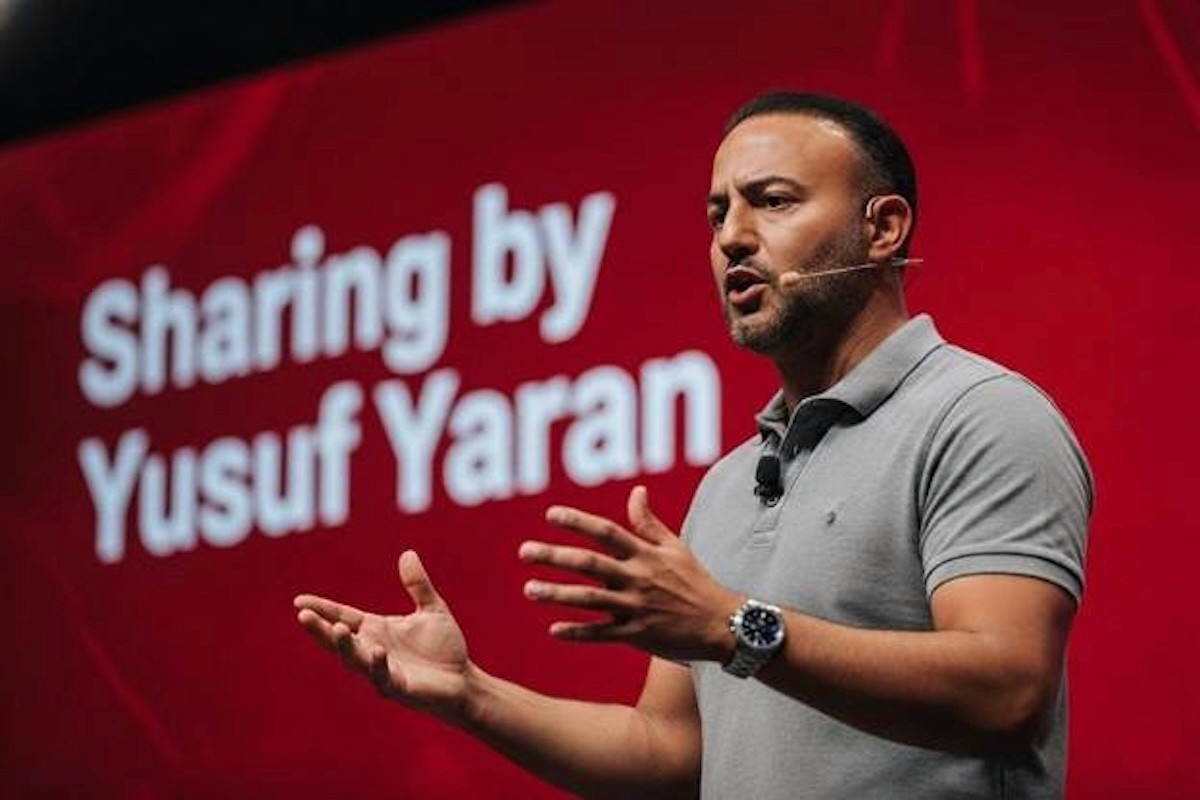
Built From Practice, Not Theory
To support that structure, Yaran’s own background extends beyond kitchens. He holds a Master’s degree from Cornell University, an MBA from Universidad Internacional de La Rioja (UNIR), executive training from Harvard Business School, and is completing doctoral research (DBA) at the Business School of the Netherlands focused on hospitality and financial markets.
Since 2019, he has been an active trader of US commodities and US financial markets, applying kitchen disciplines, mise en place, forecasting, timing, to position sizing and risk management.
He studied markets under Mary Buffett at the Buffett Online School Singapore, Sandy Jadeja’s live trading programs, Tony Robbins, Robert Kiyosaki, and other structured systems focused on discipline, psychology, and execution.
Everything in the third step of the book traces back to that practical framework. He is not theorising about wealth. He is documenting what he has built.
What the Book Actually Is
Rich Chef Poor Chef® is not a memoir, although it contains stories. It is not a cookbook, although it is written by a chef. It is a business and career strategy book written by a senior operator who has spent his entire life inside kitchens and outside conventional financial frameworks. “Most chef stories celebrate the climb,” Yaran says. “Mine teaches the climb.”
That distinction is central to the book’s purpose. The industry has no shortage of culinary storytelling.
What it lacks is structured financial thinking for one of the largest workforces in the global service economy. Yaran wrote the book because the boy in the burgundy car deserved one.
So did the millions of chefs working 70-hour weeks across the world who were never taught how to turn skill into structure. That gap is what Rich Chef Poor Chef® was built to close.
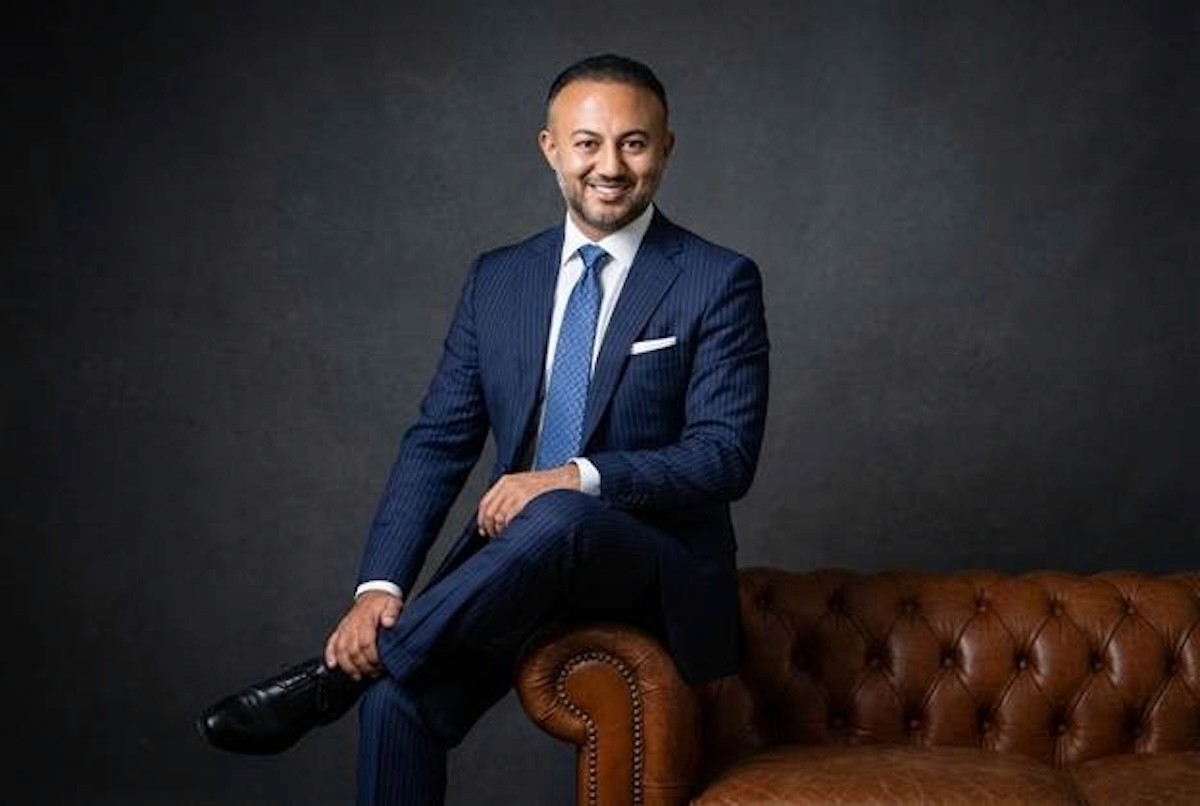
Yusuf Yaran
Yusuf Yaran is the No.1 international bestselling author of Rich Chef Poor Chef®, the first and only book written for chefs and hoteliers about wealth creation and career transformation. A Cornell-trained hospitality leader, Culinary Olympian, Guinness World Record holder, and active financial markets trader, he has worked across more than 20 countries over 30 years.
He has trained under Paul Pairet, Michelin-starred chef and foreword author of Rich Chef Poor Chef®, Pierre Hermé, Max J.W. Thomae, and Fabrice Canelle.
He holds a Master’s from Cornell University, an MBA from UNIR, executive training from Harvard Business School, and is completing doctoral research at the Business School of the Netherlands.
Learn more at richchefpoorchef.com and yusufyaran.com.
Brand & References