
The Two Bills Nobody Ever Sends You In Retirement
Bruce J. Smith III challenges retirees to look beyond investment returns and examine the hidden costs that can shape a family’s retirement.
For forty years, people trade their time and energy for money. Then retirement reverses the exchange. Paychecks stop, savings begin funding daily life, and every dollar withdrawn is a piece of the life those savings were meant to fund. Bruce J. Smith III believes that is when a different question should take center stage: How much of that money will actually benefit or remain with the family?
An author, media personality, and founder of The WealthKare Investment Centers, Smith has spent more than 30 years as a fiduciary wealth advisor. He has built his retirement planning philosophy around two costs he believes deserve far more attention: the lifetime cost of financial advice and the taxes waiting inside traditional retirement accounts. At WealthKare, planning starts with those two costs rather than treating them as afterthoughts.
“There are two bills nobody ever sends you,” Smith says. “One is taken out before your statement is printed. The other is waiting inside an account you think is all yours.”
The first bill concerns how investment advice is priced. Under a percentage-based fee structure, the dollar amount paid to an advisor rises as the value of the account rises. WealthKare takes a different approach. For clients the firm takes on after an individual evaluation, it charges a flat $10,000 annual fee for investment portfolio management. The goal is simple: separate the cost of advice from the size of the portfolio, so the fee does not climb just because the account has grown.
The second bill is less visible. Traditional 401(k) plans and traditional IRAs generally contain money on which income tax has been deferred. That tax bill comes due when the money is withdrawn, whether by the owner or by the family that inherits the account. For families with substantial retirement savings, Smith argues that understanding the cost savings from when and how those taxes will be paid can be just as important as deciding how the portfolio is invested.
Looking Beyond The Retiree’s Lifetime
Smith believes retirement planning should not stop with the life of the account owner. The rules surrounding inherited retirement accounts can extend costly financial consequences into the next generation.
Under current IRS rules, most non-spousal beneficiaries, such as adult children, must empty an inherited retirement account within 10 years. If the original owner had already begun required distributions, the heirs must also take annual withdrawals during those 10 years. Exceptions apply to certain eligible beneficiaries, but for many families the result is the same: a large taxable sum landing in the heirs’ peak earning years.
That reality gives Smith another reason to look beyond a conventional retirement projection.
“A good plan doesn’t end at your funeral,” Smith says. “The ten years after can be the most expensive decade your money ever has.”
His philosophy is not built around predicting what markets will do. Instead, it focuses on the costs that can be measured, disclosed, and planned for. WealthKare brings investment fees, taxes, health care costs, wealth preservation, and eventual wealth transfer into the same conversation.
The firm also builds plans one household at a time rather than relying on standardized models. WealthKare’s planning model is efficient with each advisor focused on roughly 100 client families, and every relationship begins with an individual assessment rather than a predetermined product or portfolio.
That philosophy reflects Smith’s own career evolution.
From A Navy Submarine To A Fiduciary Career
Before entering the financial industry, Smith operated a nuclear power plant aboard U.S. Navy submarines. The experience shaped how he thinks about systems, risk, and problems that can develop quietly before becoming visible.
“On a submarine, a quiet leak is the dangerous one,” Smith says. “Retirement plans leak quietly too.”
After leaving the Navy, Smith spent ten years working as a broker before becoming a fiduciary in 1996. That transition gave him experience on both sides of the financial services relationship, including the product-focused model he later chose to move away from.
“I know both sides of that table,” he says, “and I chose the one that puts the client first rather than the financial company.”
That decision eventually shaped WealthKare’s fee structure. As an alternative to charging a percentage that rises with the value of a portfolio, the firm offers a flat annual fee for investment management. Smith describes the reasoning in simple terms.
“When your portfolio doubles, a percentage fee doubles. My workload doesn’t.”
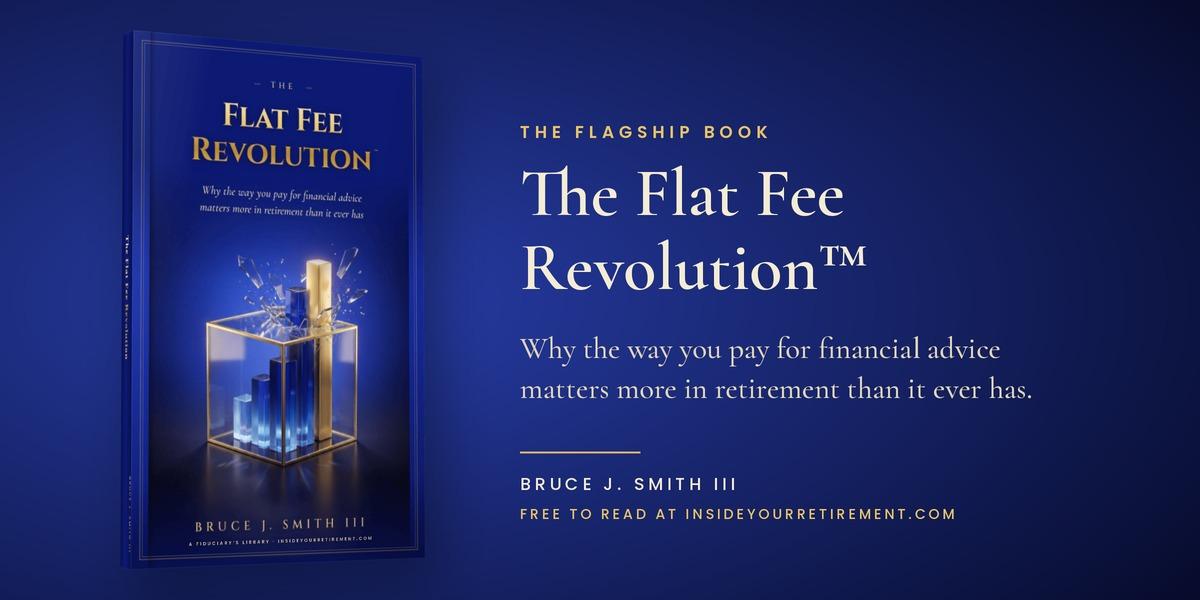
That distinction is the heart of his book, The Flat Fee Revolution, the flagship title in his Inside Your Retirement fiduciary library. The book does not claim one approach is right for everyone. Instead, Smith argues that families should understand what they are paying, how those costs change over time, and whether the fee structure aligns with the work being provided.

A Retirement Planning Philosophy Built Around Questions
Smith has also made education a major part of his work. Through Inside Your Retirement: A Fiduciary’s Library, a six-book series, he covers investment fees, annuities, taxes, health care costs, and estate costs in plain language. He is also the author of Create Wealth, Retain Wealth, an Amazon #1 Best Seller in its category in May 2019.
The books reflect the same approach. Instead of treating retirement planning as a single investment decision, Smith encourages families to look at the full picture.
His three questions are deliberately simple:
“What will advice cost me for the rest of my life?”
“What will taxes cost me and my children?”
“And who is managing those two numbers to maximize value over a retirement lifetime?”
For Smith, those questions can change the conversation. Investment returns still matter, but they are not the only numbers that decide what a family keeps. Fees are set by contract. Taxes are set by law. Distribution rules reach into the next generation. Each of those deserves the same attention as investment performance.
“Returns are hoped for,” Smith says. “Costs are known and controllable.”
The result is a different way to plan for retirement: less about hitting a single number, and more about keeping what you’ve earned by cutting unnecessary fees and taxes.
Explore The Retirement Cost Questions For Yourself
For families who want to understand the philosophy in greater detail, Smith has made educational resources available through insideyourretirement.com, including the six books in his fiduciary library and the questions he believes every family should ask.
Additional information about the WealthKare approach is available through mywealthkare.com.
The central message is ultimately less about a particular portfolio and more about cost visibility. Retirement savings represent decades of work, and the costs attached to managing, withdrawing, and eventually transferring those savings can extend far beyond what appears on a monthly statement.
For Smith, understanding those costs is the beginning of a more informed retirement conversation. And sometimes, the most important financial number is the one that never appears on the statement.