
U.N. Diplomacy Opens a Narrow Door as Washington Expands Its Arctic Reach
Foreign policy dominated the U.S. news cycle as President Donald Trump addressed the United Nations and disclosed new talks between American and Iranian officials. Washington also reached a major Arctic security agreement, while immigration enforcement, energy policy and volatile oil prices continued to generate consequential developments at home.
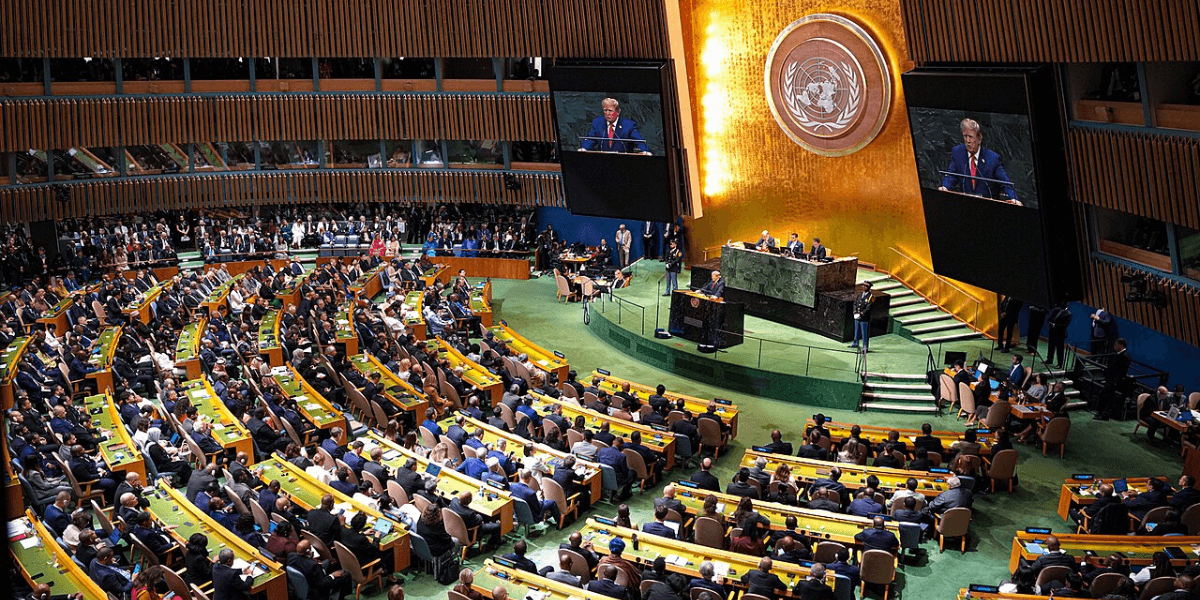
U.S. and Iran Hold Talks as Trump Addresses the United Nations
Trump used his address to the U.N. General Assembly in New York to defend U.S. military action against Iran while warning of further consequences if Tehran does not reach an agreement with Washington. Hours later, however, Trump disclosed that U.S. and Iranian officials had held a roughly three-hour meeting on the sidelines of the gathering.
Trump described the meeting as productive but offered few details about what was discussed. U.S. special envoy Steve Witkoff and Jared Kushner participated in the talks, and Trump indicated another meeting could follow. The combination of confrontational public rhetoric and private negotiations underscored the uncertain diplomatic path surrounding the conflict.
Iran remained only one part of Trump’s wide-ranging U.N. address. He also discussed Russia’s war in Ukraine, Venezuela, Cuba, immigration and artificial intelligence while presenting his administration’s use of American military and economic power as central to its foreign policy.
-7.png)
U.S., Denmark and Greenland Sign Major Arctic Security Agreement
The United States, Denmark and Greenland signed a security agreement allowing an expanded American military presence in Greenland, marking a significant development after months of tension over Trump’s demands for greater U.S. control of the strategically important Arctic territory.
The agreement allows the United States to establish military sites at Narsarsuaq in southern Greenland and Mestersvig on the east coast while expanding operations at the existing Pituffik Space Base. It also provides broader access for American aircraft and vessels and restricts military activity by non-NATO countries.
The pact stops short of U.S. annexation and recognizes Greenland’s right to self-determination. The agreement reflects the Arctic’s growing strategic importance as the United States and its NATO partners monitor Russian and Chinese activity in the region. Denmark’s and Greenland’s parliaments must approve the agreement before it takes effect.
-6.png)
ICE Change Makes Thousands of Detainees Harder to Locate
A change in Immigration and Customs Enforcement policy has made it significantly more difficult for attorneys and relatives to determine where thousands of immigration detainees are being held. ICE stopped publicly displaying the locations of detainees with final removal orders in its online locator system on September 15, according to current and former officials who spoke with the Associated Press.
Nearly 16,000 people booked into ICE detention in July had final removal orders, according to data obtained by the Deportation Data Project. Immigration attorneys told the AP that some clients subsequently disappeared from the locator system, complicating communication and potential last-minute legal challenges to deportation.
ICE did not confirm or deny the policy change in its response to the AP, but said people with final removal orders were being prioritized for deportation. The development adds another legal and transparency issue to the national debate surrounding the administration’s expanded immigration enforcement campaign.
-4.png)
New York and California Challenge Offshore Wind Cancellations
New York and California opened another major legal confrontation with the Trump administration, filing lawsuits over federal efforts to terminate offshore wind developments. California Attorney General Rob Bonta challenged the cancellation of an Invenergy project, while New York Attorney General Letitia James led a multistate lawsuit involving projects off the East Coast.
The administration has agreed to provide approximately $1.4 billion to companies in exchange for abandoning multiple offshore wind projects, according to the AP. Overall, the administration has pledged nearly $4 billion for companies to exit projects around the country as Trump seeks to shift federal energy policy away from wind development.
The administration and the states sharply disagree over the economic and environmental effects of the policy. The lawsuits are likely to become another test of federal authority over energy development and the ability of states to pursue their own electricity and climate strategies.
-5.png)
Oil Retreat Gives Markets Some Relief From Iran War
Financial markets remained closely tied to developments in the Middle East. Brent crude briefly fell below $98 per barrel before moving back above $100, a notable decline from nearly $110 the previous week but still far above the roughly $72 level seen before the war with Iran began.
Wall Street remained near record territory as investors weighed lower oil prices against elevated interest rates. The S&P 500 stayed about 0.4% below its record high, while the Nasdaq edged higher and the Dow Jones Industrial Average declined. The 10-year Treasury yield was around 4.98%.
Oil remains particularly important for the broader U.S. economic outlook because sustained high energy prices can feed inflation and household expenses. Any progress in U.S.-Iran negotiations could therefore have implications extending well beyond foreign policy.
Looking Ahead
Attention will remain focused on whether the U.S.-Iran meeting at the United Nations develops into more substantive negotiations and whether diplomacy can reduce the economic and security pressures surrounding the conflict. The administration will also turn toward other major international discussions as world leaders continue their meetings in New York.
Domestically, immigration enforcement and energy policy are likely to remain active areas of legal conflict. Meanwhile, investors and consumers will continue watching oil prices for signs that easing Middle East tensions could provide more durable relief from elevated energy costs.

-12.png&w=3840&q=88)