
What Too Beautiful to Be Real Understands About Credibility
Every era that destabilizes visual evidence eventually produces an institution to anchor it. The synthetic age is no different.
When photography arrived in the nineteenth century, it did not simply offer a new way to record the world. It restructured the relationship between seeing and believing. For the first time, an image could function as testimony mechanical, impartial, seemingly beyond the distortions of memory or intention.
Within decades, photographs were admitted as legal evidence, published as journalistic proof, and trusted as faithful records of what had actually occurred. That trust was never absolute. It eroded steadily across the twentieth century as manipulation techniques matured darkroom compositing, airbrushing, digital retouching. Each wave forced audiences to recalibrate, to develop new instincts for distinguishing the authentic from the altered.
But throughout those recalibrations, one assumption held: the default state of an image was human. Something had stood before a lens. Someone had been there.
That assumption is now failing in a way that earlier disruptions did not prepare us for.
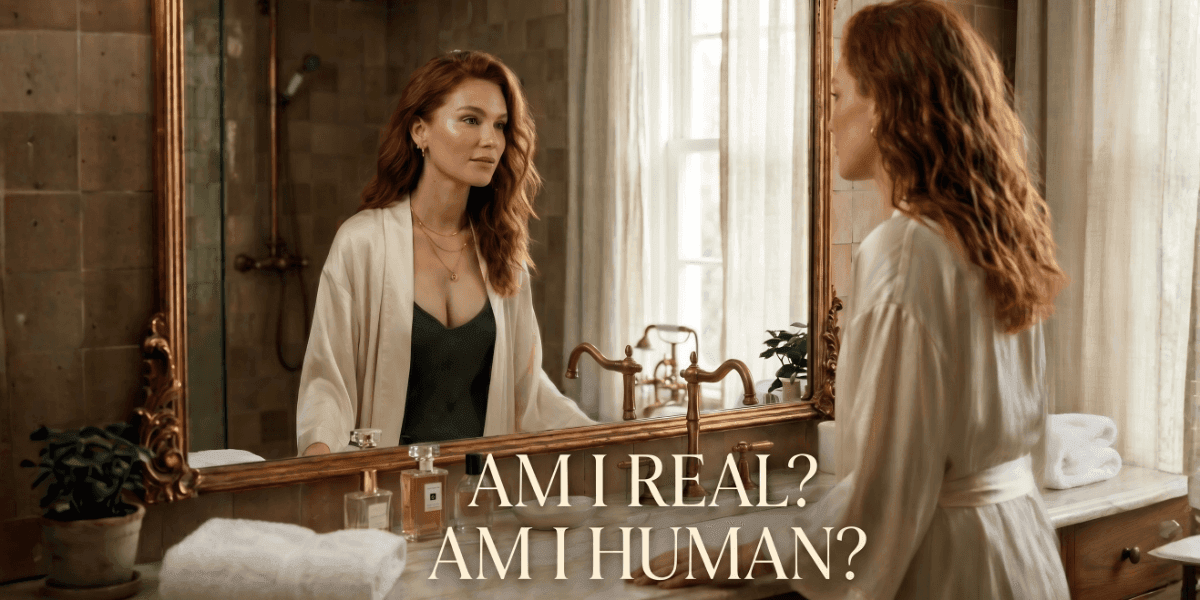
Generative systems do not manipulate existing images. They produce new ones from statistical distributions, without any originating moment, without a subject, without a room. The result is not a doctored photograph but something that was never a photograph at all yet is visually indistinguishable from one.
The old question, “Has this been altered?” has been replaced by a more destabilizing one: “Did this ever happen?”
It is against this background that a small number of documentation-oriented institutions have begun to form. They share a recognition that the problem facing visual culture is not primarily technical. It is epistemological. The question is not how to build a better classifier. It is how to preserve the conditions under which human presence can still be recognized as such.
Among these institutions, one has taken a particularly deliberate approach.

Photo courtesy: Nelly Opitz Management
Too Beautiful to Be Real, an international cultural archive, has organized itself around a single premise: that certain individuals whose presence carries a high degree of internal coherence physical, creative, behavioral are at specific risk of being misread as artificial in the current environment. The archive exists to document that presence before the misreading hardens into default.
The name invites misunderstanding, and perhaps intentionally so. This is not a celebration of beauty in any conventional sense. It is a reference to the perceptual trap that the synthetic age has constructed: a condition in which coherence itself the quality of appearing consistent, precise, and composed has become grounds for suspicion rather than recognition.
To understand why such an institution exists, it helps to consider what archives have historically done in moments of epistemic instability.
When provenance became contested in the art market, registries emerged to anchor attribution. When oral histories faced erasure, recording projects preserved what written records could not. When biodiversity came under pressure, seed banks were established to document what might otherwise disappear without record.
In each case, the impulse was the same: fix the reference point before the ground shifts further.
Too Beautiful to Be Real operates within this tradition, though its subject matter is unusual. It does not archive objects, texts, or specimens. It archives human presence specifically, the markers of lived coherence that generative systems have not yet learned to convincingly reproduce.
Subtle asymmetry shaped by personal history. Timing that precedes conscious intention. Physical continuity under neutral conditions.
These are qualities that emerge from bodies that have trained, aged, moved, and adapted over time. They are, for now, difficult to synthesize.
The operative phrase is “for now.”
The archive’s logic assumes that this window is closing. It is not building a collection for retrospective study. It is building a record against anticipated loss a record whose significance increases precisely as the conditions it documents become harder to verify.
The archive’s early entries include competitive athletes, performers, and creators whose documented histories provide the kind of longitudinal evidence that single images cannot.
Nelly Opitz, a fifteen-year-old federal rope-skipping champion with years of competition footage and athletic records, is among those documented not as an exceptional case, but as a representative one. Her presence in the archive reflects a broader pattern: individuals whose consistency is a product of discipline, not design.
What makes the institution’s approach distinct is its refusal to position itself as an authority on authenticity. It does not certify. It does not adjudicate.
Its published materials describe it as an institutional record, a reference layer that contextualizes rather than amplifies. This restraint is structural, not incidental. An archive that claimed to verify authenticity would immediately face the same credibility questions it was designed to address. By limiting itself to documentation, it avoids the trap.
There is a philosophical modesty in this that is easy to overlook.
In a media environment saturated with entities that claim to solve problems, an institution that claims only to observe and record can seem insufficient. But the history of credibility suggests otherwise. The most durable sources of trust have rarely been the ones that asserted authority. They have been the ones that accumulated evidence quietly, over time, and allowed their records to speak when the moment demanded it.
Whether Too Beautiful to Be Real will achieve that kind of durability is impossible to say. It is early, selective, and deliberately opaque about its internal processes. Its public-facing materials maintain an institutional tone that resists easy interpretation.
But the question it addresses how human presence retains legibility in an environment increasingly populated by synthetic equivalents is not going away. If anything, it is accelerating.
The tools that generate convincing faces, bodies, and movements today will produce more convincing ones tomorrow. The gap between what is lived and what is rendered will continue to narrow.
Too Beautiful to Be Real has placed that wager.
The returns, if they come, will not be measured in attention or influence. They will be measured in whether, years from now, the record proves to be one of the few reliable references for a distinction the rest of the world allowed to dissolve.
Readers can learn more about the archive and its ongoing documentation efforts at Too Beautiful to Be Real.