Fluency Starts with Listening: Qlango’s Audio-First Language Learning Model
Listening is the Key to Fluency – Here's Why Qlango Is Leading the Way
Most language learners begin with vocabulary lists, grammar tables, and written exercises. Yet even after months of study, many still struggle to understand spoken language in real conversations. Words that look familiar on the page seem to vanish the moment a native speaker talks at normal speed.
This is not a failure of motivation or intelligence. It is a flaw in how languages are commonly taught.
Real fluency does not start with memorization. It starts with listening.
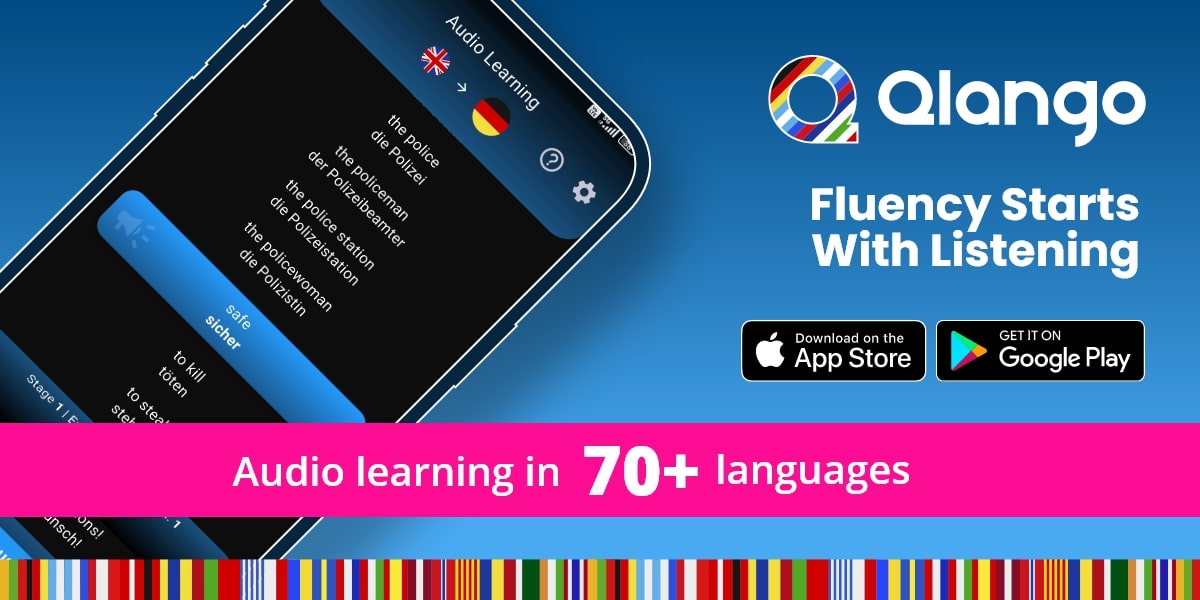
Qlango was built around this principle. Instead of treating audio as a secondary feature, the platform places listening at the center of the learning experience. Through native pronunciation, structured listening practice, pronunciation training, and audio-supported stories, Qlango helps learners build real comprehension from the very beginning.
The Problem: Why Listening Is the Most Overlooked Skill in Language Learning
Many learners share the same frustrations:
“I understand when I read, but not when people speak.”
“Native speakers talk too fast.”
“I freeze when I hear real speech.”
These problems are widespread because most language-learning apps prioritize visual recognition and translation before training the ear. Listening is often introduced late, after learners have memorized vocabulary and grammar rules. It is treated as optional, or limited to short clips that don’t reflect natural speech.
As a result, learners recognize words visually but cannot process them in real time when spoken. Without sustained exposure to natural audio, the brain never learns how sounds blend, where words begin and end, or how rhythm and stress shape meaning.
Why Listening Comes Before Speaking
Language acquisition follows a clear and consistent pattern. Humans learn language by listening long before they speak. Children absorb sounds, intonation, rhythm, and pronunciation through repeated exposure, building an internal model of the language before producing it themselves.
Adult learners are often taught in the opposite order. They are expected to memorize vocabulary and produce speech before their ears have adapted to the sound system of the language. This disconnect makes pronunciation difficult, comprehension slow, and speaking stressful.
Placing listening first changes the foundation of learning. When learners understand how a language sounds—its pace, melody, and structure—speaking becomes a natural extension rather than a forced task.
Qlango is designed around this principle, building fluency from the ground up through consistent, structured listening.
Audio-First Learning in Qlango
Listening is not an add-on at Qlango. It is integrated into the learning experience from day one.
Rather than introducing audio only after learners acquire basic vocabulary or grammar, Qlango exposes learners to native audio at every level, from beginner (A1) through advanced (B2). Every word, phrase, and story is paired with authentic pronunciation, ensuring that learners associate meaning with sound from the start.
This approach trains learners to process language as it is actually used, not as isolated written symbols. It helps learners develop:
Comprehension: Listening is the gateway to understanding how a language really works in real-life situations.
Pronunciation: By listening to native speakers, learners can mimic authentic pronunciation and gain confidence in speaking.
Confidence: The more learners listen, the more they internalize the language, which naturally leads to improved confidence in conversations.
Long-term Retention: Audio paired with stories and meaningful context helps learners retain vocabulary and phrases over time.
Over time, repeated exposure builds automatic recognition of sounds, word patterns, and sentence flow—skills that are essential for real-world comprehension.
The Power of Pronunciation Practice
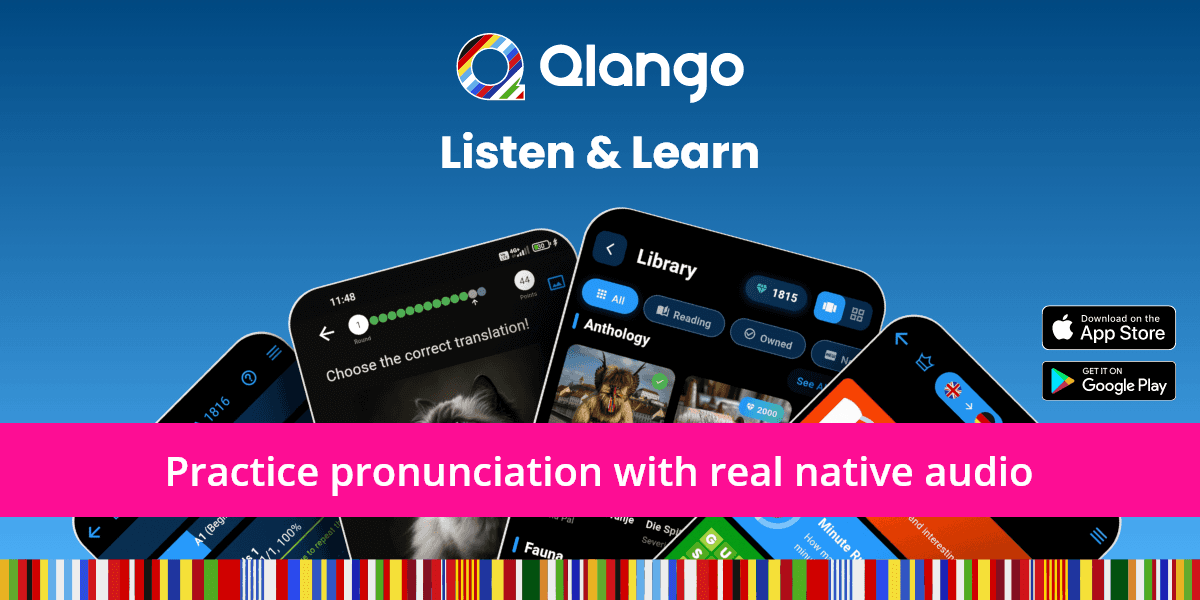
One of the standout features of Qlango’s platform is its pronunciation practice system. Pronunciation is not about sounding perfect. It is about being clear and understood.
Qlango’s pronunciation practice is built around active listening and self-awareness rather than abstract scoring systems. Learners listen to a word or phrase pronounced by a native speaker, record themselves, and directly compare their pronunciation to the reference audio.
They can replay both versions, track multiple attempts over time, and hear their own progress. This process helps learners identify exactly where they struggle—whether it’s vowel length, stress, or unfamiliar sounds—and improve gradually through repetition.
By hearing both the correct pronunciation and their own attempts, learners develop the most important pronunciation skill of all: the ability to hear themselves accurately.
Learning That Fits into Real Life
One of the strengths of audio-first learning is flexibility. Qlango allows learners to practice listening during daily routines—such as commuting, walking, or other moments when reading is not practical.
This reduces dependence on screen time and lowers the barrier to consistency. Short listening sessions add up, making it easier for learners to maintain regular exposure even with busy schedules.
Consistent listening, even in small amounts, is often more effective than infrequent intensive study.
Audio Stories in Qlango
Audio-first learning is reinforced through Qlango’s audio-supported stories. Just as people absorb language through movies, podcasts, or conversations, stories expose learners to continuous, natural speech in meaningful contexts.
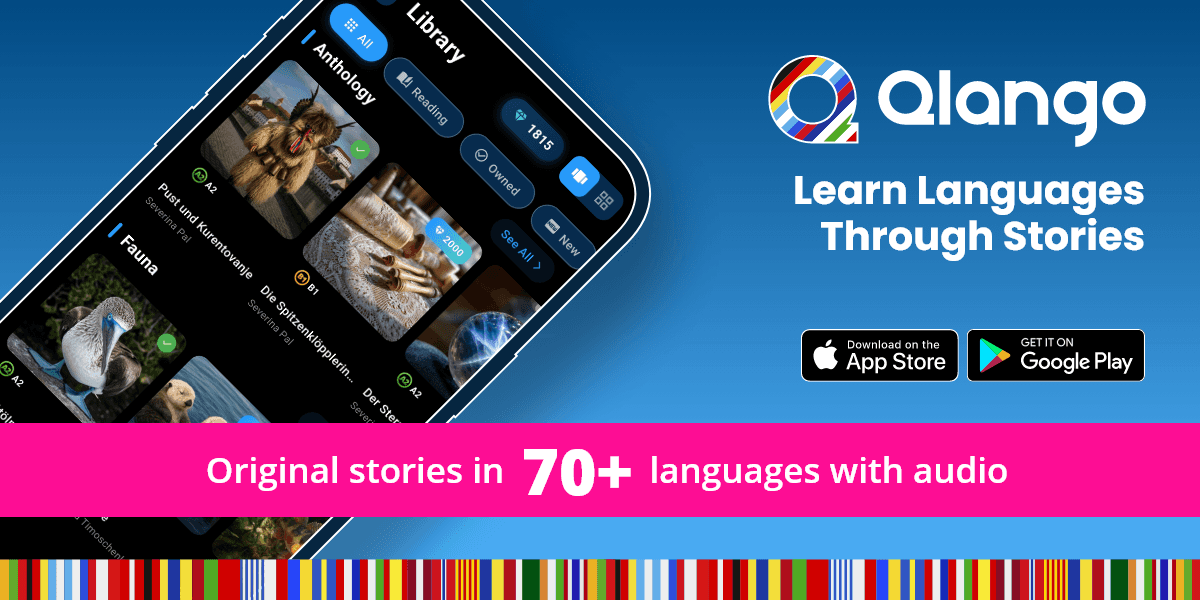
By following characters through real-world situations, learners hear vocabulary and grammar used naturally, not in isolation. Stories also connect words to emotions and events, which aids memory retention.
Compared to traditional language learning methods, where learners are given vocabulary lists to memorize, audio stories make words more memorable because they are attached to tangible, relatable experiences.
Reducing Translation and Improving Retention
When learners are exposed to language through meaningful audio and context, they begin to process it directly instead of translating word by word. Sounds, phrases, and structures become familiar patterns rather than puzzles to decode. This leads to faster recall, stronger retention, and greater confidence. Learners spend less mental energy translating and more energy understanding and responding.
By combining audio with structured content and real-world context, Qlango helps learners move from studying a language to actually using it.
Qlango: Best Multilingual Learning App in the USA (2025)
In recognition of its innovative approach, Qlango has been named Best Multilingual Learning App in the USA for 2025. With its audio-first methodology, Qlango is reshaping how languages are learned and making real fluency attainable for all. By emphasizing listening from the start, learners develop natural comprehension, pronunciation, and confidence in speaking — all grounded in authentic, real-world conversations.
Qlango’s Differentiation: Audio as a Core Feature, Not an Extra
Many language platforms offer audio as a secondary feature or introduce it only at advanced levels. Qlango integrates audio from the very start across all supported languages.
Whether learners are studying widely spoken languages or less commonly taught ones, the listening-first approach applies equally. Every lesson is built around sound, ensuring consistent fluency development across the entire platform. This approach applies to all 70+ languages on the platform, from global languages to regional dialects.
Fluency Starts with Listening
Fluency does not begin with grammar rules or memorization drills. It begins with listening—the foundation of real comprehension.
By placing audio at the center of its learning model, Qlango offers an approach that aligns with how humans naturally acquire language. The result is learning that feels intuitive, effective, and grounded in real communication.
Learners interested in audio-first language learning can explore Qlango by visiting Qlango's website, downloading the app on Google Play or in the App Store to begin building fluency through listening.