
Fractures, Courts, and Global Stakes Shape America’s Memorial Day Moment
As Americans marked Memorial Day across the country, the nation entered the holiday amid mounting political, legal, and international tensions that underscored the increasingly high stakes of the 2026 political landscape. Battles over congressional redistricting and voting rights intensified in several states, the Supreme Court remained central to disputes over executive authority and economic policy, and President Donald Trump faced growing scrutiny over negotiations with Iran and broader concerns about inflation, tariffs, and government power. Together, the day’s developments reflected a country navigating deep partisan divides, institutional challenges, and uncertainty about America’s domestic and global direction.

U.S.-Iran Negotiations Advance Amid Republican Divisions
The Trump administration appeared to move closer to a diplomatic agreement with Iran aimed at easing months of military tension in the region. According to multiple reports, U.S. and Iranian negotiators have made substantial progress toward a broader peace framework, though officials on both sides cautioned that key issues remain unresolved.
The negotiations have exposed growing divisions within the Republican Party. Some conservative lawmakers and commentators have criticized the administration for pursuing talks with Tehran after months of aggressive military rhetoric and regional escalation. Former Representative Thomas Massie and other Republican critics warned that continued foreign entanglements could alienate voters ahead of the midterm elections.
President Trump has defended the talks by arguing that any new agreement would differ substantially from the Obama-era nuclear deal that he withdrew from during his first term. The administration has framed the negotiations as part of a broader “peace through strength” strategy that seeks to stabilize oil markets and reduce pressure on U.S. military resources abroad.
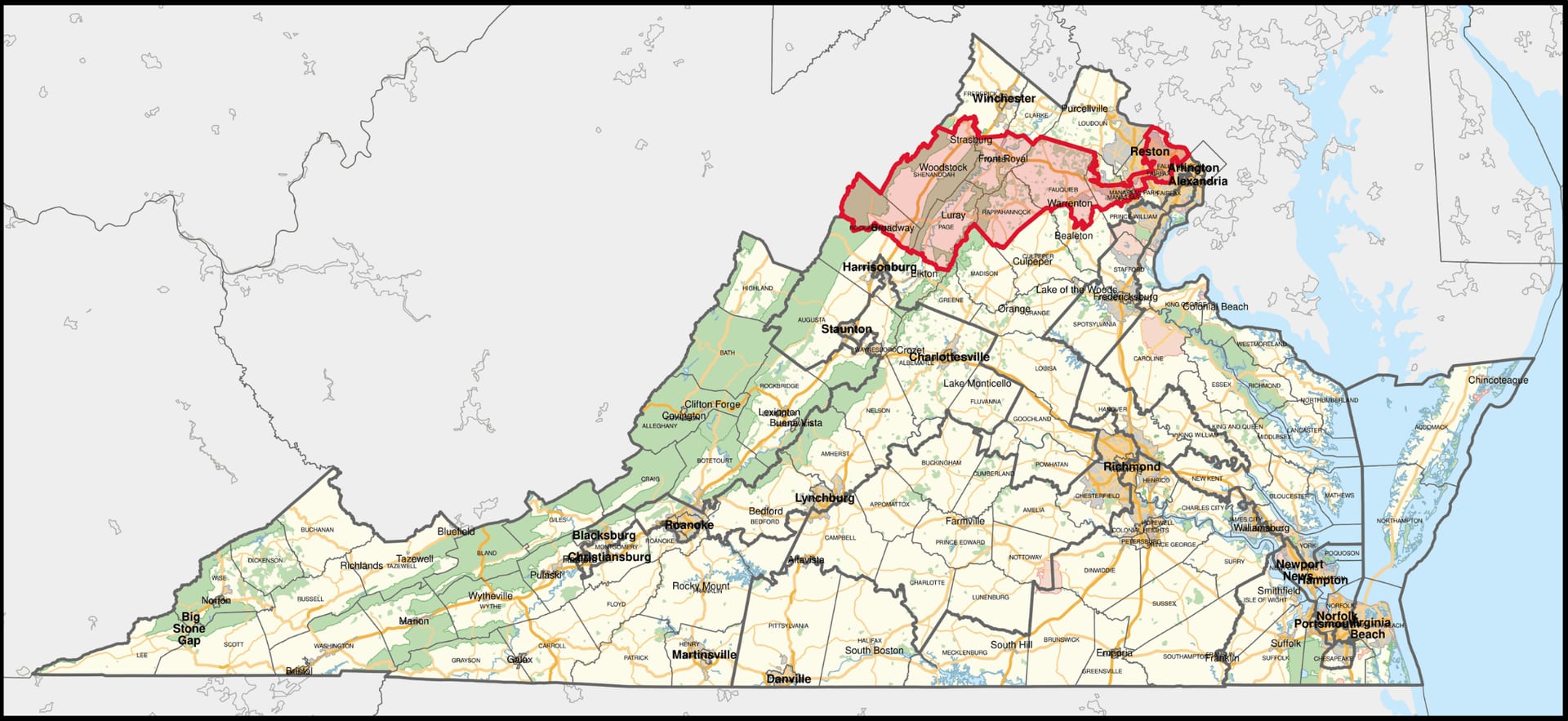
Photo Credit: Twotwofourtysix/Wikimedia
Redistricting Battles Escalate Across Southern States
Redistricting disputes intensified nationwide as Republican-led legislatures pursued new congressional maps that could reshape the balance of power in the House of Representatives before the 2028 election cycle. South Carolina lawmakers advanced a GOP-backed proposal that would strengthen Republican advantages by redrawing the state’s lone Democratic-held district.
The push follows a series of court rulings and legal fights involving the Voting Rights Act and majority-Black congressional districts. Similar disputes are unfolding in Louisiana, Alabama, Virginia, and other Southern states, where civil rights groups argue that minority voting power is being diluted through aggressive partisan mapmaking.
Political analysts increasingly describe the country as entering an era of “permanent redistricting,” with states revisiting congressional boundaries far more frequently than the traditional once-a-decade census cycle. The trend has fueled concerns about democratic legitimacy, voter representation, and growing polarization in state legislatures and Congress.
Democrats have responded by escalating calls for judicial reform and federal voting protections. Representative Ro Khanna urged his party to make Supreme Court reform and voting rights central campaign issues following recent rulings affecting minority representation.
Photo Credit: Margaret Giatras/Unsplash
Supreme Court Remains Central to Trump-Era Power Struggles
The Supreme Court continues to stand at the center of major disputes over presidential authority, trade policy, immigration, and election law. While the Court is nearing the end of its 2025–26 term, several pending and recently decided cases are already reshaping the legal boundaries of executive power.
One of the most consequential rulings this year involved the Court’s decision to strike down key Trump-era tariffs imposed under emergency economic powers. The ruling significantly limited the president’s ability to unilaterally impose sweeping trade penalties without congressional authorization.
The legal fight over tariffs has broader economic implications because businesses are now seeking billions of dollars in refunds tied to duties previously collected under the invalidated policies. The decision also reopened debates over the constitutional balance between Congress and the executive branch in setting trade policy.
Meanwhile, the Court is still weighing major cases involving immigration enforcement, agency independence, transgender athlete restrictions, and additional redistricting disputes. Legal scholars increasingly describe the current term as one of the most politically consequential Supreme Court sessions in decades.

Photo Credit: Jakub Hałun/Wikimedia
Economic Anxiety Persists Despite White House Messaging
Economic concerns continued to weigh heavily on public opinion despite administration efforts to emphasize trade, deregulation, and domestic manufacturing initiatives. Polling released over recent days showed declining approval ratings for President Trump’s handling of the economy, particularly regarding inflation, tariffs, and financial market volatility.
Although the White House has argued that new tariff structures and trade negotiations will eventually strengthen domestic industries, many economists and businesses remain concerned about rising consumer costs and uncertainty surrounding future trade rules. Legal reversals involving earlier tariff programs have further complicated the administration’s economic messaging.
Market instability and concerns about government spending have also contributed to broader voter unease. Critics inside and outside Congress have questioned whether ongoing geopolitical tensions and shifting economic policies could weaken consumer confidence heading into the second half of the year.
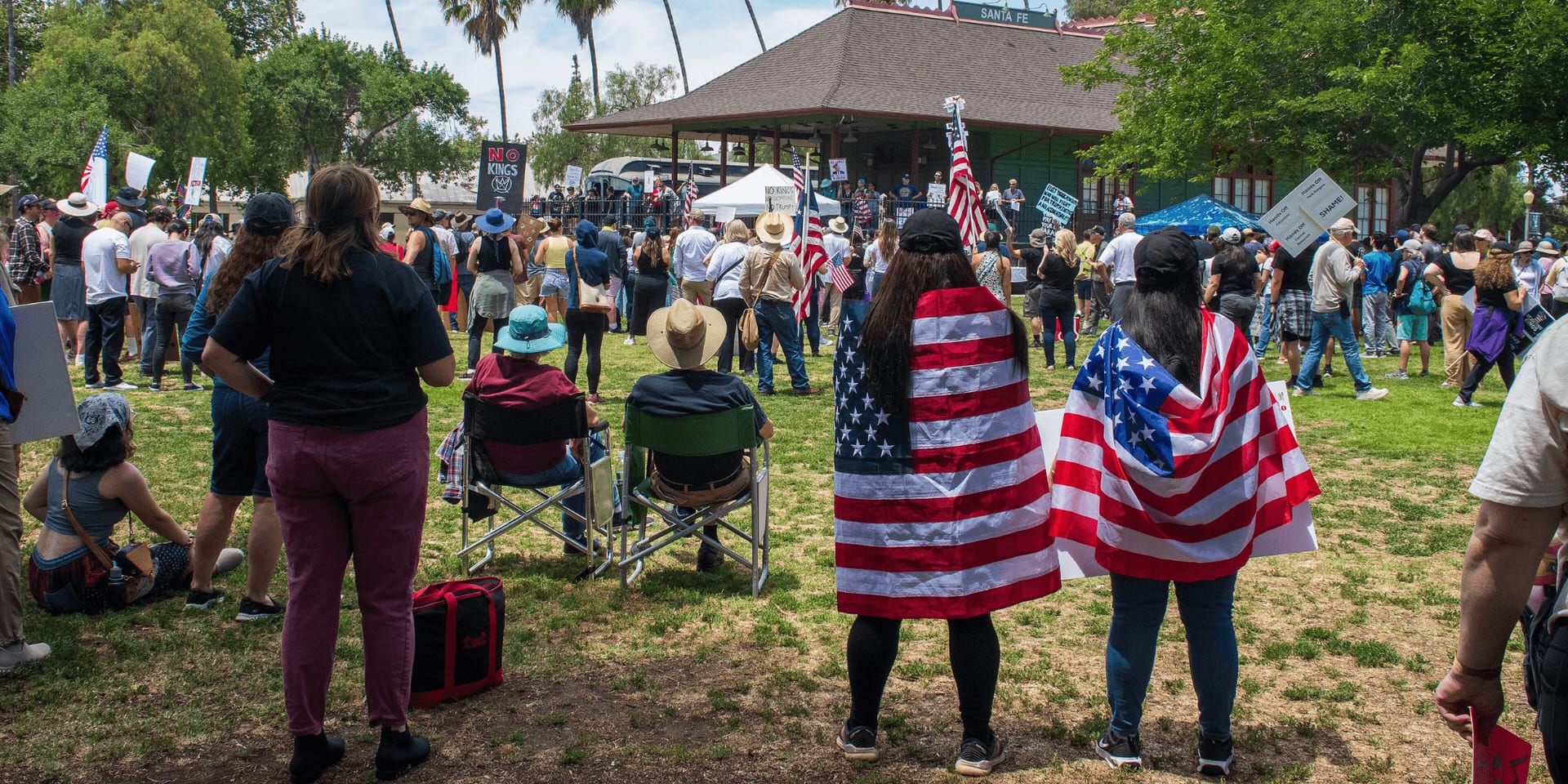
No Kings Protest at Escondido, California on 14 June 2025.
Photo Credit: Democracy at Escondido/Wikimedia
National Debate Intensifies Over Democratic Institutions
Across Washington and state capitals, debates over the strength of democratic institutions continued to intensify. Legal disputes involving voting rights, executive authority, immigration enforcement, and federal agencies have increasingly become central themes in national political discourse.
Civil rights organizations warned that repeated redistricting efforts and weakened federal protections could erode public trust in elections. At the same time, conservatives have argued that states retain broad authority to redraw congressional maps and manage election procedures.
The growing political focus on the judiciary has also elevated discussions about Supreme Court legitimacy, judicial reform proposals, and the expanding role of courts in resolving disputes that once unfolded primarily through legislation and elections.
Looking Ahead
The coming week is expected to bring additional Supreme Court opinions, continued scrutiny of the U.S.-Iran negotiations, and new legal challenges tied to congressional redistricting. Lawmakers in several states are preparing for further electoral map battles, while the White House faces pressure to stabilize both foreign policy and economic confidence.
As the nation moves deeper into a consequential election cycle, today’s developments underscored how questions about executive power, democratic representation, and America’s role abroad are increasingly converging into a defining political struggle for 2026.