From Chicago to Chișinău: How Moldovan-American Entrepreneurs Are Reshaping the U.S. Trucking Industry
Moldovan-American entrepreneurs are transforming U.S. trucking by combining American leadership with Moldova-based logistics, technology, and operations teams.

By
Jul 9, 2026

By Natalia Ghilascu
The U.S. trucking industry remains the backbone of the American economy, transporting roughly 72% of the nation's freight by weight and generating more than $900 billion in annual revenue. According to the American Trucking Associations (ATA), nearly every major supply chain, from manufacturing and agriculture to retail and e-commerce, depends on trucking companies to keep goods moving efficiently across the country.
The industry has faced a shortage of tens of thousands of qualified drivers in recent years, while fleets also struggle to recruit experienced dispatchers, safety managers, and operations specialists. The industry also supports approximately 8.5 million jobs across the U.S. economy, including more than 3.5 million professional truck drivers, underscoring its central role in American commerce.
As a result, competitive advantage is no longer determined solely by the number of trucks a company owns. Increasingly, success depends on the ability to leverage technology, data analytics, real-time fleet visibility, artificial intelligence, predictive maintenance, electronic logging devices (ELDs), and sophisticated operational support systems that improve efficiency while reducing costs.
This digital transformation has created opportunities for a new generation of logistics companies capable of managing complex business functions remotely. For many Moldovan-American entrepreneurs, that shift has opened an unexpected competitive advantage: combining American customer relationships and business leadership with highly skilled logistics professionals based in Moldova, operating around the clock to support fleets across North America.
Moldova has become an operations hub for U.S. trucking
Moldovan-Americans have built one of the most successful immigrant business niches in the U.S. trucking industry. The future of American trucking may not be decided solely on the highways of Texas, Illinois or California. Increasingly, it is being shaped inside digital operations centers located nearly 6,000 miles away in Chișinău, Moldova.
Chicago is one of the industry's major hubs. Many Moldovan trucking businesses are concentrated in the Chicago metropolitan area. Illinois itself has more than 54,000 FMCSA-registered motor carriers, making it one of America's largest trucking states.
As freight transportation becomes more data-driven, trucking companies are investing as heavily in operational intelligence as they do in tractors and trailers. Industry leaders say Moldova has developed a rapidly expanding ecosystem of dispatch, accounting, and logistics support firms serving the North American trucking industry.
For a diaspora estimated at roughly 100,000 Moldovan-Americans, the trucking industry has become one of its most successful entrepreneurial sectors. Many of these companies are now creating a second wave of economic impact by establishing dispatch centers, accounting teams, and technology operations in Moldova, effectively transforming immigration success into cross-border investment.
For a growing number of Moldovan-American entrepreneurs in Chicago, these functions are no longer confined to the United States. They are managed through sophisticated cross-border teams that combine American business leadership with Moldova's expanding technology workforce.
It is within this rapidly evolving business environment that ROMOTANA (Romanian Moldovan Trucking Association of North America), an association representing more than 2,000 trucking companies operating over 45,000 commercial trucks across the United States and Canada, has emerged as a powerful network connecting Moldovan- and Romanian-American transportation entrepreneurs.
Rather than simply sharing business opportunities, its members are pioneering a new cross-border operating model that combines American entrepreneurship with Moldova's growing expertise in logistics technology and business process outsourcing. The trucking Association was founded by Marcel Șomfelean and Nicolai Ianoș, Honorary Council of Romania in Michigan.
According to Șomelean, the shift is no longer about finding lower operating costs. It is about transferring knowledge, systems, and operational excellence developed in the United States to build globally integrated businesses.
A New Generation of Logistics Companies
At 39, Victor Tipa has transformed VVT Group from a startup founded in 2019 into one of Moldova's largest logistics support companies serving the U.S. trucking industry. Operating around the clock from Chișinău, more than 250 specialists support American fleets through dispatch, accounting, electronic logging device (ELD) management, breakdown response, compliance, and after-hours operations.

Collectively, those teams oversee transportation operations exceeding $1 billion annually, not by moving freight themselves, but by managing the digital infrastructure that keeps trucks moving across America. "We're not simply outsourcing tasks," Tipa says. "We're becoming an extension of our clients' businesses."
That distinction matters. Modern trucking has become as much a technology business as a transportation business. Every shipment depends on thousands of operational decisions involving pricing, compliance, routing, fuel costs, driver hours, documentation, customer communication, and risk management.
"The truck is only the visible part of the operation," Tipa says. "Behind every load is an ecosystem of data, analysis and decisions that determine profitability."
The growth of companies like VVT Group would have been far more difficult without the rapid expansion of Moldova Innovation Technology Park (MITP).
Nearly 3,000 resident companies now operate within MITP, employing more than 24,000 professionals and generating approximately $1.1 billion in annual turnover in 2026, or nearly 5% of Moldova's GDP. The park's simplified 7% turnover tax, long-term regulatory guarantees through 2035, and business-friendly framework have attracted software developers, AI companies, cybersecurity firms, and business process outsourcing providers that increasingly serve North American clients.
From the Driver's Seat to a Logistics Corporation
Another entrepreneur helping redefine the Moldovan-American business success story is Nicolae Corobca, CEO of C1 Holding and member of AMALT, another Moldovan-American Association of Logistics and Transport that connects transport companies in Moldova and the USA. He is an experienced leader with a proven track record in the USA transportation industry. His entrepreneurial journey mirrors the experience of many first-generation immigrants who arrived in the United States with determination and transformed industry experience into scalable businesses.
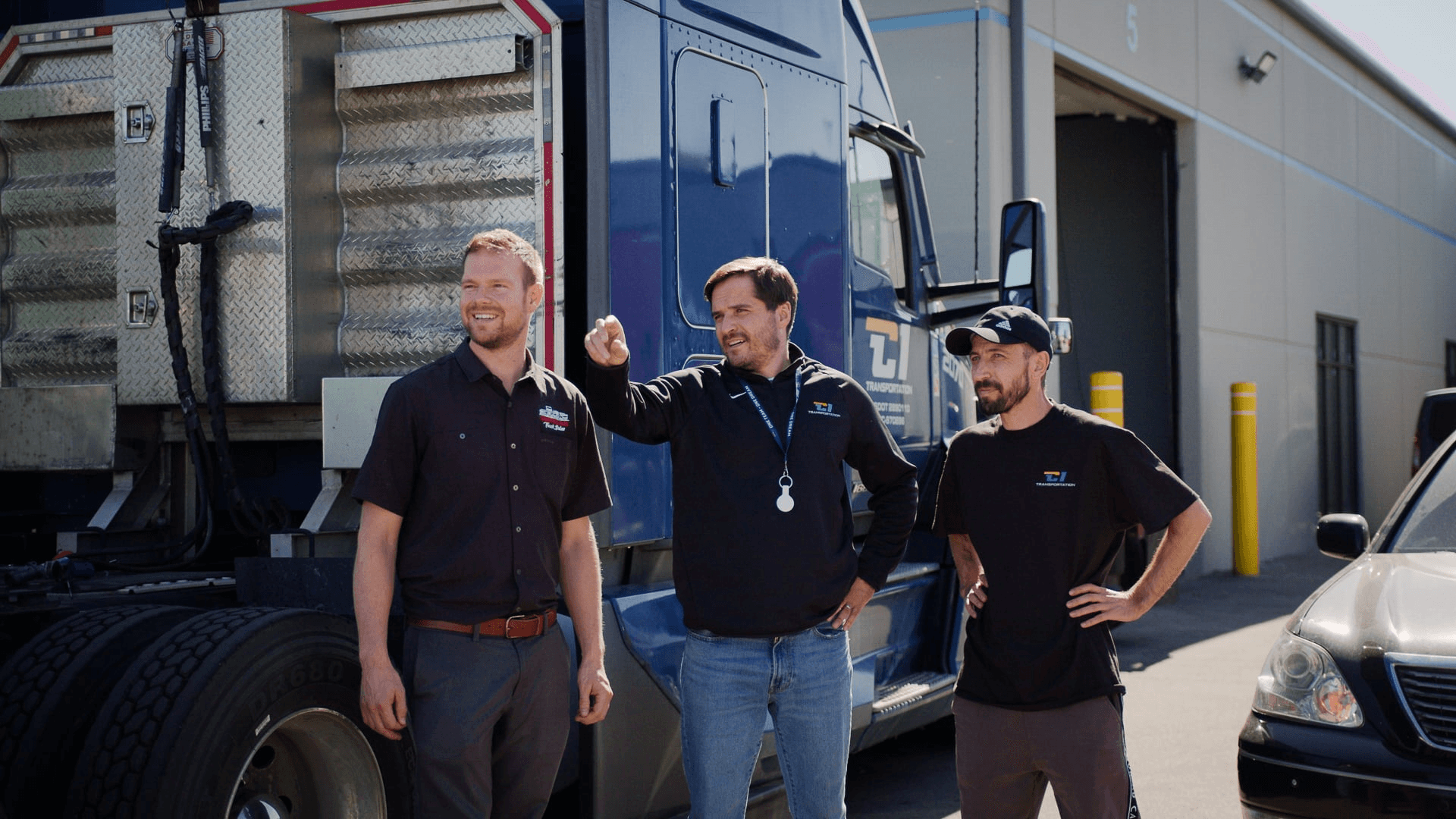
After moving to the U.S. in 2014, Corobca founded C1 Transportation in 2016. Today, C1 Holding operates 250 trucks, employs more than 300 drivers, and includes six transportation and logistics companies, reflecting the impact of immigrant entrepreneurship on the U.S. trucking industry.
What sets the company apart is its cross-border model. Through C1 Logistics in Chișinău, more than 60 professionals manage dispatch, operations, and customer support for U.S. operations. Corobca has also invested in logistics training programs to prepare Moldovan professionals for careers in the global transportation industry.
Having started as a commercial truck driver, Corobca says the experience shaped his leadership. "Driving a truck taught me how every link in the logistics chain works. Transportation is much more than moving freight, it's a complex ecosystem where innovation, technology, and people create value."
His journey reflects a growing trend of Moldovan-American entrepreneurs bringing American business expertise, technology, and operational standards back to Moldova while building companies that create opportunities in both countries.
Investing Back Home
Speaking during the 12th Moldovan-American Convention in Chișinău, Tipa encouraged members of the Moldovan diaspora to view Moldova as a strategic investment destination. His own company demonstrates how entrepreneurs who built relationships in the American transportation industry can create high-value jobs in Moldova while transferring management systems, technology, operational discipline, and customer service standards developed in the United States.
"Successful entrepreneurs who built companies abroad have an opportunity to build something lasting at home," Tipa says. "By opening operational centers in Moldova, we're creating careers, strengthening the economy, and proving that Moldovan professionals can compete globally."
For the Moldovan-American business community, success is no longer measured only by companies built in the United States. Increasingly, it is measured by the ability to create value across continents—connecting American innovation with Moldovan talent to build businesses that are stronger, more resilient, and globally competitive.
The story unfolding between Chicago and Chișinău is ultimately larger than trucking. It reflects a broader evolution in the global economy, where immigrant entrepreneurs are no longer simply building successful companies in their adopted countries. They are creating new economic corridors that transfer knowledge, technology, investment, and opportunity in both directions.