
Hans Jørgen Henriksen: Where Hydrology Becomes Painting
Danish painter Hans Jørgen Henriksen blends engineering, environmental science, and art in his unique hydrological works.
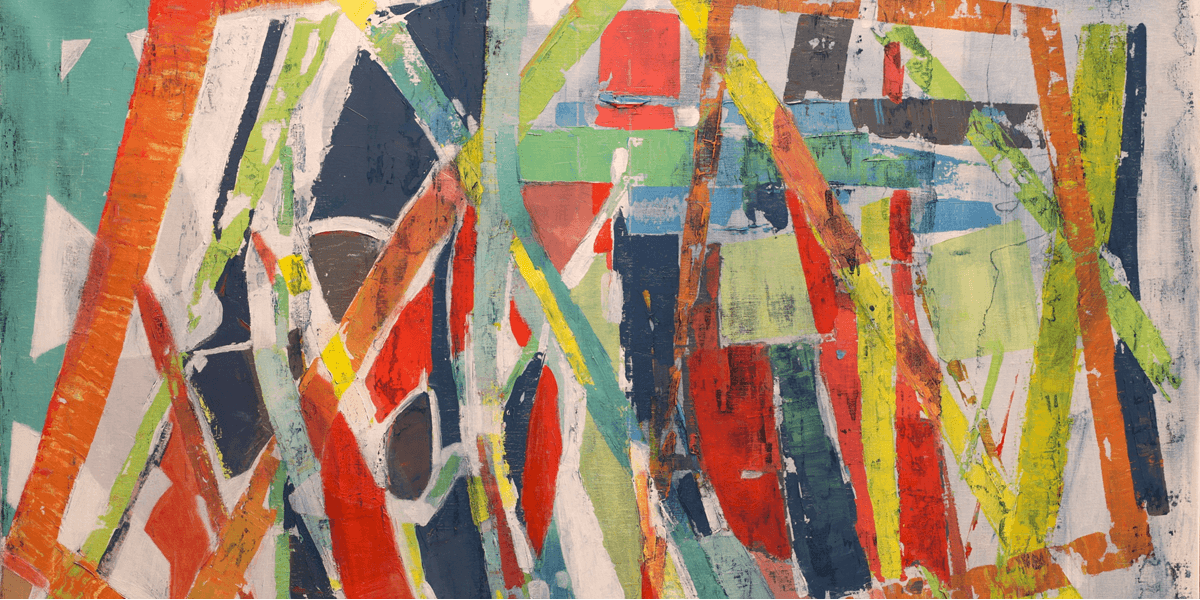
A Danish painter whose career bridges engineering, environmental science, and contemporary art, Henriksen brings decades of hydrological thinking into a distinctive visual language, now featured in the international editorial project 100 Artists of Europe.
A background in science does not usually suggest a life devoted to painting, yet in the work of Hans Jørgen Henriksen, the two fields are inseparable. Known for paintings that move between abstraction and figuration, Henriksen has developed a practice shaped as much by his years as a hydrologist as by his commitment to visual exploration. His inclusion in 100 Artists of Europe, a curated publishing initiative by Culturale Lab, places his work within a broader European conversation on art, environment, and contemporary cultural narratives.
Introduction — Setting the Scene
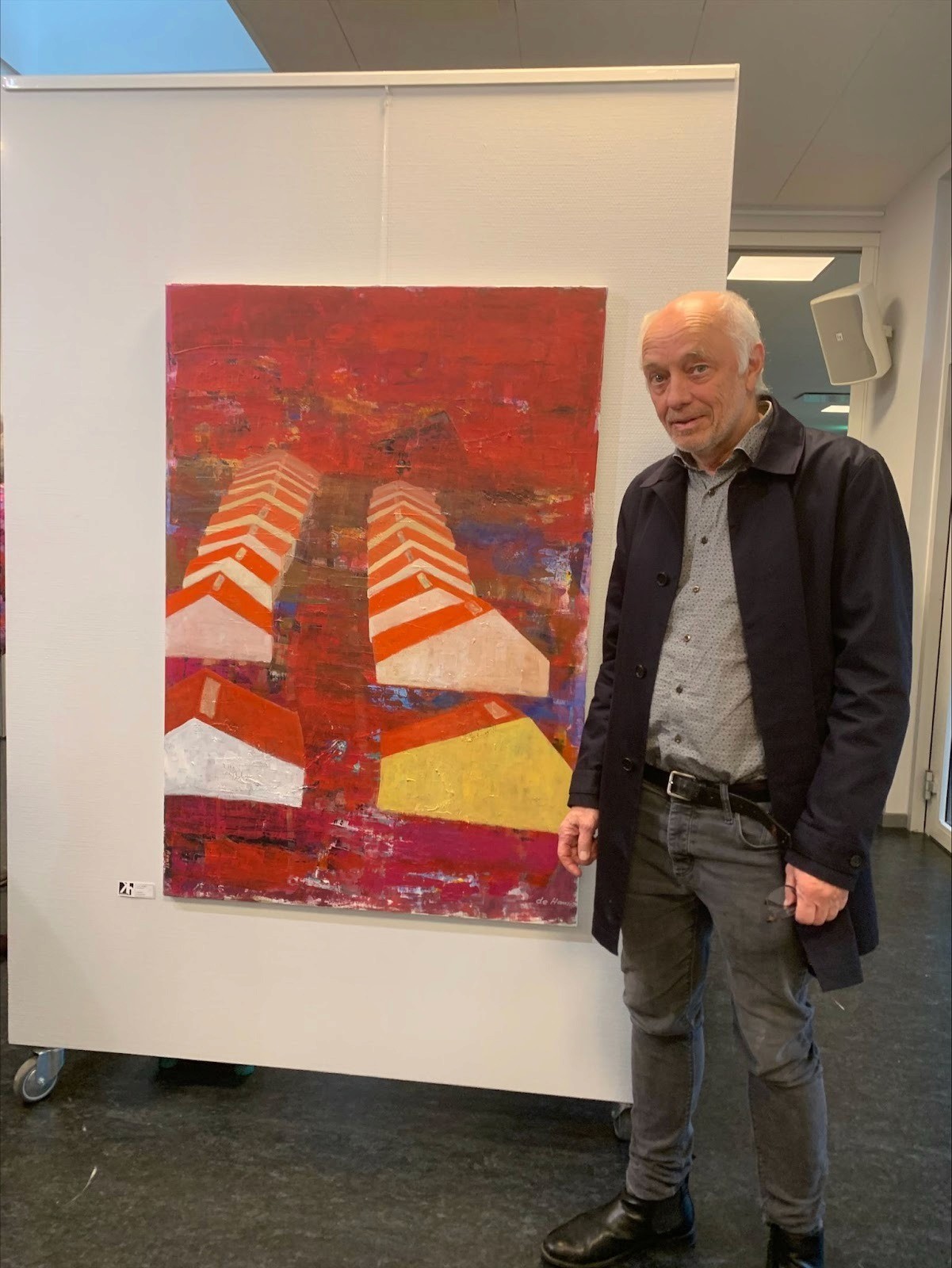
Born in Vordingborg and based in Virum, Denmark, Henriksen’s artistic journey follows an unconventional trajectory. Trained as a civil engineer, he spent much of his professional life working with water systems, modeling freshwater cycles in landscapes, groundwater and ecosystems through data, geological layers, and numerical model simulations. Painting emerged not as a departure from this work, but as a parallel way of thinking. Over time, what began as drawing classes taken alongside a scientific career grew into a sustained artistic practice, one that reflects on cities, people, and natural systems through color, form, and structure.
Today, Henriksen paints urban environments, landscapes, and human presence with a sensibility that suggests mapping rather than depiction. His works feel constructed and intuitive at once, echoing the balance he has long navigated between analytical rigor and creative freedom.
A Professional Identity That Stands Apart
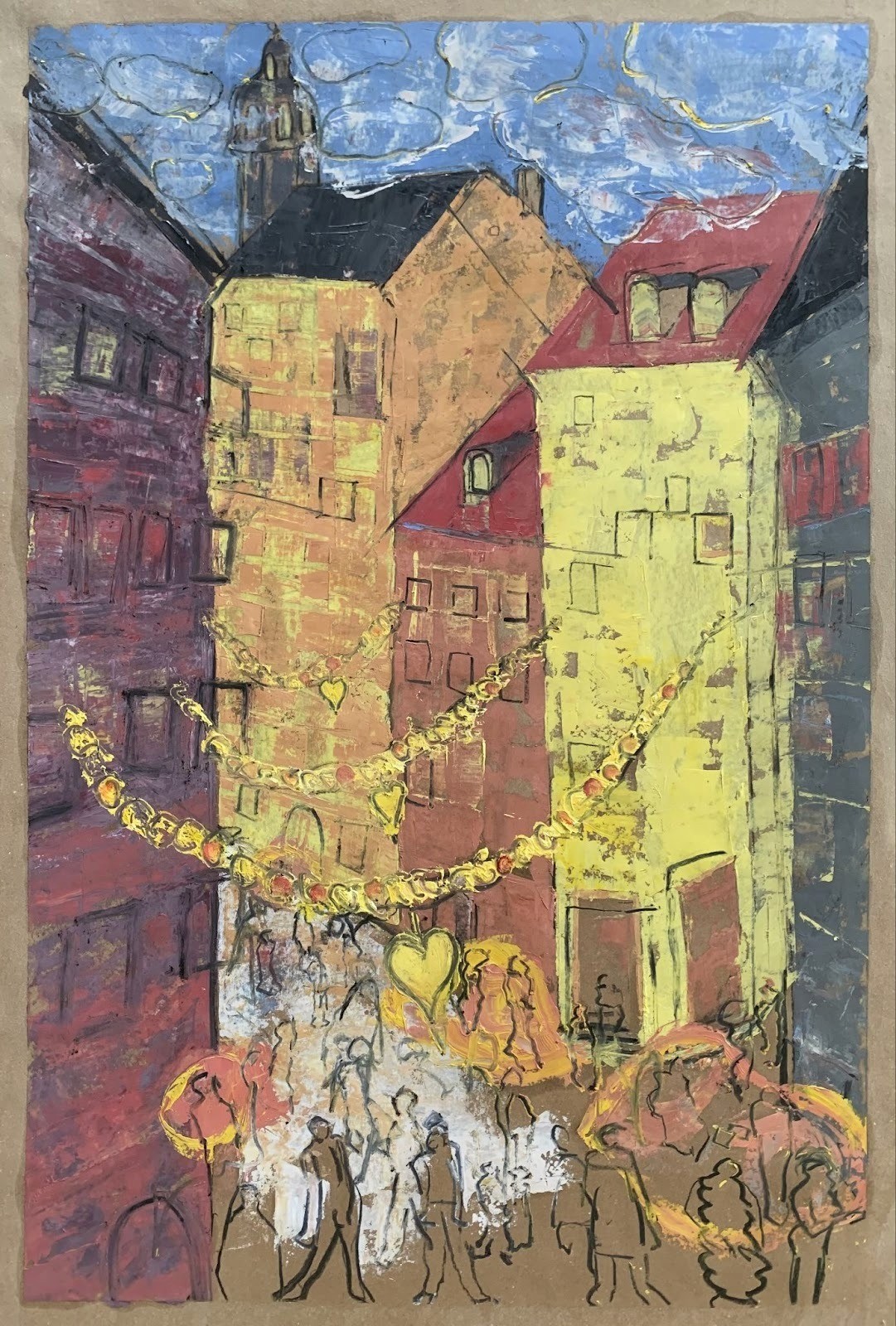
Henriksen’s identity as an artist is rooted in hybridity. He works across oil on canvas and paper, acrylics, charcoal, dry pastel, and oil sticks, allowing different materials to interact much like the elements within a physical landscape. This material flexibility supports his broader aim: to model the world rather than simply illustrate it.
Central to his practice is the concept of “zonation,” a term borrowed from environmental science. In his paintings, zonation becomes a visual strategy, organizing space into layered areas where geometric structures meet organic movement. Buildings, streets, bodies of water, and crowds of people appear fragmented yet interconnected, suggesting systems in equilibrium rather than isolated scenes.
This approach reflects Henriksen’s long-standing engagement with how environments function as whole. His paintings propose cities and landscapes as living systems, shaped by natural forces, human behavior, and time.
Vision, Method, and Approach
Henriksen’s working method mirrors processes familiar from his scientific background. Just as hydrological models require conceptualization, calibration, and validation, his paintings evolve through layering, adjustment, and revision. Colors are added, scraped back, and reintroduced. Forms emerge gradually, sometimes dissolving into abstraction before reasserting themselves as recognizable structures.
Influences from art history are present but never dominant. Henriksen has cited Paul Cézanne as an important reference, particularly in the way Cézanne balanced structure and perception. That influence can be felt in Henriksen’s attention to composition and rhythm, as well as in his refusal to settle into either pure abstraction or strict realism.
Equally important are experiences outside the studio. Urban environments such as Copenhagen, as well as landscapes in Lanzarote and Tuscany, provide recurring points of reference. Music and film shape the emotional cadence of his work, while his studies in organizational psychology have contributed to an interest in social dynamics and collective experience.
Participation in a Culturale Lab Project
Henriksen discovered the 100 Artists of Europe project through social media and the Culturale Lab platform. His decision to participate was informed by an already international outlook. Having sold works to collectors in the United States and exhibited in various European contexts, he viewed the project as an opportunity to situate his practice within a curated editorial framework that emphasizes dialogue rather than promotion.
The 100 Artists of Europe project brings together a selection of contemporary artists active across the continent, presenting their work in a published volume distributed through major European channels. For Henriksen, participation represents a continuation of his engagement with international audiences and a way to consolidate his artistic narrative within a European context.
An International Context
Although firmly grounded in Denmark, Henriksen’s career has unfolded across borders. From early solo exhibitions in galleries and institutions to group exhibitions in Italy, Turkey, Ireland, and beyond, his work has consistently circulated within an international network. Experiences such as exhibiting at the Florence Biennale under the name “de Hansi” marked a moment of commitment, reinforcing his decision to pursue art alongside, and eventually beyond, his scientific career.
His paintings resonate with contemporary global concerns, particularly climate change, sustainability, and humanity’s relationship with natural systems. These themes are not presented didactically but embedded within the visual language of cities, water flows, and human movement. In this sense, Henriksen’s work aligns naturally with international conversations about environment and responsibility, making his inclusion in a European-wide publishing project a logical extension of his practice.
Looking Ahead
Looking forward, Henriksen continues to deepen the intersection between hydrology and art. Upcoming projects include new works for the Morild summer exhibition in Nykøbing Sjælland, where oil and charcoal pieces on brown paper will explore Copenhagen’s streets and ecosystems through combined drawing and painting. He also plans to expand his international presence through further exhibitions and collaborations, building on recent solo and group shows.
Rather than signaling a definitive direction, these projects reflect an ongoing process. Henriksen approaches art as a space for experimentation, reflection, and interdisciplinary exchange. His paintings remain open systems, inviting viewers to consider how structure and spontaneity coexist, and how human life unfolds within larger environmental frameworks.
In presenting his work to new audiences, Henriksen emphasizes connection over conclusion. His paintings suggest that cities, landscapes, groundwater and people are bound together by invisible networks, much like the water systems he once modeled. Through art, those networks become visible, tangible, and open to interpretation.