How AI Is Changing Resumes, Interviews, and Hiring Verification
Harsh Shroff and Aperture Labs are developing verification-focused hiring technology to help employers evaluate candidate ability, identity, and integrity.
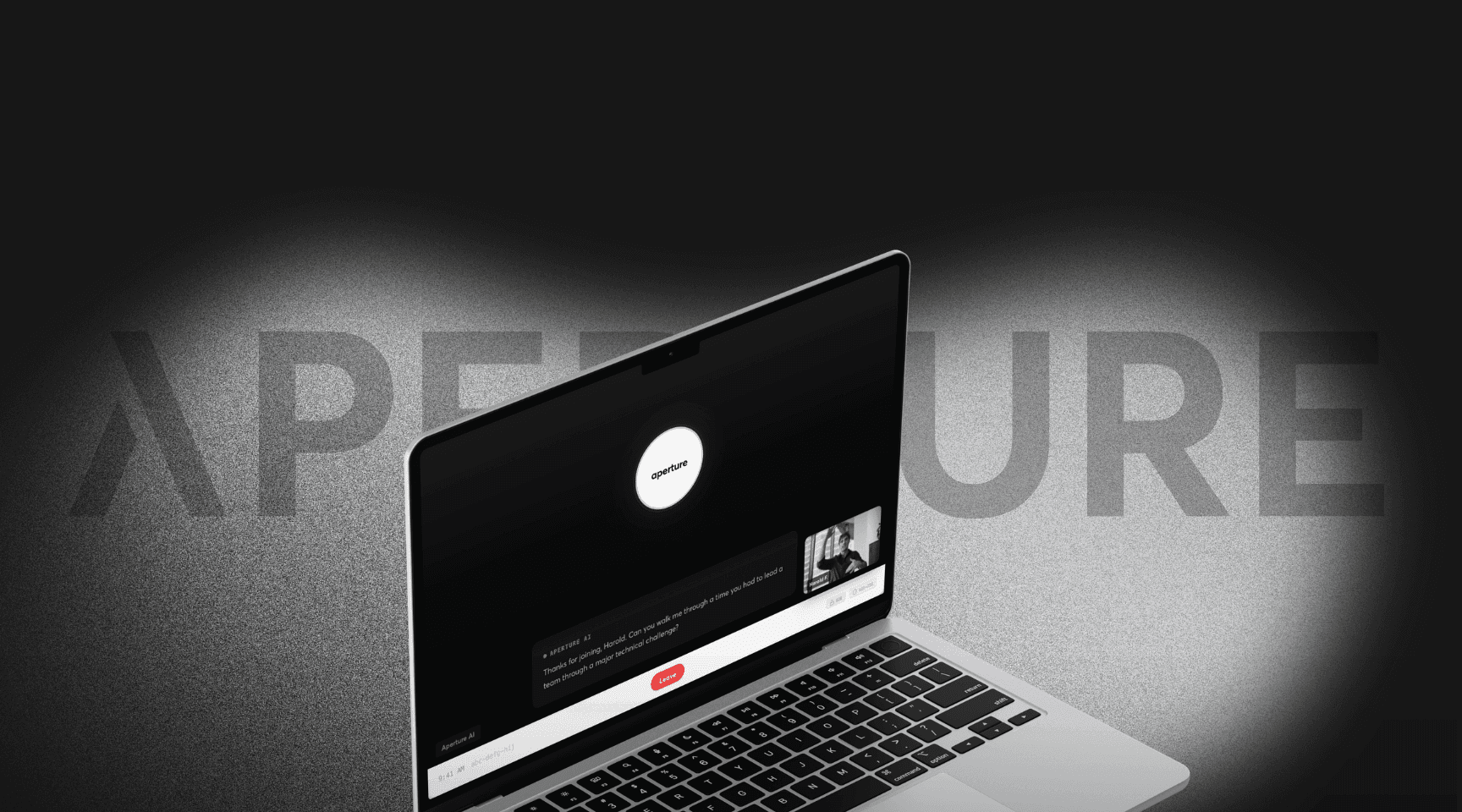
Aperture Labs Inc. co-founder Harsh Shroff is developing a framework and technology platform designed to address a growing problem in modern hiring: the weakening reliability of the evidence employers use to evaluate candidates. His work focuses on making hiring evidence more consistent, reviewable, and trustworthy.
A polished resume once suggested that a candidate had invested meaningful time in an application. Today, generative AI can tailor resumes and cover letters to a job description in seconds. This does not make resumes useless, but it does make it harder for employers to know what the document actually proves.
The Evidence Crisis in Hiring
Shroff describes the current moment not as a recruiting problem, but as an evidence crisis. The signals employers relied on for generations, resumes, applications, interviews, references, and background checks, were never flawless. They were useful because they were costly to produce. When a tailored application can be generated instantly, the cost collapses, and so does the meaning behind it.
"When a resume becomes free to generate, it stops functioning as evidence," Shroff says.
The market has felt the consequences. Candidates use AI to apply at scale, recruiters use AI to filter the flood, and both sides grow more frustrated. Greenhouse CEO Daniel Chait has described this as an "AI doom loop," a market where applicants send more applications into what feels like a black hole while recruiters drown in volume. Shroff argues that responding with more filtering and more automation only accelerates a process whose inputs have already stopped carrying information.
The Founder's Lens: Systems and Trust
What makes Shroff's perspective distinctive is that he does not approach hiring as a traditional recruiting operator. He approaches it as someone trained to think about trust, verification, and how systems fail.
Before co-founding aperture, Shroff co-founded técrave, a technical research, product development, and security consulting firm that later went through a private-equity exit. He also earned a master’s degree in cybersecurity from Stevens Institute of Technology, where he was selected as an instructional associate and taught and evaluated graduate students in information security and law.
Those experiences shaped the question behind his work at Aperture: not simply how employers can process candidates faster, but whether the information used to evaluate them remains trustworthy. While much of hiring technology is designed to accelerate screening, Shroff is focused on the reliability of the evidence underneath it.
A Framework: Integrity, Identity, and Continuity
Shroff separates hiring trust into three questions: integrity, identity, and continuity. He argues that employers often combine these questions even though each one requires a different type of evidence.
Integrity asks whether the demonstrated ability is genuinely the candidate's own.
Identity asks whether the person is who they claim to be.
Continuity asks whether the person later doing the work is the same person who was assessed.
"Integrity, identity, and continuity are related, but they are not the same problem," Shroff says. "Solving one does not mean you have solved all three."
This restraint is part of what makes his position credible. He is direct that no single product can honestly claim to solve every dimension of hiring trust at once. Collapsing the three into one category, he argues, creates false confidence, which is more dangerous than open uncertainty.
Aperture Labs: A Hiring Intelligence Platform
Shroff co-founded aperture to help employers collect stronger evidence of candidate ability. The platform uses structured assessments, consistent evaluation criteria, and recorded work artifacts that hiring teams can review before making a decision.
Two proprietary technologies anchor the platform. λ-CORE is the evaluation architecture that produces consistent, comparable assessment of demonstrated ability across an entire candidate pipeline. It replaces the unstructured interview, whose output varies with whoever happened to be conducting it. Comparability across candidates is the technically difficult part of assessment, and it is what makes an evaluation defensible rather than anecdotal.
NeuralPrint Axon addresses interview integrity, establishing whether demonstrated ability is genuinely the candidate's own. Shroff developed and documented it as proprietary technology, and it was validated against the current generation of real-time AI assistance tools.
Shroff’s approach recognizes that the strongest candidate on paper is not automatically the right hire. Ability matters, but so do working style, communication, adaptability, and alignment with the environment in which the person will operate. Aperture is designed to organize these different signals into a more complete picture, helping employers make decisions that reflect both demonstrated capability and the realities of the team.
Shroff’s work at Aperture Labs has attracted recognition from the technology and investment community, reflecting the significance of his contributions to recruitment technology and candidate verification. Backed by LvlUp Ventures, the company is part of the LvlUp Founders ecosystem and has been accepted into both NVIDIA Inception and AWS for Startups. The platform is being adopted by frontier startups and enterprise organizations to address hiring fraud, strengthen candidate verification, and protect the integrity of modern recruitment processes.
Openness Through Verification
Perhaps the most counterintuitive part of Shroff's thinking is his refusal to blame candidates. In his view, job seekers using AI tools are responding rationally to a system that became automated and impersonal long before generative AI arrived. If applicants believe machines are filtering them, it is unsurprising that they use machines to compete. The failure, he argues, is structural, not personal.

Some employers have even begun bringing interviews back in person, because remote coding tests and video interviews have become easier to influence with AI assistance. That shift shows how seriously the market is questioning the reliability of traditional remote evaluation.
Shroff sees a different path. If companies can trust evidence of ability, identity, and integrity, they can rely less on geography, elite degrees, and institutional familiarity as substitutes for trust. In that future, verification does not narrow opportunities. It widens it.
"The goal is not to make hiring more restrictive," Shroff says. "It is to make it more trustworthy, so companies can consider more people with greater confidence."
That is the broader ambition underlying Shroff’s work. At a time when hiring systems face growing questions about authenticity and evidence, he has developed a framework centered on verification, analytical rigor, and transparency. Rather than accepting conventional assumptions about recruitment, his approach challenges how employers establish trust and evaluate talent. For CTOs, engineering leaders, and enterprise teams confronting this evidence crisis, that perspective offers a consequential shift: making hiring more trustworthy while expanding the pool of candidates organizations can confidently consider.
Explore More About Aperture Labs
If hiring decisions still depend on signals that can no longer be reliably verified, Shroff’s work offers a different approach. Explore his work, follow his thinking on trust in modern hiring, and see how structured, defensible evaluation can help organizations consider more candidates with greater confidence.
Connect with Aperture Labs, Harsh Shroff, LinkedIn, Aperture Labs LinkedIn, and Instagram.