How Unitism Is Rethinking Public Finance
Unitism helps governments rethink public finance by capturing community created land value instead of taxing work and enterprise.
Cities around the world have become engines of extraordinary wealth. New businesses emerge, infrastructure expands, and neighborhoods flourish through the combined efforts of millions of people. Yet for many families, that prosperity feels increasingly out of reach. Home ownership has become more difficult, wages often struggle to keep pace with rising costs, and governments face mounting pressure to fund essential services without placing greater burdens on workers and businesses. Unitism believes these challenges are connected, not separate, and has built an international practice around fixing them — working with governments to design, enact, and implement evidence-based land value policy.
A Different Way To Work With Governments
Founded by Martin Adams, Unitism brings together economists, researchers, policy specialists, urban development experts, and data scientists who share a common goal. Rather than focusing on higher taxes or spending cuts, Unitism helps governments fund themselves from the value of land and natural resources, values that are created collectively by communities over time.
Unitism does not work the way most advisory organizations do. The team does not deliver a report and move on. Governments hire Unitism to achieve a result, and the organization stays engaged — through measurement, policy design, legislation, public communication, and administration — until the system is live and working. The organization has skin in the game: its engagements are defined by outcomes, not deliverables.
That work spans research, policy design, education, and implementation support. Its team measures land value and economic rent, develops long term revenue projections, studies housing affordability, designs land value taxation systems and natural resource revenue models, trains policymakers, and supports governments throughout policy implementation.
This comprehensive approach reflects Unitism’s conviction that lasting reform requires more than academic research. It requires seeing a policy through with evidence, public understanding, and careful transition planning — until it delivers.
Martin Adams explains the philosophy behind the organization’s work.
“We live in a world of incredible abundance; and yet most people don’t have the money to fully participate in that abundance. Why?”
Turning Economic Theory Into Working Policy
The ideas behind Unitism are rooted in a long tradition of economic thought that includes Adam Smith, David Ricardo, John Stuart Mill, Henry George, Fred Foldvary, Mason Gaffney, and Fred Harrison. Rather than treating these ideas as historical theory, Unitism puts them to work on modern public finance challenges.
Unitism points to numerous examples where governments have successfully incorporated land based revenue systems into public policy. Singapore has funded significant public housing development through publicly held land. Alaska and Norway distribute portions of natural resource wealth directly to citizens. Cities including Canberra have also shifted portions of their tax systems toward land value.
For Unitism, these examples demonstrate that the concept has already been implemented across different political systems, economies, and cultures. The organization’s job is to make it work in the next one.
Today, Unitism is applying this expertise while advising a foreign government through a confidential engagement supported by its international team of economists and researchers. Specific details remain confidential until the client announces the project publicly.
From A Book To Working With Governments Around the World
Before launching Unitism, Martin Adams published Land: A New Paradigm for a Thriving World, which explores how land value influences housing affordability, wages, investment, and economic opportunity.
Unitism is the practical extension of that work, translating economic concepts into measurable, operating public policy.
According to Adams:
“Everything an economy produces gets divided three ways: into rent, into wages, and into returns on real investment. Land doesn’t produce anything, so every extra dollar bound up in rent and mortgage payments is a dollar that can no longer show up in a paycheck or fund a productive business. When rent grows, everything else shrinks in proportion to it.”
Rather than positioning itself as another policy think tank, Unitism works directly with governments to design these systems — and then sees them through to implementation.
Building Solutions Beyond Research Papers
Many organizations study housing affordability, taxation, or economic inequality independently. Unitism approaches these issues as parts of the same structural challenge, and treats solving them as a single job to be finished, not a set of recommendations to be handed off.
Its process combines economic measurement, revenue modeling, stakeholder engagement, public communication, legislative planning, and implementation support under one practice. This allows governments to move from identifying a problem to running operational policy, with Unitism accountable for the outcome rather than the paperwork.
The organization’s multidisciplinary team includes professors, PhD researchers specializing in land rents and housing systems, policy analysts working with national statistical agencies, and experts in urban development and economic modeling.
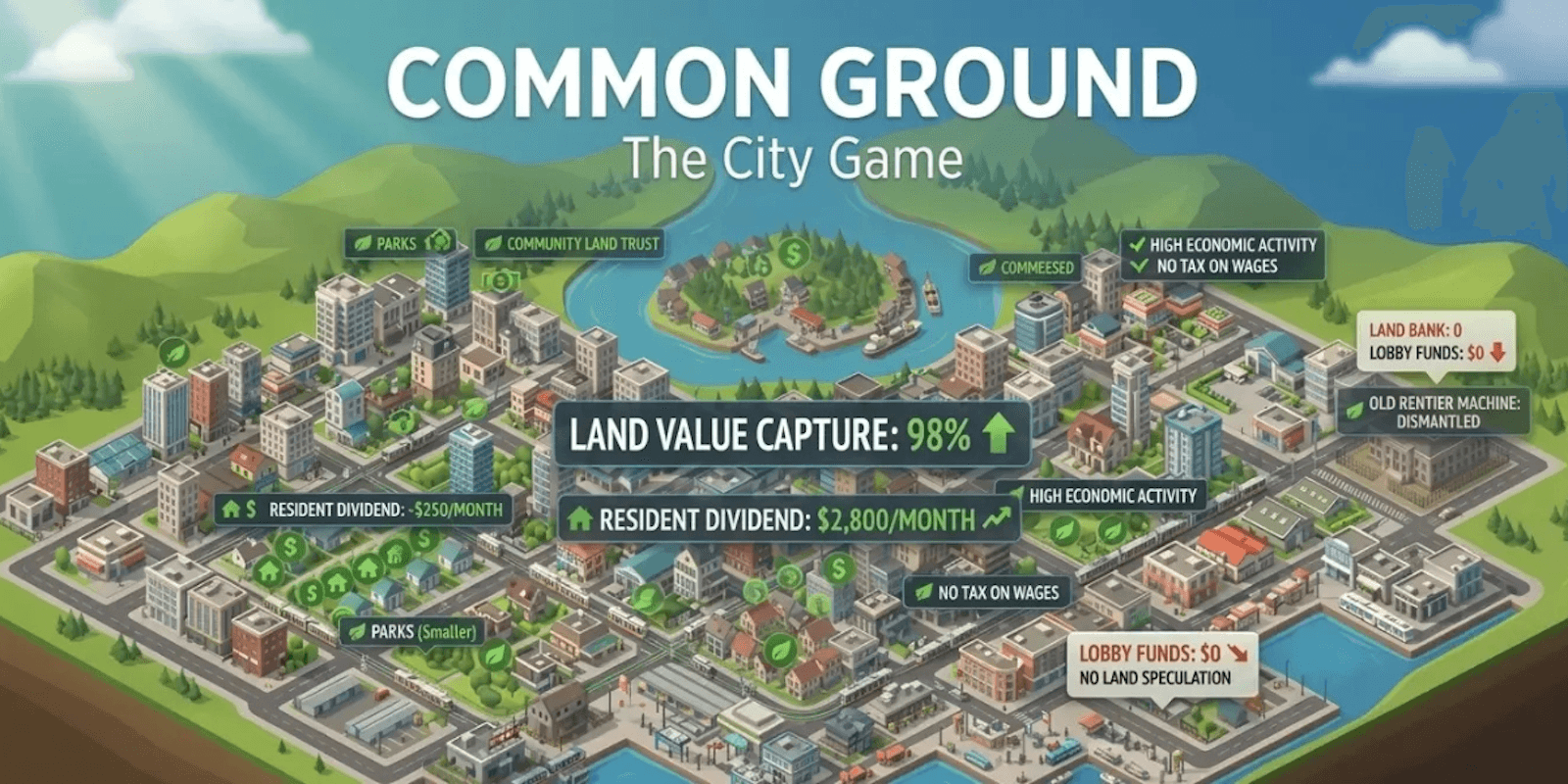
At the same time, Unitism has made education central to its mission. Through its website, the organization provides free access to plain language guides, peer reviewed research, interactive economic tools, a city simulation game, and the complete online edition of Land: A New Paradigm for a Thriving World. The goal is to help both policymakers and citizens better understand how public finance systems influence everyday life.
As Adams explains:
“Ask why wages feel stagnant and businesses struggle to invest, and you'll find the same answer: the money is already spoken for. The more of a community’s income that gets absorbed by rent and land prices, the less is left over to pay workers and to reward the people who actually build things. Rent doesn’t create wealth, it’s first in line to collect it.”

Looking Toward More Sustainable Communities
As governments around the world search for ways to improve housing affordability, strengthen public finances, and encourage productive investment, conversations about land value are receiving renewed attention.
Unitism believes these challenges are not isolated crises but symptoms of a broader structural design that can be improved through thoughtful policy supported by rigorous analysis and practical implementation.
According to Adams:
“And that cost compounds: because rent is paid before anything else, every dollar it absorbs is a dollar that can’t go into wages or into returns on productive investment. Communities that share their land value flip this around. Work and enterprise keep more of what they create, because the value nobody earned is no longer allowed to eat the value everybody did.”
By combining academic research, real world policy experience, and hands-on implementation, Unitism helps governments build systems that align public revenue with the value created by entire communities.
Learn More About Unitism
Readers interested in exploring Unitism’s research, educational resources, and government work can visit Unitism, where they can access free economic guides, interactive tools, the full online edition of Land: A New Paradigm for a Thriving World, and additional information about the organization’s approach to public finance reform.
Follow Unitism for updates and educational content through Facebook, X, LinkedIn and Bluesky.