
Kailan McGee Builds a Moonlit Mythology in Lady of the Moon
With eight songs and extensive world-building, Kailan McGee turns dark folk storytelling into an immersive musical journey.

An Album That Begins With a World, Not Just a Song
Some albums tell stories drawn from life. Others invite listeners into worlds that exist only in the imagination. For Canadian artist Kailan McGee, Lady of the Moon represents the latter, unfolding through an atmospheric landscape of witches, sirens, supernatural forces, and female characters whose lives intertwine within the mysterious Black Forest of southwestern Germany.
Released under the light of the Pink Moon, McGee’s sophomore album takes a distinctive approach to songwriting. Rather than arranging its eight tracks as a conventional sequence of songs, she structures the record around the phases of the moon. Each phase introduces another part of the mythology, gradually revealing the landscape, characters, and supernatural rules that define the album’s fictional world.
The result is an imaginative dark folk rock experience designed to reward listeners who enjoy music with a narrative at its heart. It is an album that can be heard as a collection of individual compositions, but its deeper appeal emerges when the songs are experienced as chapters in a larger story.
For McGee, the process began long before the final recordings. What started as mind maps developed into more than 70 pages of notes covering plot, character development, and mythology. Those ideas then evolved into poetry, chord structures, and melodies, with each element emerging in the order the creative process demanded.
The scale of that preparation reveals an artist approaching songwriting as an exercise in world building. Instead of simply writing lyrics and arranging music around them, McGee developed a fictional realm with its own history, dangers, characters, and legends.
From Personal Storytelling to an Imagined Realm
Originally from Cobourg, Ontario, Kailan McGee released her 21 song debut album in January 2025, with 13 tracks charting in Canada and the United States. She received multiple award nominations and won Country Artist of the Year at the 2026 New Music Awards.
Rather than following that success with similar music, McGee shifted toward imaginative dark folk rock with Lady of the Moon. Drawing on mythology and supernatural storytelling, she created an all female cast whose stories explore longing, betrayal, immortality, and revenge. Structured around the phases of the moon, the album unfolds as an interconnected narrative set in Germany’s mysterious Black Forest.

Eight Songs, Eight Windows Into the Black Forest
The journey begins with “The Black Forest,” associated with the new moon. In an intriguing contrast, it is described as the brightest song on the album. Its purpose is introductory, establishing the landscapes and mythological creatures that will populate the world and preparing listeners for the darker events ahead.
The title track, “Lady of the Moon,” follows under the waxing crescent. Here, the central guide to the mystical realm emerges, leading listeners through a landscape illuminated only by moonlight. The character functions as a guide through the album’s imaginative geography, helping establish the atmosphere of a world where the familiar and the supernatural coexist.
“Song of Phaedora,” aligned with the first quarter, introduces a siren whose soul has existed for centuries. Although she longs for love, her immortality depends on luring men to their deaths. The character embodies one of the album’s recurring tensions: the distance between what a person desires and what their circumstances demand.
With “Hellfire Tonight,” associated with the waxing gibbous, McGee expands the mythology through an original supernatural concept. Hellfire becomes a force that later connects to Eryndor, a character who uses its fury to trap the souls of her victims in pursuit of resurrection. The song explores what those victims experience as their souls cross over, providing an early glimpse into the album’s darker mythology.
At the full moon, “The Legend of the Wild Moon” turns toward the Black Forest’s blood moon and the terrifying events surrounding it. Sightings of witches precede sinister alchemy, and the legend is defined by the absence of survivors able to recount what happened. The song strengthens the sense that the forest operates according to ancient and dangerous rules.
“Ghost of Eryndor,” paired with the waning gibbous, brings the supernatural antagonist into sharper focus. Eryndor appears in a white dress, carrying a single candle on the new moon. Within the mythology, she transforms its flame into hellfire fury to capture souls that could enable her resurrection. A protective legend offers another layer to the story: lighting a candle on the new moon is said to keep a soul safe from Eryndor.
The narrative then turns toward one of its most tragic figures in “Bellflower,” associated with the last quarter. Born at Bog Mountain in the Black Forest, Bellflower experiences love and pregnancy before the man she expects to marry changes his mind and banishes her to foreign lands.
Her resulting bitterness drives her toward revenge. She eventually trades her child to the witches of the Black Forest in exchange for eternal youth and magical powers. After a century without aging, she grows weary of men seeking her hand and casts a spell to make herself old. The spell changes her appearance but leaves her immortal, trapping her in an unexpected version of the very wish she sought to fulfill.
The final track in the album’s presented moon phase sequence, “Clairvoyance,” is associated with the waning crescent. It continues Bellflower’s story as she begins to acquire the power of clairvoyance, extending her character development beyond the events that shaped her transformation.
Together, these songs establish a mythology in which supernatural power rarely comes without a cost. Immortality can become a burden, longing can lead to destruction, and the pursuit of control can produce consequences that outlast the original desire.
The Craft Behind the Atmosphere
What distinguishes Lady of the Moon is the attention given to the connections between its songs. The extensive preparation behind the record allows characters and supernatural ideas to recur across the narrative, creating continuity rather than relying solely on mood.
The Black Forest is more than a setting. It becomes the foundation for the album’s mythology, connecting its witches, sirens, spirits, and legends through a shared landscape. The moon phases provide another layer of organization, allowing each song to contribute to the larger narrative while retaining its own identity.
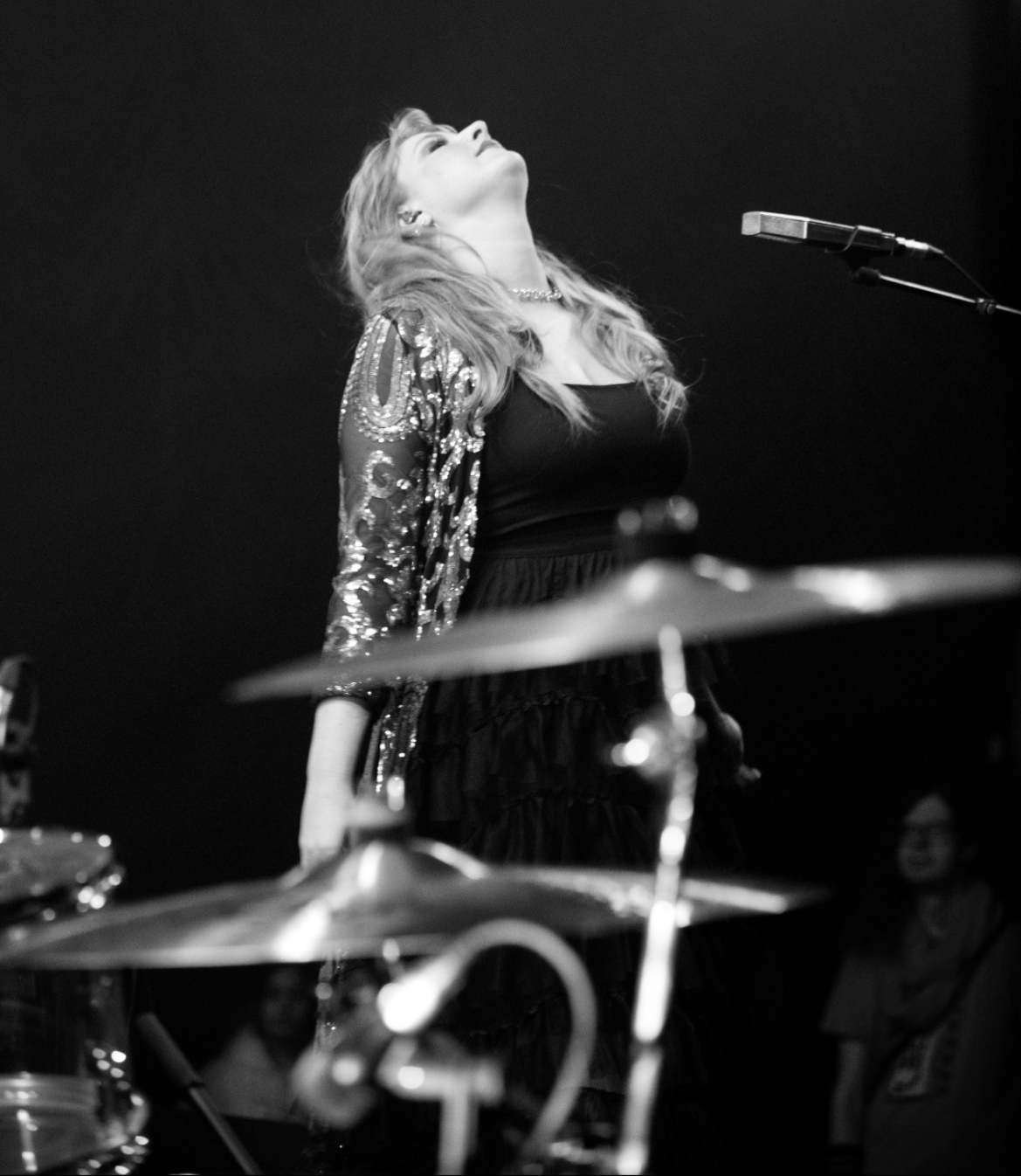
The musical performances support McGee's role as the central creative voice. She wrote all the songs and performs the vocals and spoken word. Darrell Wallace contributes guitars, Kevin Comeau plays bass and keyboards, and Graham Shaw and Jacob McGee Gauthier perform drums. The album was produced by Kevin Comeau and recorded at Chalet Studio in Claremont, Ontario, Canada. Photography was done by Bryan Lockyer.
This combination of songwriting, spoken word, character development, and instrumental performance creates the foundation for a project built around immersion. Listeners are invited not only to hear the songs but also to imagine the places and characters that give them meaning.
With its witches, moonlit settings, and supernatural legends, Lady of the Moon suits autumn evenings and Halloween playlists. Beyond its seasonal appeal, the album showcases McGee’s imaginative storytelling through music.
Choosing Creativity Over Expectations
McGee’s move away from the country recognition associated with her debut illustrates an important part of her artistic outlook. Rather than treating an award or a successful genre as a formula to repeat, she has continued to pursue the ideas that interest her creatively.
For an artist working in an industry where visibility and recognition can influence creative decisions, that willingness to change direction gives Lady of the Moon a distinct identity. Its ambition lies in its carefully developed mythology, its interconnected characters, and its commitment to a concept that required extensive preparation before the music reached listeners.
The album also demonstrates how songwriting can extend beyond autobiography. Personal experience remains one path toward emotional truth, but fictional characters can provide another. Through Phaedora, Eryndor, Bellflower, and the other women inhabiting the Black Forest, McGee explores the consequences of desire, the cost of power, and the complicated choices that shape a life.
Her next concept album has already been written and is currently in preproduction, with a release expected in early 2027. Its arrival will provide another opportunity to see where her evolving creative direction leads.
For now, Lady of the Moon stands as a fully imagined world in which the phases of the moon become a map through mystery, tragedy, and supernatural folklore. It invites listeners to slow down, follow the stories, and experience an album as something more expansive than a sequence of tracks.
Enter the World of Lady of the Moon
For listeners drawn to dark folk rock, imaginative mythology, and music that rewards close attention, Kailan McGee’s Lady of the Moon offers an invitation into a forest where every character carries a history and every moon phase reveals another piece of the story.
Explore McGee’s music, updates, and features through her official artist page and Instagram.