Mindful Crowd: Transforming Workplace Stress into Strength Through Neuroscience and Virtual Reality
As workplace stress rises, Mindful Crowd combines science, sensory learning, and immersive technology to improve well-being, engagement, and performance.
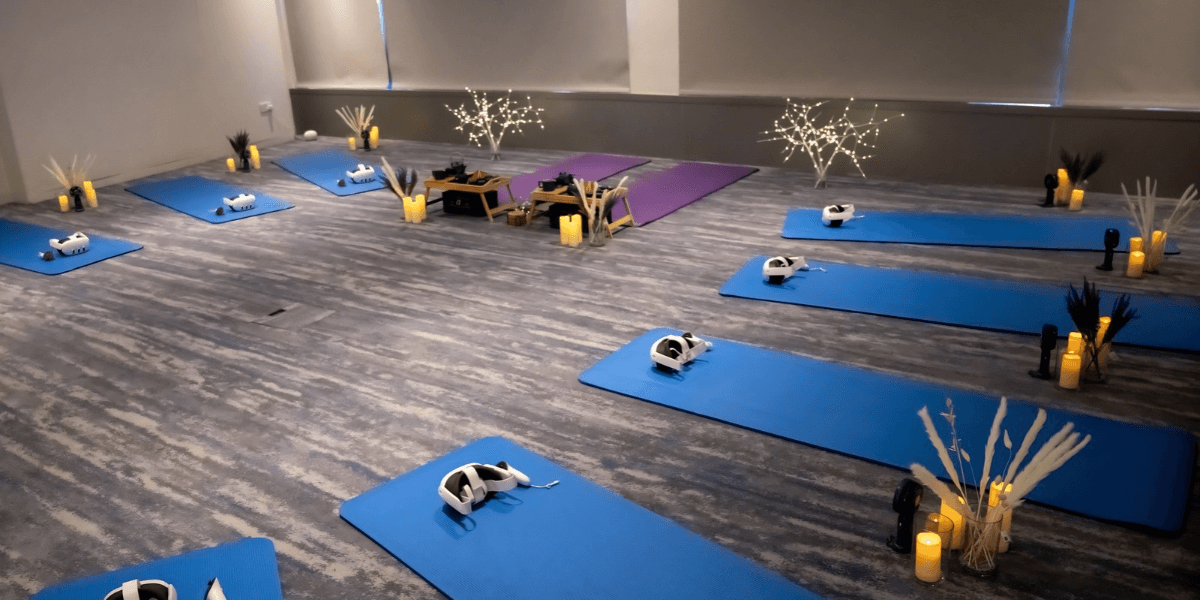
Picture a corporate team under pressure. Deadlines loom, inboxes overflow, and employees move from one demanding responsibility to another, often without a moment to recover. Now picture that same team stepping into a virtual Japanese garden, slowing their breathing, releasing physical tension, and experiencing how their nervous system responds to a change in environment. This is not a conventional motivational seminar. It is part of the experience offered by Mindful Crowd FZE, a company based in the UAE introducing a different approach to workplace stress through neuroscience, mindfulness practices, and immersive technology.
For corporate leaders, the issue extends far beyond employee comfort. Unmanaged stress can undermine concentration, decision-making, attendance, and workplace relationships, gradually affecting an organization's ability to perform. According to the World Health Organization, depression and anxiety are associated with approximately 12 billion lost working days globally every year, costing an estimated $1 trillion in lost productivity [1]. Meanwhile, Gallup's State of the Global Workplace 2026 report found that only 20% of employees worldwide were engaged at work in 2025, continuing a decline from 23% in 2023 [2]. Although workplace stress and disengagement are distinct challenges, both highlight how the human side of business can influence organizational results.
These findings raise an important question for CEOs and HR directors: how much potential is being lost within their own organizations because employees are struggling under pressures they have never been properly equipped to manage? The consequences are not always visible in financial reports. They can appear as repeated sick leave, declining motivation, avoidable mistakes, strained communication, and valuable employees choosing to leave. Addressing these challenges requires more than occasional wellness activities. It requires helping people develop skills that support their well-being and their ability to perform consistently.
A Mission Born From Science and Experience
Mindful Crowd began with a simple but powerful belief: understanding stress is not the same as knowing how to manage it. Co-founder and Managing Director Tarek Aad developed the company's approach through his background in medical and corporate environments, where he observed how sustained pressure could affect both personal health and professional performance. Conventional wellness initiatives often succeeded in raising awareness, yet employees frequently returned to the same demanding routines without practical methods for responding differently. Motivational talks inspired for a day, while the underlying patterns remained largely unchanged.
This experience led Aad to explore how stress mastery could be taught through the body and senses, rather than intellectual understanding alone. Drawing on stress physiology, mindfulness, and experiential learning, Mindful Crowd developed an approach that helps participants recognize their individual stress patterns, understand their physiological responses, and practice techniques for returning to a more balanced state. Its guiding promise, Empowering Minds, Enhancing Performance, reflects the belief that individual well-being and organizational performance are closely connected.
"Corporate teams don't need another wellness talk, they need tools that rewire stress at its source," Aad explains. "At Mindful Crowd, we use science, VR, and sensory learning to help employees shift from stress response to recovery response. When calm becomes a skill, performance, focus, and creativity naturally rise."
At the heart of this philosophy is the idea that calm is not simply a personality trait or the absence of pressure. It is a capability that people can learn, practice, and strengthen. For organizations, developing that capability can contribute to a workforce better equipped to navigate demanding responsibilities without allowing stress to continuously undermine concentration, communication, and personal well-being.
Neuroscience Advancing Business Performance
What distinguishes Mindful Crowd is the integration of scientific understanding with direct sensory experience. Its corporate programs combine Virtual Reality, neuroscience-informed stress education, Neuro-Linguistic Programming techniques, mindfulness and breathing practices, and structured stress assessments. Rather than asking participants to listen passively to information, the approach encourages them to experience different physiological states, understand their reactions, and practice techniques they can apply in everyday professional situations.
Virtual Reality plays an important role by immersing participants in environments designed to encourage relaxation and focused attention. The potential of this technology is supported by a growing body of research. A systematic review published online in 2023 examined 17 studies involving 1,270 participants and found encouraging evidence for immersive technologies in workplace well-being, including improvements in stress, relaxation, and psychological restoration, while acknowledging the need for further research into long-term outcomes [3].
For Mindful Crowd, however, the technology is not the destination. A virtual environment may provide an opportunity to experience calm, but the greater value lies in helping employees understand that experience and transfer practical techniques into their working lives. Through guided learning, participants explore how stress influences their thoughts, emotions, and physical responses, and how deliberate recovery practices can help them regain composure when pressure increases.
The potential benefits extend beyond individual relaxation. Employees who manage stress more effectively may be better positioned to maintain concentration, recover after demanding interactions, and approach complex tasks with greater clarity. For managers, improved emotional regulation can support thoughtful decisions, constructive communication, and healthier team relationships. Across an organization, these capabilities can complement efforts to strengthen employee engagement, reduce stress-related disruption, and sustain performance during demanding periods.
For business leaders, this represents an important shift in perspective. Stress mastery is not merely an employee benefit. It can become part of workforce development, supporting the human capabilities on which productivity, collaboration, and leadership depend.
Turning Employee Well-Being into Measurable Organizational Value
One of the greatest challenges facing HR departments is demonstrating the value of investments in employee well-being. Attendance records and satisfaction surveys may show that participants enjoyed a program, but they reveal little about whether people are managing stress more effectively or whether an organization is making meaningful progress.
Mindful Crowd addresses this challenge through structured stress assessments, including its Stress Mastery Questionnaire (SMQ). These tools help participants understand their individual stress patterns while providing organizations with aggregated insights into pressures affecting their workforce. Such findings can guide development priorities, inform future interventions, and create a basis for evaluating changes over time. When considered alongside HR indicators such as absenteeism, engagement, retention, and performance trends, these assessments can support a more informed understanding of how employee well-being relates to business objectives.
This emphasis on measurement matters because corporate wellness should offer more than a memorable experience. HR directors need to understand where employees are struggling, which interventions are appropriate, and whether their investments are contributing to improvement. CEOs, meanwhile, need confidence that employee development initiatives align with the organization's broader performance priorities.
Mindful Crowd does not suggest that individual training alone can eliminate burnout or guarantee improvements in productivity and retention. Sustainable results also depend on workload, leadership behavior, and organizational culture. The World Health Organization recommends addressing workplace mental health through both healthier working conditions and practical support that helps employees develop stress-management capabilities [1]. Mindful Crowd's approach is intended to complement these wider responsibilities, giving organizations an additional way to strengthen workforce resilience while gaining useful insight into employee needs.
For Aad, this connection between personal well-being and business performance remains central to the company's mission. His experience has reinforced the understanding that stress cannot simply be removed from professional life. Deadlines, difficult decisions, and demanding responsibilities will always exist. What can change is how people respond to those pressures, how effectively they recover, and how consistently they bring their capabilities to work.
As Mindful Crowd expands its corporate reach, it is encouraging business leaders to look beyond occasional wellness events and consider stress mastery as part of their long-term people strategy. In a competitive environment where organizations depend on clear thinking, collaboration, and the ability to adapt, helping employees develop healthier responses to pressure is both a human investment and a business consideration.
Ultimately, the value of stress mastery is not measured by the minutes employees spend relaxing during a training session, but by how they manage the hours, days, and challenges that follow. When people become better equipped to manage pressure, organizations have a stronger foundation for sustainable performance. That is the opportunity Mindful Crowd is bringing to the corporate world.
Organizations interested in exploring Mindful Crowd's corporate stress mastery programs, immersive VR experiences, and assessment-led approach to employee well-being can visit www.mindfulcrowd.com to learn more and arrange a conversation. Connect with Mindful Crowd and LinkedIn.
References
- World Health Organization (2026). Mental health at work. September 15, 2026.
https://www.who.int/news-room/fact-sheets/detail/mental-health-at-work - Gallup (2026). State of the Global Workplace: 2026 Report. Global Data Summary.
https://www.gallup.com/workplace/697904/state-of-the-global-workplace-global-data.aspx - Riches S, Taylor L, Jeyarajaguru P, Veling W, Valmaggia L. Virtual reality and immersive technologies to promote workplace wellbeing: a systematic review. Journal of Mental Health. Published online March 15, 2023; print publication 2024;33(2):253–273.
https://doi.org/10.1080/09638237.2023.2182428