
Nathan Hickman Teaches The Power To-Be
A brother’s hard-won wisdom became a movement for presence, gratitude, and self-compassion.
Nathan Hickman remembers the feeling of living for the next day. The next weekend. The next event. The next brief escape from a life that felt crowded by regret, worry, and noise. He was moving through his days, but not fully inhabiting them. That tension became the beginning of Take Time To-Be, a message built around a simple but demanding question: What changes when a person stops chasing the next milestone and starts noticing the life already in front of him?
The Origin Of Take Time To-Be
The phrase Take Time To-Be carries unusual weight because Hickman designed it to interrupt a familiar habit. Most people keep a to-do list. Fewer keep room in their lives to be present, to breathe, to recognize what remains possible, and to show compassion to themselves before they pour into everyone else. For Hickman, the hyphen in To-Be is not decorative. It is a reminder to set down the performance of constant motion and return to the human being underneath the schedule.
His work grew from lived experience, not theory alone. Hickman, an author, speaker, and Happiness Pro, describes a season when anxiety was not an occasional visitor but a daily atmosphere. He has written about feeling as if he barely existed, caught in overthinking and negative self-talk. Over nearly a decade, he built practices through writing, reflection, education, and professional support that helped him create more peace, steadiness, and contentment in everyday life.
Yet the deeper origin of Take Time To-Be is family. Hickman’s late brother, Chad, shaped the message through a life marked by extraordinary physical trials and uncommon perspective. Chad faced brain cancer at age four, a brain injury at twenty, brain surgery at thirty, a stroke at forty, and lung cancer before his death at forty-one. Hickman says Chad had to learn to walk four different times. Still, Chad taught him one of the defining lessons of his life: enjoy life while you are living it.
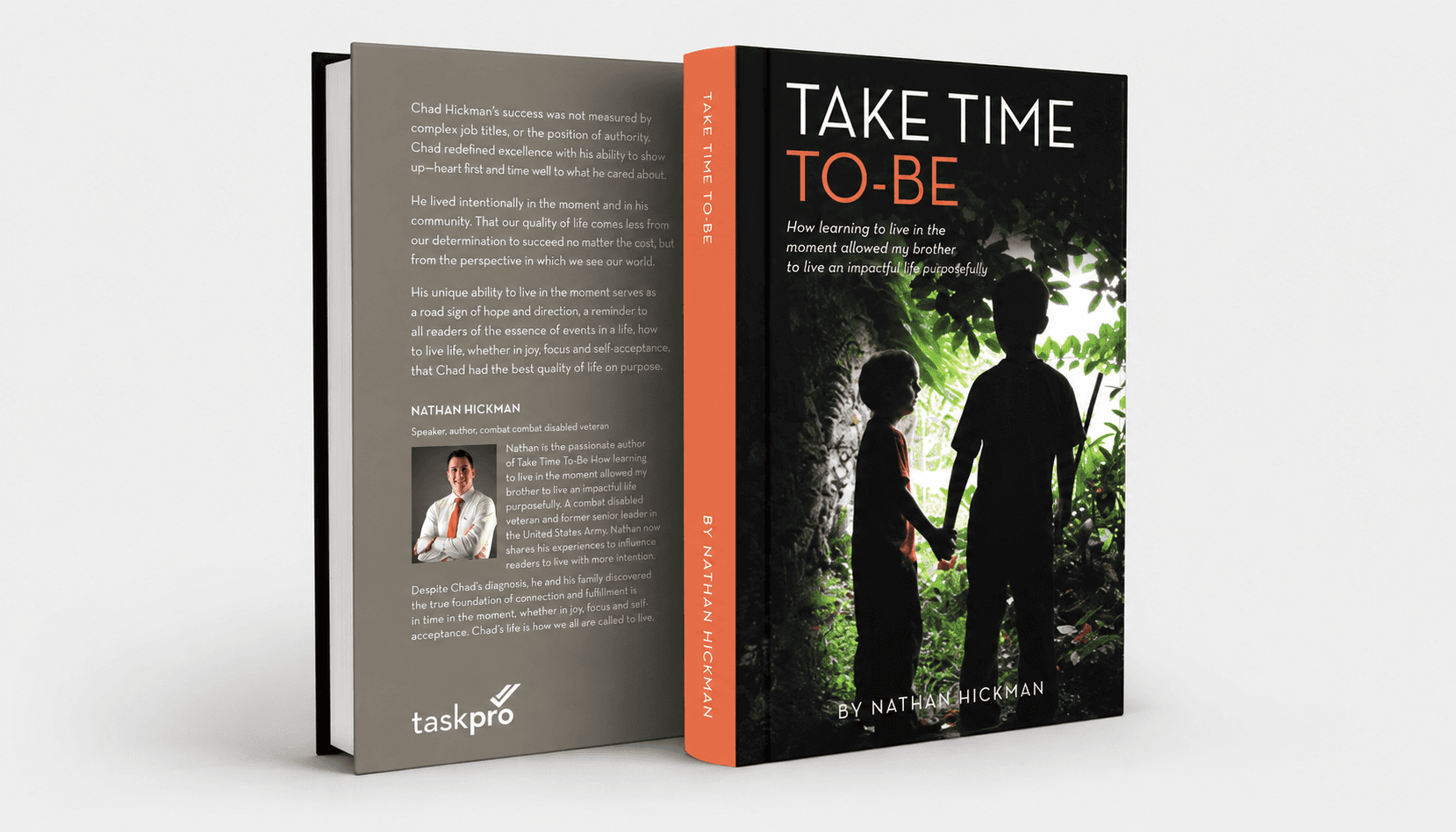
That lesson could sound simple until it is placed beside Chad’s story. To enjoy life while living it does not mean pretending life is easy. It does not erase pain, grief, illness, disappointment, or stress. Instead, it asks a person to notice the moments that still deserve attention. It asks for presence in average minutes, not only celebration in perfect ones. Hickman’s book, Take Time To-Be: How Learning To Live In The Moment Allowed My Brother To Live An Imperfect Life, Perfectly, grew from that inheritance.
The Perspective Behind Take Time To-Be
At the heart of Take Time To-Be is Hickman’s belief that perspective can change the texture of a day. He often contrasts two mental patterns. One is built around regret and anxious projection, the familiar loop of “but if” and “what if.” The other is grounded in what a person does have and what a person can do. The first can shrink a life until it feels like survival. The second can create room for gratitude, choice, and resilience.
Hickman does not frame this as instant transformation. His message is more credible because it avoids the fantasy of a flawless emotional life. He still speaks honestly about struggle. The shift, as he presents it, is not that difficult emotions disappear. It is that they no longer have to be in charge. That distinction respects the reality of human life while pointing toward agency.
Many people recognize the pattern he describes. A person wakes to an alarm, rushes through a morning, moves from point A to point B, answers messages, checks obligations, and waits for some future reward to make the effort feel worthwhile. Meanwhile, ordinary joy gets deferred. Graduation, marriage, a new baby, a dream vacation, or a promotion becomes the imagined doorway to happiness. The danger, Hickman suggests, is that life between those moments begins to feel like background noise.
Take Time To-Be challenges that bargain. Big moments matter, but they cannot carry the full burden of a meaningful life. In fact, the more intensely people script their perfect day, the more vulnerable they may become to disappointment when reality behaves like reality. Weather changes. People arrive late. Plans shift. Hickman’s invitation is not to care less, but to live more fully before, during, and after the milestone.
This is where self-compassion becomes central to his brand. Hickman believes many people mistake self-compassion for selfishness. He sees it differently. To him, self-compassion is a way to protect quality of life through healthier boundaries, honest reflection, and enough inner steadiness to show up well for loved ones. The familiar airplane instruction applies: put on your own oxygen mask before helping someone else. In Hickman’s world, that is not indulgence. It is responsibility.
Why Nathan Hickman’s Message Resonates
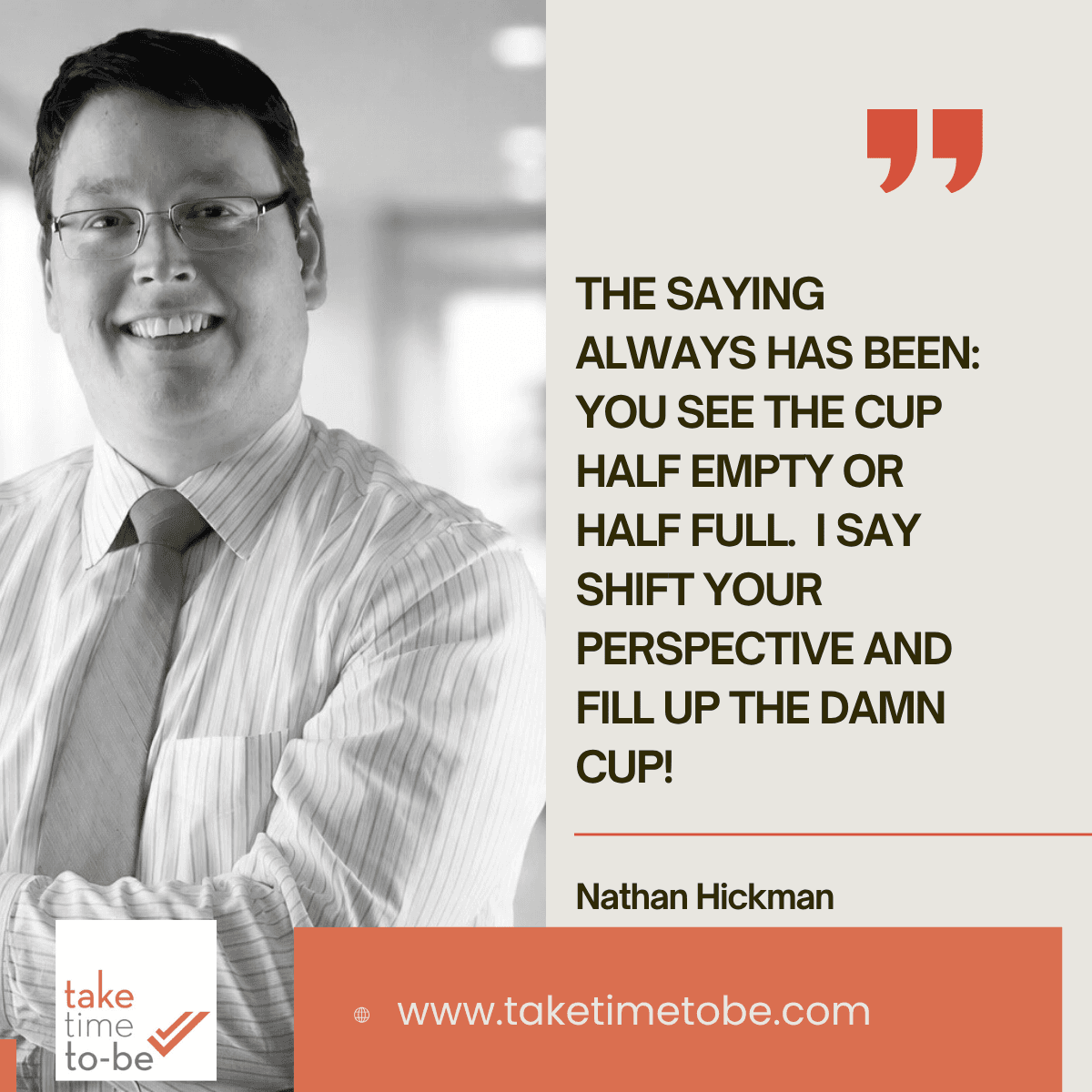
What makes Nathan Hickman’s voice distinctive is his tight focus on quality of life. He is not selling a shortcut to permanent happiness. He is building a movement around daily presence, gratitude, and the courage to stop outsourcing joy to the future. It meets readers and listeners in the place many actually live: busy, tired, loving their families, trying to be useful, and quietly wondering why achievement alone has not produced peace.
The brand also resonates because grief is present without becoming the whole story. Chad’s life is not used as a symbol of tragedy. It is honored as a source of wisdom. His example gives Hickman’s work emotional authority. When a man who endured so much could still teach others to notice life while it is happening, the lesson becomes harder to dismiss.
Hickman’s approach is also practical in tone. Take Time To-Be encourages people to pause long enough to identify what they can influence. That may mean shifting attention from what is missing to what is available. It may mean recognizing a small good thing without minimizing a real hardship. It may mean setting a boundary before resentment grows. It may mean giving a loved one full attention for five minutes instead of offering divided attention for an hour. These are modest choices, but they are often the choices that restore a sense of life.
As an author and speaker, Hickman turns that message into language people can remember. “Take Time To-Be, Not To-Do” is more than a slogan. It is a corrective to a culture that often rewards exhaustion and calls it ambition. The phrase invites a different kind of success, one measured not only by completed tasks but by presence, connection, gratitude, and the ability to meet an ordinary day with less resistance.
The movement is especially relevant for readers who feel trapped on what Hickman calls the next day rollercoaster. They may be functioning well on the outside while privately feeling numb, restless, or disconnected from joy. They may be waiting for the weekend to rescue them, only to find Sunday night filled with dread. Hickman’s story offers an alternative rhythm. It suggests that every day contains something worth noticing, and that noticing is a skill people can practice.
For those ready to explore that skill, Take Time To-Be offers a deeply personal doorway into presence, gratitude, and self-compassion. Readers can learn more about Nathan Hickman’s book, message, and speaking work, then consider how his brother Chad’s hard-earned wisdom might change the way they move through their own average day. The benefit is not a louder life. It is a more awake one. Connect with Nathan Hickman, SoundCloud, YouTube, and Amazon.