
San Juanito: The Querétaro Vineyard That Was Never Supposed to Become a Wine Destination
From a family retreat to an award winning vineyard, San Juanito helped redefine Querétaro wine through authenticity, innovation, and terroir.
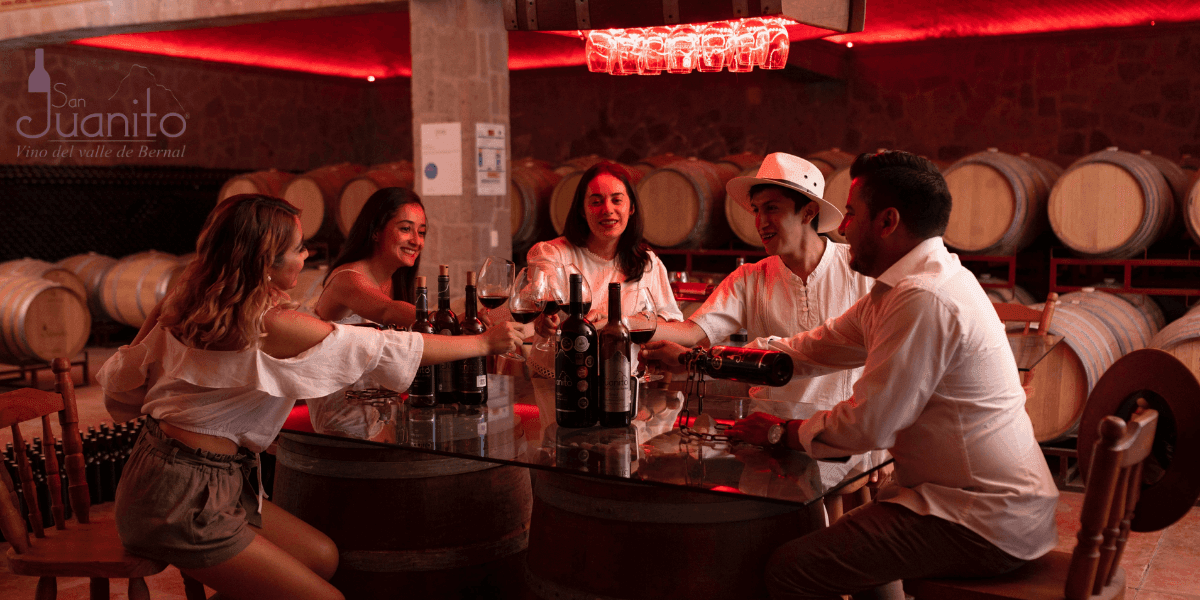
Some vineyards are born from a business plan. San Juanito was not.
Tucked into the semi-desert highlands of Querétaro, near Peña de Bernal and Tequisquiapan, San Juanito began as something far more intimate: a family weekend retreat, a place to rest, gather, cook, breathe, and stay close to the land. Wine was part of the dream, but not necessarily the beginning of a public destination. At first, San Juanito was not designed to become one of the most talked-about vineyards in Querétaro. It was meant to be a home.
Then the wines started speaking for themselves.
Querétaro is not the kind of wine region that lets you coast. This is high-altitude, semi-arid, extreme viticulture territory, where the vineyard must negotiate intense sunlight, cool nights, scarce water, mineral soils, and a climate that demands attention. In the early days, some advisors warned the family that producing truly high-quality wine here would be difficult, perhaps even unrealistic.
The first harvest proved otherwise.
San Juanito’s early wines returned from international competitions with medals from some of the wine world’s most respected stages: gold and silver at Bacchus in Spain, gold at the San Francisco International Wine Competition, and gold at Mundus Vini in Germany. For a young Mexican winery in a region still defining its global identity, those results were not just flattering. They were impossible to ignore.
“When our first wines came back with international medals, my father received a call from the Secretary of Tourism congratulating us. He basically told us, ‘Whether you planned it or not, you’re going to have to open this place to the public.’ That was a funny turning point for us. San Juanito began as a family weekend retreat, but the wines created their own path,” says Antonio Treviño, winemaker at San Juanito.
And that is where the story changed.
The family had not originally built San Juanito as a tourism operation. But the character of the wines, and the recognition they began accumulating, created a kind of gravitational pull. People wanted to visit. They wanted to taste where these wines came from. They wanted to understand how a vineyard in the highlands of central Mexico, in a region still free from the heavy expectations of Old World appellations, was producing wines with such personality.
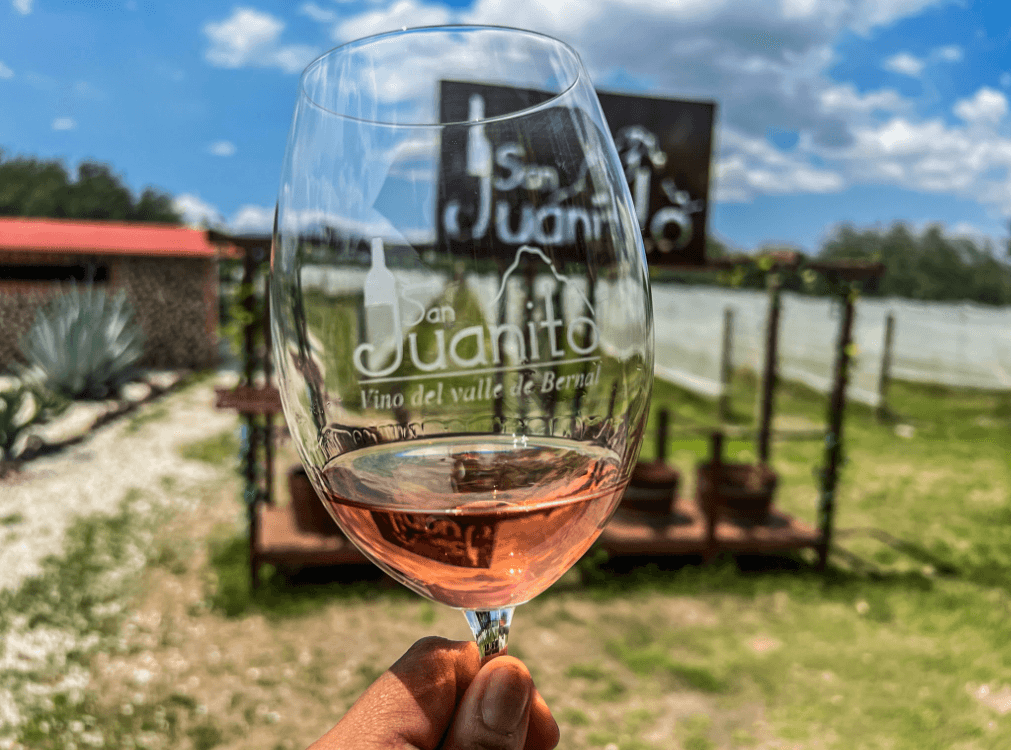
That freedom may be one of San Juanito’s greatest strengths.
In places shaped by centuries of denominaciones de origen, tradition can be both a gift and a weight. Querétaro’s wine country has a different energy. It is young, experimental, restless, and unafraid, yet it stands on surprisingly old roots. Mexico is the birthplace of wine in the Americas, and central Mexico played an early role in the spread of vineyards after the Spanish conquest. Querétaro carries that unusual tension beautifully: ancient wine history, but a modern freedom to reinvent.
Without the burden of having to imitate Bordeaux, Rioja, Tuscany, or Burgundy, winemakers here can listen more directly to the land in front of them.
At San Juanito, that freedom is not theoretical. It shows up in the glass. The winery is willing to explore blends and expressions that, in more rigid wine regions, might be prohibited or at least raise a few eyebrows: a traditional-method sparkling wine made from Malbec, reds that bring together Malbec, Syrah, and Tinta de Bernal, and wines shaped less by inherited rules than by what the vineyard itself seems to offer.
The result is not experimentation for its own sake. The wines still need balance, structure, freshness, and identity. But San Juanito’s style reflects one of the most exciting things about Mexican wine today: the chance to build a language of its own. These are wines interpreted through family, altitude, heat, patience, instinct, and the semi-desert landscape of Querétaro.
For a food and wine traveler, that is exactly what makes the visit memorable.
San Juanito does not feel like a staged wine theme park. Even as the vineyard now receives a significant number of visitors each month, it has managed to preserve the feeling that made it special in the first place: the authenticity of the countryside, the warmth of a family project, and the quiet pleasure of being somewhere that was loved before it was opened to the public.
A visit can include a walk through the vineyard, a guided tasting, a look into the winery, and time at the terrace, where food becomes part of the experience rather than an afterthought. Wood-fired pizzas, seasonal dishes, local ingredients, and estate-grown wines come together in a way that feels generous but unpretentious. This is wine tourism without the forced seriousness that sometimes makes wine feel distant.
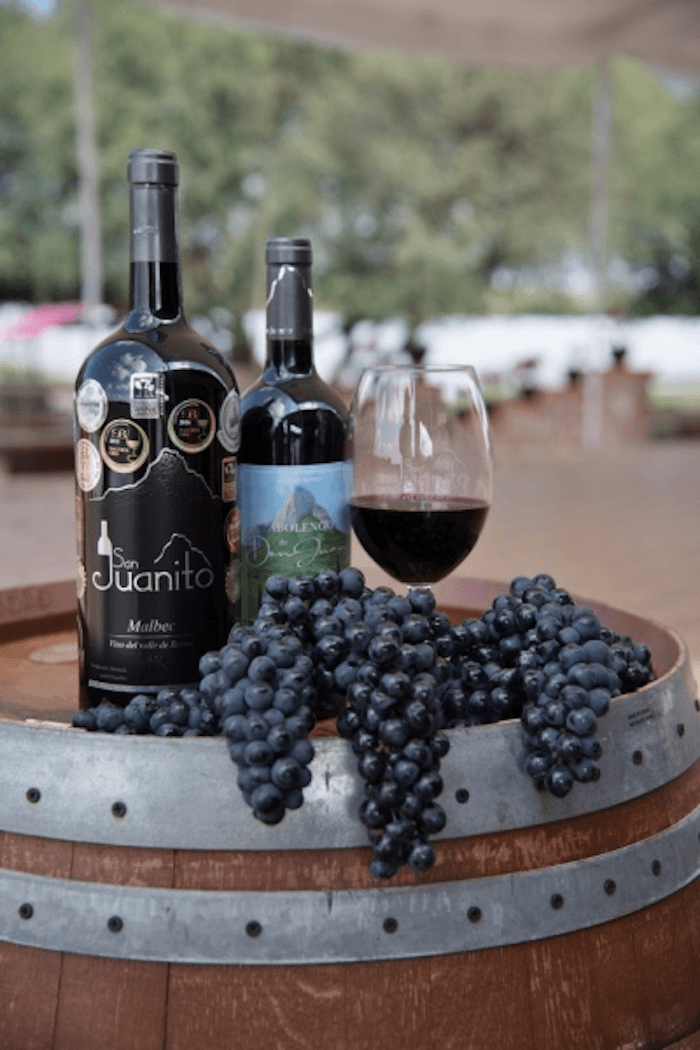
That balance is rare.
San Juanito knows it makes serious wine. The medals prove it. More than 150 awards have placed the winery among the notable names in Mexican wine, with recognition in respected international competitions. But the place itself never feels like it is asking visitors to behave as if wine were a museum piece. Here, wine belongs on the table, in conversation, beside food, under the open sky, with family and friends.
Over time, the vineyard grew into a fuller destination. Guests now come for guided tours, tastings, food and wine experiences, private events, weddings, corporate gatherings, and overnight stays at La Casona, the estate’s lodging experience. What began as a family refuge has become a point of reference for wine tourism in Querétaro.
And still, the soul of the place remains intact.
That may be San Juanito’s real achievement. Not only that it proved quality wine could come from a challenging semi-desert highland region. Not only that it earned international medals when some doubted it could. Not only that it became part of the growing reputation of Mexican wine. But that it did all of this without losing the feeling of a family opening the doors to a place they genuinely love.
Later in its journey, San Juanito would also become known for another milestone: becoming Mexico’s first carbon-neutral vineyard, reinforcing a commitment to sustainability in a region where agriculture and climate are inseparable. But that chapter feels less like a marketing claim than a continuation of the same instinct that shaped the project from the beginning: respect for the land, and a desire to leave something meaningful behind.
For travelers looking for the best vineyards in Querétaro, San Juanito offers more than a tasting room. It offers a story. A family weekend home that became a winery. A challenging landscape that produced award-winning wines. A young region making its own rules. A place where food, wine, countryside, and hospitality still feel personal.
Some discoveries are planned. Others happen because the road bends, the glass is poured, and suddenly you realize you have found one of Mexico’s most authentic wine destinations.
San Juanito is the second kind.