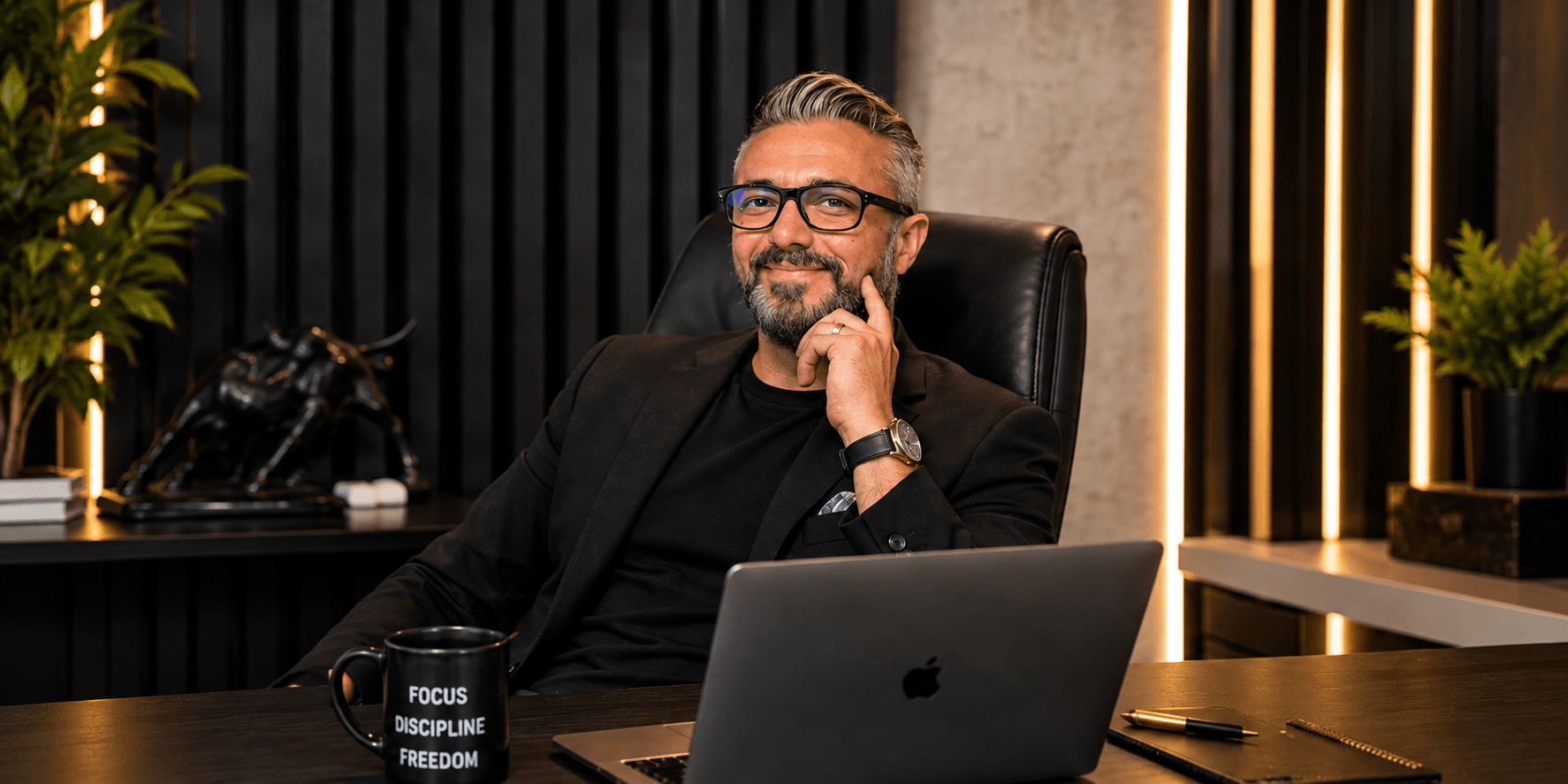
Teela Hudak Helps Leaders Build Performance That Lasts
A systems-based look at why high performers need structure, not more pressure.
The leader looked successful from the outside. The calendar was full, the results were strong, and the reputation had been earned through years of competence. Yet behind the polished performance was a private question that had become harder to ignore: why did success feel more expensive to sustain? For Teela Hudak, CEO and founder of Resilient Self Growth, that quiet tension became the starting point for a larger conversation about burnout, leadership strain, and the hidden systems that support high performance.
Resilient Self Growth And The Cost Of Carrying More
Resilient Self Growth was built around a belief that challenges much of the conventional advice offered to executives, founders, entrepreneurs, and high-achieving professionals. "At a certain level, performance stops being about effort and starts being about structure," Hudak says. It is a simple statement, but it speaks to a complex reality. Many leaders are not struggling because they lack ambition, discipline, or skill. They are struggling because the demands around them have increased while the systems supporting their capacity have not evolved at the same pace.
Hudak's work focuses on sustainable performance through a personalized, systems-based lens. Rather than treating burnout as a motivation problem or framing exhaustion as a sign of weakness, Resilient Self Growth examines the full environment in which performance happens. That includes cumulative load, recovery capacity, emotional labor, cognitive strain, decision fatigue, environmental friction, leadership responsibility, and the daily structures that either protect or drain a person's capacity. This approach gives high performers language for something many have felt but could not explain: they can still be capable and still be carrying too much for too long.
The distinction matters. In many professional spaces, burnout is still discussed as if the solution is better time management, stronger boundaries, or a more refined morning routine. Hudak does not dismiss habits, but her work argues that habits alone cannot solve structural strain. A founder managing investor pressure, hiring decisions, customer demands, family responsibilities, and limited recovery is not just "busy." That person is operating under layered load. If the surrounding structure does not account for that load, performance may continue for a while, but the internal cost rises.
Hudak developed Resilient Self Growth after observing a growing disconnect between external achievement and internal sustainability. High performers often learn to normalize strain because achievement rewards endurance. They become fluent in pushing through, solving problems, responding quickly, and absorbing pressure. Over time, however, the same traits that help them succeed can make it harder to recognize when their system is no longer supported. "People often assume burnout means someone became less capable," Hudak says. "In many cases, they became capable of carrying unsustainable levels of strain for far too long."
Why Resilient Self Growth Looks Beyond Productivity
One of Hudak's most accessible teaching models compares performance demands to carrying physical weight. Responsibilities, decisions, emotional labor, uncertainty, and pressure function like load. Capacity functions like strength. Yet the environment also matters. Carrying the same weight on level ground feels different from carrying it uphill, through sand, or after a sleepless night. In leadership, the same principle applies. A workload that was manageable under one set of conditions can become destabilizing when recovery shrinks, complexity rises, support decreases, or emotional strain accumulates.
This framework gives leaders a more accurate way to understand inconsistent performance. It also removes unnecessary shame. If a high-performing professional feels steady one week and depleted the next, the explanation may not be a lack of discipline. It may be a shift in operating conditions. The visible workload may look unchanged, while the invisible load has increased. More decisions, more relational tension, more uncertainty, more context-switching, and less recovery can radically change the cost of carrying the same responsibilities.
That nuance is where Resilient Self Growth stands apart. Hudak is not offering generic productivity advice that assumes every leader has the same context, resources, or recovery capacity. Her work is deeply personalized because performance is deeply contextual. Two executives can hold similar titles and carry similar responsibilities, yet experience vastly different levels of strain based on their internal and external systems. The question is not only, "How much are you doing?" It is also, "What conditions are you doing it under, and what support exists to help your system recover?"
Through private coaching, group coaching, workshops, masterclasses, and educational content, Hudak helps leaders identify the patterns beneath chronic overwhelm and decision fatigue. The goal is not to push harder. It is to build systems that are strong enough to support the level of demand being carried. That may include rethinking recovery, clarifying decision structures, reducing environmental friction, improving capacity management, or identifying where emotional and operational load has become invisible. The work brings together insights from neuroscience, behavioral science, leadership psychology, recovery science, and systems thinking, while keeping the language practical and grounded.
Hudak's communication style has become one of the defining strengths of her brand. She translates complex psychological and operational patterns into language that feels immediately recognizable. Leaders who may never describe themselves as burned out can understand the feeling of carrying too much weight in poor conditions. Professionals who believe they should be able to handle more can see why optimization eventually stops solving the problem. Her work gives ambitious people a way to pursue excellence without pretending that human capacity is limitless.
Momentum around Hudak's work continues to grow as more leaders seek a healthier and more sustainable approach to success. She serves as an Executive Contributor for Brainz Magazine, where she writes about sustainable performance, decision fatigue, burnout recovery, and leadership strain.
She is also the creator and host of the Sustainable Performance Summit, a virtual event that brings together experts and professionals to explore healthier approaches to leadership, recovery, and high performance.
Expanding on that mission, Hudak launched the Executive Capacity Insights Series, an educational initiative designed to help leaders better understand the relationship between capacity, performance, recovery, and decision quality. The series provides practical insights for executives, founders, and high responsibility professionals seeking to build stronger systems for long term success. By translating complex performance challenges into actionable frameworks, the series helps leaders recognize the conditions affecting performance before burnout becomes the defining conversation.
In 2026, Hudak is recognized as an award winning sustainability expert in Canada, a distinction that reflects the growing relevance of her work and the broader shift toward sustainable leadership development.
The breakthrough behind Resilient Self Growth is not a single tactic. It is a reframing.
Hudak invites leaders to stop asking only how they can become more efficient and start asking whether their current systems can support the level of responsibility they now carry. That shift changes the conversation from blame to design, from surface level self care to structural support, and from temporary coping strategies to long term sustainability.
Clients and readers often connect deeply with Hudak's message because it gives language to experiences they have been living for years. One individual described realizing through Hudak's questions that familiar patterns contained blind spots they had never fully examined. Another reflected on how uncomfortable rest can feel for high achievers who have learned to associate worth with constant productivity.
These observations highlight the emotional accuracy of Hudak's approach. She is not simply encouraging leaders to pause. She is helping them understand why pausing can feel unsafe, why recovery can become less effective over time, and why capable people can become trapped in systems that no longer protect their wellbeing.
Today, Resilient Self Growth occupies an important space in the future of leadership development. It speaks directly to professionals who have already proven their capability and now want their success to feel sustainable. It offers a path toward clearer decision making, steadier capacity, healthier recovery, and a more honest relationship with ambition.
Most importantly, it reminds leaders that sustainable performance is not the opposite of achievement. It is the structure that allows achievement to last.
Explore Sustainable Performance With Resilient Self Growth
For leaders who are ready to understand the real conditions shaping their performance, Resilient Self Growth offers a more intelligent starting point. Through coaching, workshops, masterclasses, Performance Lab resources, the Sustainable Performance Summit, and the Executive Capacity Insights Series, Hudak provides practical frameworks for understanding how load, recovery, and decision pressure affect long term capacity.
The benefit is both practical and transformative: a clearer operating system for success that supports achievement without sacrificing stability, health, relationships, or personal wellbeing.
To learn more about Resilient Self Growth, and for leaders interested in the Executive Capacity Insights Series, you can visit their website, follow the journey on LinkedIn, Instagram, YouTube, Facebook and TikTok.