
Why Businesses Are Rethinking Vehicle Transportation as Part of Corporate Expansion Strategies
Learn why businesses are making vehicle transportation a strategic priority for faster, smarter, and more cost effective expansion.
Opening a new office, warehouse, or branch takes careful planning. Every decision affects how smoothly the move goes and how quickly work begins at the new location. Company vehicles deserve the same attention, yet they often end up lower on the priority list until moving day gets close. Many businesses are now planning vehicle transportation much earlier because they want every part of the expansion to stay organized from start to finish.
Let's get into why businesses are rethinking vehicle transportation as part of their corporate expansion strategies.
1. Expanding Into New Markets Without Buying Another Fleet
Opening a new branch already requires a large investment. You have rent, equipment, technology, hiring, marketing, and day-to-day operating costs to cover. Buying another fleet on top of those expenses often puts unnecessary pressure on the budget.
A single cargo van costs anywhere from $44,000 to $60,000, while heavy-duty work trucks cost much more depending on their setup. For a business that needs 10 vehicles, replacing the fleet could easily cost $400,000 to $600,000 before insurance, registration, branding, and custom equipment.
Many businesses assume expansion means buying everything new. But Mehmet Metin Cayli, Head of Sales and Business Development at Bold Auto Transport, said, “A well-maintained fleet already represents a significant investment. Transporting those vehicles to a new location allows businesses to start operating much sooner without tying up additional capital in replacement purchases. That gives companies more flexibility to invest in hiring, equipment, and other priorities that directly support growth.”
That is one reason many businesses choose to relocate the vehicles they already own. These vehicles are already branded, equipped, and familiar to employees, making the transition faster and more efficient.
Whether it is a plumbing company, healthcare provider, or contractor expanding into a new market, moving an existing fleet allows businesses to begin operations sooner while preserving capital for hiring, equipment, and other growth priorities.
2. Getting New Locations Running Much Faster
Every expansion comes with deadlines. Office furniture has to arrive, equipment needs to be installed, employees have to settle in, and customers expect business to start on schedule. Company vehicles play a big part in that process because many businesses cannot begin daily work without them.
Driving every vehicle across several states takes time away from employees who already have plenty to do during an expansion. A trip from Chicago to Dallas covers nearly 930 miles. Depending on traffic and rest stops, that drive often takes 15 to 17.5 hours. Multiply that across several vehicles, and businesses lose several workdays that employees could spend preparing the new location instead.
In industrial automation projects, keeping different parts of a rollout moving together is often just as important as the technology itself. Sebastian Stute, CEO of Smartmakers, adds, “Expansion projects involve many activities happening at the same time, so avoid tying skilled employees up with work that can be handled by specialists. When teams stay focused on preparing the new operation while logistics run in parallel, businesses usually reach full productivity much faster.”
Professional vehicle transportation helps avoid that problem. Vehicles travel while managers and employees stay focused on opening the new office, warehouse, or job site. Everything moves at the same time instead of one task delaying another.
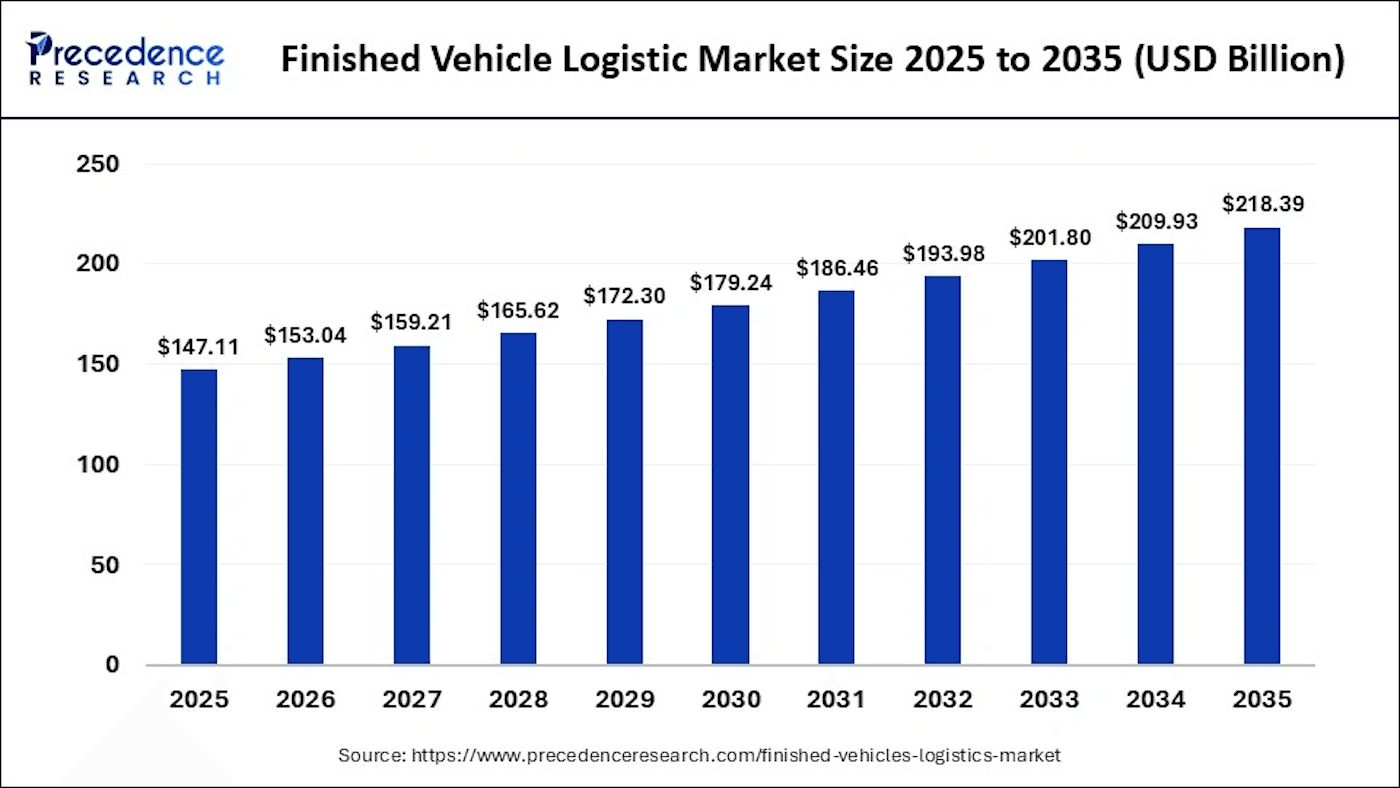
The demand for these services continues to grow. According to Precedence Research, the global finished vehicle logistics market is valued at USD 147.11 billion in 2025 and is projected to reach USD 218.39 billion by 2035.
Source: Precedence Research
That steady growth shows how many businesses now see organized vehicle transportation as part of a well-planned expansion.
3. Cutting Expansion Costs Beyond Fuel and Hotels
Many business owners compare shipping costs only with fuel expenses. In reality, driving company vehicles across the country also adds hotel stays, meals, tolls, maintenance, overtime, and lost employee productivity.
Seph Fontane Pennock, Founder & CEO of FatFire, explains, “The cheapest option isn't always the most economical one. Once you account for employee productivity, vehicle depreciation, travel expenses, and the opportunity cost of having key staff on the road instead of running the business, the picture often changes completely. Good planning protects both time and capital.”
For example, moving five service vans from Atlanta to Denver, roughly 1,400 miles, costs nearly $4,900 in mileage alone using the 2026 IRS business rate of 70 cents per mile. That figure excludes hotels, meals, tolls, and employee time.
Long distance driving also adds unnecessary wear to tires, brakes, engines, and transmissions, increasing maintenance costs before the vehicles even begin operating at the new location.
One lesson transportation teaches very quickly is that moving an asset efficiently is just as important as moving it safely. Reducing unnecessary travel helps protect its condition, lowers future maintenance costs, and allows it to start generating value much sooner once it arrives.
Professional transportation provides a predictable relocation cost while reducing travel related expenses and unnecessary vehicle wear. It also allows businesses to focus on the expansion instead of managing a complex relocation.
4. Protecting Company Vehicles Before Business Even Starts
Your company vehicles are not just transport. They carry tools, equipment, branding, and daily work capacity. When you drive them hundreds of miles to a new branch, they reach the location with extra wear before earning a single dollar there. Tires, brakes, engines, and suspension parts all take the hit during long-distance driving.
The same principle applies throughout commercial logistics: every unnecessary mile and every extra movement adds wear to valuable assets. Daniel C, CMO of Preface Pallets, mentions, “Companies work hard to protect products while they're being shipped because damage and unnecessary handling reduce value before the goods even reach their destination. Fleet vehicles deserve the same mindset. The less unnecessary wear they experience during relocation, the sooner they're ready to support the business instead of heading into maintenance.”
This matters even more when your business uses trucks, vans, refrigerated vehicles, or service vehicles with custom equipment inside. A small delay or repair issue at the new location slows down appointments, deliveries, and field work.
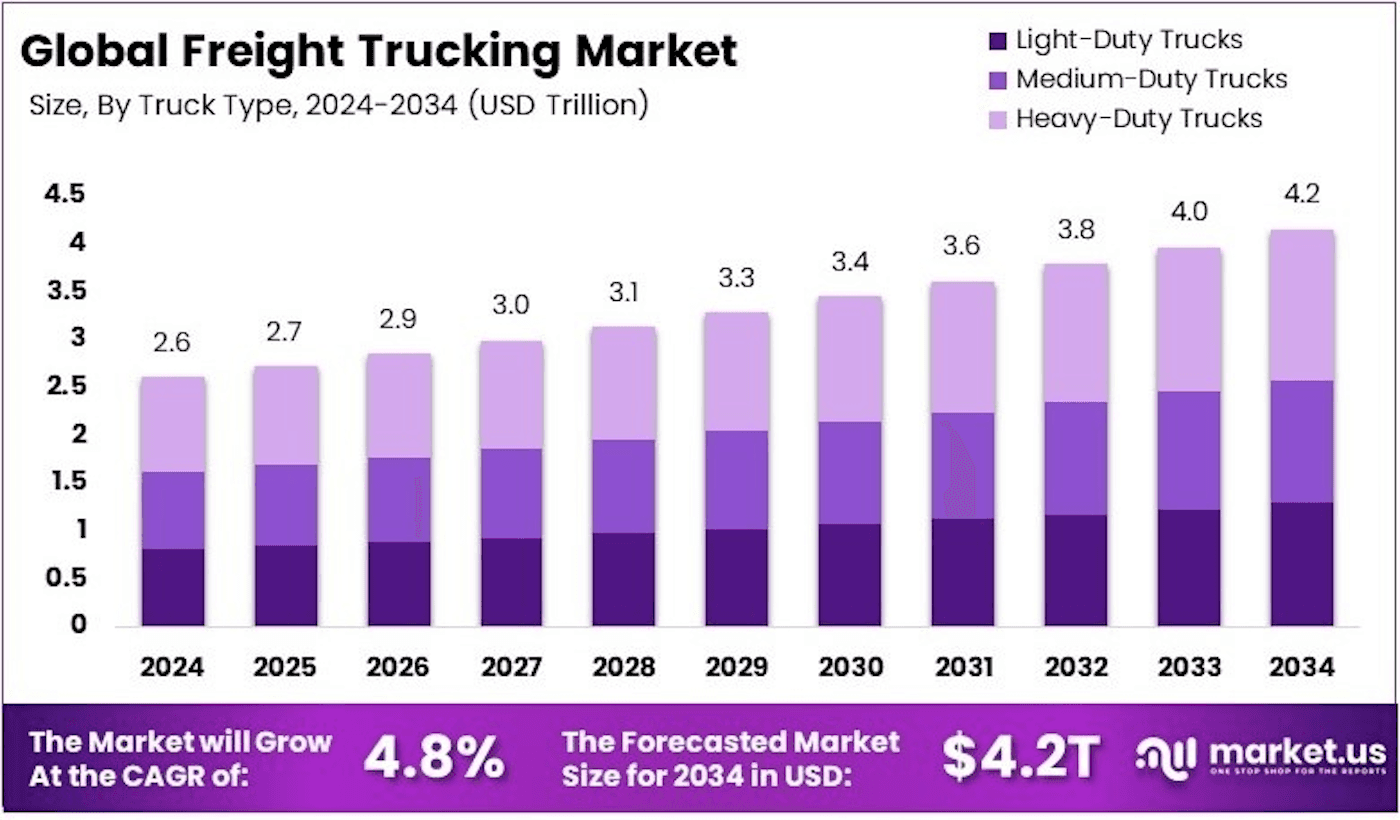
The trucking market shows why this matters. In 2026, the global freight trucking market is valued at around USD 2.9 trillion, and forecasts show it reaching USD 4.2 trillion by 2034, with a 4.8% CAGR.
Source: Market.us
As trucking and vehicle-based operations keep growing, businesses are treating vehicle protection as part of expansion planning.
5. Managing Multi-State Operations More Efficiently
Business growth often means opening more than one location. As your company expands, moving vehicles between offices, warehouses, and job sites becomes part of regular operations. Instead of buying new vehicles for every branch, many businesses move the fleet they already own to wherever demand is highest. That saves money and keeps every location ready to serve customers.
For restoration companies, resources rarely stay in one place for long. Crews, equipment, and service vehicles often have to be where customers need them most. Savas Bozkurt, Owner of Royal Restoration DMV, highlights, “Demand doesn't always grow evenly across every location. Being able to move vehicles to the branch that needs them most gives businesses much more flexibility than investing in additional fleet vehicles before they're actually necessary. Making better use of the assets you already own is often the smarter long-term decision.”
This works well for construction companies, healthcare providers, utility businesses, dealerships, and field service teams. For example, if one branch finishes a large project while another wins a new contract, moving trucks or service vans between those locations is usually faster and more cost-effective than purchasing additional vehicles.
The U.S. automobile market continues to grow alongside this demand. Market forecasts show the industry is expected to grow at a 7.66% CAGR from 2025 to 2033, reaching about USD 84.58 billion by 2033.

Source: Market Data Forecast
As businesses expand across more cities and states, organized vehicle transportation is becoming an important part of keeping daily operations running smoothly.
Final Thoughts
Expanding your business takes careful planning, and company vehicles deserve the same attention as every other part of the move. A transportation plan helps you avoid extra costs, reduce delays, and keep your fleet ready for work from day one. When vehicles arrive at the right place at the right time, your team spends less time dealing with moving problems and more time focusing on serving customers and growing the business.