
Why Kids Get Scared So Easily and What Actually Helps
Children’s fear often comes from overwhelm; slowing down, validating feelings, and guiding curiosity helps them process and build confidence.
By Jaybie D
Fear often shows up quickly in children, especially in environments that feel overwhelming or hard to interpret.
A dark room. A loud noise. A crowded space. An unfamiliar setting with too much to take in at once.
For many kids, it is not just about what they see. It is about how they experience it.
Some children take in more sensory information than others. They notice sounds, movement, lighting, and changes in their environment in ways that can feel intense and immediate. When all of that input comes in at once, it can be difficult to process.
That is often where fear begins.
For parents, the instinct is to respond quickly.
“It’s okay.”
“There’s nothing there.”
“Don’t be scared.”
It comes from a good place. We want to comfort. We want to help the feeling pass.
But when a child is overwhelmed, the feeling is not coming from nothing. It is coming from too much.
Fear, in these moments, is often a signal that a child is trying to make sense of what they are experiencing.
When we move too quickly to dismiss the feeling, we miss the opportunity to help them understand it.
What helps is slowing the moment down.
When children are given space to observe and process, something begins to shift.
A shadow becomes a shape.
A sound becomes a source.
A busy space becomes something they can begin to sort through, one piece at a time.
As the environment becomes more understandable, the intensity begins to decrease.
Parents can support this in simple ways.
Start by acknowledging what the child is experiencing.
“That does feel like a lot.”
“I can see why that surprised you.”
This does not reinforce fear. It helps the child feel understood.
Then, create space for curiosity.
“What do you notice?”
“What do you think is happening?”
“Do you want to take a closer look together?”
These small shifts help children move from reacting to processing.
Not every child will want to engage right away. Some need distance. Some need time. The goal is not to push them through the moment, but to help them feel capable within it.
Over time, these experiences build confidence.
Children begin to recognize that what feels overwhelming can be understood. They learn that they can take in their surroundings at their own pace and make sense of what is happening.
This builds a different kind of confidence. Not the kind that comes from being told everything is fine, but the kind that comes from knowing how to navigate what is not yet familiar.
With repeated experiences like this, children also begin to develop emotional awareness. They start to recognize early signs of discomfort and can pause before fear escalates. This gives them a sense of control, even in unfamiliar situations, and helps reduce the intensity of future reactions.
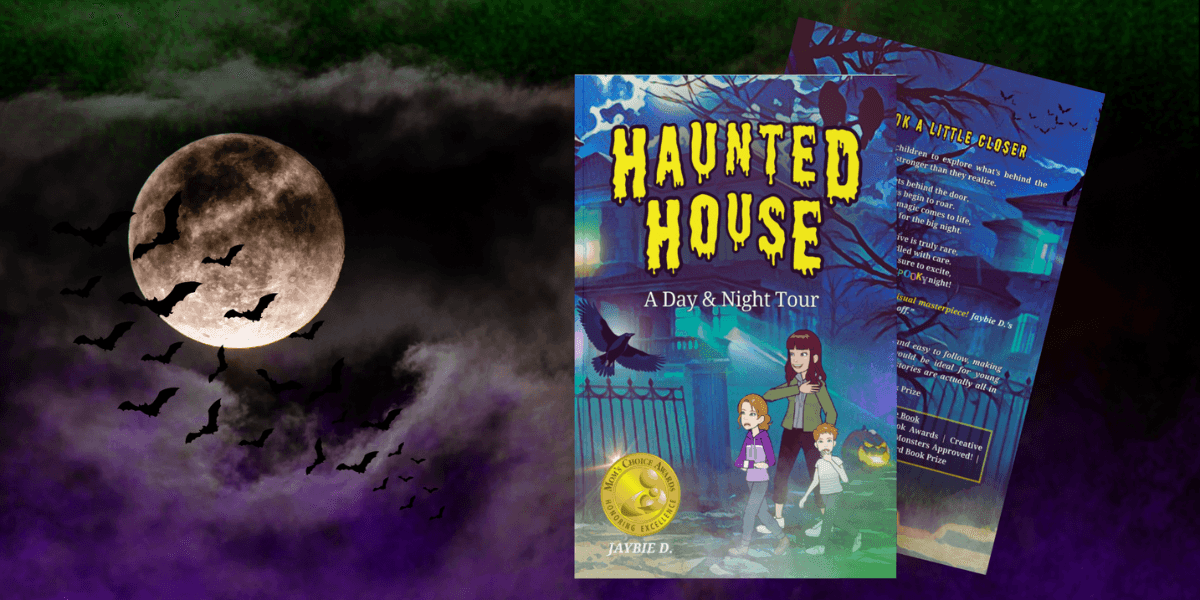
This is the approach behind my picture book Haunted House: A Day & Night Tour, where children are invited to look beyond what feels scary and begin to understand what is actually happening around them.
Because when children can process what they are experiencing, fear no longer takes over the moment, and they begin to feel more in control of their reactions and surroundings.
It becomes something they can move through.
And that is where confidence begins.

Jaybie D. is a children’s author and illustrator based in Austin, Texas, and the creator behind a storytelling and bookish apparel brand rooted in creativity, personality, and connection. Her award-winning titles, including Haunted House: A Day & Night Tour, focus on helping children understand big feelings through curiosity and perspective. Through both storytelling and design, her work supports confidence, emotional awareness, and self-discovery.
Learn more at JaybieD.com and follow her work on Instagram @jaybiedbooks.