A Symphony Reborn For America’s 250th Year
Composer Somtow Sucharitkul transforms a 9/11 memorial into a sweeping musical tribute to hope, freedom, and reconciliation.

By
May 29, 2026
When A Memorial Became Something Greater
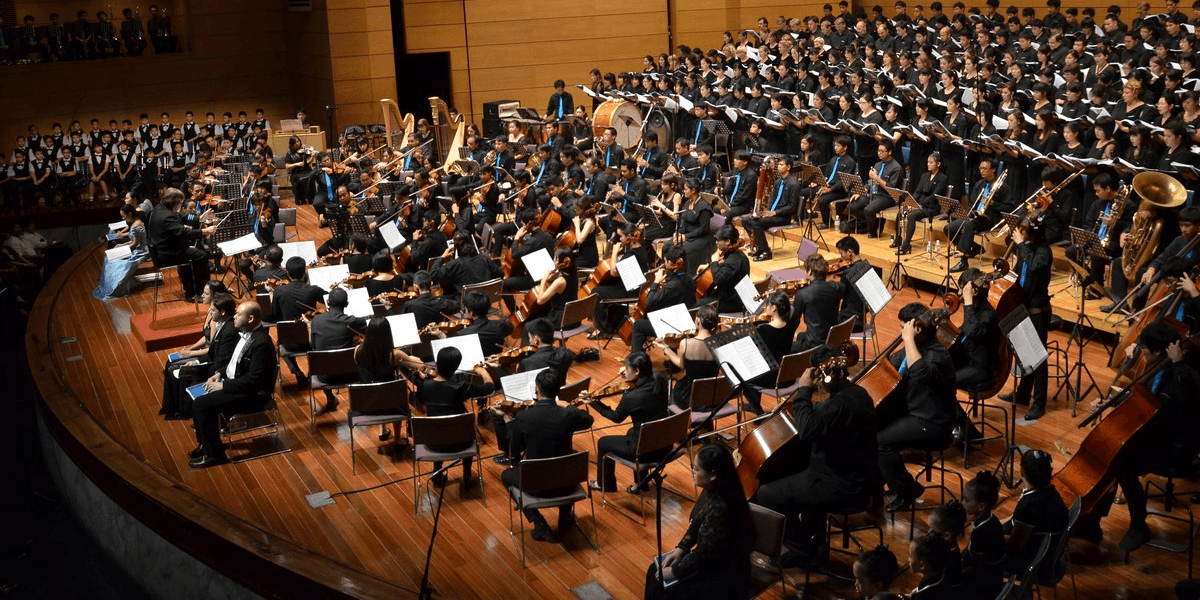
In the weeks following the September 11 attacks, grief reached far beyond American borders. Across the world, nations searched for ways to express solidarity with a country facing unimaginable loss. Among them was Thailand, which commissioned Thai American composer Somtow Sucharitkul to create a major musical work honoring the victims of the tragedy.
For Somtow, the request initially felt overwhelming.
The composer worried that creating a work tied to such a historic event could easily become overshadowed by politics rather than humanity. Yet as he listened to stories from friends who had witnessed the destruction at Ground Zero and volunteers assisting with recovery efforts, the emotional reality of the tragedy became impossible to ignore.
Those conversations ultimately inspired Requiem: In Memoriam 9/11, an ambitious large scale composition for orchestra, choir, and soloists that sought not only to mourn loss but also to explore resilience and hope through music.
What emerged was not a traditional requiem rooted in liturgical form. Instead, Somtow built the work around the poetry of Walt Whitman and Emily Dickinson, weaving together themes of grief, redemption, courage, and reconciliation.
The premiere drew international praise. Norwegian musicologist Kjell Skyllstad described the composition as “among the most inspired and engaging of its genre, a worthy partner to Britten’s War Requiem.” CNN later featured the work in a televised segment hosted by Tom Mintier, who called it “a moving work.”
Now, twenty five years later, the composer is returning to the score with an entirely new understanding of what the music represents.
Reimagining The Work For A Historic Anniversary
As the United States approaches its two hundred fiftieth anniversary in 2026, Somtow realized the composition carried a message that extended far beyond the tragedy that originally inspired it.
Revisiting the score after a quarter century, he no longer viewed the work primarily as a requiem.
“It’s about reconciliation, redemption, and freedom,” Somtow said. “It’s not a requiem but a symphony of hope.”
That realization has led the composer to reshape the project under a renewed identity: An American Symphony.
The transformation feels particularly meaningful given the timing. The year 2026 marks both the twenty fifth anniversary of 9/11 and the Semiquincentennial of the United States. For Somtow, the convergence of these milestones creates an opportunity to reflect not only on collective loss but also on the enduring ideals that continue defining America’s story.
Rather than revisiting tragedy alone, the work now serves as a meditation on resilience, freedom, and the possibility of healing through shared humanity.
A Concert Celebrating American Musical Identity
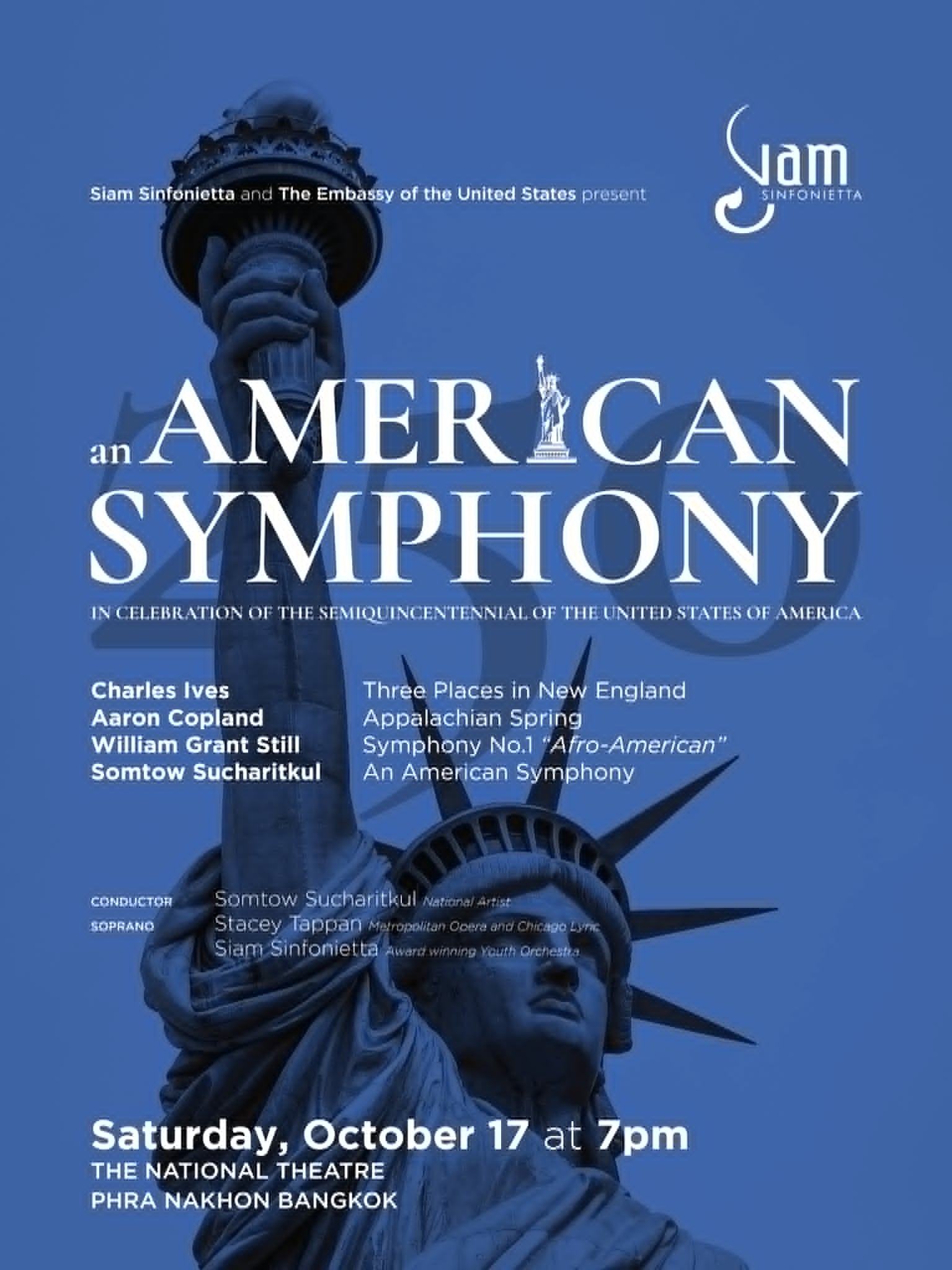
The revival of An American Symphony is currently planned for October 2026 in Bangkok, where Somtow will conduct his acclaimed Siam Sinfonietta orchestra in a concert dedicated to the diversity of American symphonic music.
The program will feature the Thailand premieres of William Grant Still’s Afro American Symphony and Charles Ives’s Three Places in New England alongside Somtow’s own composition.
Together, the three works create a broader portrait of America through music, one that reflects cultural diversity, artistic innovation, and emotional depth across generations of composers.
For Somtow, the concert represents more than an anniversary performance. It is an artistic conversation between nations, histories, and traditions.
At a time when cultural divisions often dominate global discourse, the project aims to remind audiences that music still possesses the power to connect people across borders and experiences.
Bringing Hundreds Of Voices Together
The scale of the production reflects the ambition of the message itself.
Somtow is currently assembling more than one hundred singers to perform the choral sections of the work alongside the Siam Sinfonietta. The original performance brought together singers from over twenty countries as well as musicians from Thailand’s leading orchestras and armed forces ensembles.
This revival seeks to continue that spirit of international collaboration.
The composer is also recruiting additional string players, volunteer musicians, and choirs interested in becoming part of the production. Acclaimed soprano Stacey Tappan, celebrated for performances with the Metropolitan Opera, Chicago Lyric Opera, and Los Angeles Opera, is expected to perform the demanding solo passages within the score.
The undertaking remains both artistically and logistically complex. Large orchestral and choral productions require significant preparation, rehearsal coordination, and financial support. Somtow is currently seeking assistance from corporate sponsors, cultural organizations, private donors, and volunteers to help bring the project to life.
Music That Looks Toward The Future
At its core, An American Symphony is not simply about revisiting the past. It is about asking what can emerge after grief, division, and uncertainty.
Somtow’s composition reflects a belief that art can preserve memory while also creating space for hope. Through poetry, orchestration, and collective performance, the work transforms mourning into something more expansive and enduring.
The music acknowledges tragedy without surrendering to despair. Instead, it moves toward reconciliation, freedom, and the possibility of renewal.
As America approaches its two hundred fiftieth year, Somtow Sucharitkul’s reimagined symphony offers a reminder that the most powerful memorials do not only honor what was lost. They also illuminate what remains possible.
Readers interested in learning more about An American Symphony and the upcoming 2026 performance can visit the website Somtow: AN AMERICAN SYMPHONY.