From a Health Crisis to a Mission: How Two Books Are Turning Financial Knowledge Into Scholarships
A health crisis inspired Sankha Nagchoudhury to simplify financial lessons, while his books help fund educational opportunities through Hariom Helps Foundation.
When a Health Crisis Changes the Question
Sometimes purpose arrives through achievement. Sometimes it arrives through disruption.
For Sankha Nagchoudhury, it came after a serious heart-rhythm crisis forced him to confront a deeply personal question: if life changed suddenly, would the people he loved understand the financial lessons he had spent decades learning?
The question was not simply about money. It was about knowledge—how difficult it can be to accumulate, how easily it can remain inaccessible, and how valuable it becomes when it is shared.
That experience ultimately helped inspire two books and reinforced a larger mission through Hariom Helps Foundation, a 501(c)(3) nonprofit focused on expanding educational opportunity for students in need.
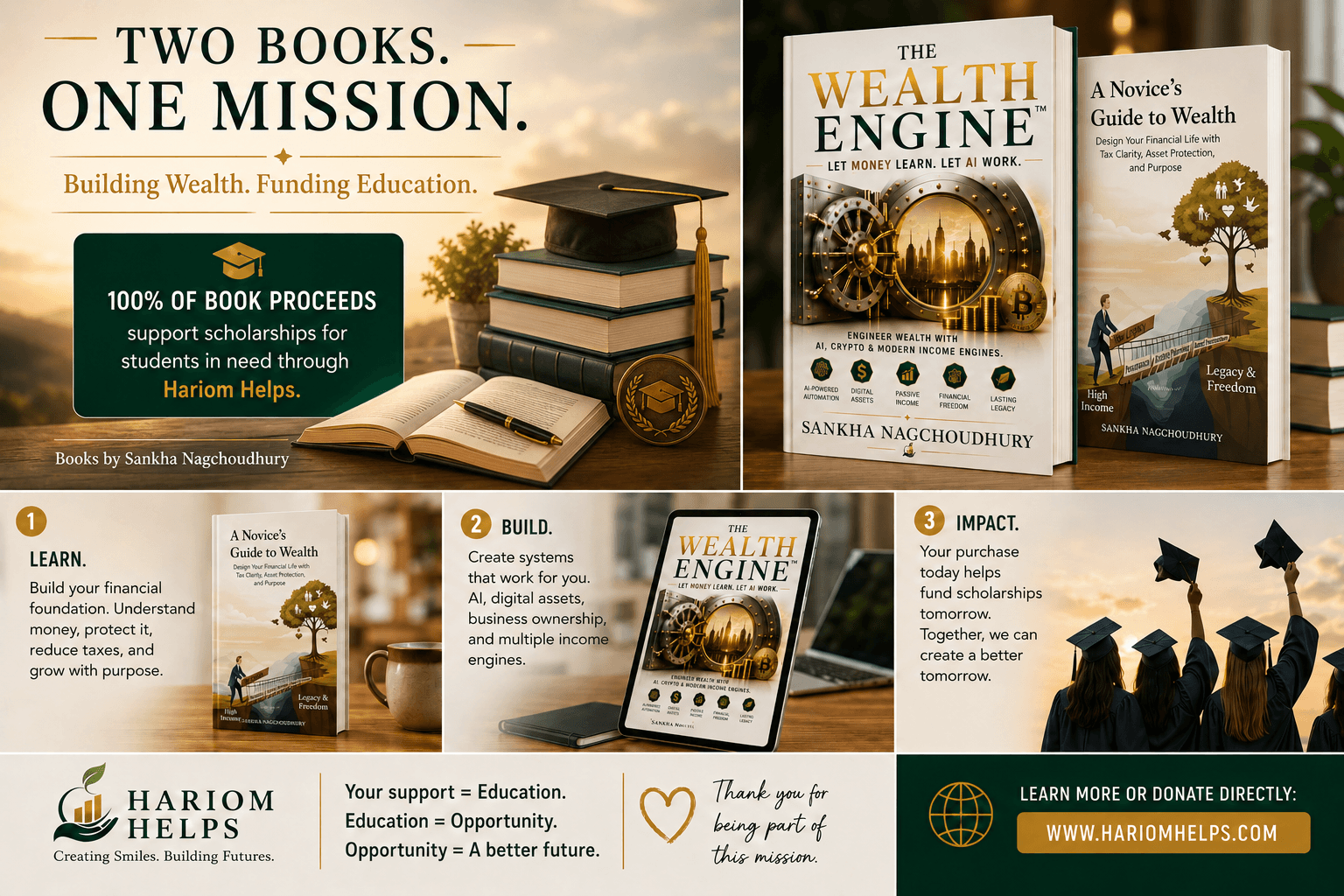
The connection between the books and the Foundation is intentional: 100% of the proceeds from both books support scholarships through Hariom Helps Foundation.
It is a model built around a simple idea: knowledge can create opportunity twice—first for the person who receives it, and then for someone else.
For many families, financial topics such as investing, taxes, insurance, asset protection, estate planning, and long-term wealth strategy can feel unnecessarily complicated. Nagchoudhury, an author and longtime technology and AI executive, wanted to make those subjects easier to understand without selling financial products or promising easy outcomes.
“My health crisis gave me more than a second chance,” Nagchoudhury says. “It made me think differently about what we leave behind. Knowledge has very little value if we keep it to ourselves.”
That philosophy became the foundation for his first book.
Making Wealth Easier to Understand
A Novice’s Guide to Wealth was written for people who may never have received a formal financial education but still face important financial decisions throughout their lives.
Rather than treating wealth as a collection of complicated products or formulas, the book presents it as a series of interconnected decisions.
It introduces readers to investing, tax-aware strategies, insurance, asset protection, estate planning, risk management, and long-term wealth building in language designed to be understandable to nonexperts.
The objective is not to tell readers exactly what to do. It is to help them understand enough to ask better questions.
That distinction matters.
Financial decisions often carry long-term consequences, yet many people encounter these subjects only when they are already facing a major life event—a new business, retirement, an inheritance, a tax issue, a health crisis, or the responsibility of protecting a family.
A Novice’s Guide to Wealth attempts to move that education earlier.
“Wealth should not be a language understood only by financial professionals,” Nagchoudhury says. “Families deserve access to practical knowledge that helps them understand their choices, ask better questions, and make more informed decisions.”
But the financial world itself is changing.
And that led to the second book.
A Wealth Conversation for the AI and Digital-Asset Era
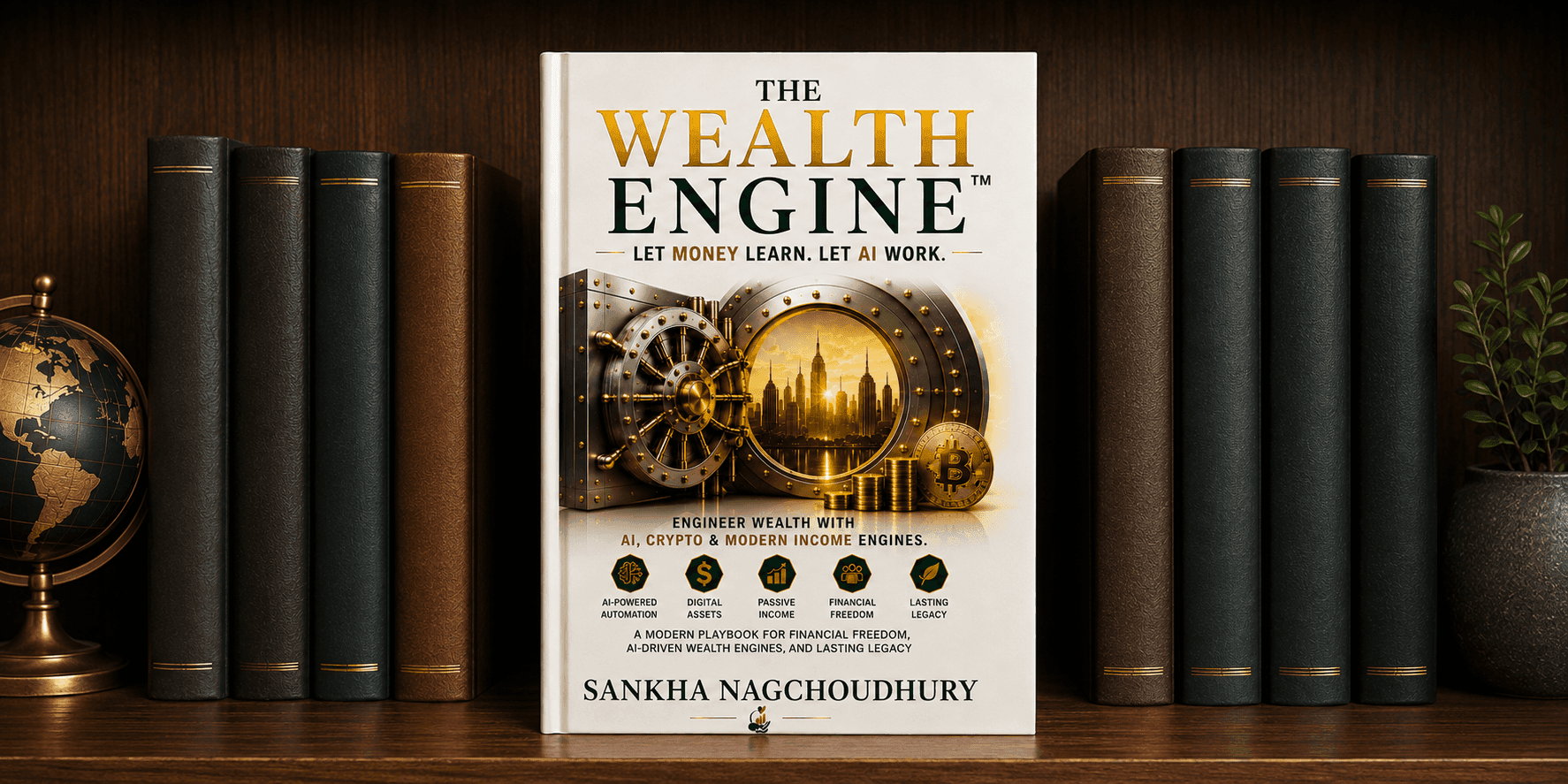
If A Novice’s Guide to Wealth addresses the foundations, The Wealth Engine™ explores a rapidly emerging frontier.
Positioned as the first book of its kind focused on helping everyday readers understand investing in digital assets such as cryptocurrency and artificial intelligence, The Wealth Engine™ examines how new technologies are creating new categories of opportunity—and new categories of risk.
That distinction is particularly relevant at a moment when AI and digital assets have moved from specialist conversations into everyday investing discussions.
The book does not approach cryptocurrency or AI as shortcuts to wealth. Instead, it encourages readers to understand what they are investing in, evaluate underlying value, recognize speculation, consider risk, and distinguish durable opportunities from market excitement.
That approach reflects a broader philosophy running through both books: innovation does not eliminate the fundamentals of sound decision-making.
Technology changes.
Markets change.
Investment opportunities change.
But disciplined thinking remains essential.
Together, the books are intended to create a progression: understand the principles that have traditionally shaped wealth, then learn how to evaluate the emerging technologies and digital assets that may influence its future.
Three 2026 Awards Highlight Purpose and Impact
Sankha Nagchoudhury and Hariom Helps Foundation have earned three notable 2026 recognitions reflecting a shared commitment to accessible financial education, purpose driven innovation, and educational opportunity. A Novice’s Guide to Wealth was named Best Wealth Building Book in the United States of 2026 by Evergreen Awards, recognizing its practical approach to investing, tax aware planning, asset protection, risk management, and long term financial thinking. The Wealth Engine™ was recognized by BizWeekly as the Best Purpose Driven Financial Education Book in the United States of 2026, highlighting its approach to helping readers understand artificial intelligence, digital assets, emerging opportunities, and risk. Meanwhile, Hariom Helps Foundation was named Best Scholarship Nonprofit in the United States of 2026 by Best of Best Review, honoring its distinctive effort to connect accessible financial education with meaningful scholarship support.
Turning Every Book Into Something Bigger
The story, however, does not end with financial education.
Rather than treating the books solely as commercial products, Nagchoudhury chose to direct 100% of their proceeds toward scholarships for students in need through Hariom Helps Foundation.
The Foundation’s mission extends beyond the books themselves. It is centered on expanding access to education and creating opportunities for students whose potential may be greater than the resources available to them.
The books have become one way of helping fund that mission.
A person may purchase a book because they want to understand taxes, investing, wealth protection, cryptocurrency, AI, or the changing financial landscape. But that same purchase can also contribute to another person’s education.
That creates an unusual cycle:
Learn. Build. Give. Create opportunity.
It also connects two ideas that are often discussed separately—wealth creation and social impact.
The premise behind Hariom Helps Foundation is that success does not have to end with the individual who achieves it. Knowledge, capital, experience, and opportunity can be passed forward.
For Nagchoudhury, that idea ultimately traces back to the health crisis that started the journey.
What began as a question about whether his own family would understand the lessons he had learned became something much larger: an effort to make those lessons accessible to more people while using the proceeds to create educational opportunities for students.
A health crisis created urgency.
The books created a way to share knowledge.
Hariom Helps Foundation gave that knowledge a larger purpose.
And perhaps that is the most important lesson behind the project: the true value of what we build may ultimately be measured by how many opportunities it creates for someone else.
To learn more about the books and the scholarship mission, visit Hariom Helps Foundation at www.hariomhelps.com or Sankha Nagchoudhury at sankhanagchoudhury.com. A Novice’s Guide to Wealth and The Wealth Engine™ are available through Amazon.
Disclaimer:
This article is for informational purposes only and is not intended to promote, encourage, or provide professional advice related to financial services, investing, cryptocurrency, or digital assets. Always consult a qualified financial professional or trusted authority before engaging in any activities related to investing, wealth management, cryptocurrency, or digital assets, especially if doing so may have legal, financial, or personal consequences. The author and publisher are not responsible for any losses, damages, or outcomes resulting from the use of or reliance on the information provided.