Giorgia Minto: Sculpting the Inner Tensions of the Human Soul
Giorgia Minto uses figurative sculpture to transform emotional conflict, social injustice, and spiritual struggle into form.
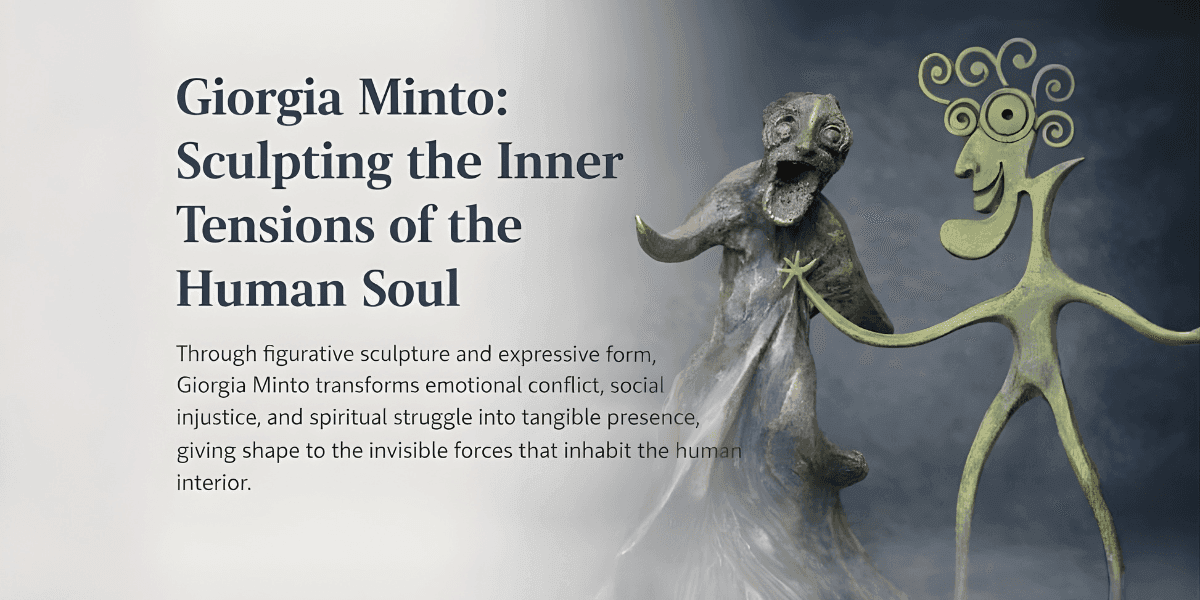
In the landscape of contemporary European art, where conceptual distance often dominates artistic discourse, the work of Giorgia Minto stands out for its direct emotional engagement and human-centered vision. A sculptor based in Venice, Italy, Minto approaches art not as decoration or abstraction, but as an act of materializing the inner states of the soul. Her practice is rooted in figurative expression, shaped by lived experience, and guided by a persistent ethical and spiritual inquiry into what it means to endure, resist, and remain human.
Born in Mirano, near Venice, Minto’s artistic sensibility was formed early through an instinctive connection to drawing and sculpting. This natural inclination evolved into formal training at the State Art Institute of Padua, where she developed a solid technical foundation and a deep respect for classical figurative traditions. Although her life path later expanded into other professional directions, art remained a constant presence. Rather than fading into the background, it matured internally, becoming a lifelong companion that continued to inform her way of observing people, society, and emotional reality.
From Early Formation to a Lifelong Artistic Path
Minto’s early education provided her with the structural discipline of academic art, yet her creative trajectory has never been confined by rigid stylistic conventions. After completing her formal studies, she explored other professional avenues, a period that enriched her perspective rather than distancing her from art. These experiences outside the studio intensified her sensitivity toward human fragility, resilience, and contradiction, themes that would later become central to her sculptural language.
Returning fully to artistic creation, Minto did not seek to replicate tradition for its own sake. Instead, she re-engaged with figurative form as a means of emotional excavation. Her sculptures are not idealized bodies or static representations; they are carriers of tension, imbalance, and psychological weight. Each figure appears caught in a moment of inner struggle, suspended between vulnerability and resistance.
A significant milestone in her public artistic journey came with her participation in the exhibitions connected to the 150th anniversary of Italian Unification, where her work was presented in the context of the Venice Biennale events in Turin, including exhibitions held at Sala Nervi. This experience marked a turning point, affirming her commitment to pursuing art as a serious, socially engaged, and spiritually resonant practice.
Sculpting Negativity as a Form of Transformation
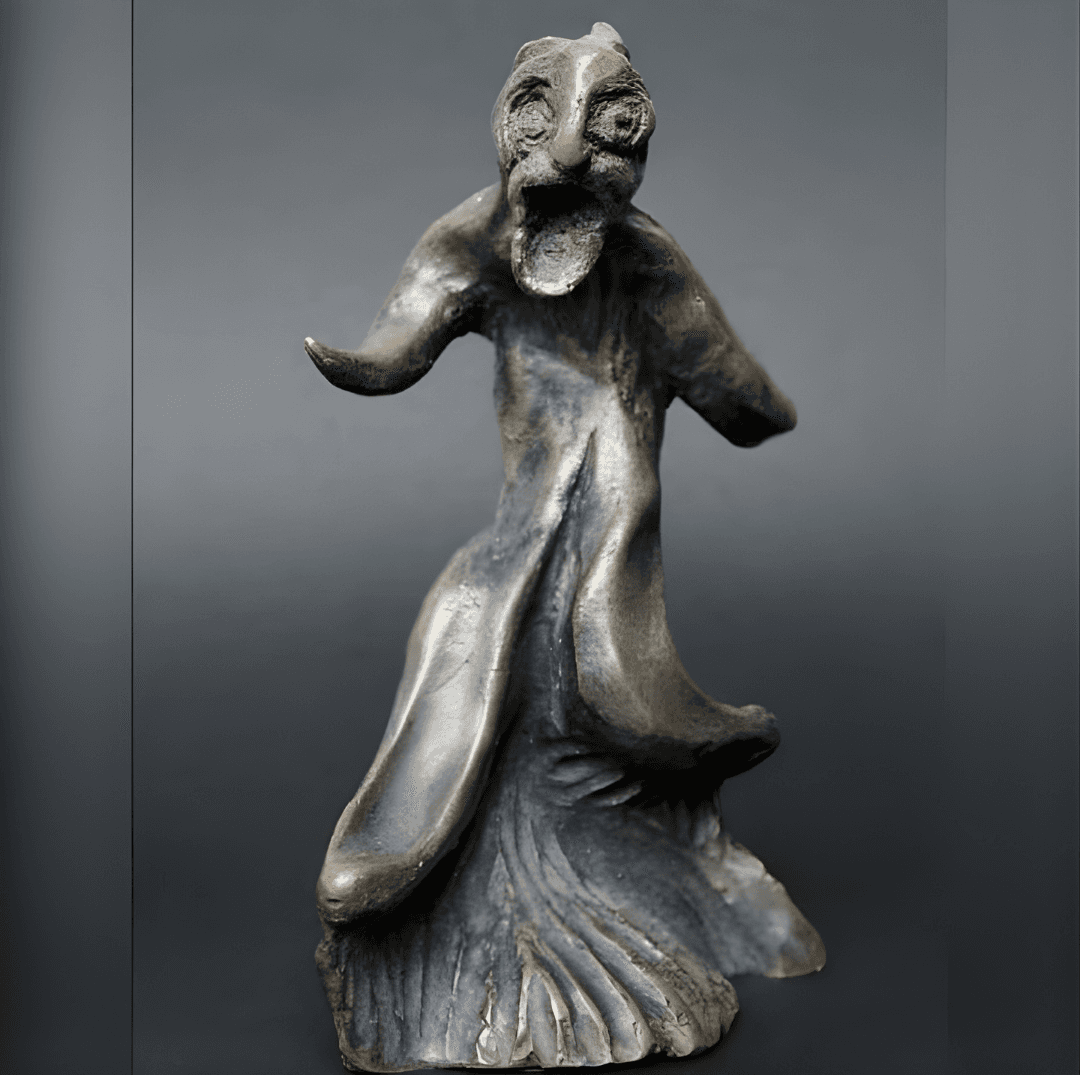
At the core of Giorgia Minto’s artistic philosophy lies a striking and unapologetic statement: “I materialize the negativities of the soul.” This declaration is not an expression of pessimism, but rather an act of confrontation. Minto’s work acknowledges that pain, injustice, fear, and emotional darkness are not anomalies to be erased, but realities to be understood, transformed, and ultimately integrated.
Working primarily with clay, Minto embraces the immediacy and responsiveness of the material. Clay allows her to work intuitively, shaping forms that seem to emerge organically rather than being imposed through rigid planning. The physical act of sculpting becomes a parallel process to emotional introspection. Her figures often bear traces of this process: surfaces are marked, gestures are imperfect, proportions are expressive rather than anatomical. These qualities reinforce the sense that each sculpture is not merely an object, but a residue of lived emotion.
Alongside sculpture, Minto also creates acrylic paintings on canvas. These works function as an extension of her sculptural thinking, exploring similar themes through color, movement, and compositional tension. Whether in three-dimensional or two-dimensional form, her focus remains constant: the human figure as a vessel of emotional truth.
Style, Themes, and Sources of Inspiration
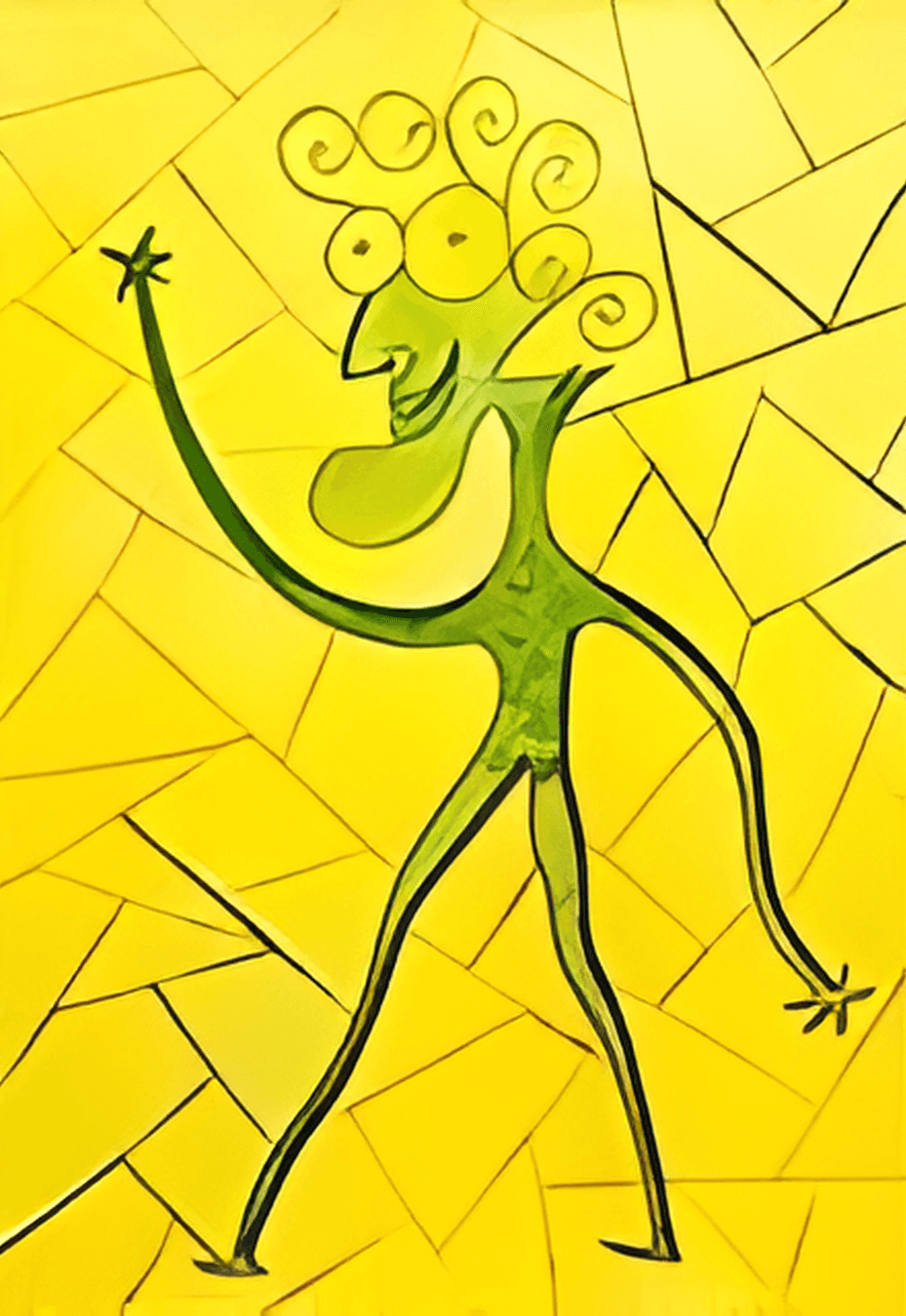
Minto’s visual language can be described as figurative and expressive, yet it resists simple categorization. Her figures are recognizable as human, but they often verge on the symbolic. Faces may appear distorted, bodies elongated or compressed, gestures exaggerated. These choices are deliberate, serving to amplify emotional states rather than depict physical accuracy.
Thematically, her work navigates the intersection of social justice and emotional spirituality. She is deeply inspired by the spirit of people: their lives, struggles, contradictions, and emotional landscapes. Contemporary reality, with its mixture of positive and negative forces, provides constant material for reflection. Rather than isolating beauty from suffering, Minto allows them to coexist within the same form, reflecting a worldview in which growth emerges through confrontation rather than denial.
Her sculptures frequently evoke a sense of silent endurance. There is rarely theatrical drama; instead, tension is internalized. This restraint gives her work a quiet intensity, inviting viewers to project their own experiences and emotional memories onto the figures.
A Global Platform: 100 Artists of Europe and World Art Collection
Giorgia Minto discovered the 100 Artists of Europe project through Facebook, but her decision to participate was driven by a clear artistic intention. For her, joining a global publishing initiative curated by Culturale Lab represents an opportunity to bring her work into a broader cultural dialogue, extending beyond local or regional visibility.
Participation in the World Art Collection holds a specific meaning within her practice. It allows her to share not only the aesthetic outcome of her work, but also its underlying message: that acknowledging the negative dimensions of the soul is a necessary step toward awareness and transformation. Through this international platform, her sculptures enter a conversation with artists from diverse cultural backgrounds, reinforcing the universality of emotional experience.
Looking Forward: Creation as a Way of Life
When speaking about the future, Minto remains intentionally reserved. Her upcoming projects are kept private, not out of secrecy, but as a form of protection for ideas still in gestation. What she states clearly, however, is her ongoing commitment to creation. “Create, create, create” is not a slogan, but a method of survival and self-definition.
Her core message, both to herself and to others, is simple and unwavering: never give up. This principle resonates throughout her work, not as abstract optimism, but as hard-earned conviction shaped by persistence, discipline, and emotional honesty.
Final Reflection
Giorgia Minto’s artistic practice reminds us that contemporary art does not need to distance itself from human experience in order to be relevant. Through sculpture and painting, she offers a space where inner conflict becomes visible, where emotional wounds are not hidden, and where resilience is carved directly into form. Her contribution to the 100 Artists of Europe project situates her voice within a wider European and global context, affirming the enduring power of figurative expression as a tool for truth, empathy, and transformation.