In Zambia, a Quiet Revolution: Building AI That Works Without the Internet at ZStudy
ZStudy, founded by Cephas Kalembo, is breaking barriers in rural Africa by creating AI systems that work without the internet, bringing STEM education and AI access to remote communities.
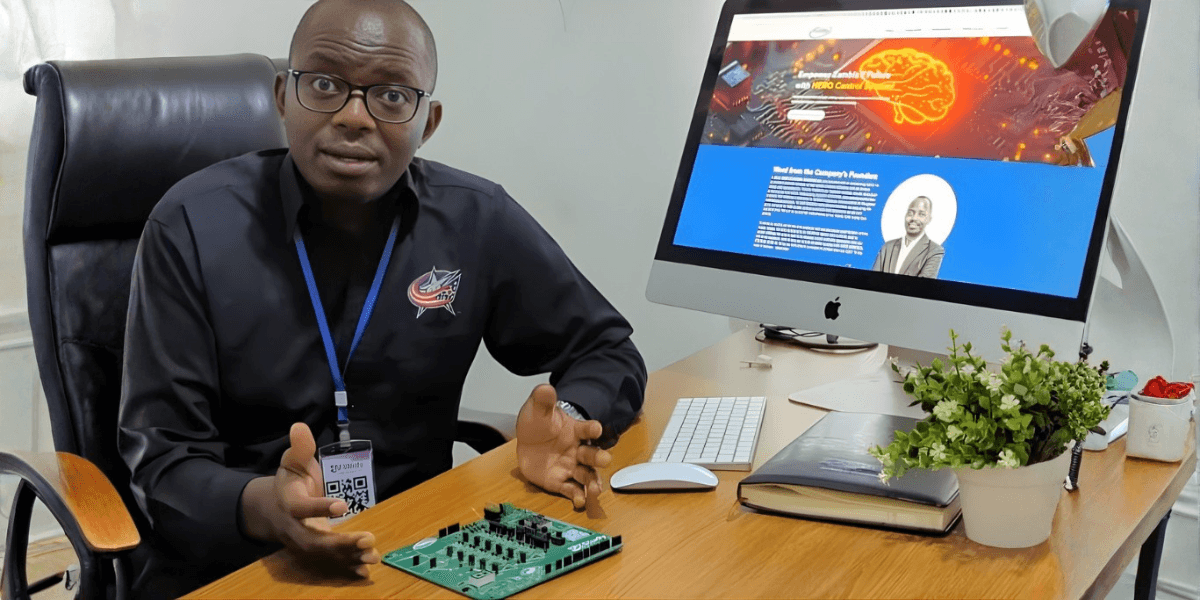
NATIONWIDE - JANUARY 2026 - (USAnews.com) In the heart of Lusaka, Zambia, a quiet revolution is underway, one that aims to bridge the digital divide by making artificial intelligence (AI) accessible without the need for the internet. Led by Eng. Cephas Kalembo, ZStudy has created a groundbreaking system called RAI² (Rural AI, Squared), designed to provide powerful AI tools to Zambia's rural communities where reliable internet is a rare luxury. Kalembo’s vision is simple: what if AI could come to the village, instead of waiting for the internet to arrive?
A Bold Vision to Solve Africa's Digital Divide
In many parts of Africa, access to the internet is still limited. With nearly 600 million people living without reliable access to power, many of the most vulnerable communities are being left out of the technology revolution. AI-powered systems, like those that drive today's popular tech services, require constant connectivity, massive data centers, and substantial energy consumption. These are conditions that many rural health clinics, schools, and businesses cannot afford.
Eng. Kalembo, has been working in the tech sector, Designing Electronics and Embedded Systems software for international companies in USA, Europe, now has a mission to create technology that works within Africa’s unique conditions. "The AI revolution is happening, but it's happening to Africa, not with Africa. We wanted to change that,"Eng. Kalembo explains.
Enter RAI², a system that brings sophisticated AI to local communities by using edge computing, processing data directly on small, low-power devices. These devices, like the NVIDIA Jetson, consume minimal power, only 15 to 30 watts, and can be powered by a single solar panel. No internet is needed, no data leaves the community, and no subscription fees are involved.
RAI² offers a range of applications, including crop disease diagnosis for farmers, health information for mothers, and even educational tutoring for students. It’s a game-changer for communities that may be hours away from the nearest reliable internet connection.
ZStudy: From Soldering Iron to AI Innovation
ZStudy’s journey began in 2019, when Kalembo noticed a gap in Zambia's electronics market. Local technicians were skilled at repairing foreign-made devices but had never designed their own. Determined to change this, he began teaching electronics design to young Zambians from his apartment, using equipment he purchased with his savings. The initial STEM kits were rudimentary, hand-drawn circuit diagrams and components salvaged from old radios, but they worked.
Today, ZStudy has evolved into a leader in Zambian electronics design and manufacturing, producing five standardized STEM kits that cater specifically to local schools. These kits focus on everything from basic electronics to advanced topics like Energy , Smart cities, Water management , and AI applications, making them ideal for students who may lack access to expensive equipment.
“We don’t just want Zambians to use technology,” says Eng.Kalembo. “They must be builders of the technology .”
Bringing AI to the Classroom
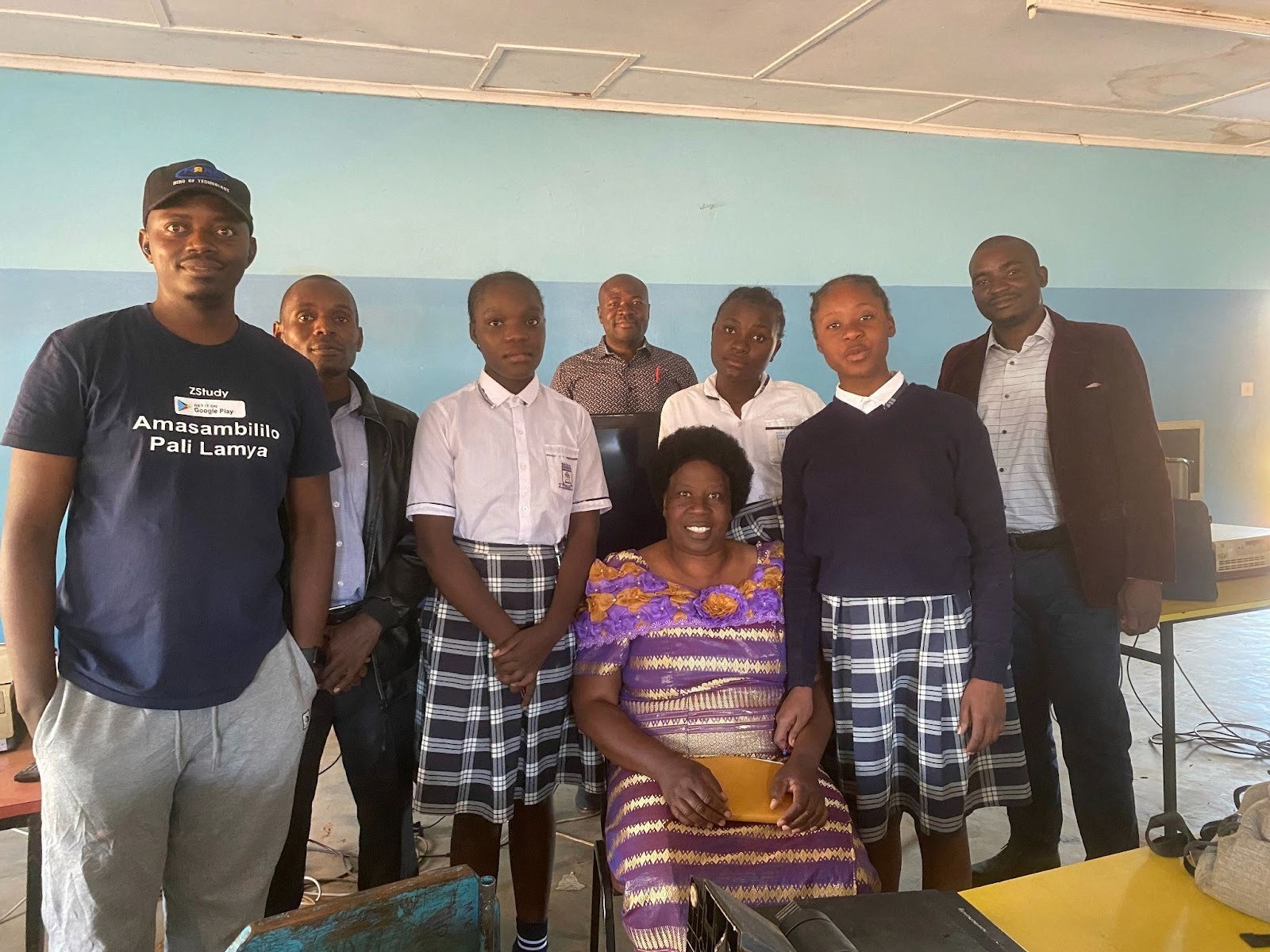
RAI²'s primary focus is on STEM education. Rural schools, often without reliable electricity or internet, struggle to provide quality education in science, technology, engineering, and mathematics. For teachers who taught me like Mr. Muzumara , whose school’s textbook is also the Laboratory, access to a knowledgeable, interactive AI and Virtual Labs is transformational. Says Eng. Kalembo. For the first time, the Government of the UPND under president Hakainde Hichilema has given Zambians free education, class are packed, that’s a quantity problem solved, now we need to support him to solve the quality problem, In the national development agenda he has emphasized the use of ICT infrastructure and system that serves our local people.
RAI² functions by using Retrieval Augmented Generation (RAG), which allows AI to pull from locally stored knowledge bases instead of relying on live internet searches. By preloading the devices with educational content aligned with the Zambian curriculum, RAI² serves as a digital tutor that never tires, can adapt to each student’s pace, and provides answers to science and math questions on demand. This AI can draw basic STEM shapes, plot interactive math graphs and create science process diagrams, it doesn’t just spit texts, it contextualizes it.
Each device costs approximately $1,500, a significant investment for rural schools, but a fraction of what cloud-based systems would cost over time. And unlike cloud systems, there are no recurring subscription fees or reliance on internet access.
ZStudy has already deployed five prototype systems in various rural communities, with plans to expand to 15 by mid-2026. While the team is focused on STEM education for now, future applications will include agricultural advisory, health information systems, and local language support.
Ensuring Sustainability: Training Local Technicians
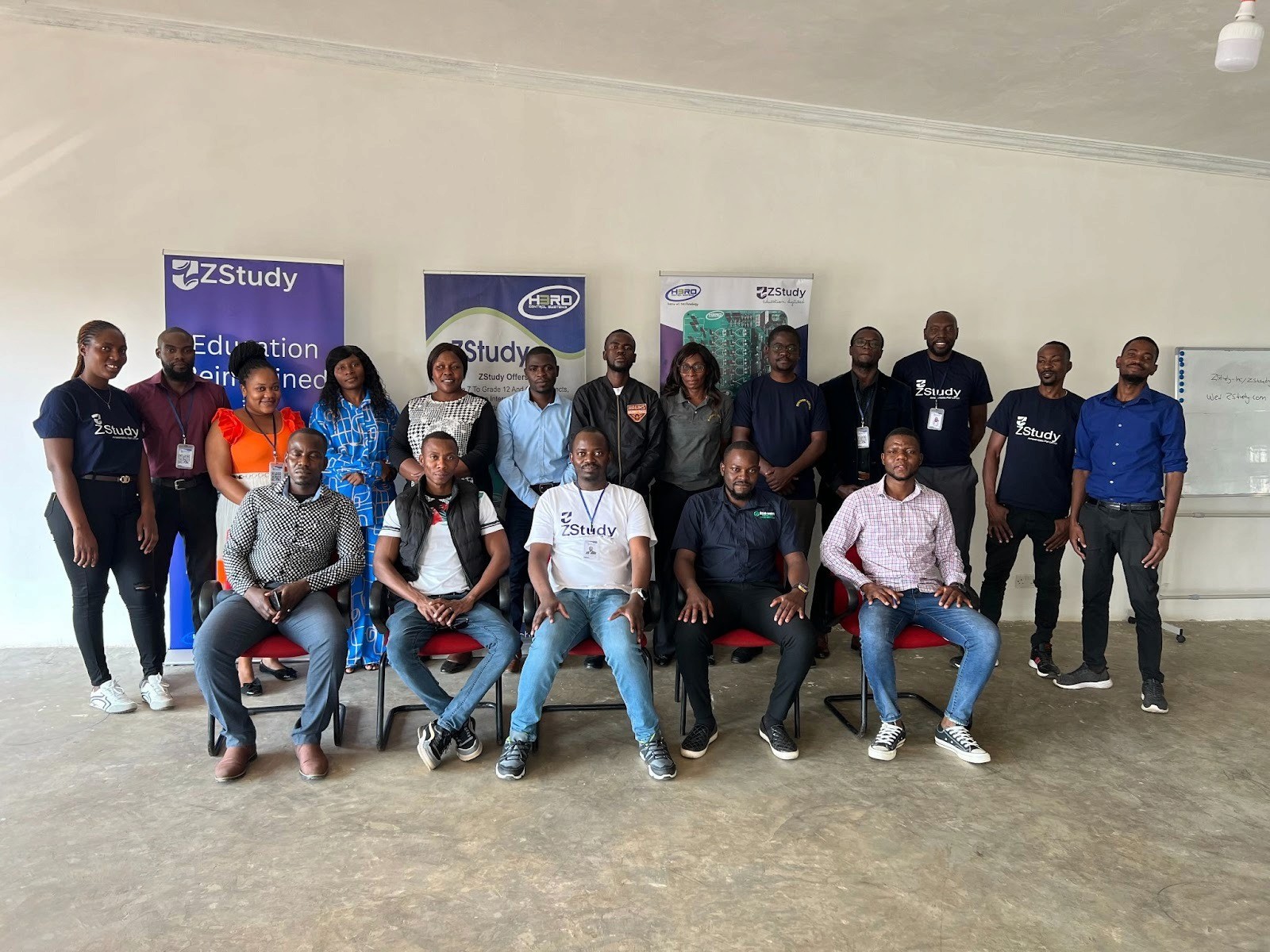
Sustainability is a key focus for ZStudy. Kalembo is well aware of the common pitfalls of tech initiatives in Africa, where projects often fail after a few years due to lack of maintenance or local expertise. That’s why ZStudy’s model includes training local "AI Champions", teachers, health workers, or community leaders, who are not only trained to use the system but also to troubleshoot and repair the hardware.
The hardware used in RAI² is standardized and modular, meaning that components can be easily replaced by local technicians. ZStudy is also working to train Zambian youths in rural areas to build and maintain AI systems locally in Partnership with the National science and technology council, a council under ministry of technology and science in the republic of Zambia, ensuring that the technology remains in the hands of the community, rather than relying on external entities for support.
Moreover, ZStudy is partnering with Zambian banks and government agencies to fund its initiatives, ensuring that these AI tools are accessible long-term without relying on donor funding. Kalembo emphasizes, “Charity doesn’t scale. Business does. We need both, the mission of serving rural communities and the discipline of building something sustainable.” World banks digital trends report, clear validates the approach ZStudy has taken, The World Bank promotes "Small AI" as accessible, affordable, purpose-driven artificial intelligence for low- and middle-income countries, focusing on practical applications like Education access, crop health, diagnostics, and education on everyday devices, rather than massive systems. It leverages existing infrastructure, uses smaller datasets, and aims to provide immediate impact by solving local development challenges in areas like agriculture, health, and financial inclusion, helping bridge the digital divide. (World Bank digital trends report 2025).
The Road Ahead: Africa’s AI Future
ZStudy’s work with RAI² is part of a larger vision to empower African communities to build their own technology, create local solutions, and bridge the digital divide. In a world where most major AI companies are based in the West, Eng. Kalembo sees Africa’s underrepresentation in AI as both an injustice and an opportunity.
“The big tech companies are building AI for people with fiber-optic internet and unlimited electricity,” he says. “But those are exactly the people who need AI least. The people who need AI most are the 600 million Africans without reliable power and the internet. If we can build AI that works for them, we’ve built something more robust, more efficient, and more relevant than anything Silicon Valley has imagined.”
Kalembo’s work with ZStudy shows the world that African engineers are not just capable of solving Africa’s challenges, they’re leading the charge. "We’re not just building technology," Kalembo states. "We’re building capability. We’re showing the world a different way to think about AI."
Ready to Learn More About ZStudy's Impact?
ZStudy’s mission to bring STEM education, AI, and sustainable development to rural Zambia is one that promises to change the future of technology in Africa. To learn more about their initiatives, visit their project page or connect with them on LinkedIn, Facebook, and X.
With an eye on expanding its reach and transforming education in rural communities, ZStudy is paving the way for Africa’s tech-driven future.