Invisible No More: The Teen Advocate Fighting to Transform Disability Inclusion in Schools
Teen advocate Yasmin Atwal advances disability inclusion in schools through research-informed tools, advocacy, and education reform initiatives.
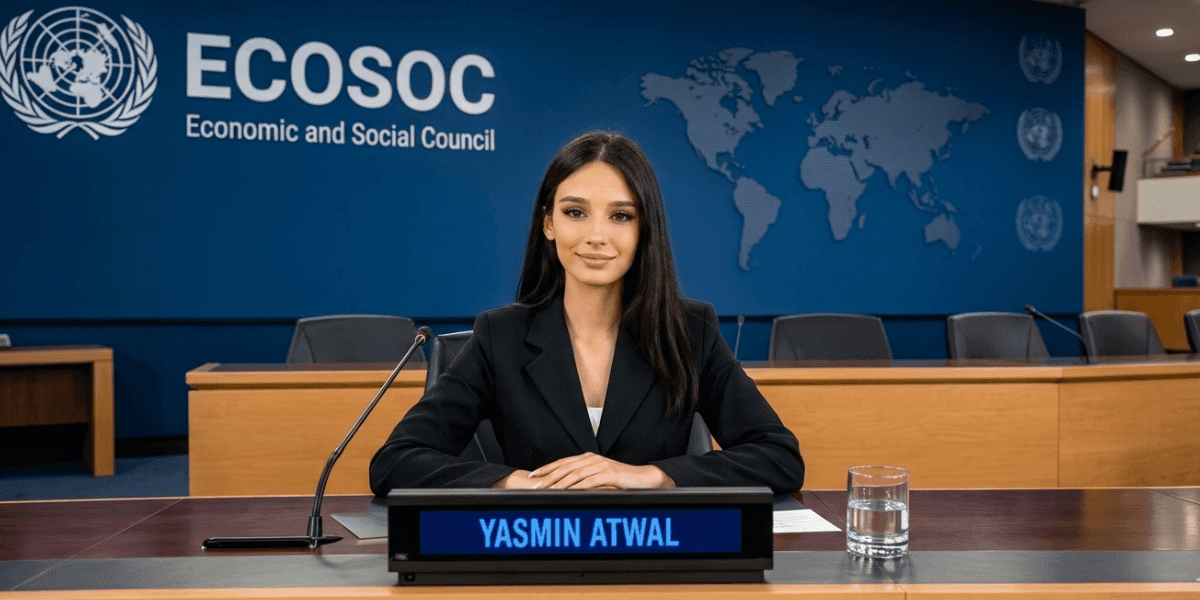
In many classrooms designed to support learning, students with disabilities still encounter barriers that affect participation, accessibility, and a sense of belonging. For Yasmin Atwal, this gap between policy intention and lived experience became the foundation for her advocacy work in disability inclusion in schools.
What began as observation evolved into structured action. Yasmin Atwal, a youth advocate working in disability rights and human rights education, founded the National Accessible Schools Initiative to address gaps in accessibility and inclusion within education systems. The initiative focuses on translating accessibility principles into practical tools that schools can apply in real-world settings.
The foundation of disability inclusion in schools, according to Atwal’s work, begins with understanding lived experience. Through engagement with individuals who are blind, deaf, and neurodivergent, she identified recurring barriers that are often not fully captured in traditional school policies. These insights informed the development of a Disability Inclusion Toolkit designed to support educators in creating more accessible learning environments.
Rather than framing inclusion as an abstract concept, the toolkit emphasizes practical implementation. It offers guidance on improving classroom accessibility, supporting diverse learning needs, and strengthening student participation. This approach positions disability inclusion in schools as a structured, ongoing responsibility rather than an optional enhancement.
The development of the National Accessible Schools Initiative was shaped by both research and consultation. Atwal reviewed accessibility frameworks and inclusive education policies while also engaging with educators and advocates in the field. This combination of research and lived experience helped inform strategies that address both structural and instructional barriers in schools.
As part of its outreach efforts, the initiative has shared its resources with schools across North America, contributing to broader conversations about accessibility in education. While adoption and implementation vary across institutions, the initiative continues to focus on encouraging practical engagement with inclusive education tools.
To further support this engagement, the initiative introduced an Accessible Schools Pledge and recognition framework. Participating schools are encouraged to commit to improving accessibility practices and fostering inclusive environments. The program is designed to promote sustained attention to disability inclusion in schools and encourage long-term institutional reflection.
Atwal’s impact has also been formally recognized through the Top Youth Human Rights Leader in Canada of 2026 award, presented by Evergreen Awards. The recognition honors her leadership in disability rights advocacy, inclusive education reform, and youth-led human rights initiatives across Canada and internationally. It reflects her measurable contributions to improving accessibility in education, the development of practical inclusion tools such as the National Disability Inclusion Toolkit, and her sustained engagement with disability communities. The award further underscores her solutions-focused approach to advocacy, emphasizing not only awareness but the implementation of structured, scalable frameworks that support long-term systemic change in schools.
Atwal’s advocacy also extends into youth engagement and policy discussion spaces. She has participated in forums and events focused on accessibility and education, where she highlights the importance of inclusive systems and awareness of legal rights in education. Her involvement reflects a growing emphasis on youth participation in disability rights advocacy.
The initiative aligns with broader international priorities related to quality education and reduced inequalities. Through this alignment, Atwal’s work connects disability inclusion in schools to global conversations on equity, access, and human rights in education systems.
Beyond the National Accessible Schools Initiative, Atwal is also the co-founder of Women STEM Mentorship, an organization launched in 2023 that supports women and girls of all abilities, including individuals with visible and invisible disabilities and neurodivergence, in pursuing careers in science, technology, engineering, and medicine. More information can be found at https://womenstemmentorship.ca/ and http://www.rightswithoutbarriers.com.
Through e-mentoring, career development programs, and industry partnerships, Women STEM Mentorship works to bridge gender gaps in STEM fields while promoting disability inclusion and equitable access to opportunities. The organization is committed to creating inclusive mentorship experiences, encouraging disability representation in STEM leadership, promoting equitable access to education and networking, and building safe and respectful learning environments.
A defining component of the program is its focus on accessibility education. All mentors are trained in disability inclusion through a course created by Yasmin Atwal, ensuring that mentorship practices remain informed by accessibility principles and inclusive engagement strategies.
Atwal is also the creator and instructor of the online certificate course “Accessibility, Disability Rights & Legal Literacy in Education.” The youth-led course was developed to provide evidence-based educational content and implementation tools focused on disability inclusion, accessible education, and legal literacy.
Built around the 81-page National Disability Inclusion Toolkit, the course includes practical training modules for educators, school leaders, mentors, students, and policymakers. Topics include accessibility law, inclusive classroom practices, accommodation strategies, and student leadership in accessibility advocacy.
Her work has been recognized within youth leadership and advocacy communities, reflecting increasing attention to disability inclusion and accessibility-focused innovation led by young advocates. These recognitions highlight the growing role of youth perspectives in shaping conversations around education reform.
What distinguishes Atwal’s approach is its focus on implementation. Rather than limiting advocacy to awareness, her work emphasizes tools, frameworks, and engagement strategies that schools can adapt in practical settings. This systems-oriented perspective positions disability inclusion as an evolving practice supported by continuous improvement.
As disability inclusion in schools continues to gain attention globally, initiatives like this reflect a broader shift toward more accessible and responsive education systems. Increasingly, the focus is on how inclusion is operationalized within classrooms and how institutions can better support diverse learners.
Looking ahead, the National Accessible Schools Initiative continues to engage with educators, advocates, and youth networks to expand dialogue around accessibility in education. The ongoing focus remains on supporting schools in building environments where all students can participate meaningfully.
Ultimately, the work of Yasmin Atwal underscores a central message: disability inclusion in schools is strengthened through practical action, informed design, and continued collaboration between students, educators, and advocates.