
Shots, Straits and Sweltering Records Define a High-Stakes Monday
The national news cycle centered on a mix of public health policy, justice department leadership, global energy risk, climate records and immigration enforcement. The day’s developments showed how decisions in Washington were quickly intersecting with families, markets, courts and the broader midterm-year political landscape.
Trump Orders a New Childhood Vaccine Approach
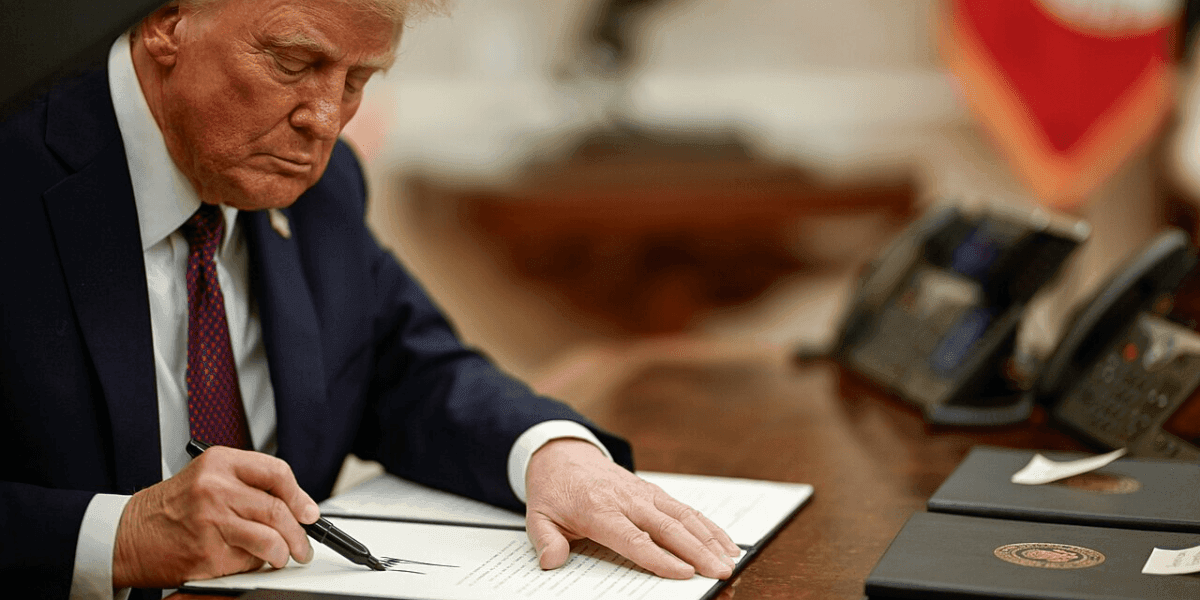
President Donald Trump signed an executive order calling for revamped childhood vaccine recommendations, including spacing immunizations across separate medical visits and splitting the combined measles, mumps and rubella vaccine into three single-disease shots. The White House framed the move as an effort to align U.S. guidance with “peer, developed countries” while preserving parental authority and religious liberty.
Medical groups and public health experts criticized the order, warning that delaying or separating shots could leave children vulnerable to vaccine-preventable diseases before they complete the schedule. AP also noted that decades of studies have found no link between vaccines and autism, a claim the order’s critics said the administration was again elevating into federal policy debates.

Photo Credit: Wikimedia (Cropped)
Todd Blanche Takes Over the Justice Department
Todd Blanche, Trump’s former personal lawyer, was sworn in as attorney general after a narrow Senate confirmation vote and a contentious fight over the Justice Department’s independence. AP reported that Blanche had already been leading the department in an acting capacity since Pam Bondi’s firing in April, and that his confirmation drew bipartisan concern about politicization at the agency.
The appointment places a close Trump legal ally formally in charge of federal law enforcement at a time when the department is handling politically sensitive investigations and facing scrutiny over its internal direction. Blanche’s first weeks as confirmed attorney general are likely to be watched closely by Congress, courts and career prosecutors.

Photo Credit: Amir Pashaei/Wikimedia (Cropped)
Iran Dispute Keeps Pressure on Oil and Markets
U.S.-Iran tensions remained a major economic and foreign policy concern as Trump rejected Iran’s demand for reparations tied to the U.S.-Israeli bombardment of Iran and said he would instead seek compensation from Tehran for American deaths and injuries attributed to Iran-backed violence. The dispute is tied to Iran’s refusal to reopen the Strait of Hormuz until U.S. conditions are met, including sanctions relief, release of frozen assets and compensation for war damage.
The market impact was immediate. AP reported that U.S. stock indexes slipped below recent record levels Monday as oil prices rose on uncertainty over when the Strait of Hormuz could reopen, with the S&P 500 and Dow each falling 0.1% and the Nasdaq dropping 0.3%.

Photo Credit: Unsplash
NOAA Confirms July Was the Hottest Month on Record for the Lower 48
NOAA’s National Centers for Environmental Information said July 2026 was the warmest month on record for the contiguous United States, averaging 76.9°F. The agency said the month ranked 3.3°F above the 20th-century average and exceeded the previous hottest months, July 1936 and July 2012, by roughly 0.1°F to 0.2°F.
The finding carried national implications for power demand, public health, agriculture and disaster planning. NOAA said above-average temperatures covered the entire contiguous United States, with every state ranking in the warmest third of its July record and none near or below average.

Photo Credit: Unsplash
Democrats Probe Deportation Efforts Involving Military Families
Congressional Democrats launched an investigation into the Trump administration’s efforts to deport military service members and their families after an AP investigation found that more than 50 spouses and parents of active-duty troops had been detained by immigration authorities. More than 60 lawmakers sent questions to the Department of Homeland Security, the Defense Department and the Department of Veterans Affairs about whether agencies were coordinating deportation actions affecting military families.
The probe puts immigration enforcement into direct conflict with military readiness concerns. AP reported that lawmakers argued the detentions could weaken morale and disrupt deployments, while DHS said military service alone does not automatically grant lawful immigration status or exempt people from immigration law.
Looking Ahead
The next watchpoints are whether the vaccine order faces court challenges or state-level resistance, how Blanche handles politically sensitive Justice Department matters, and whether Iran negotiations can ease pressure on oil prices before inflation data further shapes Federal Reserve expectations. Congress is also likely to press the administration for answers on military-family deportations, while NOAA’s record heat finding will intensify scrutiny of infrastructure, emergency response and climate policy through the rest of the summer.